

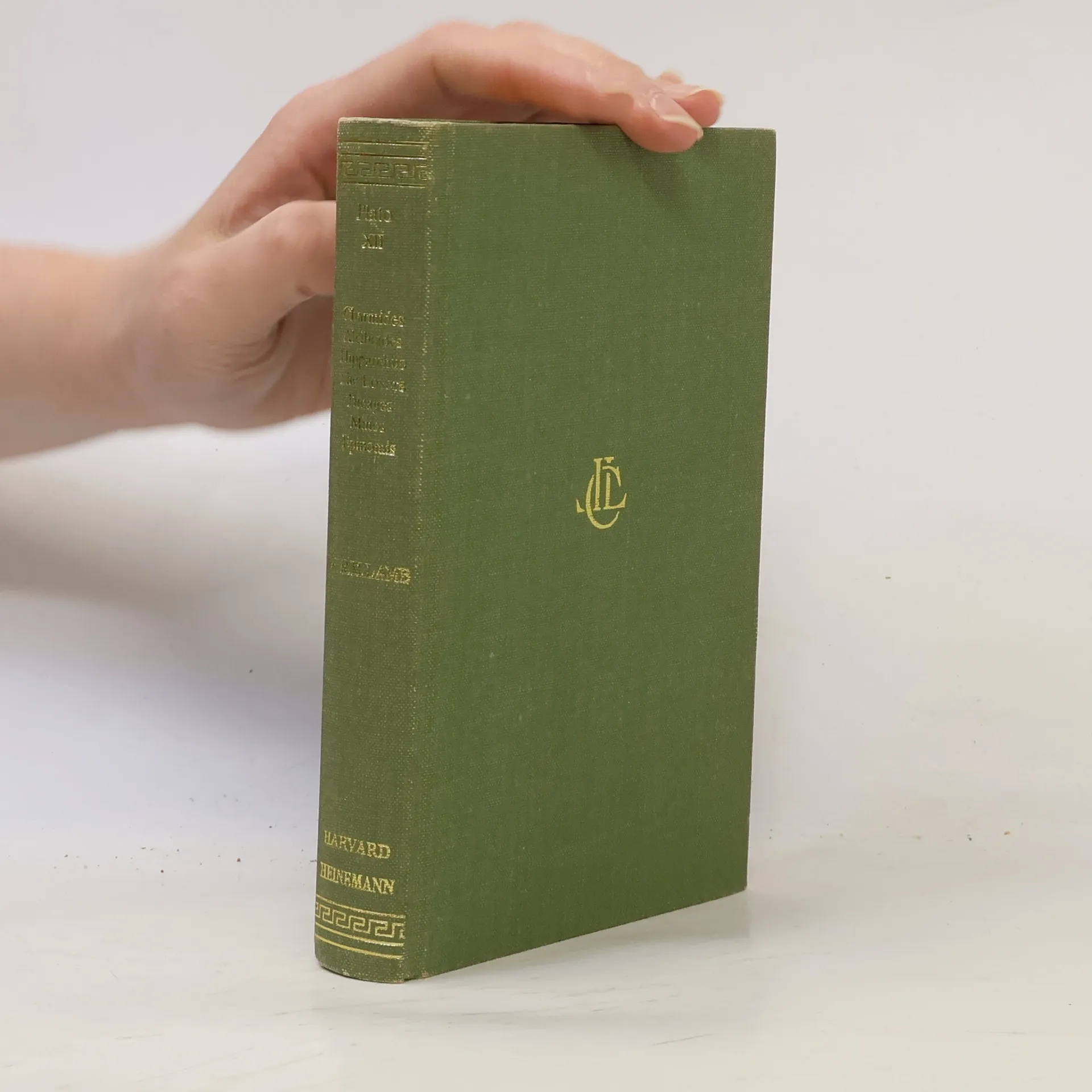
Plato - 13: Charmides, Alcibiades 1-2, Hipparchus, The Lovers, Theages, Minos, Epinomis
Auteurs
Paramètres
- 512pages
- 18 heures de lecture
En savoir plus sur le livre
Plato, the renowned philosopher from Athens, was born in 427 BCE. Initially an admirer of Socrates, he later established the influential philosophical school in the grove Academus. Much of his life remains uncertain; it is likely he left Athens after Socrates' execution and possibly traveled to Cyrene, Egypt, and Sicily. Wealthy and critical of advanced democracy, he lived to 80. Linguistic analyses, including those from computer science, continue to explore the order of his philosophical dialogues, which are celebrated for their exquisite prose and the interplay of Socratic and Platonic thought. In dialogues like Laches, Charmides, and Lysis, ethical concepts are examined, while Protagoras, Ion, and Meno question whether righteousness can be taught. Gorgias portrays Socrates' estrangement from Athenian thought, leading to his impending fate. The Apology, Crito, Euthyphro, and Phaedo recount Socrates' trial and death, addressing the immortality of the soul. The Symposium and Phaedrus explore the nature of love, and Cratylus delves into language. The Republic, a ten-book masterpiece, discusses righteousness, education, gender equality, societal structure, and slavery abolition. The dialectical dialogues include Euthydemus on philosophy, Parmenides on concepts, and Theaetetus on knowledge. Sophist, Politicus, and Philebus tackle not-being, statesmanship, and the nature of good, respectively. The Timaeus investigates the univers
Achat du livre
Plato - 13: Charmides, Alcibiades 1-2, Hipparchus, The Lovers, Theages, Minos, Epinomis, Platón, W.R.M. Lamb
- Langue

- Année de publication
- 1927
- Reliure
- (rigide)
Modes de paiement
Personne n'a encore évalué .
- Titre
- Plato - 13: Charmides, Alcibiades 1-2, Hipparchus, The Lovers, Theages, Minos, Epinomis
- Langue
- Anglais
- Auteurs
- Platón, W.R.M. Lamb
- Éditeur
- Harvard University Press
- Publié
- 1927
- Format
- rigide
- Pages
- 512
- ISBN10
- 0674992210
- ISBN13
- 9780674992214
- Séries
- Catégories
- Description
- Plato, the renowned philosopher from Athens, was born in 427 BCE. Initially an admirer of Socrates, he later established the influential philosophical school in the grove Academus. Much of his life remains uncertain; it is likely he left Athens after Socrates' execution and possibly traveled to Cyrene, Egypt, and Sicily. Wealthy and critical of advanced democracy, he lived to 80. Linguistic analyses, including those from computer science, continue to explore the order of his philosophical dialogues, which are celebrated for their exquisite prose and the interplay of Socratic and Platonic thought. In dialogues like Laches, Charmides, and Lysis, ethical concepts are examined, while Protagoras, Ion, and Meno question whether righteousness can be taught. Gorgias portrays Socrates' estrangement from Athenian thought, leading to his impending fate. The Apology, Crito, Euthyphro, and Phaedo recount Socrates' trial and death, addressing the immortality of the soul. The Symposium and Phaedrus explore the nature of love, and Cratylus delves into language. The Republic, a ten-book masterpiece, discusses righteousness, education, gender equality, societal structure, and slavery abolition. The dialectical dialogues include Euthydemus on philosophy, Parmenides on concepts, and Theaetetus on knowledge. Sophist, Politicus, and Philebus tackle not-being, statesmanship, and the nature of good, respectively. The Timaeus investigates the univers