




Paramètres
- 154pages
- 6 heures de lecture
En savoir plus sur le livre
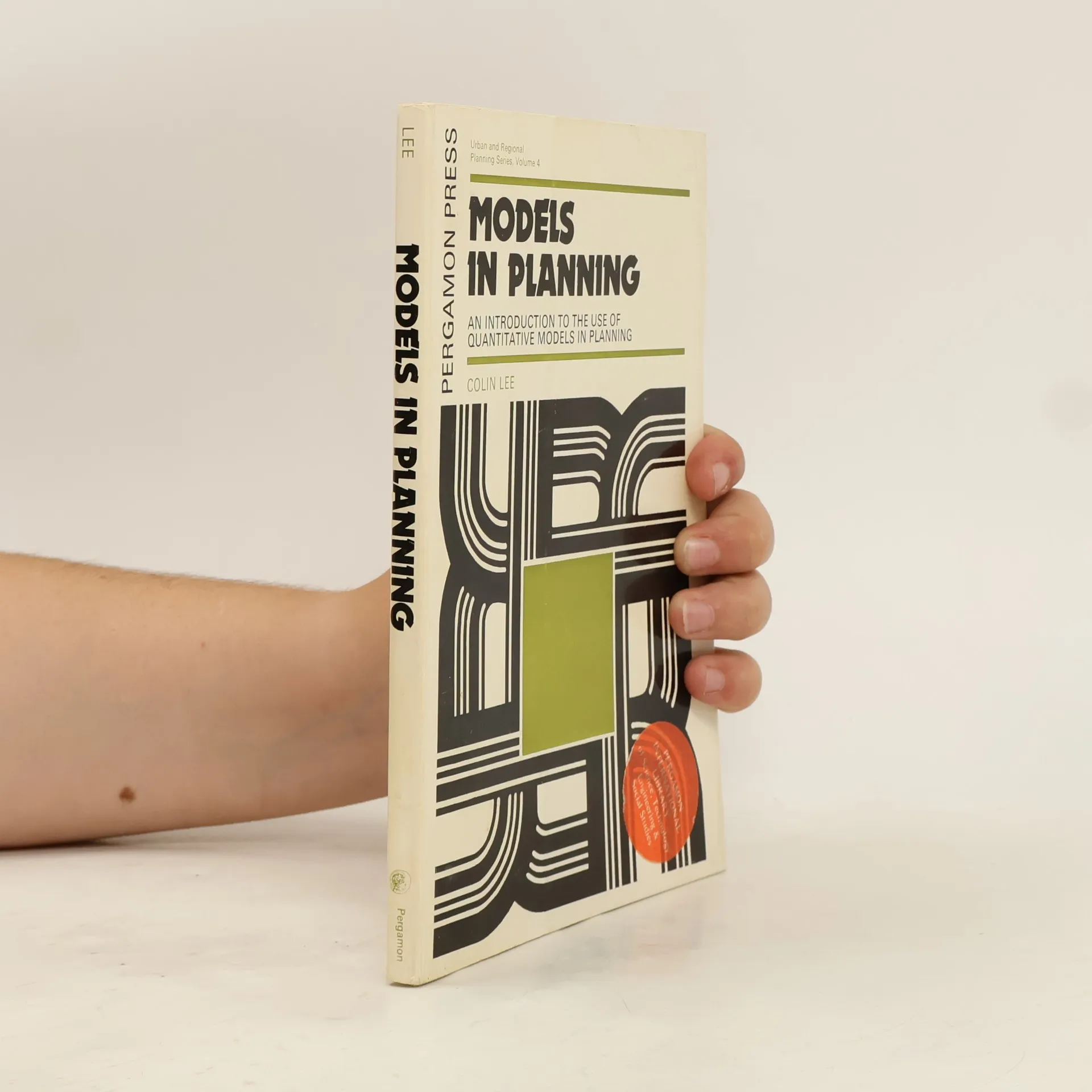
Models in An Introduction to the Use of Quantitative Models in Planning discusses the fundamental concepts in the techniques employed in the construction urban and regional models. The book emphasizes understanding of the models rather than the mathematical aspects of model construction. The text first details the role of models in the planning process, and then proceeds to discussing the principles of the design and use of models. In the third chapter, the book presents the elementary mathematical concepts and symbols that are essential in understanding the subsequent discussion of models. The succeeding series of chapters covers the types of model, which are linear, gravity, and lowry. The text also details the principles involved in optimizing models. The book will be of great use to students and practitioners of civil engineers, architecture, and urban planning.
Achat du livre
Urban and Regional Planning Series - 4: Models in Planning, Colin Lee
- Langue

- Année de publication
- 1973
- Reliure
- (souple),
- État du livre
- Abîmé
- Prix
- 9,81 €
Modes de paiement
Personne n'a encore évalué .
- Titre
- Urban and Regional Planning Series - 4: Models in Planning
- Sous-titre
- An Introduction to the Use of Quantitative Models in Planning
- Langue
- Anglais
- Auteurs
- Colin Lee
- Éditeur
- Pergamon
- Publié
- 1973
- Format
- souple
- Pages
- 154
- ISBN10
- 0080170218
- ISBN13
- 9780080170213
- Séries
- Mots clés
- Description
- Models in An Introduction to the Use of Quantitative Models in Planning discusses the fundamental concepts in the techniques employed in the construction urban and regional models. The book emphasizes understanding of the models rather than the mathematical aspects of model construction. The text first details the role of models in the planning process, and then proceeds to discussing the principles of the design and use of models. In the third chapter, the book presents the elementary mathematical concepts and symbols that are essential in understanding the subsequent discussion of models. The succeeding series of chapters covers the types of model, which are linear, gravity, and lowry. The text also details the principles involved in optimizing models. The book will be of great use to students and practitioners of civil engineers, architecture, and urban planning.