

Paramètres
- 320pages
- 12 heures de lecture
En savoir plus sur le livre
Rousseau's Legacy focuses on the new and influential paradigm of the writer that emerged in the decades immediately preceding the French Revolution. Ushered in by Rousseau's combining revolutionary sociopolitical critique with a new art of autobiography, the writer would henceforth differ greatly from the traditional "man of letters." Rousseau inaugurated the idea of a heroic and committed writerly life in which the opposition between public and private selves is collapsed. This was done in the cause of creating a future political community founded on transparency.Porter, with both a wide-ranging knowledge of contemporary theory and an informed interest in cultural/historical context, gives close readings of relevant works by a number of major French writers, including Stendhal, Baudelaire, Sartre, Barthes, Duras, Althusser, and Foucault. Thus, he explores the persistent importance of the Rousseauist paradigm for French literary culture. The book goes beyond a critique or theory that interprets literary or philosophical works for their own sake, to reveal representations and self-representations of the idea of the writer in paintings, engravings, and photographs, as well as in literary texts. In concluding, Porter argues that with the collapse of faith in social and individual regeneration through revolution, the archetype of such a writer is also waning.
Achat du livre
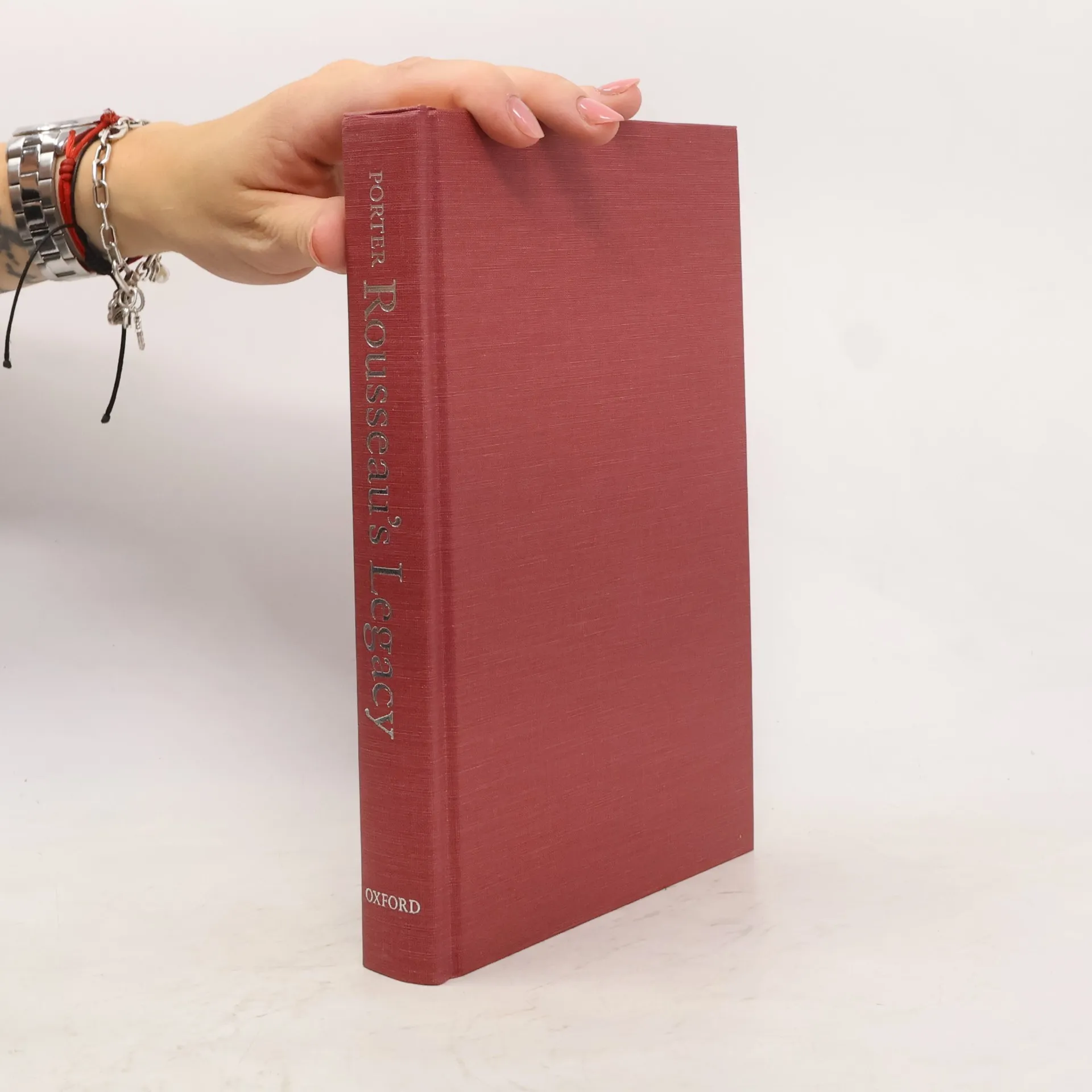
Rousseau's Legacy, Dennis Porter
- Langue

- Année de publication
- 1995
- Reliure
- (rigide)
Modes de paiement
Personne n'a encore évalué .
- Titre
- Rousseau's Legacy
- Sous-titre
- Emergence and Eclipse of the Writer in France
- Langue
- Anglais
- Auteurs
- Dennis Porter
- Éditeur
- Oxford University Press
- Publié
- 1995
- Format
- rigide
- Pages
- 320
- ISBN10
- 0195091078
- ISBN13
- 9780195091076
- Séries
- Mots clés
- Description
- Rousseau's Legacy focuses on the new and influential paradigm of the writer that emerged in the decades immediately preceding the French Revolution. Ushered in by Rousseau's combining revolutionary sociopolitical critique with a new art of autobiography, the writer would henceforth differ greatly from the traditional "man of letters." Rousseau inaugurated the idea of a heroic and committed writerly life in which the opposition between public and private selves is collapsed. This was done in the cause of creating a future political community founded on transparency.Porter, with both a wide-ranging knowledge of contemporary theory and an informed interest in cultural/historical context, gives close readings of relevant works by a number of major French writers, including Stendhal, Baudelaire, Sartre, Barthes, Duras, Althusser, and Foucault. Thus, he explores the persistent importance of the Rousseauist paradigm for French literary culture. The book goes beyond a critique or theory that interprets literary or philosophical works for their own sake, to reveal representations and self-representations of the idea of the writer in paintings, engravings, and photographs, as well as in literary texts. In concluding, Porter argues that with the collapse of faith in social and individual regeneration through revolution, the archetype of such a writer is also waning.