

Paramètres
- 320pages
- 12 heures de lecture
En savoir plus sur le livre
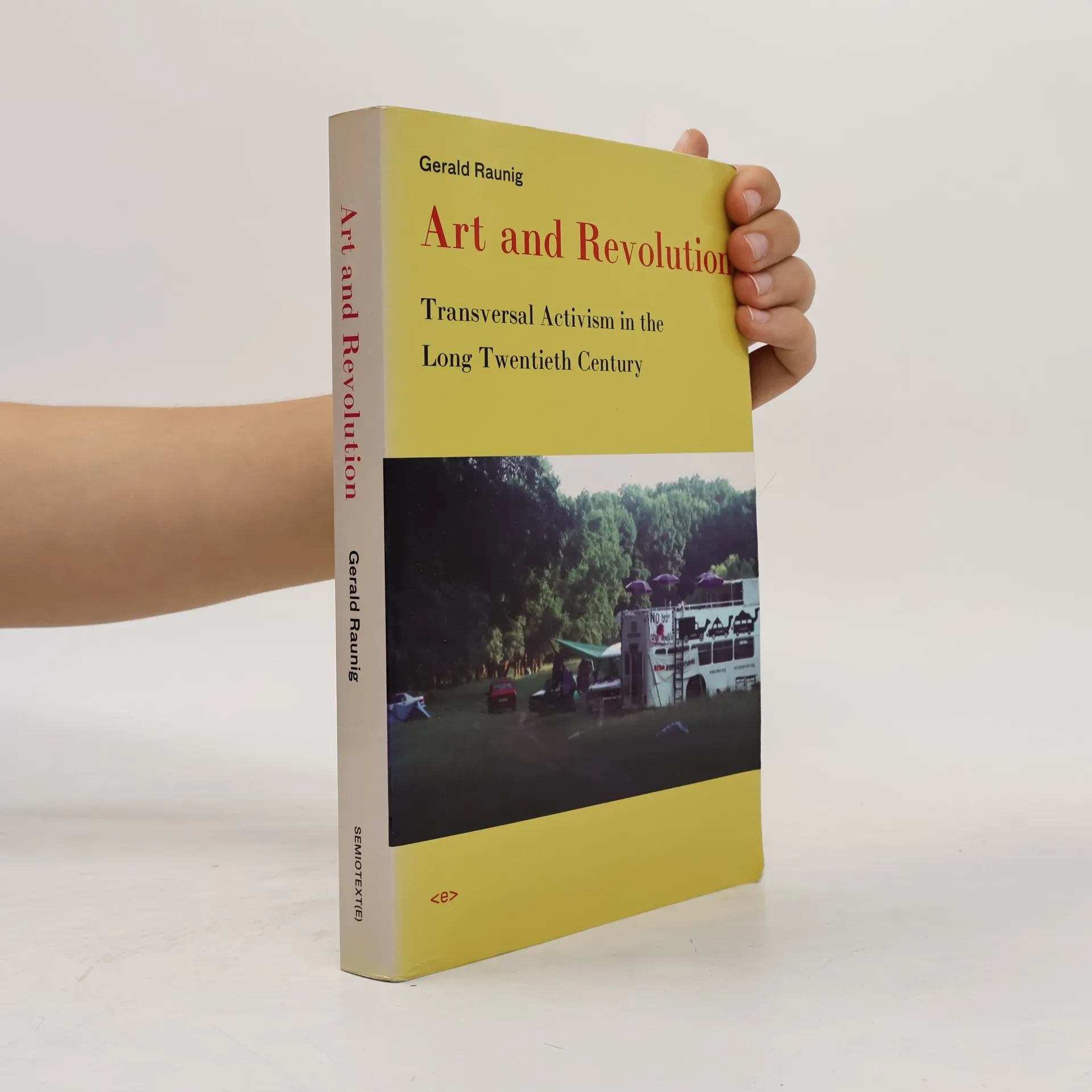
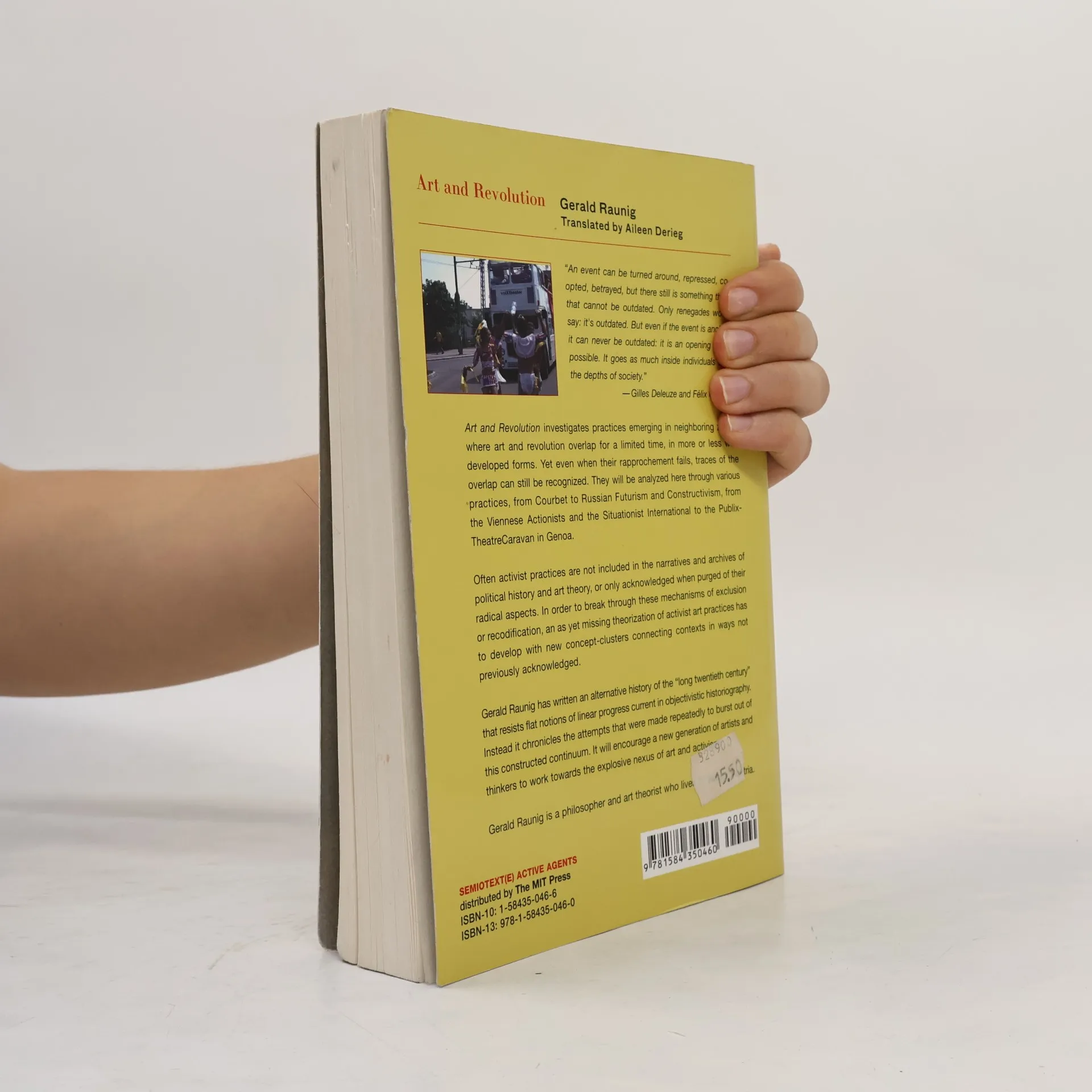
A philosopher and art theorist extends the poststructuralist theory of revolution to the nexus of art and activism. Gerald Raunig has written an alternative art history of the "long twentieth century," from the Paris Commune of 1871 to the turbulent counter-globalization protests in Genoa in 2001. Meticulously moving from the Situationists and Sergei Eisenstein to Viennese Actionism and the PublixTheatreCaravan, Art and Revolution takes on the history of revolutionary transgressions and optimistically charts an emergence from its tales of tragic failure and unequivocal disaster. By eloquently applying Deleuze and Guattari's idea of the "machine," Raunig extends the poststructuralist theory of revolution through to the explosive nexus of art and activism. As hopeful as it is incisive, Art and Revolution encourages a new generation of artists and thinkers to refuse to participate in the tired prescriptions of marketplace and authority and instead create radical new methods of engagement. Raunig develops an indispensable, contemporary conception of political change--a conception that transcends the outmoded formulations of insurrection and resistance. Too much blood and ink has been shed for the art machines and the revolutionary machines to remain separate. Gerald Raunig is a philosopher and art theorist who lives in Vienna, Austria.
Achat du livre
Semiotext(e) / Active Agents: Art and Revolution, Gerald Raunig, Aileen Derieg
- Langue

- Année de publication
- 2007
- Reliure
- (souple)
Modes de paiement
Personne n'a encore évalué .
- Titre
- Semiotext(e) / Active Agents: Art and Revolution
- Sous-titre
- Transversal Activism in the Long Twentieth Century
- Langue
- Anglais
- Auteurs
- Gerald Raunig, Aileen Derieg
- Éditeur
- Semiotext(e)
- Publié
- 2007
- Format
- souple
- Pages
- 320
- ISBN10
- 1584350466
- ISBN13
- 9781584350460
- Séries
- Catégories
- Mots clés
- Thème historique, Thèmes psychologiques, Manuels et guides, Thématique philosophique, Art, Architecture, Politique, États-Unis, Guerres, 20e siècle, Société, Linguistique, Histoire de l'art, Histoire de l'Europe, Critique littéraire, Archéologie, Culture, 21e siècle, Musées, Emploi, Rome, Critique, Artistes, Marxisme, Art moderne, Renaissance (époque), Sculpture, Modernisme, Jumeaux, Esthétique, Beauté, Théorie de l'art, Théorie critique
- Description
- A philosopher and art theorist extends the poststructuralist theory of revolution to the nexus of art and activism. Gerald Raunig has written an alternative art history of the "long twentieth century," from the Paris Commune of 1871 to the turbulent counter-globalization protests in Genoa in 2001. Meticulously moving from the Situationists and Sergei Eisenstein to Viennese Actionism and the PublixTheatreCaravan, Art and Revolution takes on the history of revolutionary transgressions and optimistically charts an emergence from its tales of tragic failure and unequivocal disaster. By eloquently applying Deleuze and Guattari's idea of the "machine," Raunig extends the poststructuralist theory of revolution through to the explosive nexus of art and activism. As hopeful as it is incisive, Art and Revolution encourages a new generation of artists and thinkers to refuse to participate in the tired prescriptions of marketplace and authority and instead create radical new methods of engagement. Raunig develops an indispensable, contemporary conception of political change--a conception that transcends the outmoded formulations of insurrection and resistance. Too much blood and ink has been shed for the art machines and the revolutionary machines to remain separate. Gerald Raunig is a philosopher and art theorist who lives in Vienna, Austria.