



Paramètres
- 292pages
- 11 heures de lecture
En savoir plus sur le livre
In this book, Michael Sandel takes up some of the hotly contested moral and political issues of our time, including affirmative action, assisted suicide, abortion, gay rights, stem cell research, the meaning of toleration and civility, the gap between rich and poor, the role of markets, and the place of religion in public life. He argues that the most prominent ideals in our political life--individual rights and freedom of choice--do not by themselves provide an adequate ethic for a democratic society. Sandel calls for a politics that gives greater emphasis to citizenship, community, and civic virtue, and that grapples more directly with questions of the good life. Liberals often worry that inviting moral and religious argument into the public sphere runs the risk of intolerance and coercion. These essays respond to that concern by showing that substantive moral discourse is not at odds with progressive public purposes, and that a pluralist society need not shrink from engaging the moral and religious convictions that its citizens bring to public life.

Achat du livre
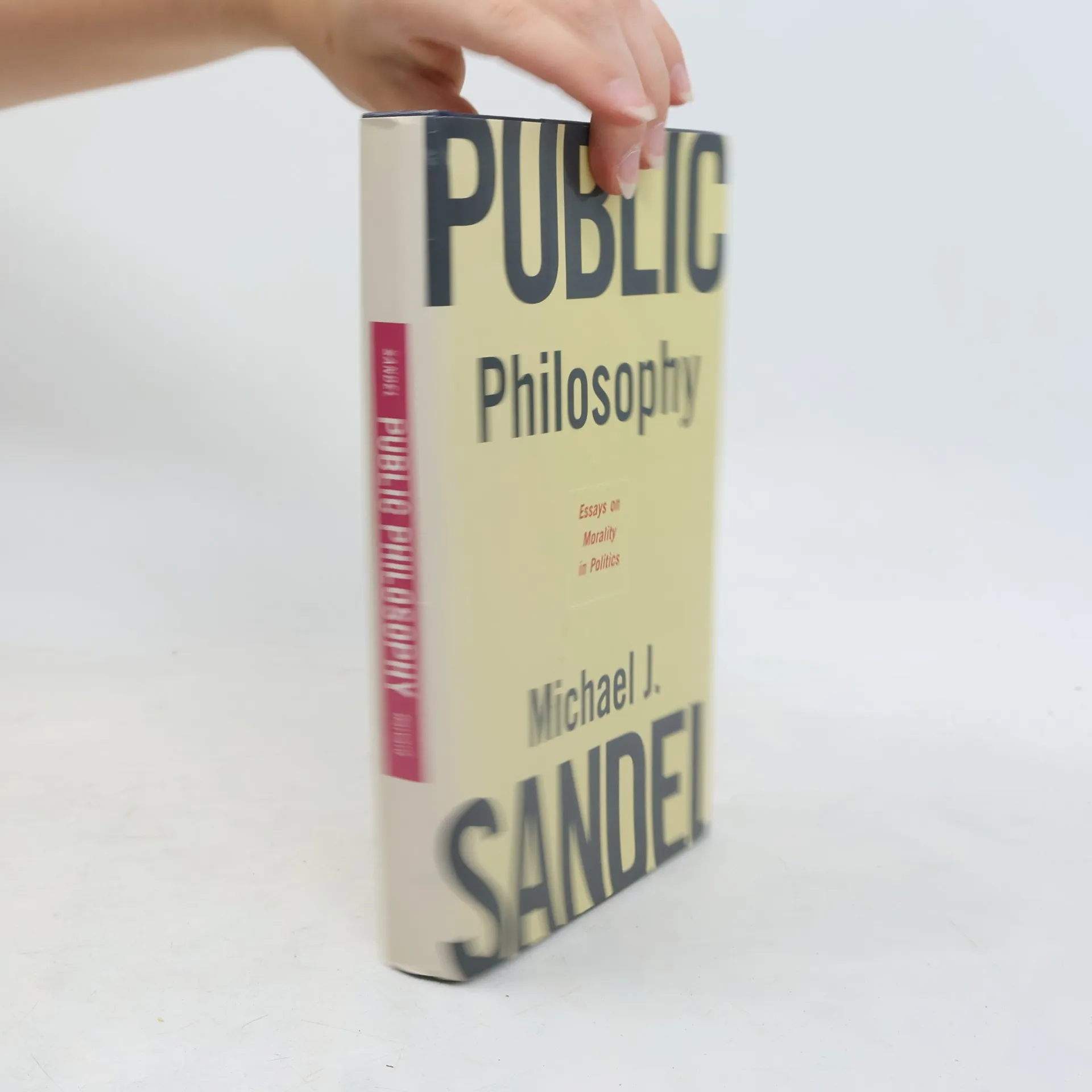
Public Philosophy, Michael J. Sandel
- Langue

- Année de publication
- 2005
- Reliure
- (rigide),
- État du livre
- Très bon
- Prix
- 13,39 €
Modes de paiement
Il manque plus que ton avis ici.
- Titre
- Public Philosophy
- Sous-titre
- Essays on Morality in Politics
- Langue
- Anglais
- Auteurs
- Michael J. Sandel
- Éditeur
- Harvard University Press
- Publié
- 2005
- Format
- rigide
- Pages
- 292
- ISBN10
- 0674019288
- ISBN13
- 9780674019287
- Séries
- Catégories
- Mots clés
- Thématique philosophique, Politique
- Évaluation
- 3,35 sur 5
- Description
- In this book, Michael Sandel takes up some of the hotly contested moral and political issues of our time, including affirmative action, assisted suicide, abortion, gay rights, stem cell research, the meaning of toleration and civility, the gap between rich and poor, the role of markets, and the place of religion in public life. He argues that the most prominent ideals in our political life--individual rights and freedom of choice--do not by themselves provide an adequate ethic for a democratic society. Sandel calls for a politics that gives greater emphasis to citizenship, community, and civic virtue, and that grapples more directly with questions of the good life. Liberals often worry that inviting moral and religious argument into the public sphere runs the risk of intolerance and coercion. These essays respond to that concern by showing that substantive moral discourse is not at odds with progressive public purposes, and that a pluralist society need not shrink from engaging the moral and religious convictions that its citizens bring to public life.