

Bookbot

Ordre Politique

Cette série plonge dans les profondeurs de l'histoire humaine, examinant l'évolution des institutions politiques fondamentales qui façonnent nos sociétés. Elle retrace le parcours depuis les premières organisations tribales jusqu'à l'émergence des États modernes et de l'état de droit. Les livres offrent une exploration provocatrice des raisons pour lesquelles certaines sociétés ont réussi à construire des gouvernements stables et responsables, tandis que d'autres continuent de lutter avec ces défis. C'est une enquête captivante sur les origines de la démocratie et la quête perpétuelle d'ordre.

Political order and political decay : from the Industrial Revolution to the globalization of democracy
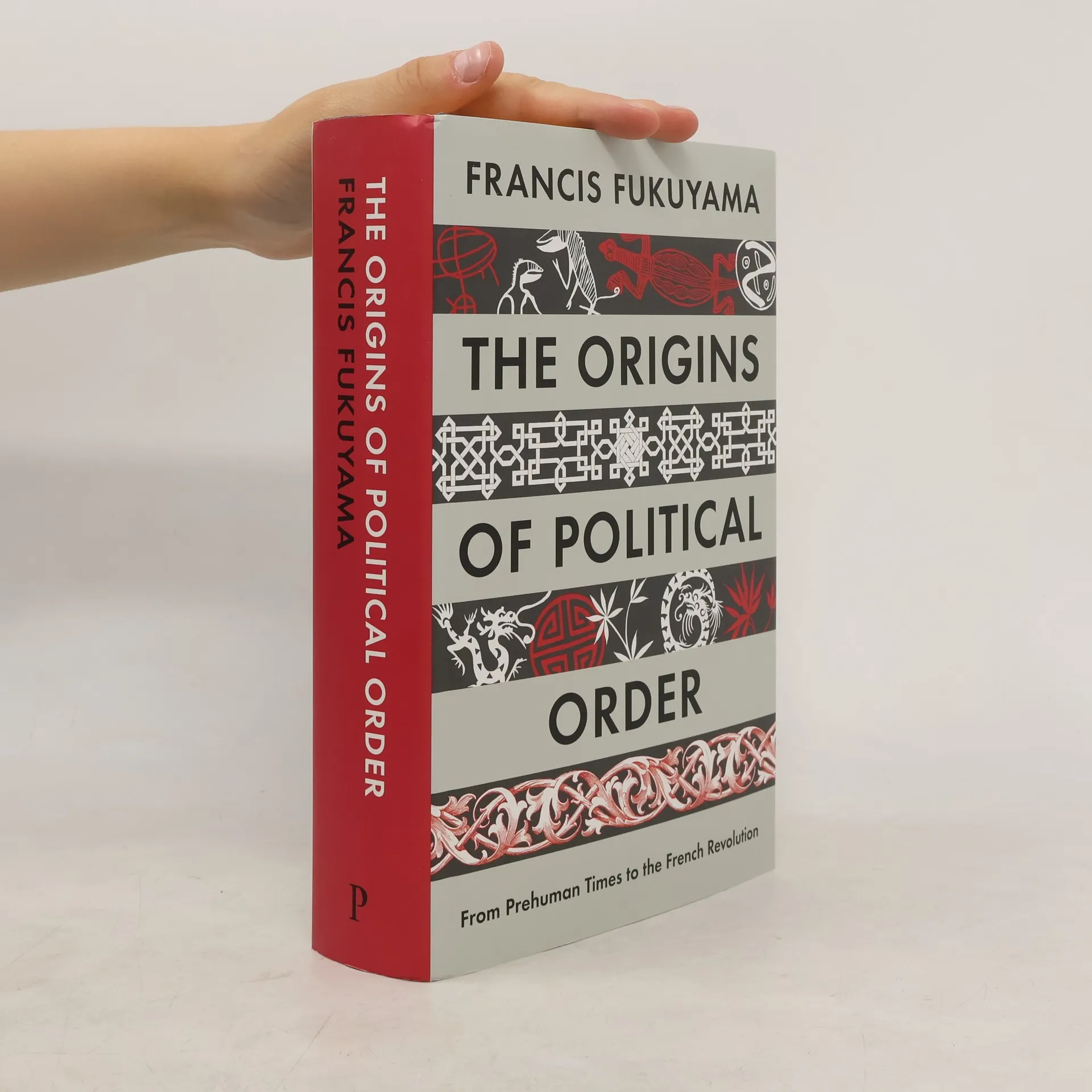
The Origins of Political Order

Ordre de lecture recommandé

  1. The Origins of Political Order

    From Prehuman Times to the French Revolution

    • 585pages
    • 21 heures de lecture

    Virtually all human societies were once organized tribally, yet over time most developed new political institutions which included a central state that could keep the peace and uniform laws that applied to all citizens. Some went on to create governments that were accountable to their constituents. We take these institutions for granted, but they are absent or are unable to perform in many of today’s developing countries—with often disastrous consequences for the rest of the world. Francis Fukuyama, author of the bestselling <i>The End of History and the Last Man </i>and one of our most important political thinkers, provides a sweeping account of how today’s basic political institutions developed. The first of a major two-volume work, <i>The Origins of Political Order</i> begins with politics among our primate ancestors and follows the story through the emergence of tribal societies, the growth of the first modern state in China, the beginning of the rule of law in India and the Middle East, and the development of political accountability in Europe up until the eve of the French Revolution. Drawing on a vast body of knowledge—history, evolutionary biology, archaeology, and economics—Fukuyama has produced a brilliant, provocative work that offers fresh insights on the origins of democratic societies and raises essential questions about the nature of politics and its discontents.

    The Origins of Political Order1
    4,3
  2. In The Origins of Political Order, Francis Fukuyama took us from the dawn of mankind to the French and American Revolutions. Here, he picks up the thread again in the second instalment of his definitive account of mankind's emergence as a political animal.This is the story of how state, law and democracy developed after these cataclysmic events, how the modern landscape - with its uneasy tension between dictatorships and liberal democracies - evolved and how in the United States and in other developed democracies, unmistakable signs of decay have emerged. If we want to understand the political systems that dominate and order our lives, we must first address their origins - in our own recent past as well as in the earliest systems of human government. Fukuyama argues that the key to successful government can be reduced to three key elements: a strong state, the rule of law, and institutions of democratic accountability.This magisterial account is required reading for anyone wishing to know more about mankind's greatest achievements.

    Political order and political decay : from the Industrial Revolution to the globalization of democracy2
    4,4