

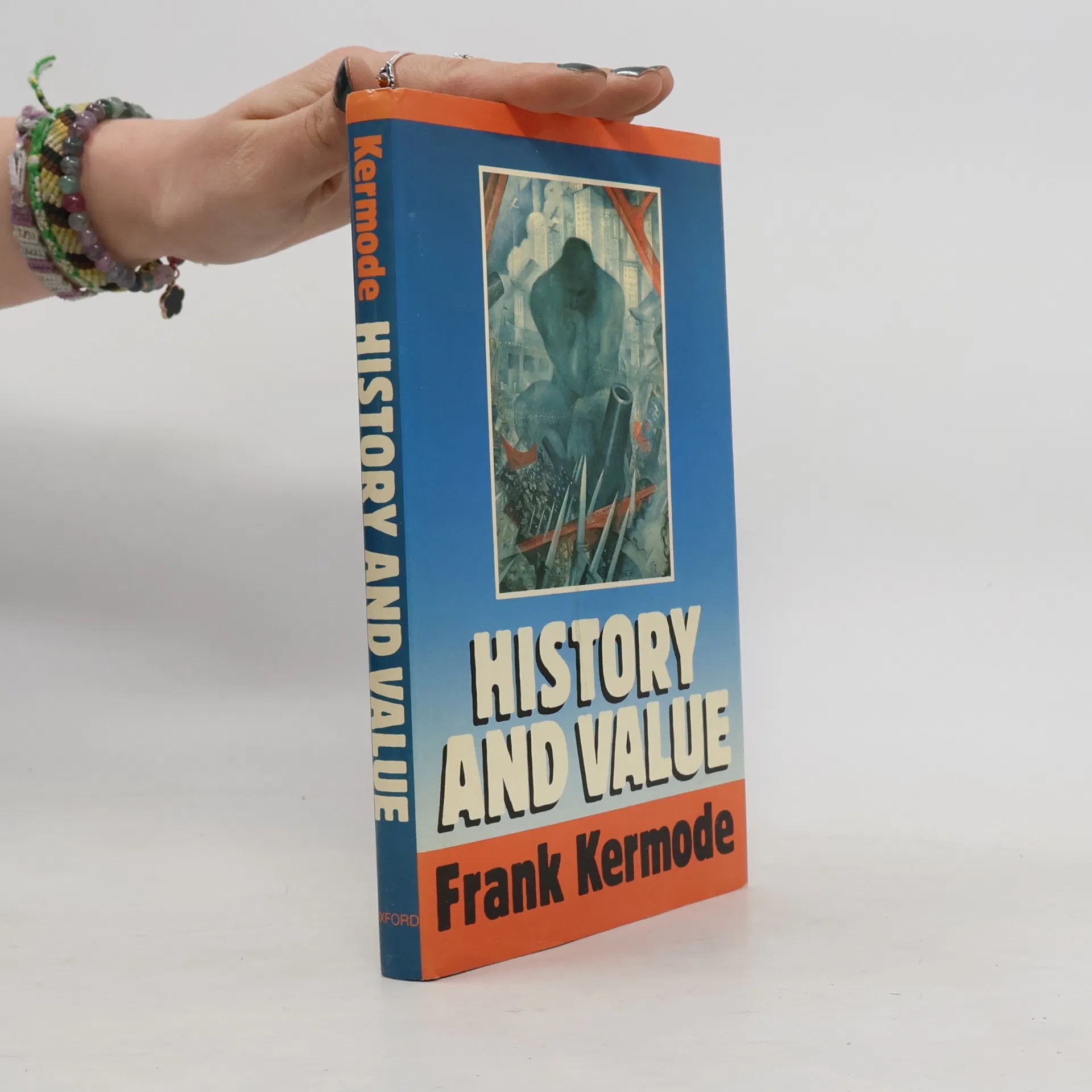


History and Value
The Clarendon Lectures and the Northcliffe Lectures 1987
Auteurs
Paramètres
- 160pages
- 6 heures de lecture
En savoir plus sur le livre
Frank Kermode here returns to the literature of his youth to ask why we seem to have forgotten how urgent and powerful this literature was during a time of economic crisis and imminent world war. First examining bourgeois left-wing writing in England in the 1930s and, to a lesser extent, in the United States, Kermode explores the causes of literary neglect and the nature of the bond between a book and its historical context. He goes on to discuss left-wing novelists and their response to the crises and political myths of the decade and the "committed" work of left-wing bourgeois poets, including Auden, MacNeice, Spender, Upward, Wyndham Lewis, and the Welsh miner and author Lewis Jones. The second part of the book draws on Marxist and postmodernist criticism, and strategies of canon- and period-formation, to address the more general question of how literature dies or survives and how we go about deciding whether to attribute value to it.
Achat du livre
History and Value, Frank Kermode
- Langue

- Année de publication
- 1988
- Reliure
- (rigide),
- État du livre
- Bon
- Prix
- 9,39 €
Modes de paiement
Personne n'a encore évalué .
- Titre
- History and Value
- Sous-titre
- The Clarendon Lectures and the Northcliffe Lectures 1987
- Langue
- Anglais
- Auteurs
- Frank Kermode
- Éditeur
- Oxford University Press
- Publié
- 1988
- Format
- rigide
- Pages
- 160
- ISBN10
- 0198123817
- ISBN13
- 9780198123811
- Séries
- Mots clés
- Description
- Frank Kermode here returns to the literature of his youth to ask why we seem to have forgotten how urgent and powerful this literature was during a time of economic crisis and imminent world war. First examining bourgeois left-wing writing in England in the 1930s and, to a lesser extent, in the United States, Kermode explores the causes of literary neglect and the nature of the bond between a book and its historical context. He goes on to discuss left-wing novelists and their response to the crises and political myths of the decade and the "committed" work of left-wing bourgeois poets, including Auden, MacNeice, Spender, Upward, Wyndham Lewis, and the Welsh miner and author Lewis Jones. The second part of the book draws on Marxist and postmodernist criticism, and strategies of canon- and period-formation, to address the more general question of how literature dies or survives and how we go about deciding whether to attribute value to it.