





Paramètres
- 578pages
- 21 heures de lecture
En savoir plus sur le livre
For some time, I've been compelled to arrange speaking engagements long in advance. A consistently effective title for these talks is "The current crisis in the Middle East." While the specifics of future crises remain unpredictable, their inevitability is assured as long as fundamental regional issues remain unaddressed. The crises will be significant in what President Eisenhower termed "the most strategically important area in the world." In the early post-War years, the U.S. effectively extended the Monroe Doctrine to the Middle East, limiting interference to Britain, which was swiftly reprimanded when it strayed (as in 1956). The region's strategic importance largely stems from its vast petroleum reserves and the power derived from controlling them, alongside the substantial profits benefiting Anglo-American interests, crucial for their economies. This dynamic has ensured that wealth primarily flows to the West rather than the local populace, perpetuating unrest. Additionally, the Israel-Arab conflict, with its complex ramifications, is intricately linked to U.S. strategic aims of dominating regional resources. For many years, the prevailing narrative framed Soviet subversion and expansionism as the core issue, justifying various policies since the Bolshevik takeover in 1917.

Achat du livre
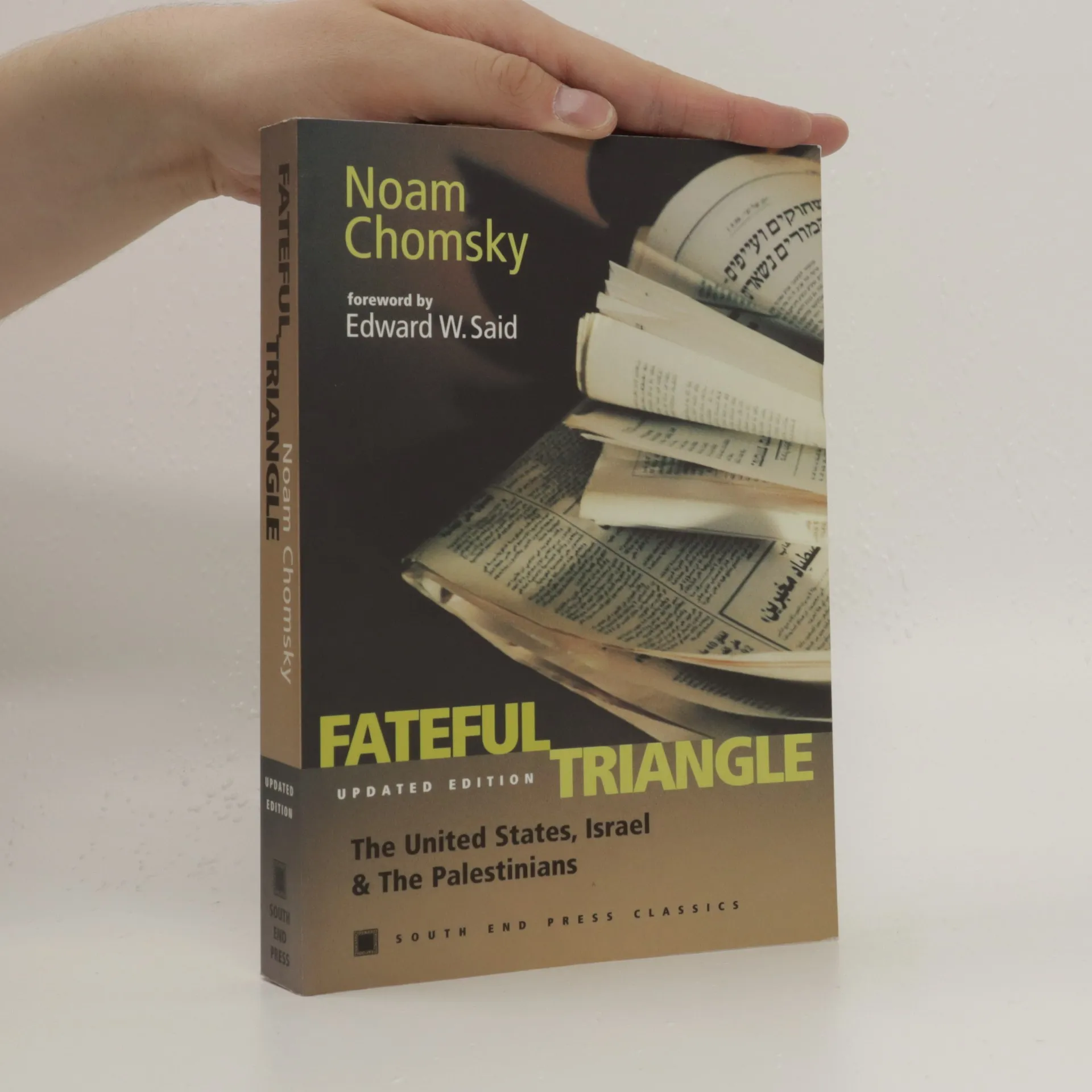
Fateful Triangle, Noam Chomsky
- Langue

- Année de publication
- 1999
- Reliure
- (souple)
Modes de paiement
Il manque plus que ton avis ici.
- Titre
- Fateful Triangle
- Langue
- Anglais
- Auteurs
- Noam Chomsky
- Éditeur
- South End Press
- Publié
- 1999
- Format
- souple
- Pages
- 578
- ISBN10
- 0896086011
- ISBN13
- 9780896086012
- Séries
- Catégories
- Mots clés
- Thème historique, Politique, États-Unis, Guerres, Israël, Palestine
- Titre original
- Fateful triangle
- Évaluation
- 4,1 sur 5
- Description
- For some time, I've been compelled to arrange speaking engagements long in advance. A consistently effective title for these talks is "The current crisis in the Middle East." While the specifics of future crises remain unpredictable, their inevitability is assured as long as fundamental regional issues remain unaddressed. The crises will be significant in what President Eisenhower termed "the most strategically important area in the world." In the early post-War years, the U.S. effectively extended the Monroe Doctrine to the Middle East, limiting interference to Britain, which was swiftly reprimanded when it strayed (as in 1956). The region's strategic importance largely stems from its vast petroleum reserves and the power derived from controlling them, alongside the substantial profits benefiting Anglo-American interests, crucial for their economies. This dynamic has ensured that wealth primarily flows to the West rather than the local populace, perpetuating unrest. Additionally, the Israel-Arab conflict, with its complex ramifications, is intricately linked to U.S. strategic aims of dominating regional resources. For many years, the prevailing narrative framed Soviet subversion and expansionism as the core issue, justifying various policies since the Bolshevik takeover in 1917.