

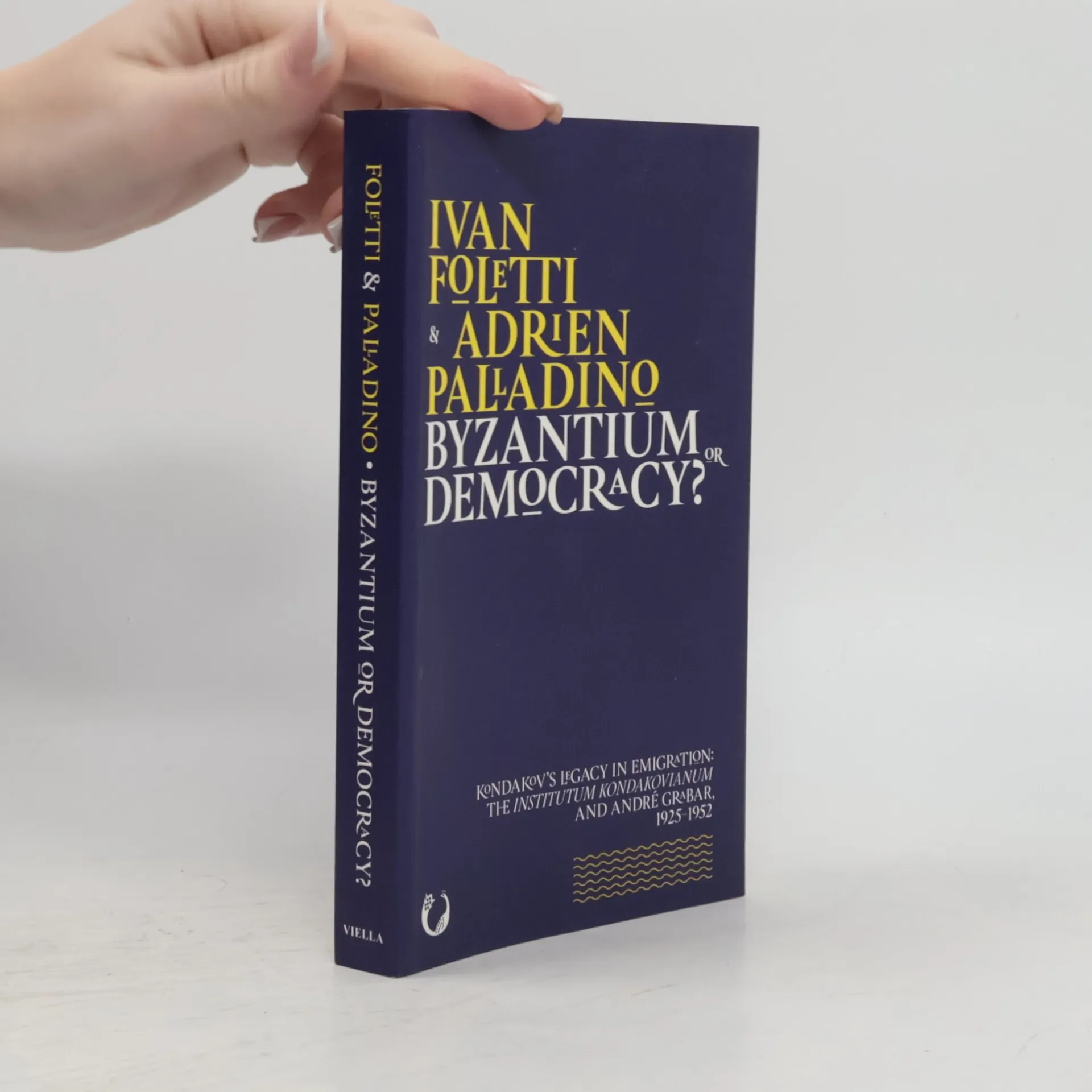


Byzantium or democracy? : Kondakov's legacy in emigration: The Institutum Kondakovianum and André Grabar 1925-1952
Auteurs
En savoir plus sur le livre
The notion of "Byzantium" has for centuries been associated with autocracy, totalitarianism, and suppression of freedom. It thus became the favored model for the Russian autocracy. In the nineteenth-century, Russian scholars working under Tsarist regimes were, either explicitly or tacitly, condoning and even supporting the ruling autocracy. After the Revolution of 1917, however, many of these effectively complicit intellectuals left Russia for Western democracies. This book shows how this experience affected the lives of intellectuals who fled and transformed their scholarship. Archival materials and writings from the time reveal how scholarship can move from aspiration to reality, as it did for the Russian emigres until the crash of 1929 and the rise of Nazism in Germany. But how is this relevant today? Because it shows how scholarship and science must be understood as part of history, and because it illustrates the power of hope. As studied and presented by emigres from Tsarist totalitarianism, "Byzantium" came to be a multinational screen onto which scholars projected not only frustrations but also dreams.
Nous avons un total de du titreByzantium or democracy? : Kondakov's legacy in emigration: The Institutum Kondakovianum and André Grabar 1925-1952 (2020 ).
Achat du livre
Byzantium or democracy? : Kondakov's legacy in emigration: The Institutum Kondakovianum and André Grabar 1925-1952, Ivan Foletti, Adrien Palladino
- Langue

- Année de publication
- 2020
- Reliure
- (souple),
- État du livre
- Bon
- Prix
- 7,29 €
Modes de paiement
Personne n'a encore évalué .
- Titre
- Byzantium or democracy? : Kondakov's legacy in emigration: The Institutum Kondakovianum and André Grabar 1925-1952
- Langue
- Anglais
- Auteurs
- Ivan Foletti, Adrien Palladino
- Publié
- 2020
- Format
- souple
- Pages
- 211
- ISBN10
- 8833134962
- ISBN13
- 9788833134963
- Séries
- Recueil
- Parva Convivia
- Mots clés
- Thème historique
- Description
- The notion of "Byzantium" has for centuries been associated with autocracy, totalitarianism, and suppression of freedom. It thus became the favored model for the Russian autocracy. In the nineteenth-century, Russian scholars working under Tsarist regimes were, either explicitly or tacitly, condoning and even supporting the ruling autocracy. After the Revolution of 1917, however, many of these effectively complicit intellectuals left Russia for Western democracies. This book shows how this experience affected the lives of intellectuals who fled and transformed their scholarship. Archival materials and writings from the time reveal how scholarship can move from aspiration to reality, as it did for the Russian emigres until the crash of 1929 and the rise of Nazism in Germany. But how is this relevant today? Because it shows how scholarship and science must be understood as part of history, and because it illustrates the power of hope. As studied and presented by emigres from Tsarist totalitarianism, "Byzantium" came to be a multinational screen onto which scholars projected not only frustrations but also dreams.