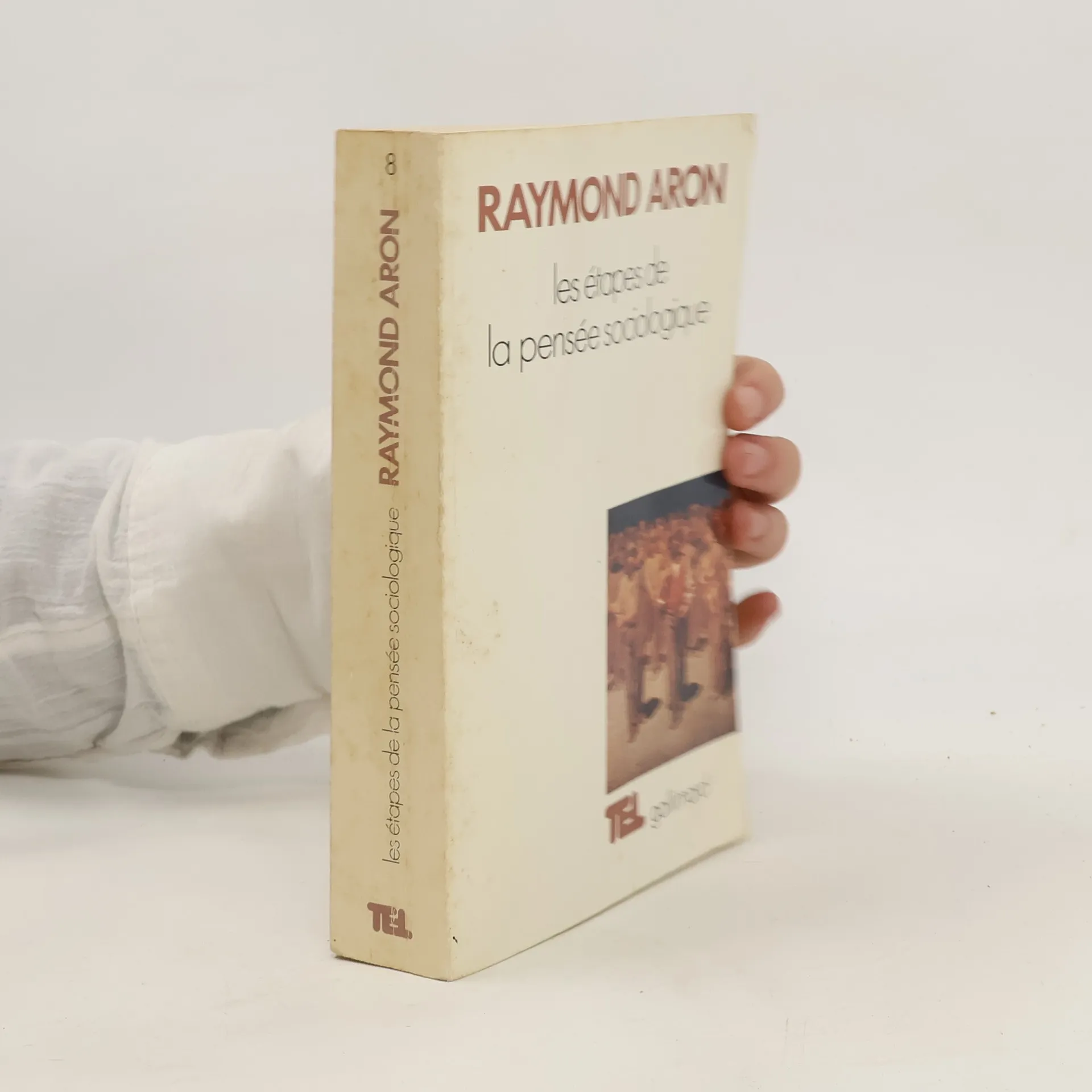

This is the first part of Raymond Aron's landmark two-volume study of the sociological tradition¿arguably the definitive work of its kind. More than a work of reconstruction, Aron's study is, at its deepest level, an engagement with the very question of modernity: How did the intellectual currents which emerged in the eighteenth century shape the modern political and philosophical order? With scrupulous fairness, Aron examines the thought and arguments of the major social thinkers to discern how they answered this question. Volume One explores three traditions: the French liberal school of political sociology, represented by Montesquieu and Tocqueville; the Comtean tradition, anticipating Durkheim in its elevation of social unity and consensus; and the Marxists, who posited the struggle between classes and placed their faith in historical necessity. In his customary clear and penetrating prose, Aron argues that each of these schools offers its own theory of the diversity of societies and that ¿each is inspired both by moral convictions and by scientific hypotheses.¿ This Routledge Classics edition includes an introduction by Daniel J. Mahoney and Brian C. Anderson.

Les courants principaux de la pensée sociologique Séries
Cette série explore les principaux courants de la pensée sociologique, examinant l'évolution de la théorie sociale et ses figures majeures. Chaque volume offre une exploration profonde et un engagement avec les questions de la modernité, telles qu'éclairées par les grands mouvements intellectuels. Les lecteurs découvriront comment diverses écoles de pensée, du libéralisme au marxisme, ont façonné notre compréhension de l'ordre politique et philosophique moderne. La série offre des aperçus pénétrants sur la diversité des sociétés, équilibrant convictions morales et hypothèses scientifiques.


Ordre de lecture recommandé
This volume explores the work of three figures who profoundly shaped sociology as it entered the twentieth century: Emile Durkheim, Vilfredo Pareto, and Max Weber.
Dans le même esprit
Montesquieu, Comte, Marx, Tocqueville, Durkheim, Pareto, Weber «Parti à la recherche des origines de la sociologie moderne, j'ai abouti, en fait, à une galerie de portraits intellectuels... Je me suis efforcé de saisir l'essentiel de la pensée de ces sociologues, sans méconnaître ce que nous considérons comme l'intention spécifique de la sociologie, sans oublier non plus que cette intention était inséparable, au siècle dernier, des conceptions philosophiques et d'un idéal politique.» (Raymond Aron)