


En savoir plus sur le livre
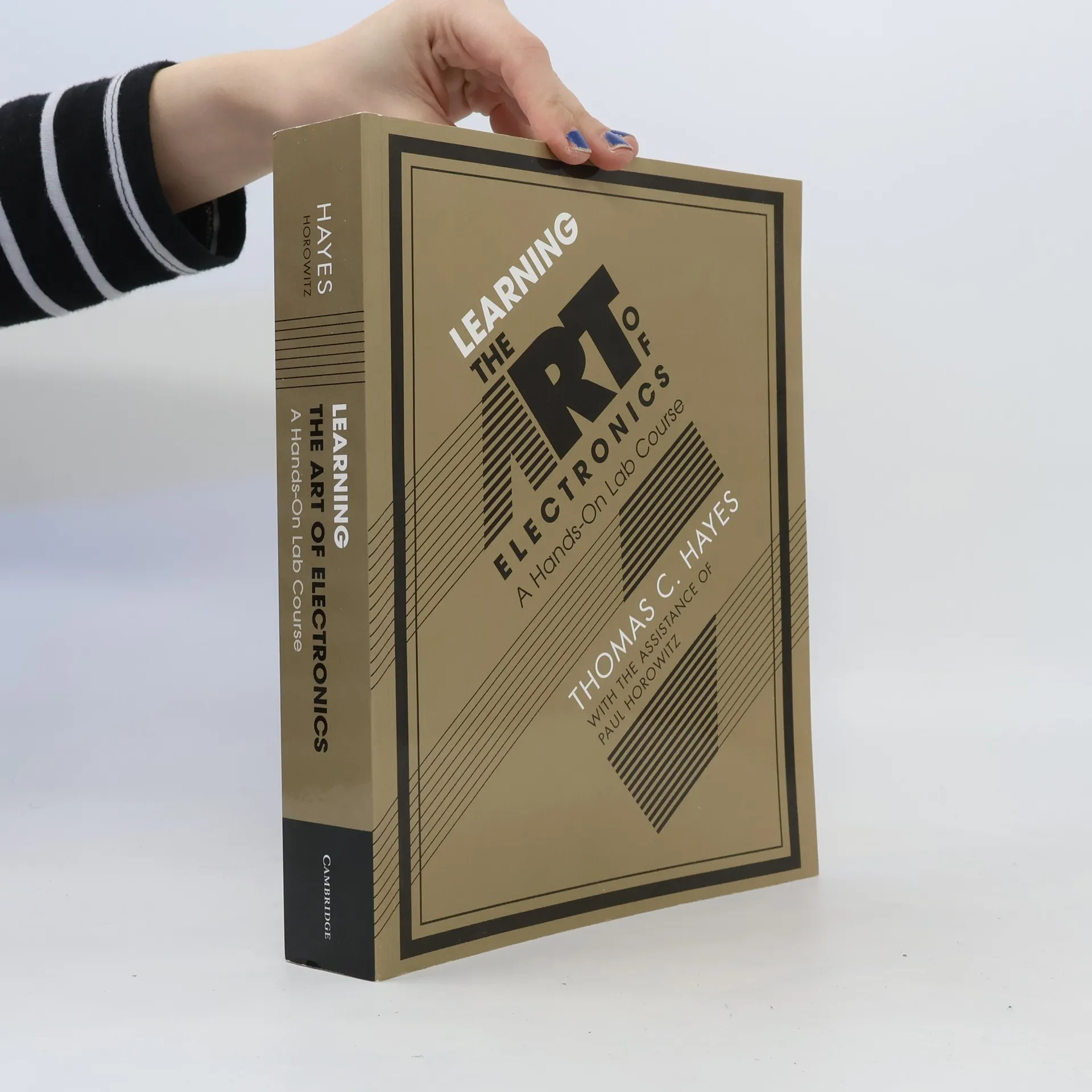
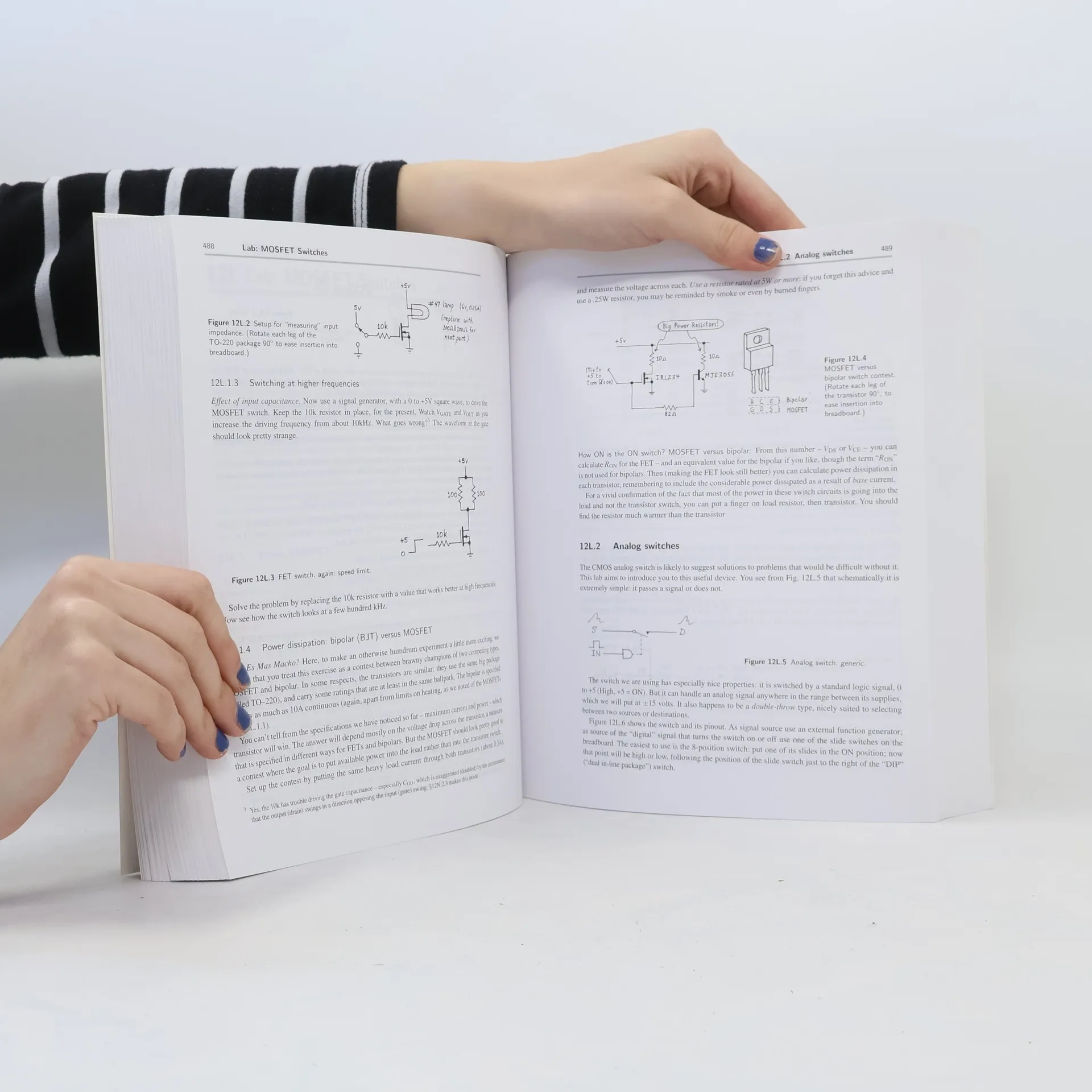
This introduction to circuit design is unusual in several respects. First, it offers not just explanations, but a full course. Each of the twenty-five sessions begins with a discussion of a particular sort of circuit followed by the chance to try it out and see how it actually behaves. Accordingly, students understand the circuit's operation in a way that is deeper and much more satisfying than the manipulation of formulas. Second, it describes circuits that more traditional engineering introductions would postpone: on the third day, we build a radio receiver; on the fifth day, we build an operational amplifier from an array of transistors. The digital half of the course centers on applying microcontrollers, but gives exposure to Verilog, a powerful Hardware Description Language. Third, it proceeds at a rapid pace but requires no prior knowledge of electronics. Students gain intuitive understanding through immersion in good circuit design.
Achat du livre
Learning the Art of Electronics, Paul Horowitz, Thomas C. Hayes
- Langue

- Année de publication
- 2016
- Reliure
- (souple)
Modes de paiement
Il manque plus que ton avis ici.
- Titre
- Learning the Art of Electronics
- Langue
- Anglais
- Auteurs
- Paul Horowitz, Thomas C. Hayes
- Éditeur
- Cambridge University Press
- Publié
- 2016
- Format
- souple
- Pages
- 1141
- ISBN10
- 0521177235
- ISBN13
- 9780521177238
- Séries
- Mots clés
- Manuels universitaires
- Évaluation
- 4,7 sur 5
- Description
- This introduction to circuit design is unusual in several respects. First, it offers not just explanations, but a full course. Each of the twenty-five sessions begins with a discussion of a particular sort of circuit followed by the chance to try it out and see how it actually behaves. Accordingly, students understand the circuit's operation in a way that is deeper and much more satisfying than the manipulation of formulas. Second, it describes circuits that more traditional engineering introductions would postpone: on the third day, we build a radio receiver; on the fifth day, we build an operational amplifier from an array of transistors. The digital half of the course centers on applying microcontrollers, but gives exposure to Verilog, a powerful Hardware Description Language. Third, it proceeds at a rapid pace but requires no prior knowledge of electronics. Students gain intuitive understanding through immersion in good circuit design.