

En savoir plus sur le livre
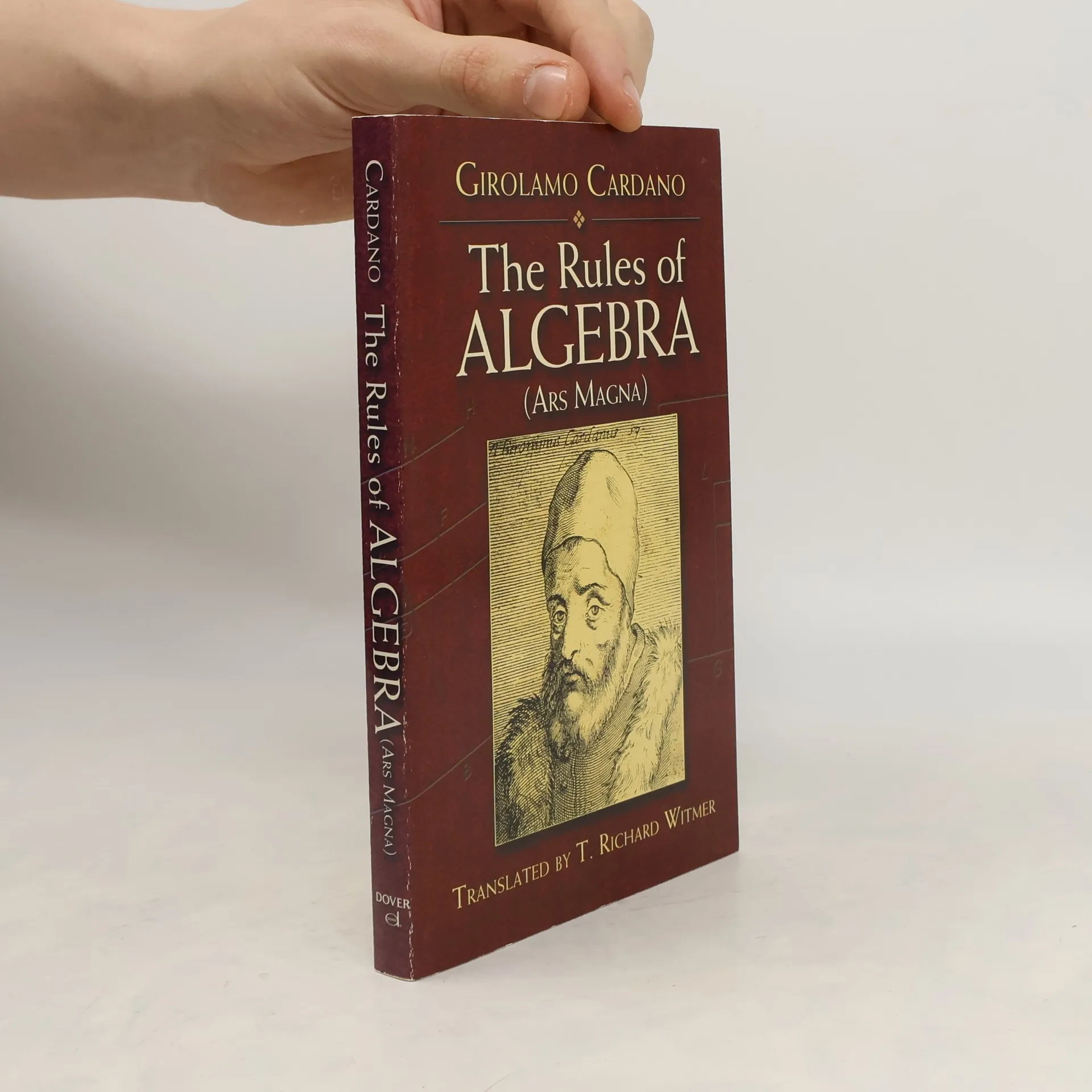
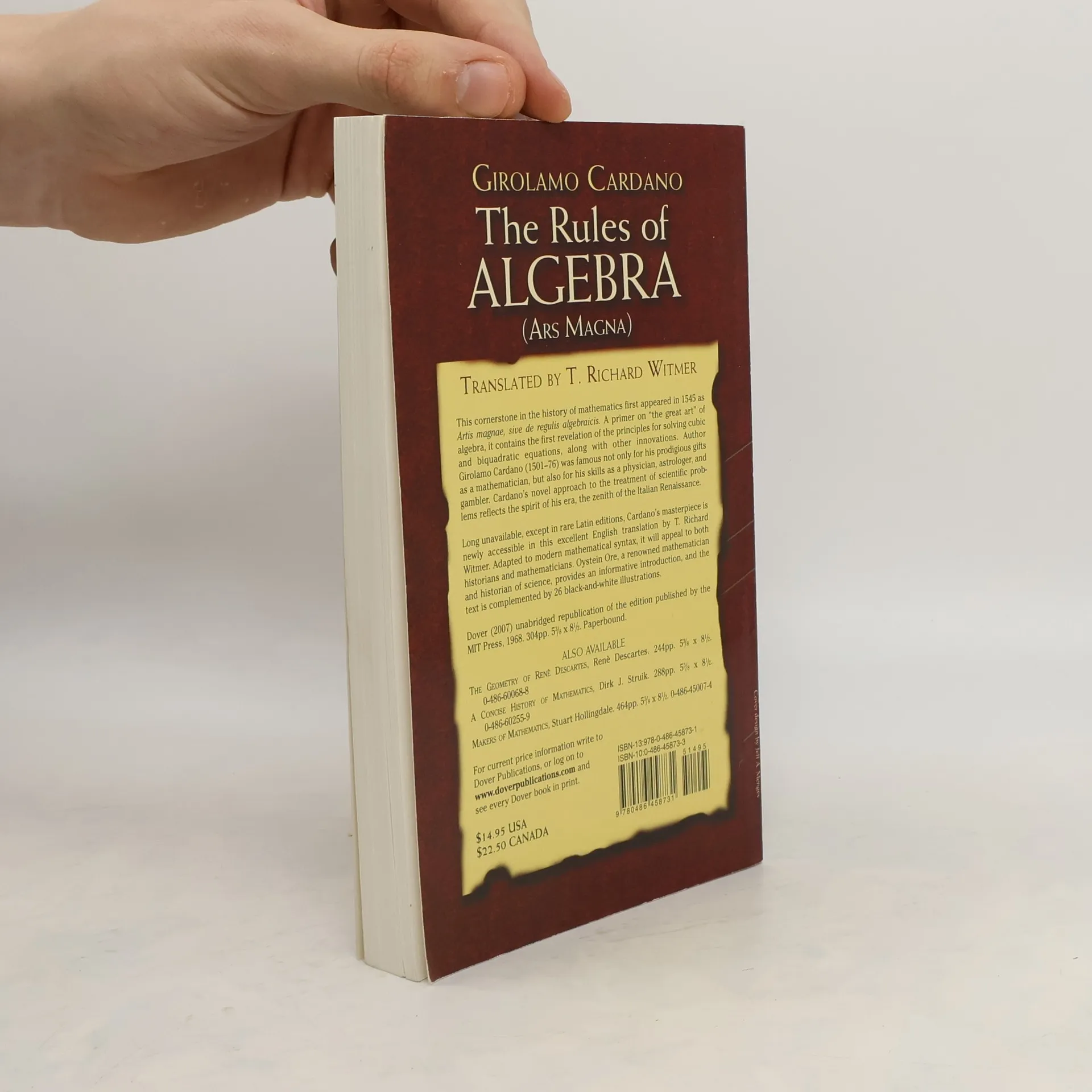
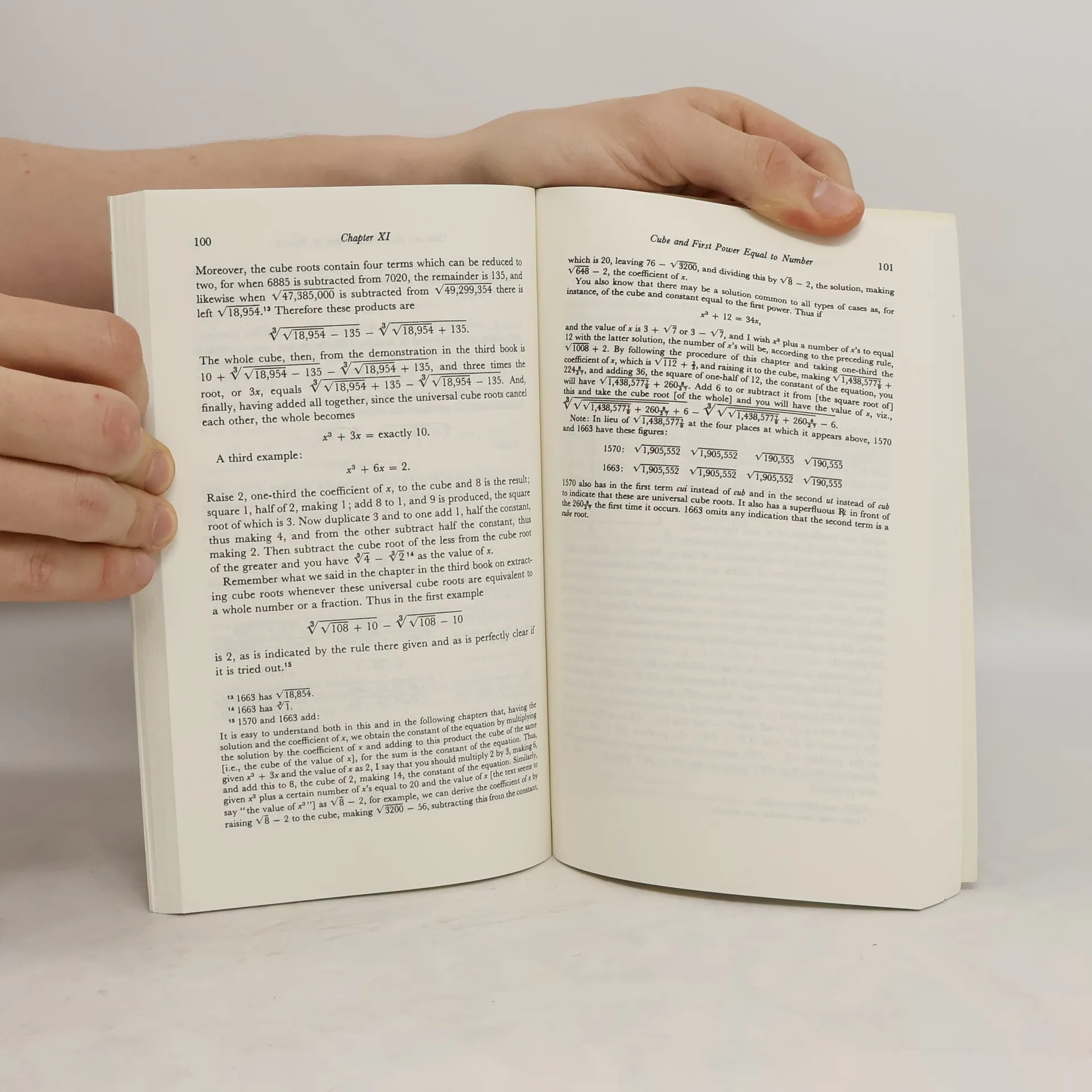
This cornerstone in the history of mathematics first appeared in 1545 as Artis magnae, sive de regulis algebraicis. A primer on "the great art" of algebra, it contains the first revelation of the principles for solving cubic and biquadratic equations, along with other innovations. Author Girolamo Cardano (1501-76) was famous not only for his prodigious gifts as a mathematician, but also for his skills as a physician, astrologer, and gambler. Cardano's novel approach to the treatment of scientific problems reflects the spirit of his era, the zenith of the Italian Renaissance.Long unavailable, except in rare Latin editions, Cardano's masterpiece is newly accessible in this excellent English translation by T. Richard Witmer. Adapted to modern mathematical syntax, it will appeal to both historians and mathematicians. Oystein Ore, a renowned mathematician and historian of science, provides an informative introduction, and the text is complemented by 26 black-and-white illustrations.
Achat du livre
The Rules of Algebra, Girolamo Cardano
- Langue

- Année de publication
- 2007
- Reliure
- (souple)
Modes de paiement
Il manque plus que ton avis ici.
- Titre
- The Rules of Algebra
- Langue
- Anglais
- Auteurs
- Girolamo Cardano
- Éditeur
- Dover Publications Inc.
- Publié
- 2007
- Format
- souple
- Pages
- 304
- ISBN10
- 0486458733
- ISBN13
- 9780486458731
- Séries
- Mots clés
- Science
- Évaluation
- 4,15 sur 5
- Description
- This cornerstone in the history of mathematics first appeared in 1545 as Artis magnae, sive de regulis algebraicis. A primer on "the great art" of algebra, it contains the first revelation of the principles for solving cubic and biquadratic equations, along with other innovations. Author Girolamo Cardano (1501-76) was famous not only for his prodigious gifts as a mathematician, but also for his skills as a physician, astrologer, and gambler. Cardano's novel approach to the treatment of scientific problems reflects the spirit of his era, the zenith of the Italian Renaissance.Long unavailable, except in rare Latin editions, Cardano's masterpiece is newly accessible in this excellent English translation by T. Richard Witmer. Adapted to modern mathematical syntax, it will appeal to both historians and mathematicians. Oystein Ore, a renowned mathematician and historian of science, provides an informative introduction, and the text is complemented by 26 black-and-white illustrations.