

Paramètres
- 458pages
- 17 heures de lecture
En savoir plus sur le livre
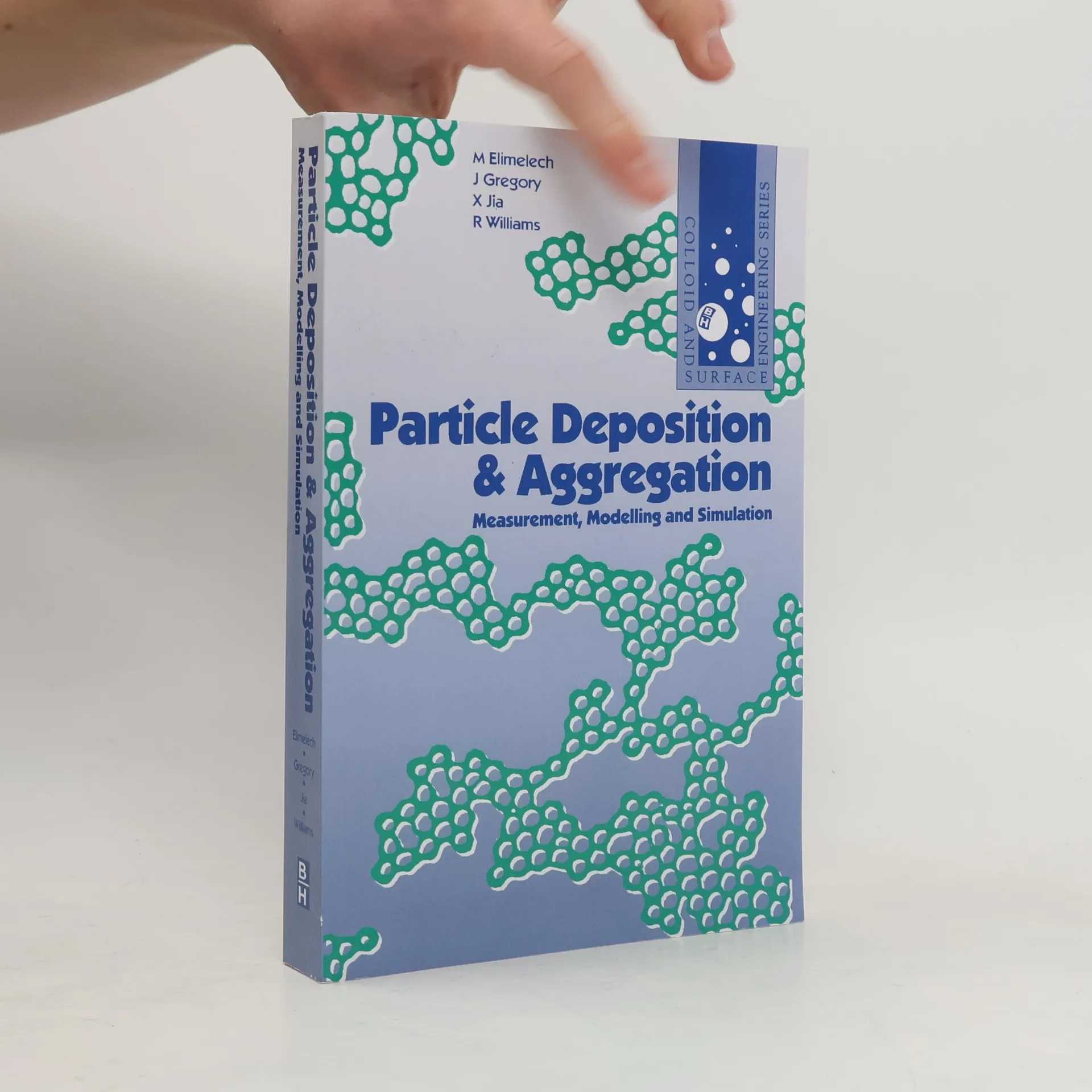
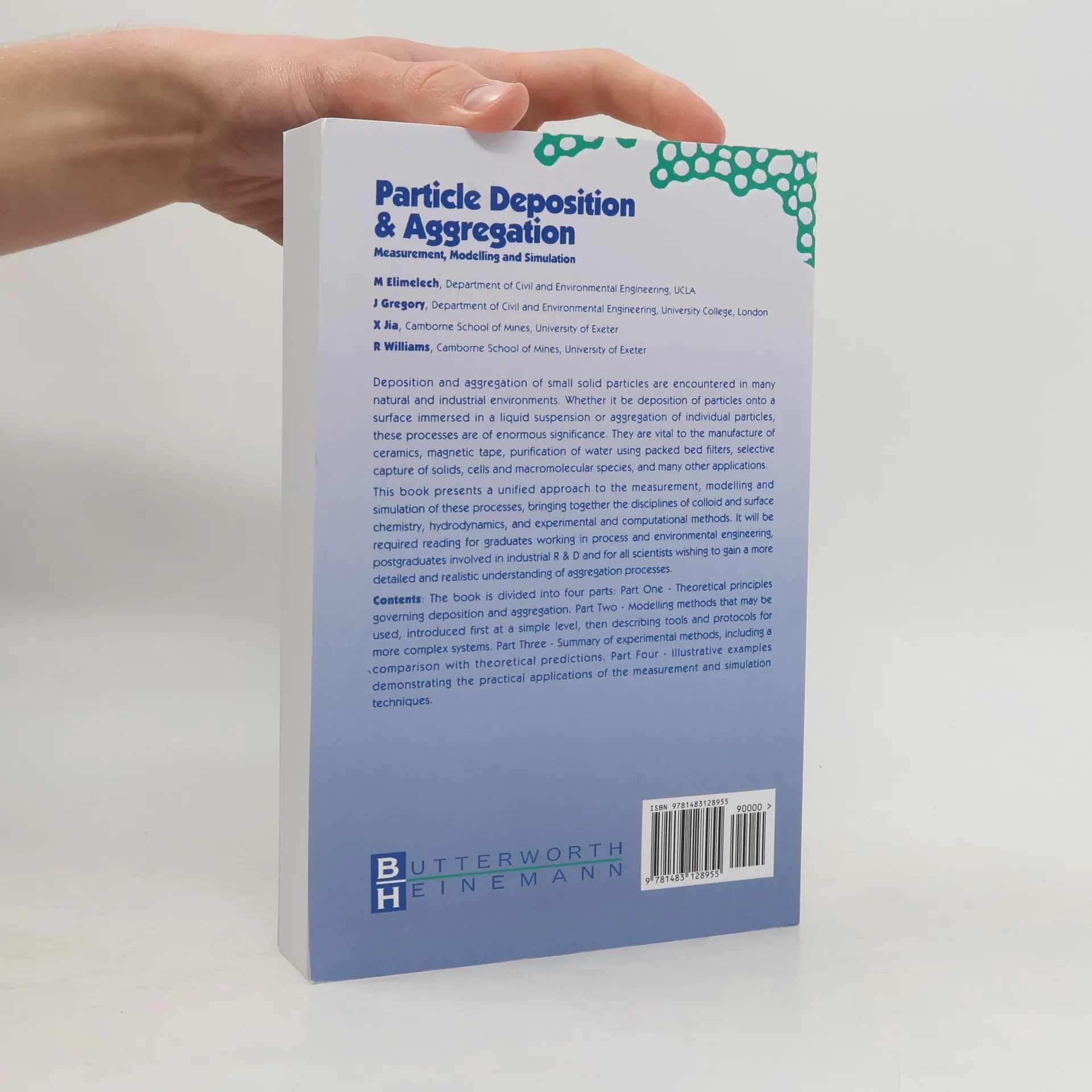
This book explores the systematic measurement, modeling, and simulation of particle deposition and aggregation, integrating disciplines such as colloid and surface chemistry, hydrodynamics, and both experimental and computational methods. It is organized into four parts. The first part outlines the theoretical principles governing deposition and aggregation, focusing on the forces between particles and the hydrodynamic factors influencing their movement. The second part introduces modeling techniques, starting with simple interactions (e.g., single particle-surface and single particle-particle) and advancing to complex systems involving multiple particle interactions, along with relevant simulation protocols and computational tools. The third part reviews experimental methods for quantifying aggregation and deposition, concluding with a comparison of experimental findings against theoretical predictions. The final part provides illustrative examples that showcase the application of simulation and modeling methods in particle filtration, aggregation, and transport processes. This resource is aimed at graduate students in process and environmental engineering, as well as scientists seeking to deepen their understanding of realistic process conditions where fluid dynamics and other complexities play a significant role.
Achat du livre
Particle Deposition and Aggregation: Measurement, Modelling and Simulation, M Elimelech, J Gregory, X Jia, R Williams
- Langue

- Année de publication
- 2013
- Reliure
- (souple)
Modes de paiement
Personne n'a encore évalué .
- Titre
- Particle Deposition and Aggregation: Measurement, Modelling and Simulation
- Langue
- Anglais
- Auteurs
- M Elimelech, J Gregory, X Jia, R Williams
- Éditeur
- Butterworth-Heinemann
- Publié
- 2013
- Format
- souple
- Pages
- 458
- ISBN10
- 1483128954
- ISBN13
- 9781483128955
- Séries
- Mots clés
- Sciences naturelles, Thématique écologique
- Description
- This book explores the systematic measurement, modeling, and simulation of particle deposition and aggregation, integrating disciplines such as colloid and surface chemistry, hydrodynamics, and both experimental and computational methods. It is organized into four parts. The first part outlines the theoretical principles governing deposition and aggregation, focusing on the forces between particles and the hydrodynamic factors influencing their movement. The second part introduces modeling techniques, starting with simple interactions (e.g., single particle-surface and single particle-particle) and advancing to complex systems involving multiple particle interactions, along with relevant simulation protocols and computational tools. The third part reviews experimental methods for quantifying aggregation and deposition, concluding with a comparison of experimental findings against theoretical predictions. The final part provides illustrative examples that showcase the application of simulation and modeling methods in particle filtration, aggregation, and transport processes. This resource is aimed at graduate students in process and environmental engineering, as well as scientists seeking to deepen their understanding of realistic process conditions where fluid dynamics and other complexities play a significant role.