


En savoir plus sur le livre
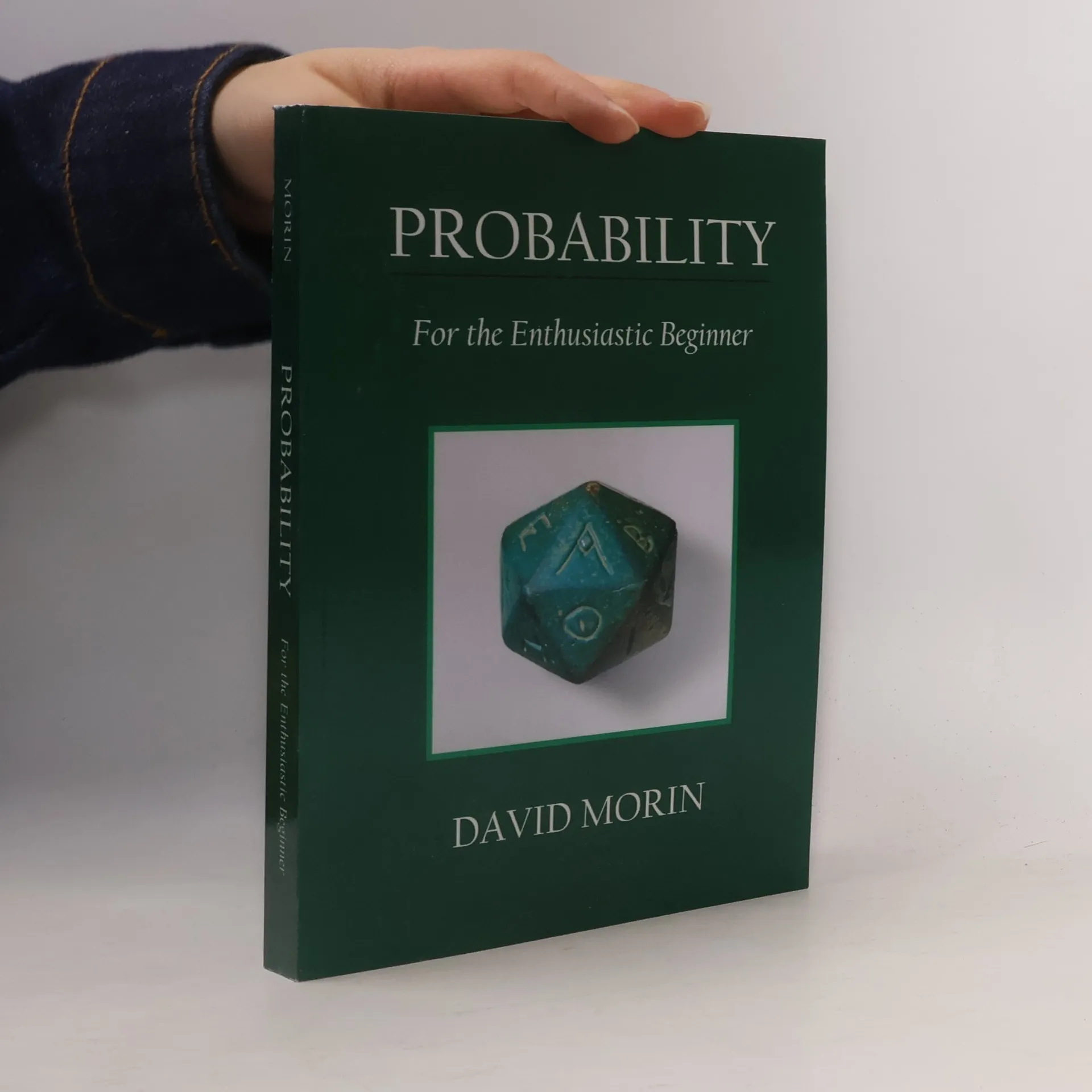
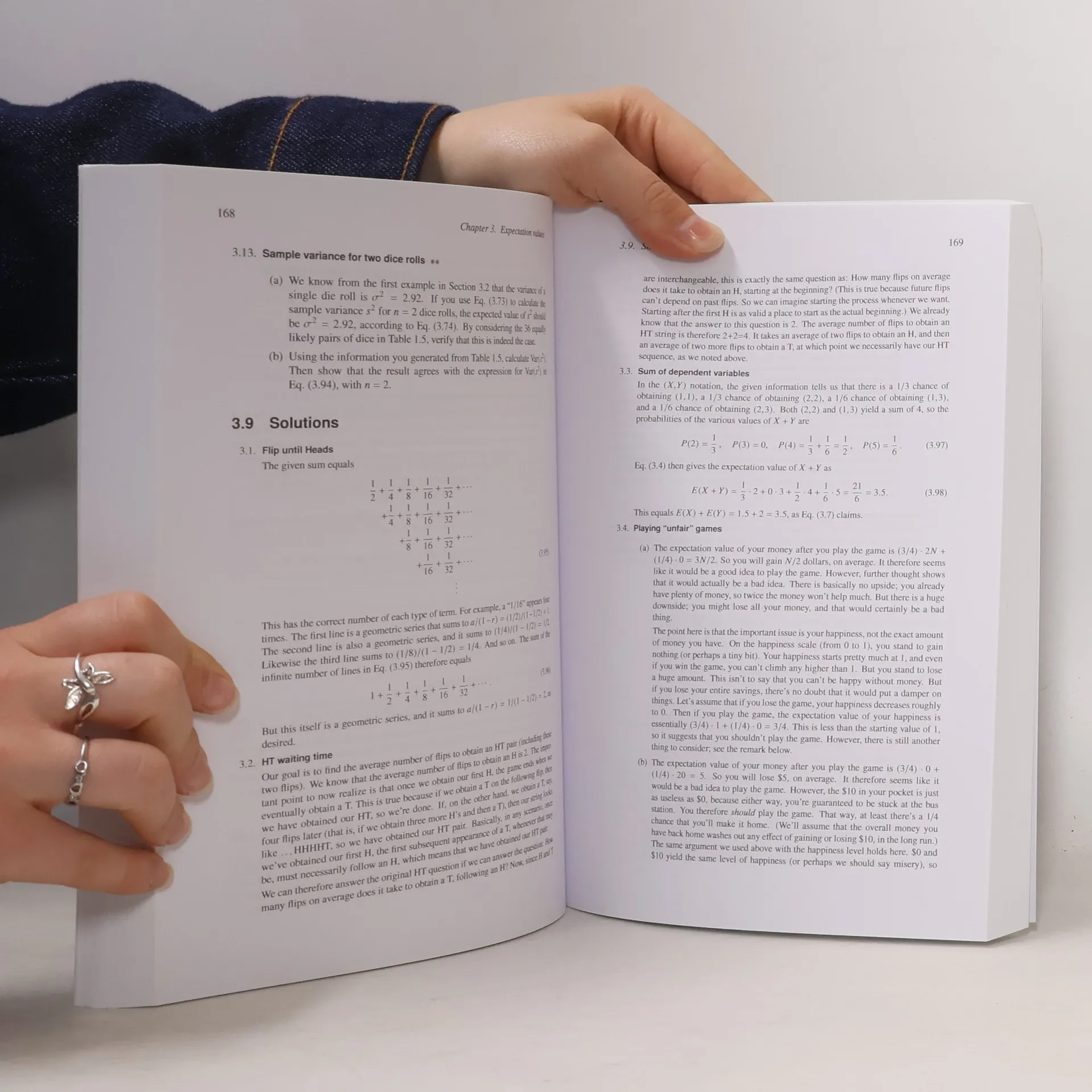
This book is written for high school and college students learning about probability for the first time. It will appeal to the reader who has a healthy level of enthusiasm for understanding how and why the various results of probability come about. All of the standard introductory topics in probability are covered: combinatorics, the rules of probability, Bayes' theorem, expectation value, variance, probability density, common distributions, the law of large numbers, the central limit theorem, correlation, and regression. Calculus is not a prerequisite, although a few of the problems do involve calculus. These are marked clearly.The book features 150 worked-out problems in the form of examples in the text and solved problems at the end of each chapter. These problems, along with the discussions in the text, will be a valuable resource in any introductory probability course, either as the main text or as a helpful supplement.
Achat du livre
Probability, David J. Morin
- Langue

- Année de publication
- 2016
- Reliure
- (souple)
Modes de paiement
Personne n'a encore évalué .
- Titre
- Probability
- Sous-titre
- For the Enthusiastic Beginner
- Langue
- Anglais
- Auteurs
- David J. Morin
- Publié
- 2016
- Format
- souple
- Pages
- 371
- ISBN10
- 1523318678
- ISBN13
- 9781523318674
- Séries
- Catégories
- Mots clés
- Science
- Description
- This book is written for high school and college students learning about probability for the first time. It will appeal to the reader who has a healthy level of enthusiasm for understanding how and why the various results of probability come about. All of the standard introductory topics in probability are covered: combinatorics, the rules of probability, Bayes' theorem, expectation value, variance, probability density, common distributions, the law of large numbers, the central limit theorem, correlation, and regression. Calculus is not a prerequisite, although a few of the problems do involve calculus. These are marked clearly.The book features 150 worked-out problems in the form of examples in the text and solved problems at the end of each chapter. These problems, along with the discussions in the text, will be a valuable resource in any introductory probability course, either as the main text or as a helpful supplement.