



En savoir plus sur le livre
Has there been an actual increase in incest occurrences, or is the perceived rise due to heightened awareness and better listening to patients? The distinguished psychoanalysts in this volume argue for the latter. They explore various aspects of incest, which they agree is always traumatic for victims. Incest typically occurs in dysfunctional families, often amidst multiple traumatic factors such as emotional deprivation, physical abuse, and parental alcoholism. In parent-child incest cases, one parent perpetrates while the other colludes through silence or absence. Although individuals with early sexual trauma may develop self-reliance and ambition, incest fundamentally disrupts healthy development, leading to lifelong guilt, sadomasochistic tendencies, low self-esteem, sexual dysfunction, and increased vulnerability to psychosomatic issues, accidents, depression, and suicide. Recognizing the phenomenological and psychodynamic signs of past incest is crucial for therapists, as it enhances their ability to detect transference and countertransference nuances, fostering greater empathy and more effective interpretations. The contributors provide detailed clinical illustrations that highlight cues of incest-related psychopathology and clarify treatment subtleties. By addressing incest, this volume significantly contributes to the prevention and healing of the profound psychic trauma inflicted by the sexual exploitation of a ch
Achat du livre
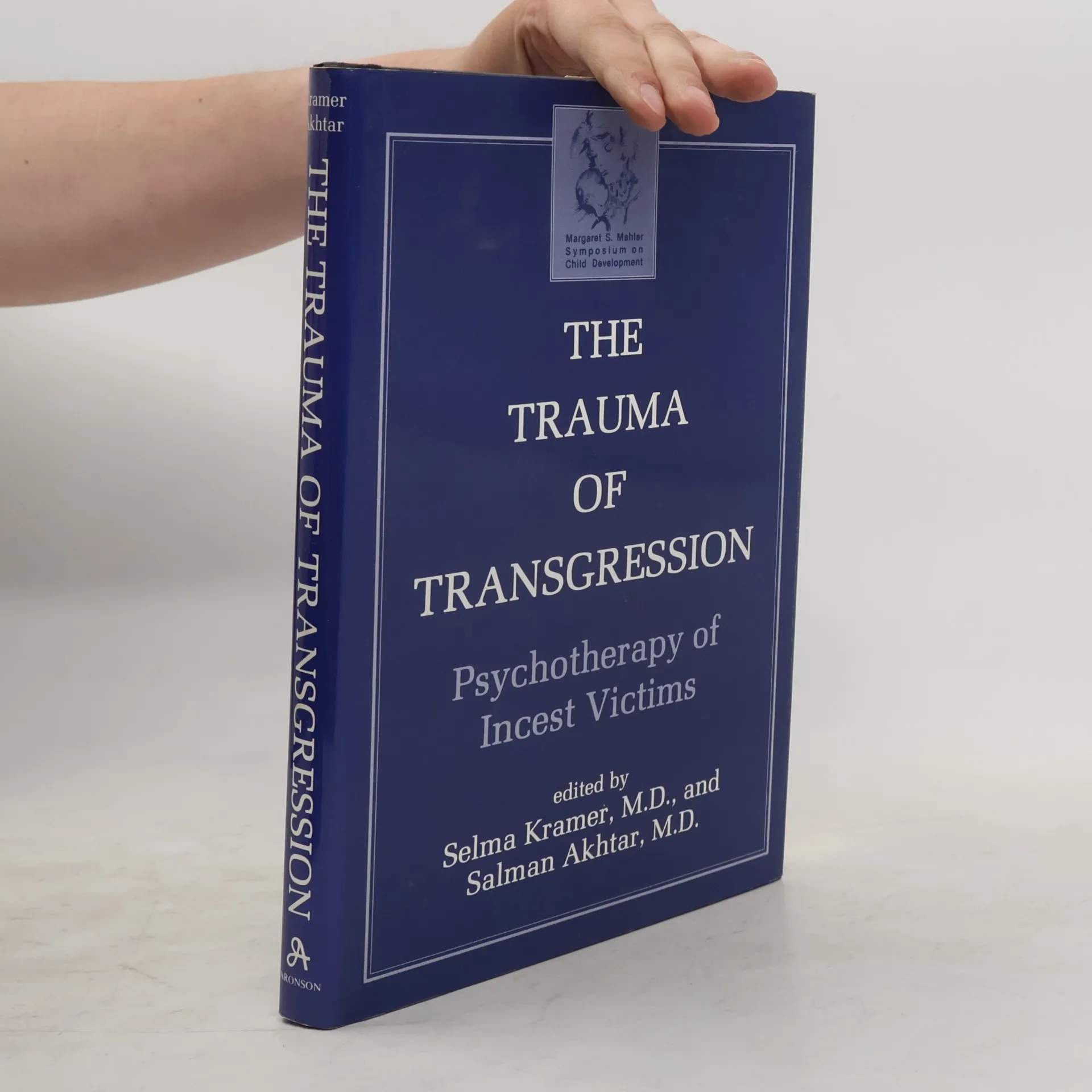
The Trauma of Transgression, Selma Kramer, Salman Akhtar
- Langue

- Année de publication
- 1991
- Reliure
- (rigide),
- État du livre
- Très bon
- Prix
- 5,29 €
Modes de paiement
Personne n'a encore évalué .
- Titre
- The Trauma of Transgression
- Sous-titre
- Psychotherapy of Incest Victims
- Langue
- Anglais
- Auteurs
- Selma Kramer, Salman Akhtar
- Éditeur
- Jason Aronson, Inc.
- Publié
- 1991
- Format
- rigide
- Pages
- 186
- ISBN10
- 0876685548
- ISBN13
- 9780876685549
- Séries
- Catégories
- Mots clés
- Thèmes psychologiques, Santé mentale, Psychothérapie, Maltraitance et abus, Travail social, Aspects Psychologiques, Inceste
- Description
- Has there been an actual increase in incest occurrences, or is the perceived rise due to heightened awareness and better listening to patients? The distinguished psychoanalysts in this volume argue for the latter. They explore various aspects of incest, which they agree is always traumatic for victims. Incest typically occurs in dysfunctional families, often amidst multiple traumatic factors such as emotional deprivation, physical abuse, and parental alcoholism. In parent-child incest cases, one parent perpetrates while the other colludes through silence or absence. Although individuals with early sexual trauma may develop self-reliance and ambition, incest fundamentally disrupts healthy development, leading to lifelong guilt, sadomasochistic tendencies, low self-esteem, sexual dysfunction, and increased vulnerability to psychosomatic issues, accidents, depression, and suicide. Recognizing the phenomenological and psychodynamic signs of past incest is crucial for therapists, as it enhances their ability to detect transference and countertransference nuances, fostering greater empathy and more effective interpretations. The contributors provide detailed clinical illustrations that highlight cues of incest-related psychopathology and clarify treatment subtleties. By addressing incest, this volume significantly contributes to the prevention and healing of the profound psychic trauma inflicted by the sexual exploitation of a ch