



En savoir plus sur le livre
As the world increasingly seeks to hold polluters accountable for carbon emissions, a complex financial mystery arises: What are the costs, who is responsible for them, and how are they paid? Veteran journalist Mark Schapiro delves into these critical questions, exploring the challenge of determining carbon's true costs and ensuring fair allocation amidst corporate lobbying, political maneuvering, and consumer behavior. Schapiro traces the cost of carbon through various landscapes, including California's drought-stricken farmland, where rising temperatures inflate food prices and crop insurance costs, impacting taxpayers. He examines Brazil's jungles, where foreign polluters pay to preserve trees as CO2 offsets, often undervaluing their worth to local communities. In China's manufacturing hubs, he questions whether the responsibility for pollution lies with the factories or the Western consumers of their products. The narrative also touches on the aviation industry's carbon pricing efforts, which have sparked a quiet global trade war, and Europe's carbon-trading market, where economists attempt to price a new commodity: a ton of carbon not emitted. Additionally, Schapiro highlights the emergence of carbon markets and the challenges faced by developing nations as they ramp up manufacturing and consumption. As global climate negotiations approach, Schapiro prompts readers to consider whether nations will continue business a
Achat du livre
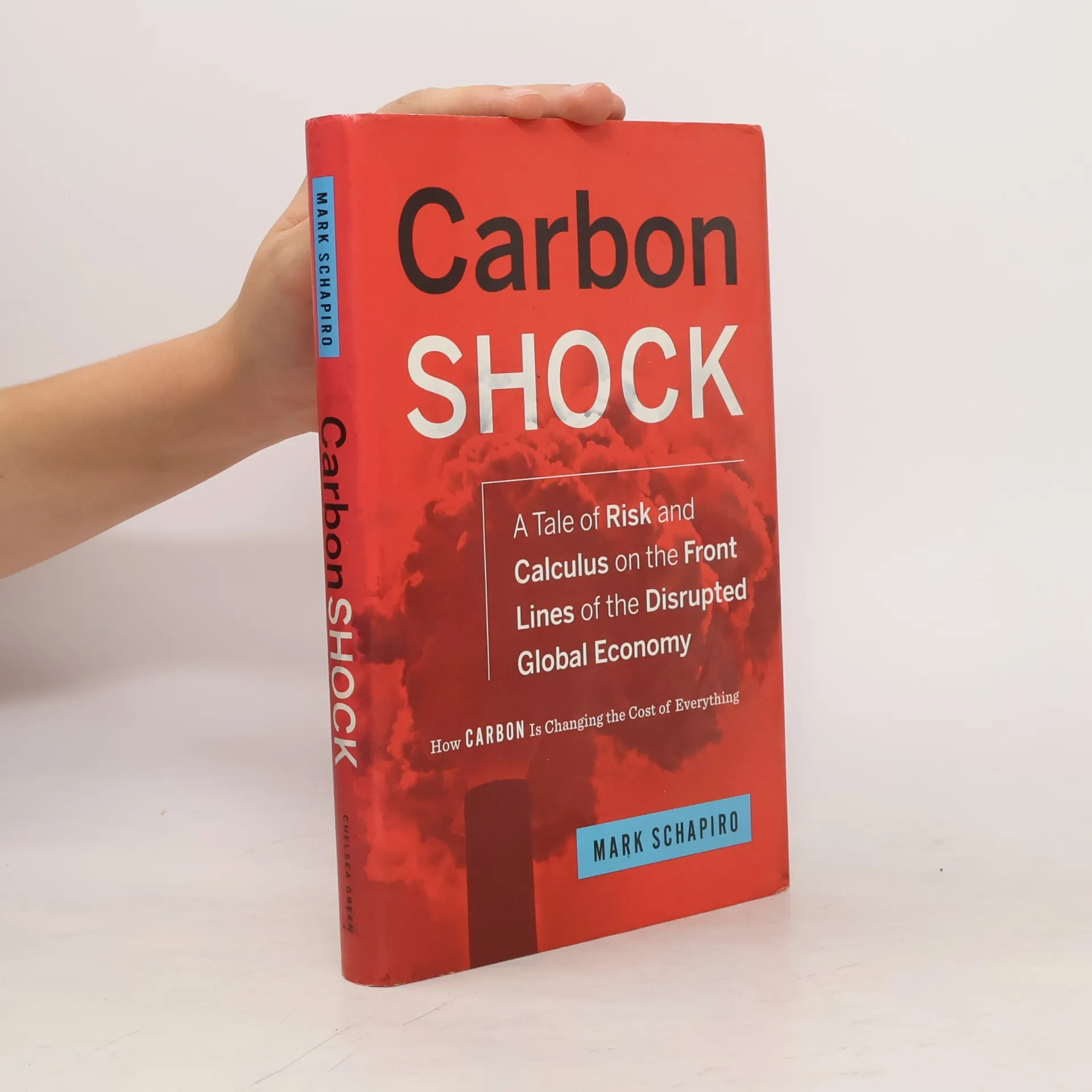
Carbon Shock, Mark Schapiro
- Langue

- Année de publication
- 2014
- Reliure
- (rigide),
- État du livre
- Bon
- Prix
- 1,59 €
Modes de paiement
Personne n'a encore évalué .
- Titre
- Carbon Shock
- Sous-titre
- A Tale of Risk and Calculus on the Front Lines of the Disrupted Global Economy
- Langue
- Anglais
- Auteurs
- Mark Schapiro
- Éditeur
- Chelsea Green Publishing Co
- Publié
- 2014
- Format
- rigide
- Pages
- 216
- ISBN10
- 1603585575
- ISBN13
- 9781603585576
- Séries
- Mots clés
- Commerce, Politique, Changements climatiques
- Description
- As the world increasingly seeks to hold polluters accountable for carbon emissions, a complex financial mystery arises: What are the costs, who is responsible for them, and how are they paid? Veteran journalist Mark Schapiro delves into these critical questions, exploring the challenge of determining carbon's true costs and ensuring fair allocation amidst corporate lobbying, political maneuvering, and consumer behavior. Schapiro traces the cost of carbon through various landscapes, including California's drought-stricken farmland, where rising temperatures inflate food prices and crop insurance costs, impacting taxpayers. He examines Brazil's jungles, where foreign polluters pay to preserve trees as CO2 offsets, often undervaluing their worth to local communities. In China's manufacturing hubs, he questions whether the responsibility for pollution lies with the factories or the Western consumers of their products. The narrative also touches on the aviation industry's carbon pricing efforts, which have sparked a quiet global trade war, and Europe's carbon-trading market, where economists attempt to price a new commodity: a ton of carbon not emitted. Additionally, Schapiro highlights the emergence of carbon markets and the challenges faced by developing nations as they ramp up manufacturing and consumption. As global climate negotiations approach, Schapiro prompts readers to consider whether nations will continue business a