

Paramètres
- 320pages
- 12 heures de lecture
En savoir plus sur le livre
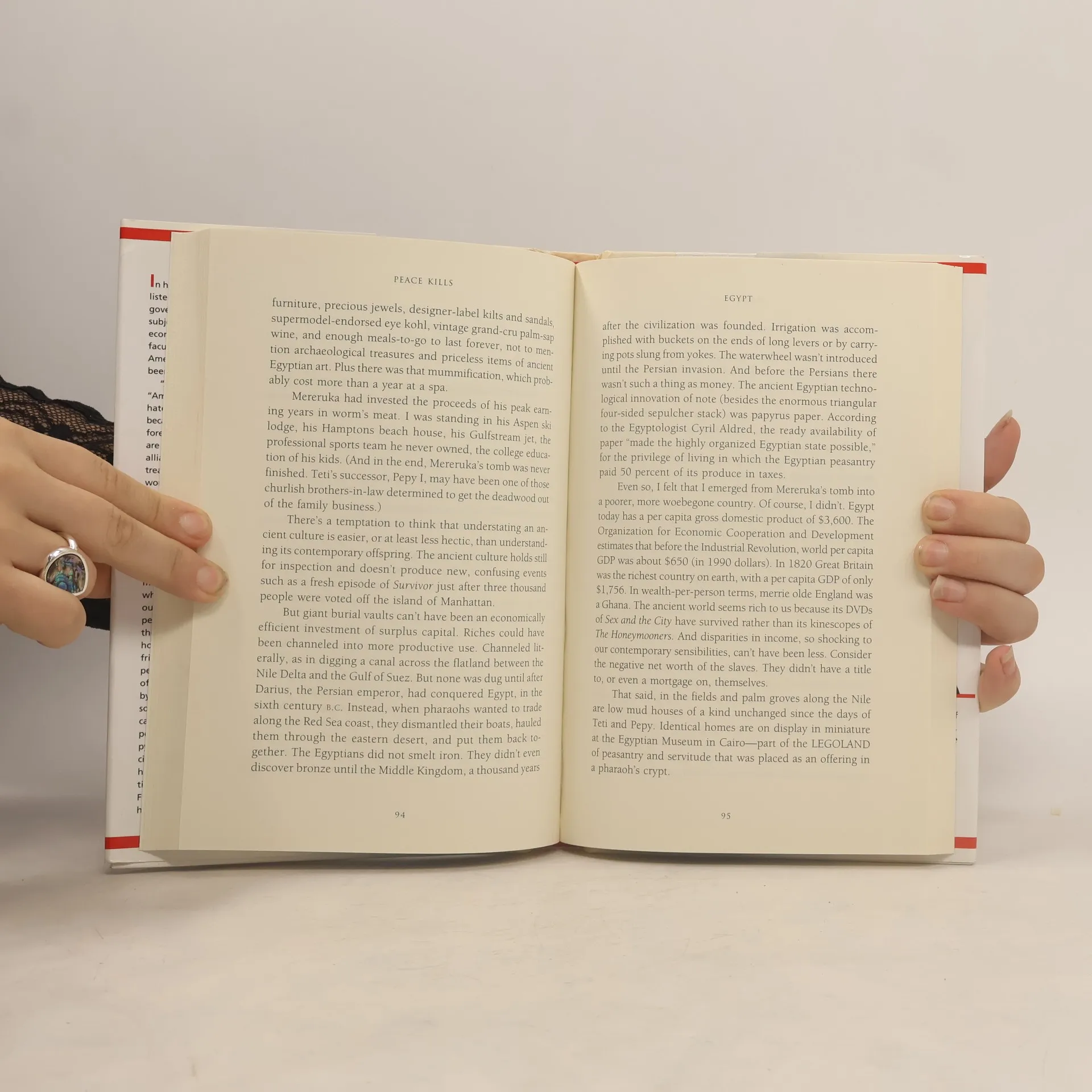
P. J. O'Rourke visits Kosovo to find out what happens when we try to have a war without hurting anybody: "Wherever there's injustice, oppression, and suffering, America will show up six months late and bomb the country next to where it's happening." He travels to Israel at the outbreak of the intifada and ponders, "What if people who had been away for ages, out and on their own, suddenly showed up at their old home and demanded to move back in? My friends with grown-up children tell me this happens all the time." He flies to Egypt in the wake of the 9/11 terrorists' attacks and contemplates bygone lunacies. "There is a question that less sophisticated Americans ask (and more sophisticated Americans would like to): Why are the people in the Middle East so crazy? Here, at the pyramids, was an answer from the earliest days of civilization: People have always been crazy." And he covers the demonstrations and the denunciations of war. "French ideas, French beliefs, and French actions form a sort of lodestone for humanity. A moral compass needle needs a butt end. Whatever direction France is pointing - toward collaboration with Nazis, accomodation with communists, existentialism, Jerry Lewis, or a UN resolution veto - we can go the other way with a quiet conscience." Finally he arrives in Baghdad with the U.S. Army and, standing in one of Saddam's palaces, decides, "If a reason for invading Iraq was needed, felony interior decorating would have sufficed.
Achat du livre
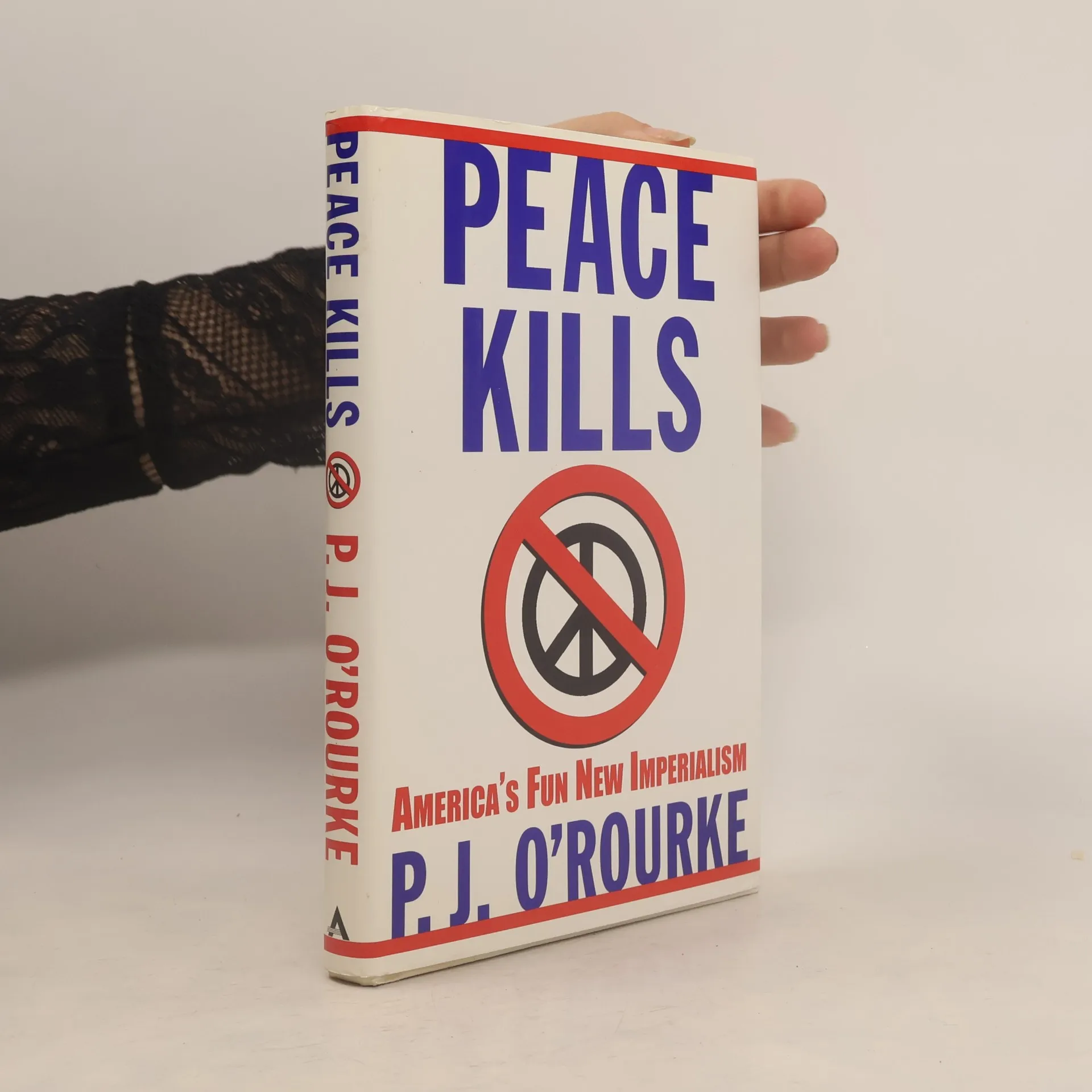
Peace Kills, P. J. O. Rourke
- Langue

- Année de publication
- 2004
- Reliure
- (rigide),
- État du livre
- Bon
- Prix
- 8,99 €
Modes de paiement
Personne n'a encore évalué .
- Titre
- Peace Kills
- Sous-titre
- America's Fun New Imperialism
- Langue
- Anglais
- Auteurs
- P. J. O. Rourke
- Éditeur
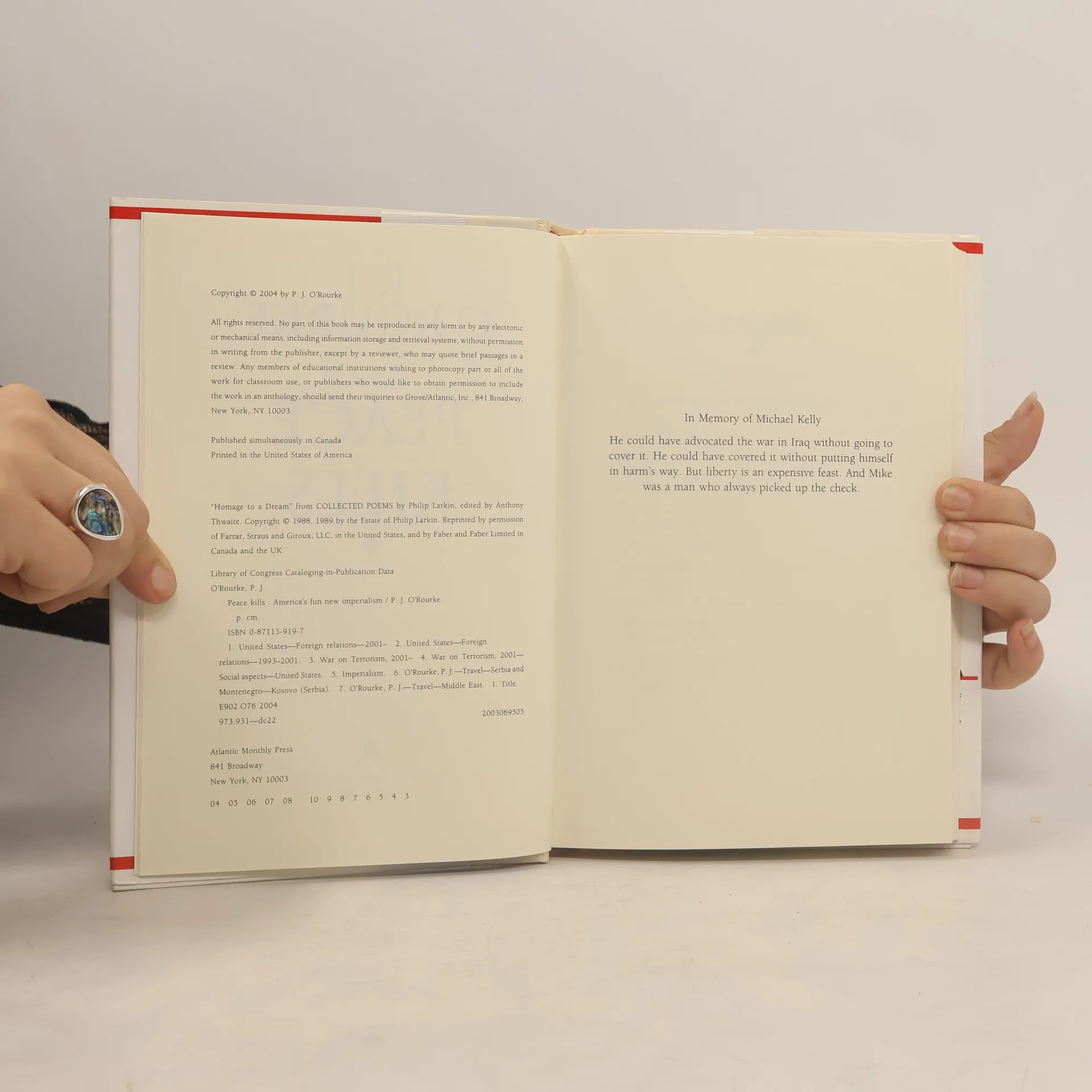
- Atlantic Monthly Press
- Publié
- 2004
- Format
- rigide
- Pages
- 320
- ISBN10
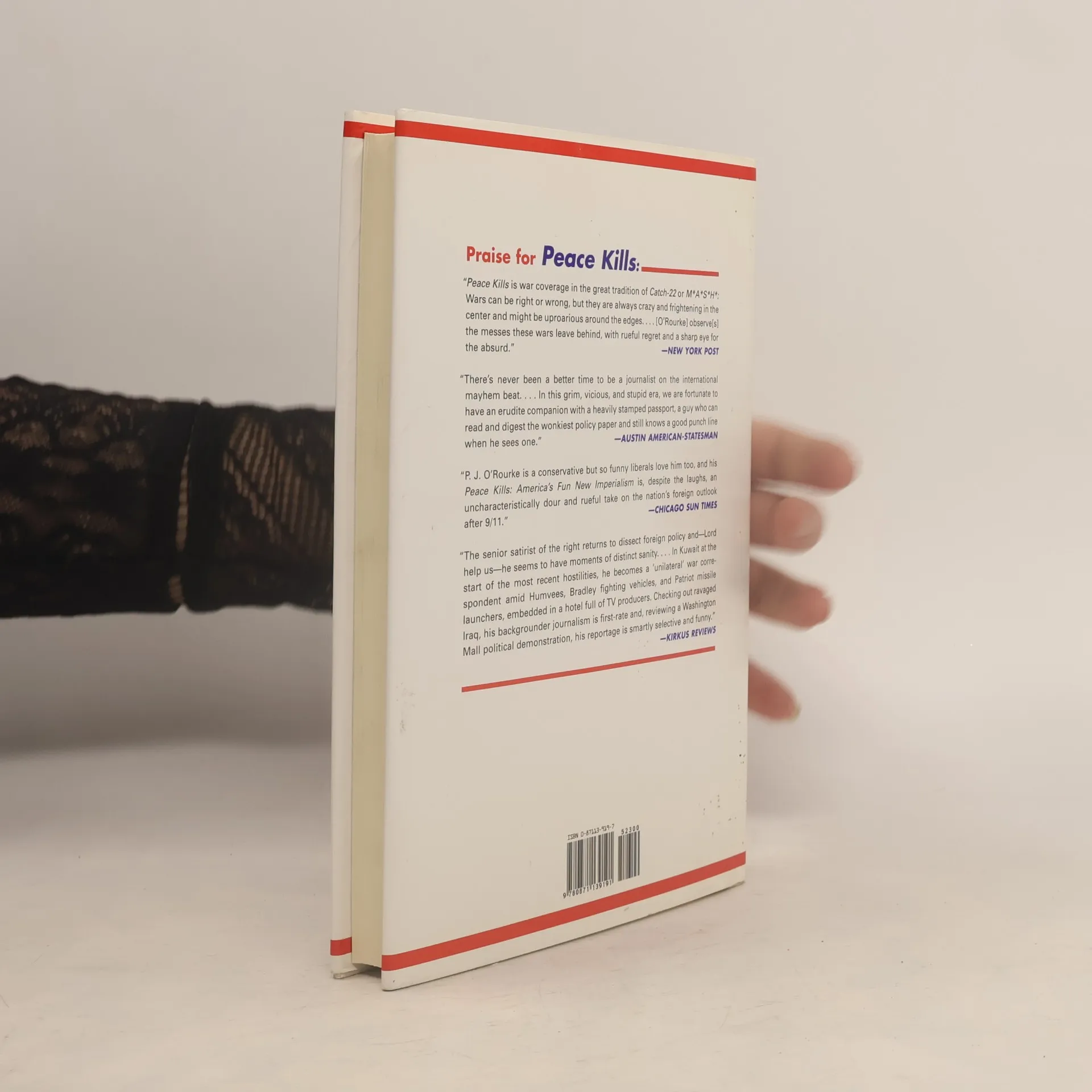
- 0871139197
- ISBN13
- 9780871139191
- Séries
- Mots clés
- Thème historique, Humour, Politique, États-Unis, Journalisme et Publication, Comédies, Théories politiques, 21e siècle, Relations internationales, Aspects sociaux, Impérialisme
- Description
- P. J. O'Rourke visits Kosovo to find out what happens when we try to have a war without hurting anybody: "Wherever there's injustice, oppression, and suffering, America will show up six months late and bomb the country next to where it's happening." He travels to Israel at the outbreak of the intifada and ponders, "What if people who had been away for ages, out and on their own, suddenly showed up at their old home and demanded to move back in? My friends with grown-up children tell me this happens all the time." He flies to Egypt in the wake of the 9/11 terrorists' attacks and contemplates bygone lunacies. "There is a question that less sophisticated Americans ask (and more sophisticated Americans would like to): Why are the people in the Middle East so crazy? Here, at the pyramids, was an answer from the earliest days of civilization: People have always been crazy." And he covers the demonstrations and the denunciations of war. "French ideas, French beliefs, and French actions form a sort of lodestone for humanity. A moral compass needle needs a butt end. Whatever direction France is pointing - toward collaboration with Nazis, accomodation with communists, existentialism, Jerry Lewis, or a UN resolution veto - we can go the other way with a quiet conscience." Finally he arrives in Baghdad with the U.S. Army and, standing in one of Saddam's palaces, decides, "If a reason for invading Iraq was needed, felony interior decorating would have sufficed.