



Paramètres
- 964pages
- 34 heures de lecture
En savoir plus sur le livre
In Freedom's Progress?, Gerard Casey argues that the progress of freedom has largely consisted in an intermittent and imperfect transition from tribalism to individualism, from the primacy of the collective to the fragile centrality of the individual person and of freedom. Such a transition is, he argues, neither automatic nor complete, nor are relapses to tribalism impossible. The reason for the fragility of freedom is simple: the importance of individual freedom is simply not obvious to everyone. Most people want security in this world, not liberty. 'Libertarians,’ writes Max Eastman, ‘used to tell us that "the love of freedom is the strongest of political motives," but recent events have taught us the extravagance of this opinion. The “herd-instinct” and the yearning for paternal authority are often as strong. Indeed the tendency of men to gang up under a leader and submit to his will is of all political traits the best attested by history.’ The charm of the collective exercises a perennial magnetic attraction for the human spirit. In the 20th century, Fascism, Bolshevism and National Socialism were, Casey argues, each of them a return to tribalism in one form or another and many aspects of our current Western welfare states continue to embody tribalist impulses. Thinkers you would expect to feature in a history of political thought feature in this book ― Plato, Aristotle, Machiavelli, Locke, Mill and Marx ― but you will also find thinkers treated in Freedom’s Progress? who don’t usually show up in standard accounts ― Johannes Althusius, Immanuel Kant, William Godwin, Max Stirner, Joseph Proudhon, Mikhail Bakunin, Pyotr Kropotkin, Josiah Warren, Benjamin Tucker and Auberon Herbert. Freedom’s Progress? also contains discussions of the broader social and cultural contexts in which politics takes its place, with chapters on slavery, Christianity, the universities, cities, Feudalism, law, kingship, the Reformation, the English Revolution and what Casey calls Twentieth Century Tribalisms ― Bolshevism, Fascism and National Socialism and an extensive chapter on human prehistory.
Achat du livre
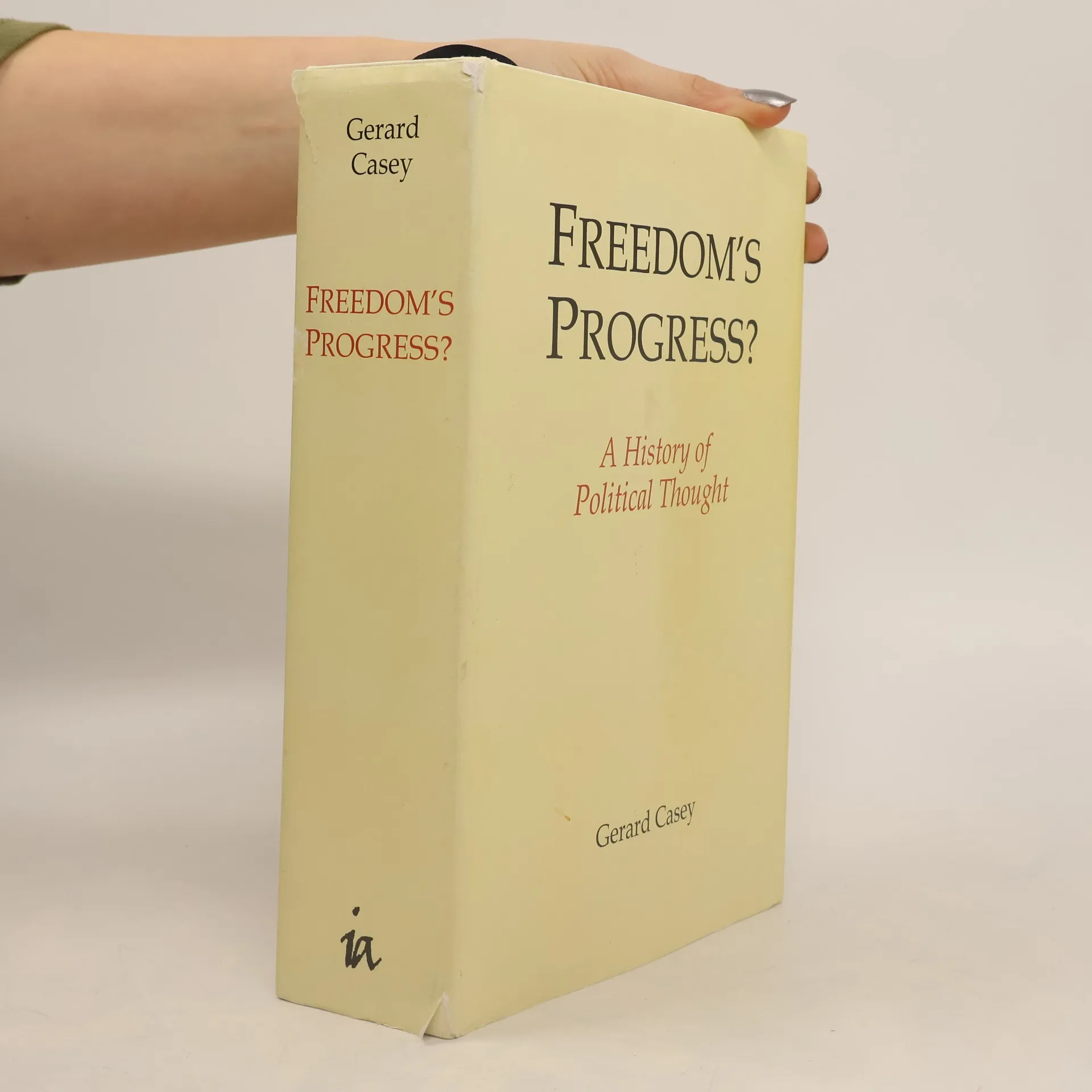
Freedom's Progress?, Gerard Casey
- Langue

- Année de publication
- 2017
- Reliure
- (rigide),
- État du livre
- Bon
- Prix
- 58,99 €
Modes de paiement
Personne n'a encore évalué .
- Titre
- Freedom's Progress?
- Sous-titre
- A History of Political Thought
- Langue
- Anglais
- Auteurs
- Gerard Casey
- Éditeur
- Imprint Academic
- Publié
- 2017
- Format
- rigide
- Pages
- 964
- ISBN10
- 1845409426
- ISBN13
- 9781845409425
- Séries
- Catégories
- Description
- In Freedom's Progress?, Gerard Casey argues that the progress of freedom has largely consisted in an intermittent and imperfect transition from tribalism to individualism, from the primacy of the collective to the fragile centrality of the individual person and of freedom. Such a transition is, he argues, neither automatic nor complete, nor are relapses to tribalism impossible. The reason for the fragility of freedom is simple: the importance of individual freedom is simply not obvious to everyone. Most people want security in this world, not liberty. 'Libertarians,’ writes Max Eastman, ‘used to tell us that "the love of freedom is the strongest of political motives," but recent events have taught us the extravagance of this opinion. The “herd-instinct” and the yearning for paternal authority are often as strong. Indeed the tendency of men to gang up under a leader and submit to his will is of all political traits the best attested by history.’ The charm of the collective exercises a perennial magnetic attraction for the human spirit. In the 20th century, Fascism, Bolshevism and National Socialism were, Casey argues, each of them a return to tribalism in one form or another and many aspects of our current Western welfare states continue to embody tribalist impulses. Thinkers you would expect to feature in a history of political thought feature in this book ― Plato, Aristotle, Machiavelli, Locke, Mill and Marx ― but you will also find thinkers treated in Freedom’s Progress? who don’t usually show up in standard accounts ― Johannes Althusius, Immanuel Kant, William Godwin, Max Stirner, Joseph Proudhon, Mikhail Bakunin, Pyotr Kropotkin, Josiah Warren, Benjamin Tucker and Auberon Herbert. Freedom’s Progress? also contains discussions of the broader social and cultural contexts in which politics takes its place, with chapters on slavery, Christianity, the universities, cities, Feudalism, law, kingship, the Reformation, the English Revolution and what Casey calls Twentieth Century Tribalisms ― Bolshevism, Fascism and National Socialism and an extensive chapter on human prehistory.