L'œuvre de James Evans explore les liens complexes entre les processus psychologiques, linguistiques et musicaux. Sa recherche et sa pratique se concentrent sur l'évaluation et la thérapie complètes, employant à la fois des approches traditionnelles et des techniques avancées de neurothérapie. L'approche d'Evans fusionne des aperçus théoriques avec une vaste expérience pratique dans divers contextes cliniques. Ses contributions offrent aux lecteurs une compréhension approfondie des complexités de l'esprit et du comportement humains.
Published on the occasion of the exhibition held at the Institute for the Study of the Ancient World, New York University, New York, October 19, 2016-April 23, 2017.
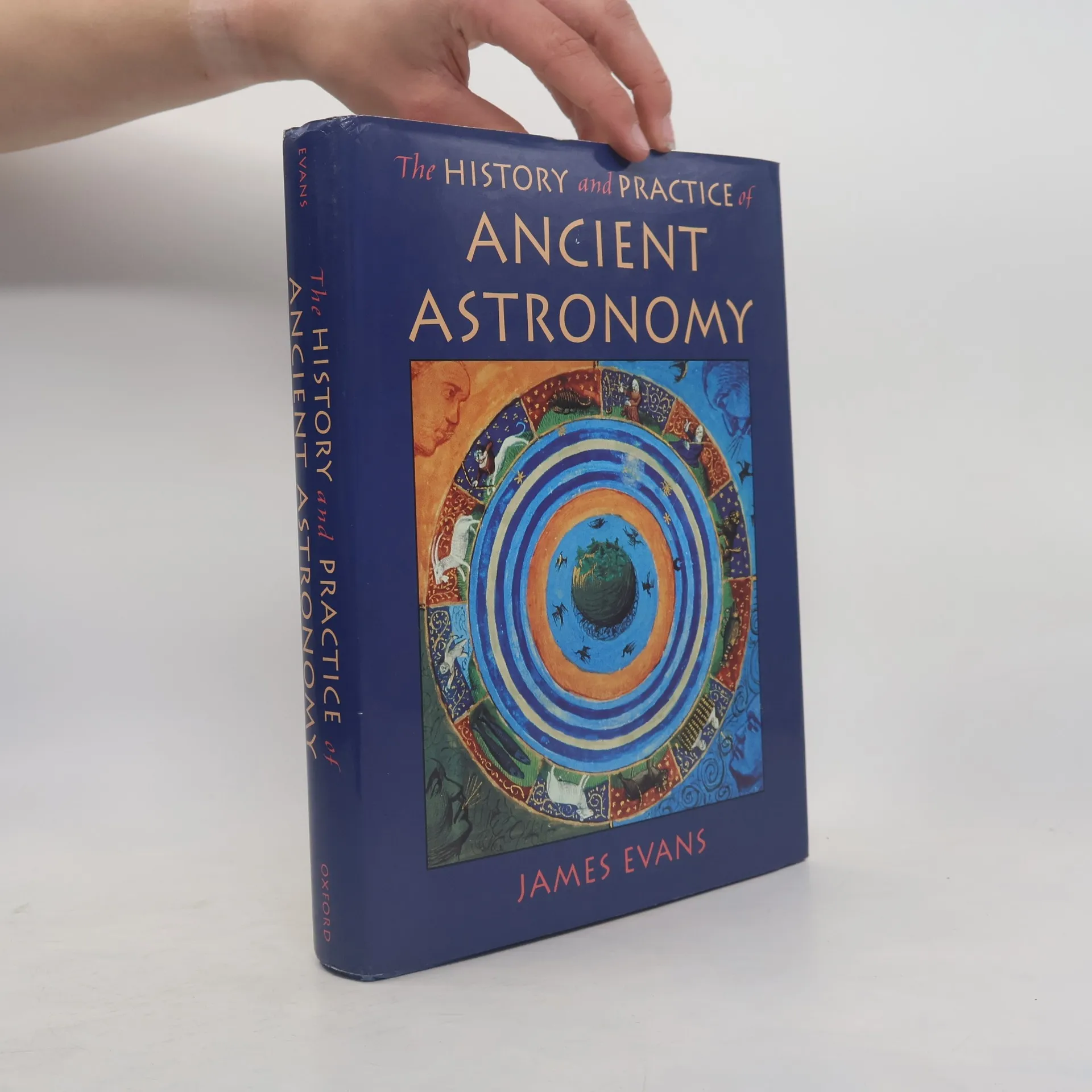
This work combines new scholarship with hands-on science, immersing readers in the practices of ancient astronomers. It traces ideas from Babylon to sixteenth-century Europe, focusing primarily on the Greek period, where geometric and philosophical concepts shaped Western astronomy. The author emphasizes concrete details of ancient astronomical practice, allowing readers to engage in real astronomy using historical methods. For instance, they can predict Jupiter's retrograde motion using Babylonian arithmetic or Ptolemaic geometry. The text teaches how to utilize an astrolabe and design sundials based on Greek and Roman techniques. Supplementary exercises and patterns for constructing working astronomical instruments, such as an astrolabe and equatorium, are also included. Beyond methods, the book critically examines the evidence for reconstructing ancient astronomy, featuring extensive excerpts from ancient texts, thorough documentation, and engaging discussions about astronomy's role in various cultures. Accessible to a broad audience, it appeals to those interested in the evolution of our understanding of the universe from ancient times through the Renaissance.