

Robert Trivers is a pioneering figure in the field of sociobiology. For Natural Selection and Social Theory, he has selected eleven of his most influential papers, including several classic papers from the early 1970s on the evolution of reciprocal altruism, parent-offspring conflicts, and asymmetry in sexual selection, which helped to establish the centrality of sociobiology, as well as some of his later work on deceit in signalling, sex antagonistic genes, and imprinting. Trivers introduces each paper, setting them in their contemporary context, and critically evaluating them in the light of subsequent work and further developments. The result is a unique portrait of the intellectual development of sociobiology, with valuable insights for evolutionary biology, anthropology, and psychology.
Robert Trivers Livres
Robert L. Trivers est une figure séminale de la biologie évolutive, ayant profondément façonné notre compréhension de l'évolution sociale. Il est réputé pour avoir proposé des théories révolutionnaires sur l'altruisme réciproque, l'investissement parental et le conflit parent-enfant. Son travail s'étend à des analyses perspicaces sur l'auto-tromperie et le conflit intragénomique. La rigueur analytique de Trivers et sa profonde exploration des dynamiques du comportement social en font un penseur prééminent de la théorie évolutive.
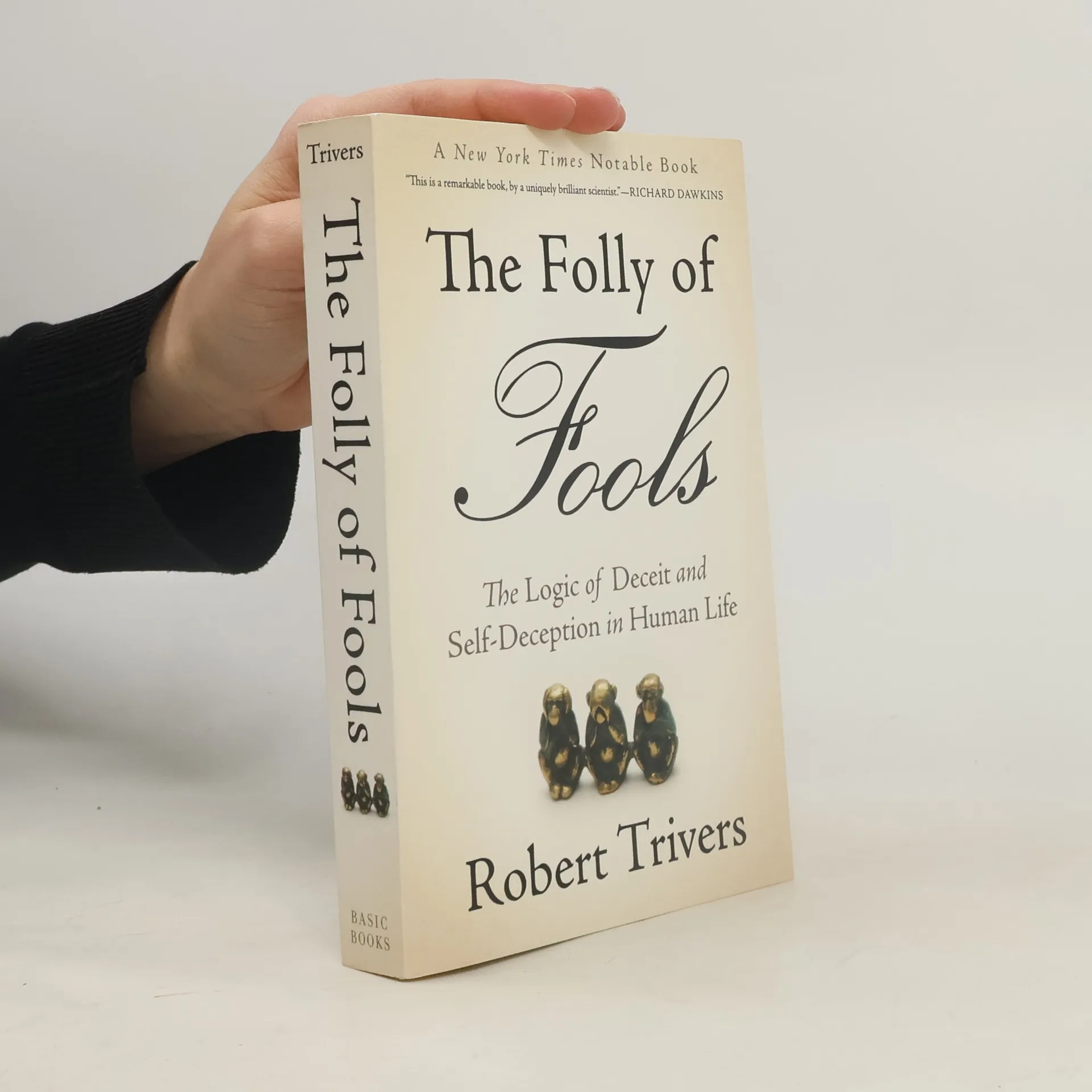

The Folly of Fools. The logic of Deceit and Self-deception in Human Life
- 416pages
- 15 heures de lecture
A New York Times Notable Book of 2012 Whether it’s in a cockpit at takeoff or the planning of an offensive war, a romantic relationship or a dispute at the office, there are many opportunities to lie and self-deceive—but deceit and self-deception carry the costs of being alienated from reality and can lead to disaster. So why does deception play such a prominent role in our everyday lives? In short, why do we deceive? In his bold new work, prominent biological theorist Robert Trivers unflinchingly argues that self-deception evolved in the service of deceit—the better to fool others. We do it for biological reasons—in order to help us survive and procreate. From viruses mimicking host behavior to humans misremembering (sometimes intentionally) the details of a quarrel, science has proven that the deceptive one can always outwit the masses. But we undertake this deception at our own peril. Trivers has written an ambitious investigation into the evolutionary logic of lying and the costs of leaving it unchecked.