

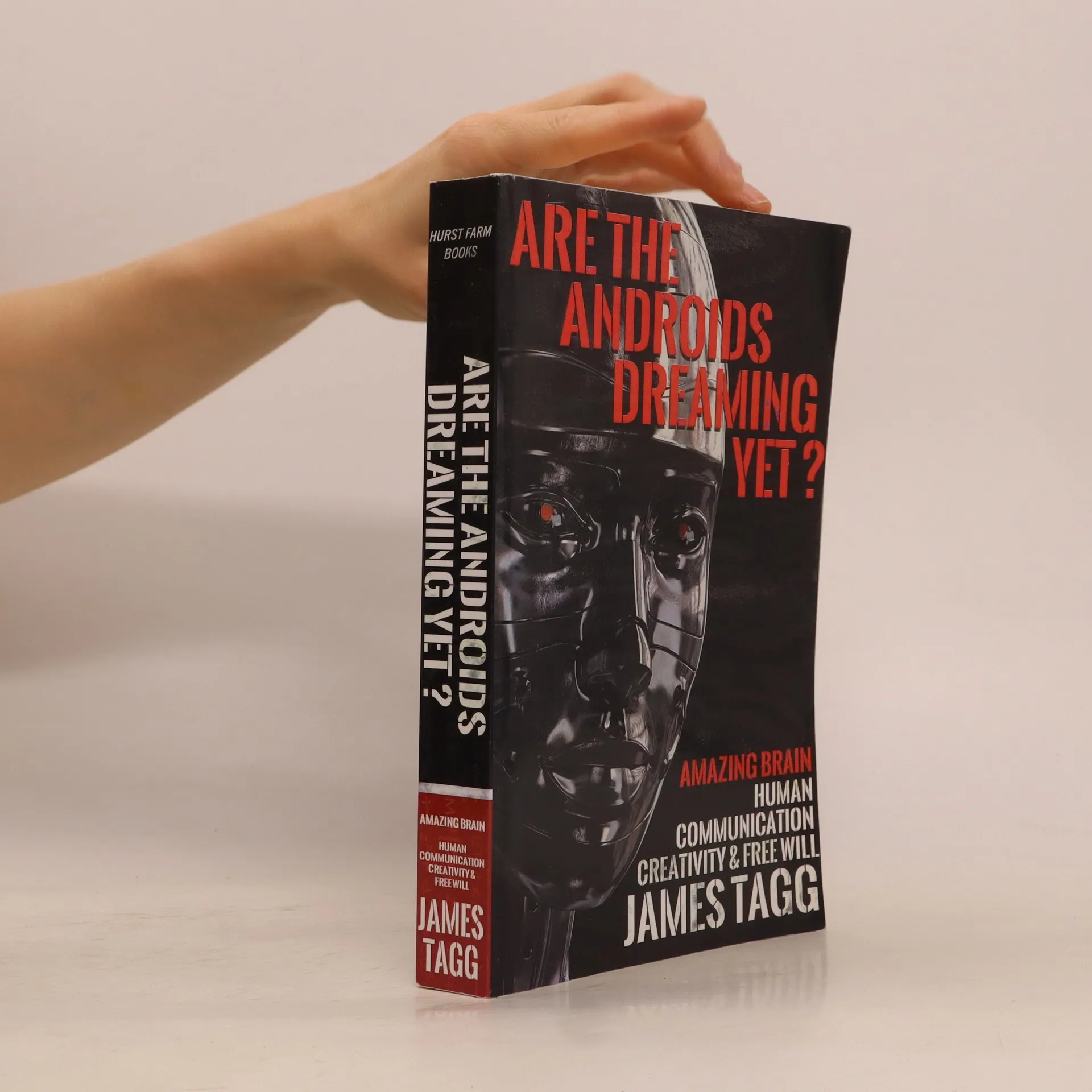
Are the Androids Dreaming yet?
- 436pages
- 16 heures de lecture
Alan Turing invented the computer, helped win World War II and left us with one of the greatest puzzles of our time - the imitation game. Can computers do everything a human mind can do? Many scientists think we have a tenuous hold on the title, "most intelligent being on the planet". They think it's just a matter of time before computers become smarter than us, and then what? This book charts a journey through the science of information, from the origins of language and logic, to the frontiers of modern physics. From Lewis Carroll's logic puzzles, through Alan Turing and his work on Enigma, to John Bell's inequality, and finally the Conway-Kochen 'Free Will' Theorem. How do the laws of physics give us our creativity, our rich experience of communication and, especially, our free will? James Tagg is an inventor and entrepreneur. A pioneer of touchscreen technology, he has founded several companies, including Truphone, the world's first global mobile network. He holds numerous patents, filed in over a hundred countries. He studied Physics and Computer Science at Manchester University, Design at Lancaster University and Engineering at Cambridge University. He lives with his family on a farm in Kent, England.