Cet auteur crée de la science-fiction qui fait réfléchir, explorant de profondes questions philosophiques. Ses œuvres se caractérisent par des mondes et des personnages complexes qui poussent les lecteurs à contempler la nature humaine et l'avenir. Avec un souci du détail et des concepts originaux, il livre des récits captivants qui résonnent longtemps après la dernière page. Son approche du genre est nouvelle et intellectuellement stimulante.
How to Use Self Control and Mental Toughness (Develop Navy Seal Mental Toughness, Unbreakable Grit, Spartan Mindset, Build Good Habits)
192pages
7 heures de lecture
Self-discipline is presented as the essential foundation for achieving success in life, surpassing the roles of talent, intelligence, and positive thinking. It emphasizes the importance of maintaining focus during challenging times and developing mental toughness to overcome self-imposed limitations. By cultivating self-discipline, individuals can effectively navigate obstacles and transform their dreams into reality, making it a crucial element for personal and professional growth.
"Stories From the Winter Fire is a great read, deeply moving and insightful. Joe Williams is a very talented storyteller as he weaves in and out of his compelling stories illuminating truths. These stories illustrate our hearts embrace of the great mystery. They are very timely in today's society as we try to exist in harmony during such challenging times. This is an inspiring reminder that Divine Spirit guides us with love and protects us all." Grandmother Mamma Bear Cheryl V. Ward "I have read these stories and they are wonderful! These words and prayers are powerful and heartwarming. I want to thank you for sharing this work with me. I am honored." Patty Grant Grandmother and Elder Cherokee nation Cherokee N.C.
The book explores the intersection of traditional music studies, English folk music history, and the philosophies of Gilles Deleuze and Félix Guattari. It critiques the prevalent focus on cultural identity in understanding and valuing traditional music, offering a fresh perspective that challenges conventional narratives. By integrating these disciplines, it aims to redefine how traditional music is perceived and appreciated, moving beyond identity to broader philosophical implications.
Exploring profound themes of existence and duality, Joe Williams delves into the complexities of human experience, juxtaposing despair with gratitude. His narrative artfully captures the interplay between deep suffering and grace, reflecting on human frailty and potential. Williams, revered as a wise figure within his community, offers a blend of playful irreverence and heartfelt insight, making his work a compelling read for those seeking wisdom and connection.
The narrative explores the profound journey of inner change leading to external transformation. It emphasizes the importance of self-discovery and personal growth as essential steps toward achieving meaningful change in one's life. Through introspective experiences, characters learn that true transformation begins from within, inspiring readers to reflect on their own paths to self-improvement and renewal.
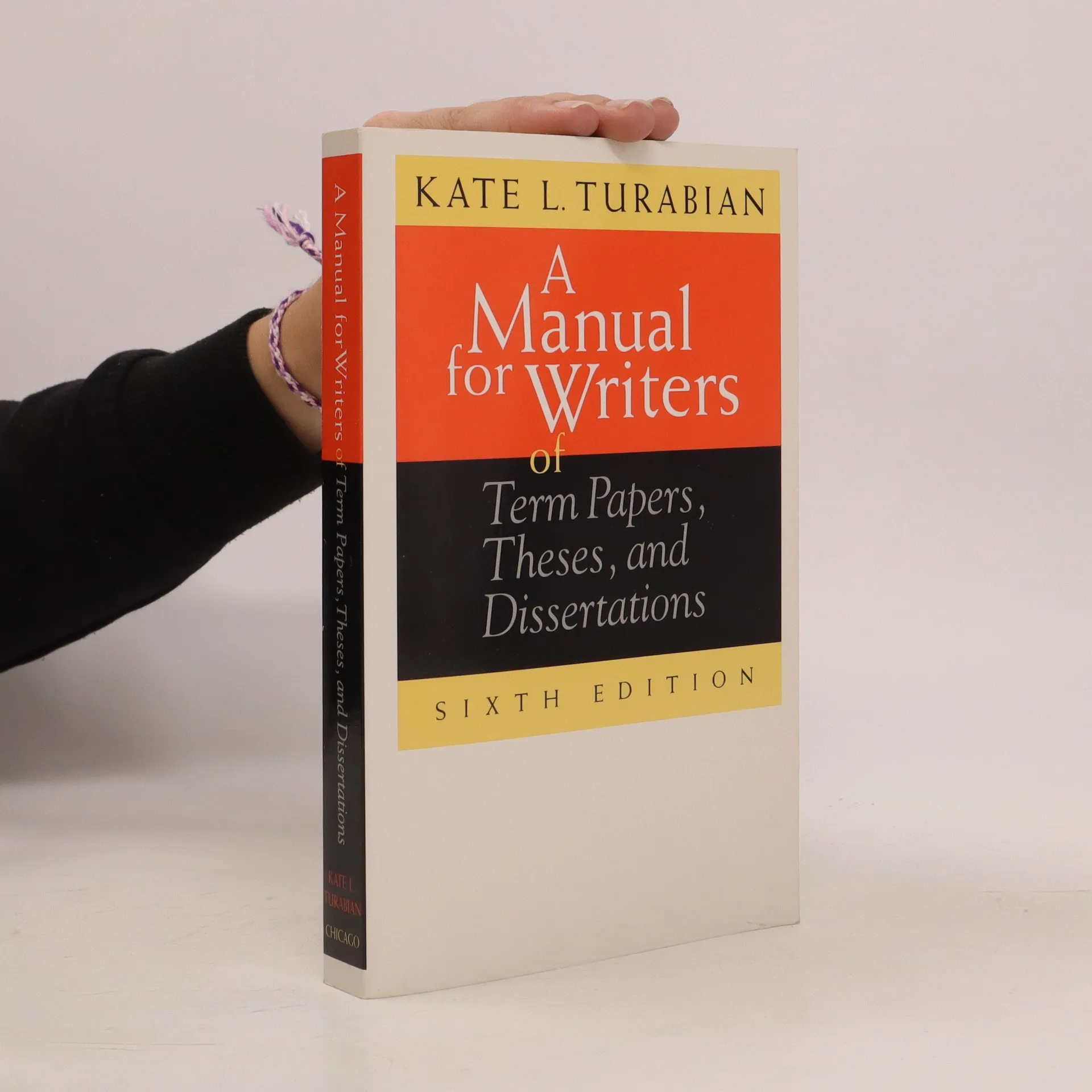
Dewey, Bellow, Strauss, and Friedman are just a few of the influential thinkers associated with the University of Chicago, but none has garnered more respect than Kate Turabian. As the dissertation secretary for decades, she authored the definitive guide on completing and submitting student papers. Her Manual for Writers of Research Papers, Theses, and Dissertations has sold over seven million copies since its 1937 debut. The seventh edition represents a significant revision, ensuring it remains an essential resource for writers at all levels—from first-year undergraduates to seasoned scholars. Gregory G. Colomb, Joseph M. Williams, and the late Wayne C. Booth, along with the University of Chicago Press Editorial Staff, have enhanced this classic, preserving Turabian’s practical advice while incorporating new research and citation methods for the digital age. This edition expands the guide significantly, offering a comprehensive overview of the research and writing process, from formulating questions to revising drafts. It also includes an authoritative section on citation practices, fully updated to align with the fifteenth edition of The Chicago Manual of Style, covering various source types and electronic citations. The final section addresses stylistic issues crucial for crafting strong papers, while the appendix consolidates essential formatting guidelines. This revised edition is a timeless reference, tailored for a new
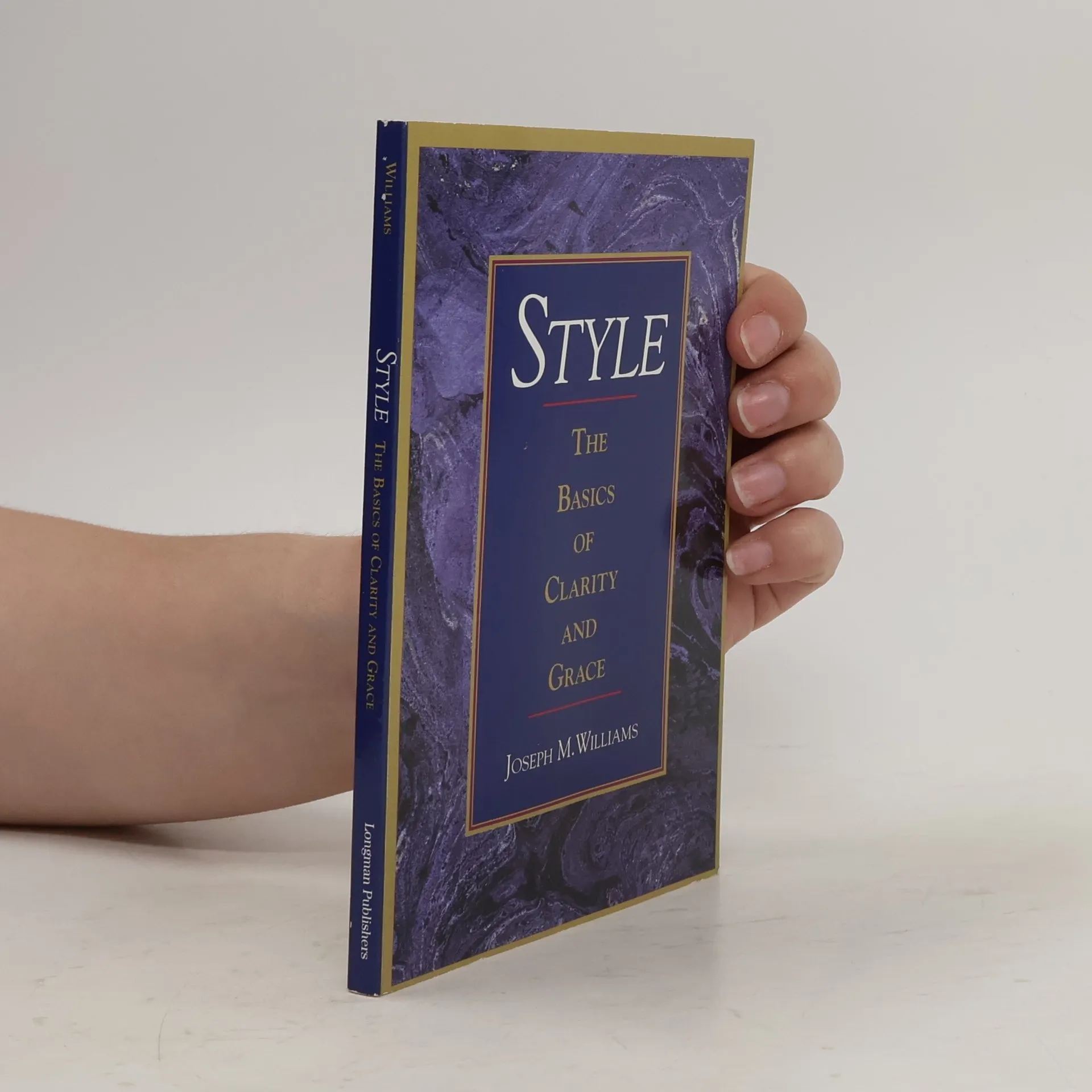
"Style: The Basics of Clarity and Grace" reflectsthe wisdom and clear authorial voice of Williams' best-selling book, "Style: Lessons in Clarity and Grace," while streamlining every chapter to create a very brief, yet powerfully direct guide to writing with style. The concise clarity of this book makes it a handy reference for anyone interested in good writing--as well as a quick and ideal guide for freshman composition courses, writing courses across the disciplines, and as a supporting text in courses that require clear and direct writing. "Style: The Basics "covers the elemental principles of writing that will help students diagnose the strengths and weaknesses of their prose quickly and revise effectively. The text features principles of effective prose written in Williams' hallmark conversational style, offering reason-based principles, rather than hard and fast rules, for successful, effective writing.
Chicago Style for Students and Researchers - Eighth Edition
464pages
17 heures de lecture
A little more than seventy-five years ago, Kate L. Turabian drafted a set of guidelines to help students understand how to write, cite, and formally submit research writing. Seven editions and more than nine million copies later, the name Turabian has become synonymous with best practices in research writing and style. Her Manual for Writers continues to be the gold standard for generations of college and graduate students in virtually all academic disciplines. Now in its eighth edition, A Manual for Writers of Research Papers, Theses, and Dissertations has been fully revised to meet the needs of today’s writers and researchers. The Manual retains its familiar three-part structure, beginning with an overview of the steps in the research and writing process, including formulating questions, reading critically, building arguments, and revising drafts. Part II provides an overview of citation practices with detailed information on the two main scholarly citation styles (notes-bibliography and author-date), an array of source types with contemporary examples, and detailed guidance on citing online resources. The final section treats all matters of editorial style, with advice on punctuation, capitalization, spelling, abbreviations, table formatting, and the use of quotations. Style and citation recommendations have been revised throughout to reflect the sixteenth edition of The Chicago Manual of Style . With an appendix on paper format and submission that has been vetted by dissertation officials from across the country and a bibliography with the most up-to-date listing of critical resources available, A Manual for Writers remains the essential resource for students and their teachers.
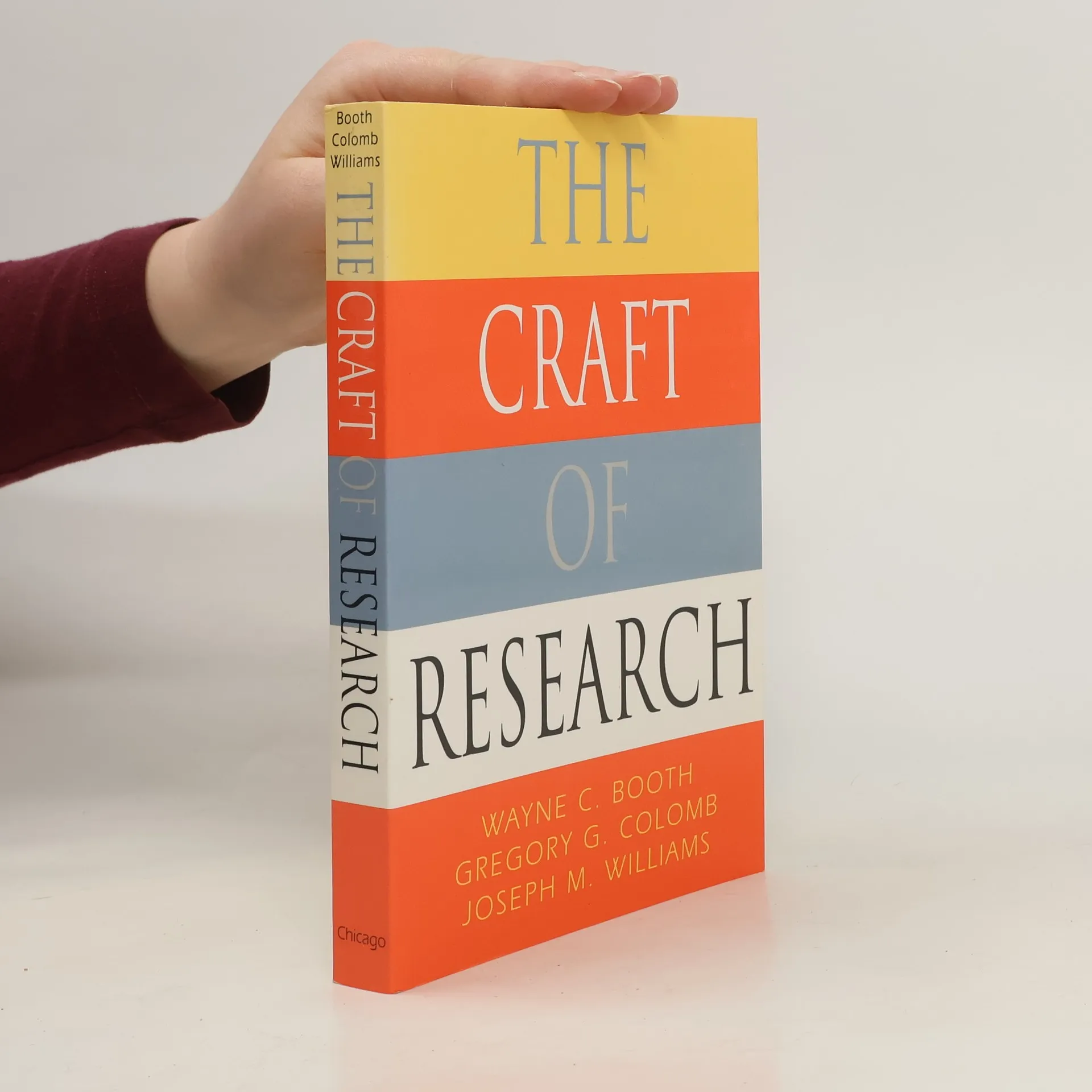
Along with many other topics "The craft of research" explains how to build an argument that motivates readers to accept a claim and how to create introductions and conclusions that answer that most demanding question "So what?"
Style: The Basics of Clarity and Grace retains the wisdom and clear authorial voice of Williams best-selling book, Style, while streamlining every chapter to create a very brief, yet powerfully direct guide to writing with style. The brevity of words and clarity of expression make this book a quick and ideal read for freshman composition courses, as well as for writing courses across the disciplines. Style: The Basics of Clarity and Grace covers the elemental principles of writing that will help students diagnose their prose quickly and revise it effectively. The four sections Style as Choice, Clarity, Grace, and Ethics feature principles of effective prose, written in William's hallmark conversational style. As in Style, Seventh Edition, these principles are offered as reason-based approaches to improving prose, rather than as hard and fast rules to writing well.