

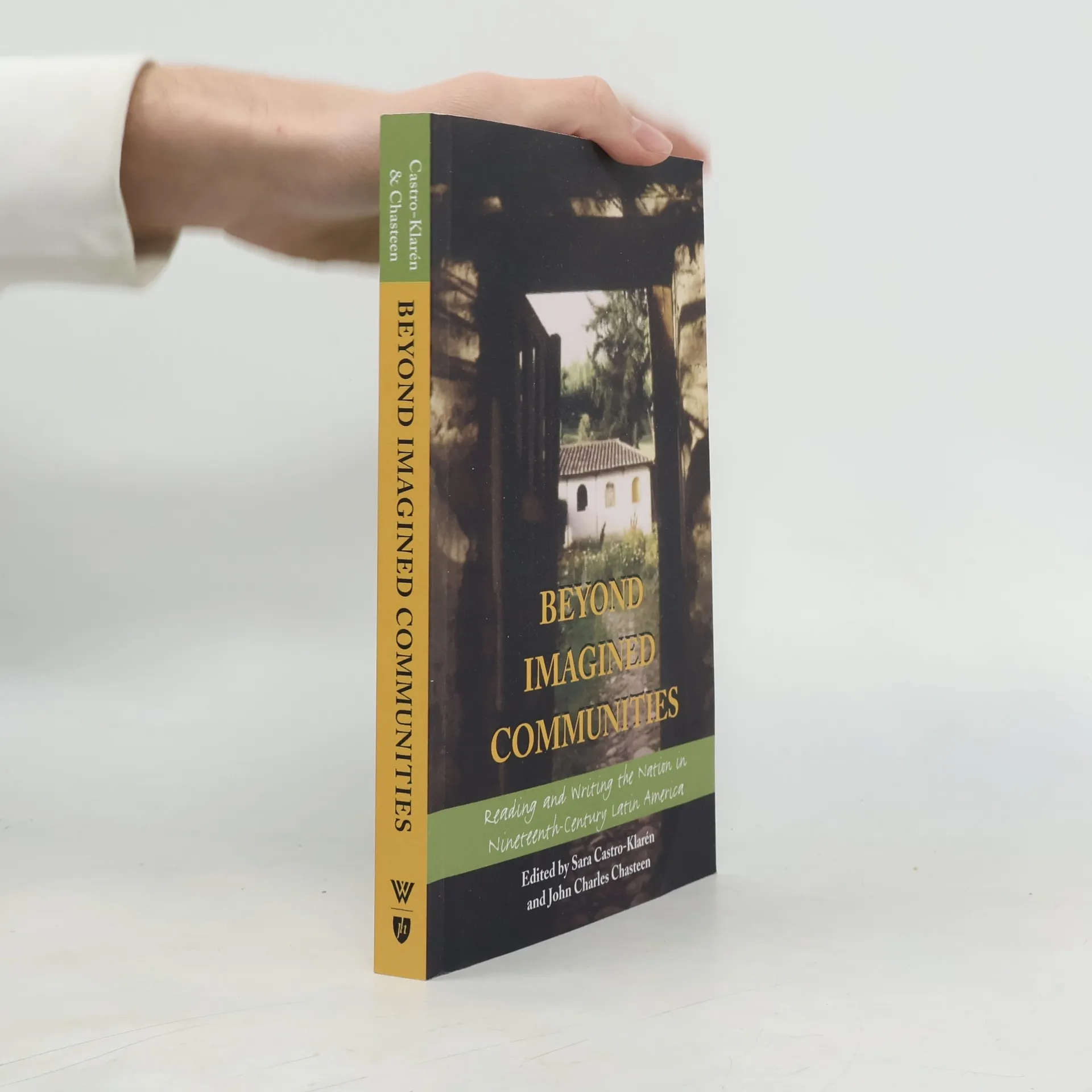
Beyond Imagined Communities
Reading and Writing the Nation in Nineteenth-Century Latin America
- 252pages
- 9 heures de lecture
How did the nationalisms of Latin America's diverse countries emerge from their shared histories within the Spanish and Portuguese empires and their mixed populations? This collection of essays critiques Benedict Anderson's influential arguments in "Imagined Communities," which links Latin American nationalism to the local circulation of colonial newspapers and the experiences of colonial administrators. Instead, it reveals the broader cultural influences that shaped these national identities. Four historians explore various social contexts: François-Xavier Guerra examines political communication, Tulio Halperín Donghi focuses on political parties, Sarah C. Chambers delves into the feminine sphere of salons, and Andrew Kirkendall discusses the role of higher education in training new administrators. Additionally, four critics investigate the production of cultural artifacts: Fernando Unzueta analyzes novels, Sara Castro-Klarén looks at archaeology and folklore, Gustavo Verdesio addresses the suppression of unwanted archaeological evidence, and Beatriz González Stephan explores national literary histories and international expositions. This multifaceted approach highlights the complexity of Latin American nationalisms, moving beyond simplistic explanations to reveal a rich tapestry of cultural influences.