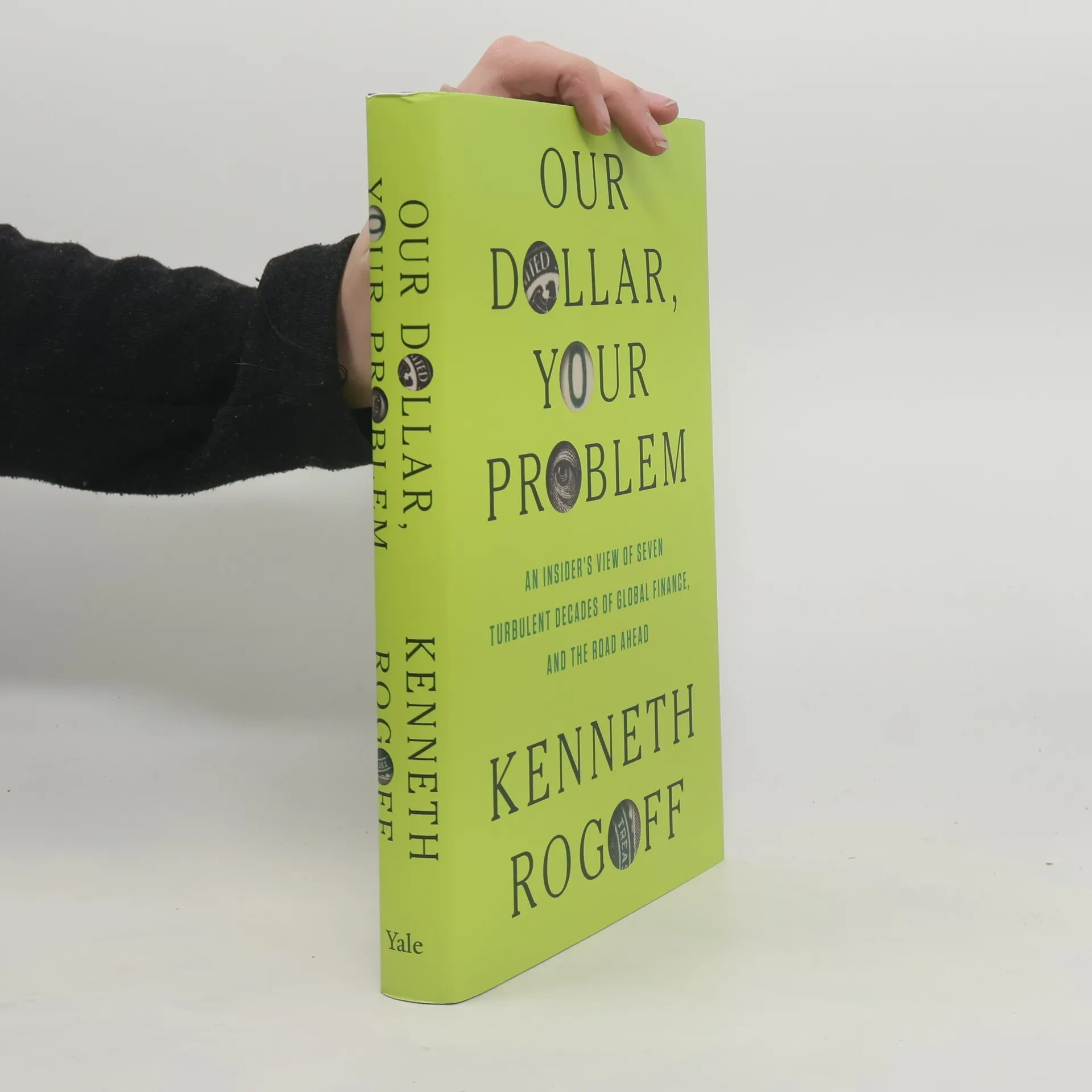
Cet auteur explore des systèmes économiques complexes et leur impact sur la société. Ses écrits se caractérisent par une profonde compréhension du fonctionnement des marchés et de la finance internationale. À travers son œuvre, il offre des observations pénétrantes sur les défis économiques contemporains. Son approche est à la fois analytique et accessible.
An Insider's View of Seven Turbulent Decades of Global Finance, and the Road Ahead
345pages
13 heures de lecture
A leading economist explores the U.S. dollar's inexorable postwar global expansion and argues that today's outsized footprint may portend greater financial instability at home and abroad
Foundations of International Macroeconomics is an innovative text that offers the first integrative modern treatment of the core issues in open economy macroeconomics and finance. With its clear and accessible style, it is suitable for first-year graduate macroeconomics courses as well as graduate courses in international macroeconomics and finance. Each chapter incorporates an extensive and eclectic array of empirical evidence. For the beginning student, these examples provide motivation and aid in understanding the practical value of the economic models developed. For advanced researchers, they highlight key insights and conundrums in the field. Topic coverage includes intertemporal consumption and investment theory, government spending and budget deficits, finance theory and asset pricing, the implications of (and problems inherent in) international capital market integration, growth, inflation and seignorage, policy credibility, real and nominal exchange rate determination, and many interesting special topics such as speculative attacks, target exchange rate zones, and parallels between immigration and capital mobility. Most main results are derived both for the small country and world economy cases. The first seven chapters cover models of the real economy, while the final three chapters incorporate the economy's monetary side, including an innovative approach to bridging the usual chasm between real and monetary models.
Aufstieg und Fall des Dollars und was seine Instabilität für uns und die globalen Finanzmärkte bedeutet. Top-Ökonom über Währungs- und Wirtschaftskrisen
368pages
13 heures de lecture
Die ganze Welt ist abhängig vom Dollar. Doch wird das auch so bleiben? Der führende Wirtschaftswissenschaftler Kenneth Rogoff untersucht den Aufstieg des US-Dollars zur Weltwährung und zeigt, warum seine Vormachtstellung alles andere als gesichert ist. Der ehemalige Chefökonom des Internationalen Währungsfonds stützt sich auf eigene Erfahrungen, unter anderem mit politischen Entscheidungsträgern und Staatsoberhäuptern, und beschreibt, wie der Dollar sich gegen den japanischen Yen, den sowjetischen Rubel und den Euro durchsetzte. Präzise analysiert er die aktuellen Herausforderungen, mit denen die Leitwährung konfrontiert ist: Kryptowährungen und der chinesische Yuan, zunehmende Inflation und höhere Zinssätze, politische Instabilität und das Auseinanderbrechen des Dollarblocks. Das Ende der Pax-Dollar-Ära könnte bereits eingeläutet sein, nicht nur, weil viele Länder von dem System zutiefst frustriert sind, sondern auch, weil Selbstüberschätzung und Arroganz zu Fehlern führen. Rogoff zeigt, wie Amerikas übergroße Macht und exorbitante Privilegien finanzielle Instabilität nach sich ziehen – im eigenen Land und auf der ganzen Welt.