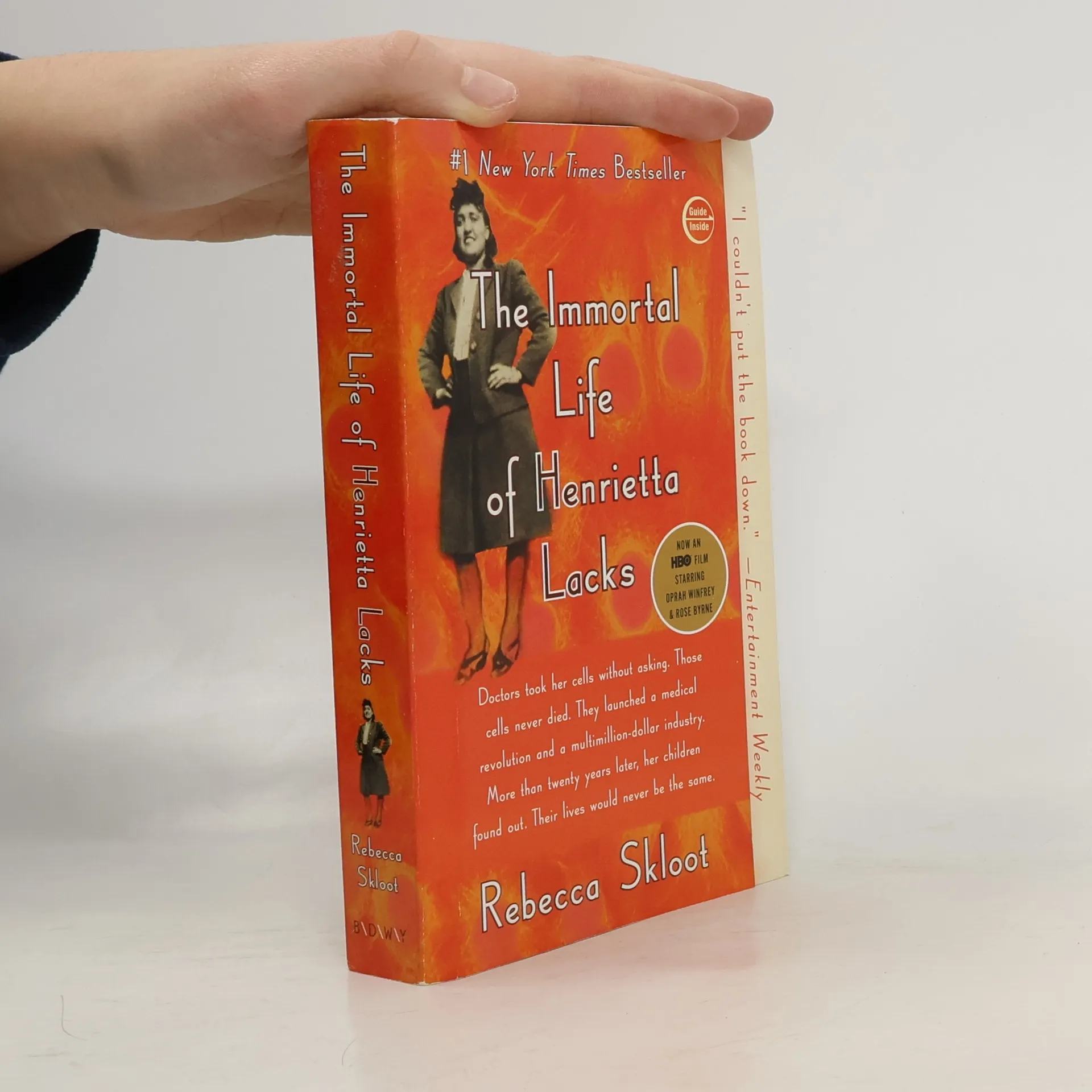
"Her name was Henrietta Lacks, but scientists know her as HeLa. She was a poor Southern tobacco farmer, yet her cells--taken without her knowledge--became one of the most important tools in medicine. The first "immortal" human cells grown in culture, they are still alive today, though she has been dead for more than sixty years. HeLa cells were vital for developing the polio vaccine; uncovered secrets of cancer and viruses; helped lead to in vitro fertilization, cloning, and gene mapping; and have been bought and sold by the billions. Yet Henrietta Lacks is buried in an unmarked grave. Her family did not learn of her "immortality" until more than twenty years after her death, when scientists began using her husband and children in research without informed consent. The story of the Lacks family is inextricably connected to the dark history of experimentation on African Americans, the birth of bioethics, and the legal battles over whether we control the stuff we are made of"--Publisher's description
Rebeca Skloot Livres
Rebecca Skloot est une auteure renommée qui excelle dans l'écriture scientifique narrative, alliant recherche rigoureuse et narration captivante. Son travail explore une diversité de sujets, de la bioéthique aux frontières de la médecine, en passant par la relation complexe entre la race et la médecine. Skloot est reconnue pour sa capacité à éclairer des sujets complexes avec clarté et profondeur émotionnelle. Les lecteurs sont attirés par sa voix distinctive, qui allie magistralement la curiosité intellectuelle à une profonde perspicacité humaine.