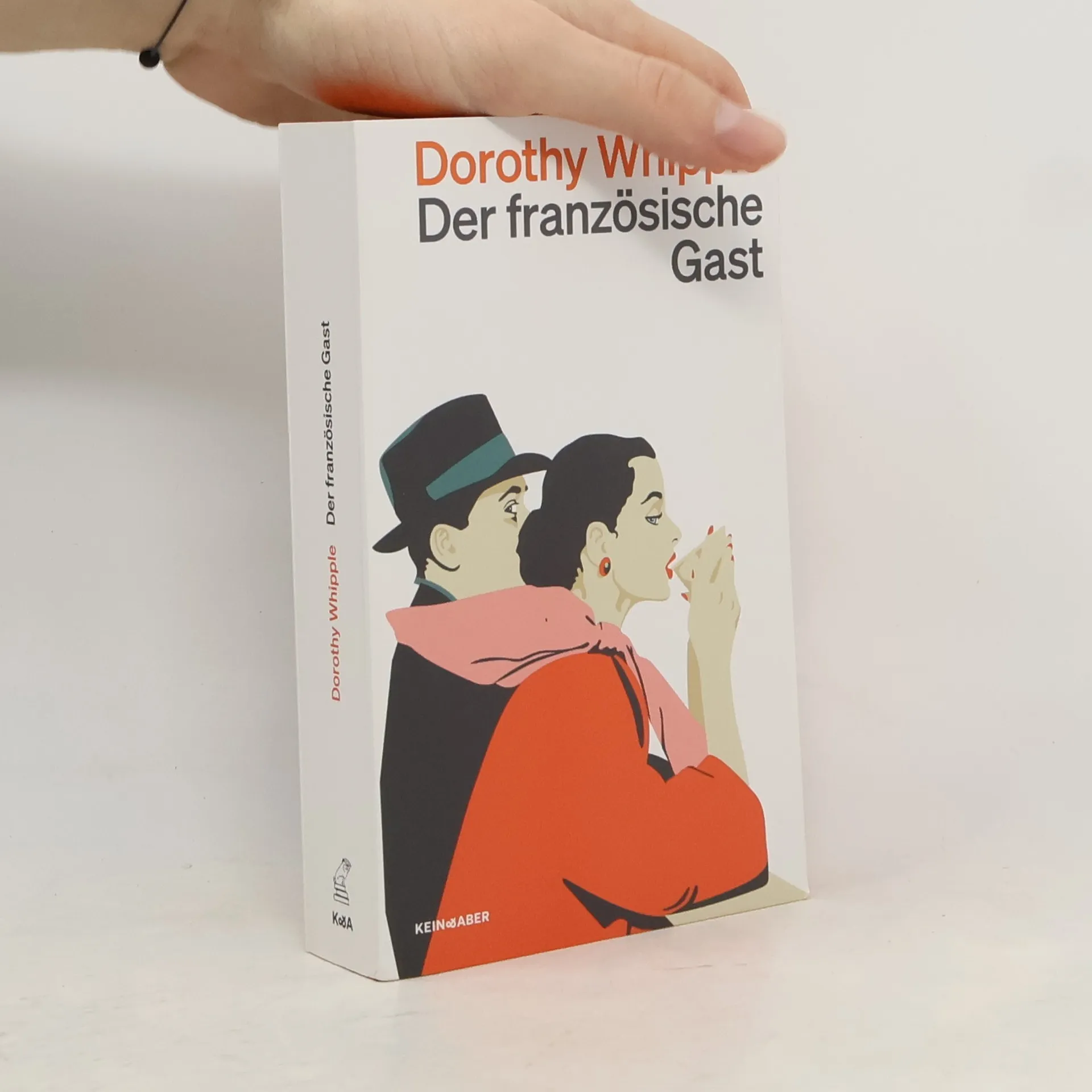
The Other Day
- 264pages
- 10 heures de lecture
Dorothy Whipple fut une romancière britannique renommée dont les neuf romans à grand succès, dont beaucoup furent des Choix ou Recommandations de la Société du Livre, résonnèrent profondément auprès des lecteurs. Son œuvre explorait souvent les thèmes de la vie de famille et des dynamiques sociales, offrant aux lecteurs un aperçu perspicace de la vie en Grande-Bretagne durant la première moitié du XXe siècle. Whipple devint célèbre pour son style narratif captivant, qui saisissait habilement les nuances des relations interpersonnelles et des attentes sociales. Ses caractérisations expertes et ses intrigues engageantes lui valurent des éloges de la critique et une large popularité, certaines de ses œuvres étant également adaptées au cinéma.


Seit zwanzig Jahren ist Ellen North glücklich verheiratet mit ihrem Mann Avery, sie haben zwei Kinder und leben in der idyllischen Peripherie Londons. Doch dann tritt Louise in ihr Leben, eine junge Französin, die eingestellt wurde, um der ungeliebten Schwiegermutter Gesellschaft zu leisten. Mit einer gehörigen Portion Je ne sais quoi fängt Louise an, sich bei der Schwiegermutter unverzichtbar zu machen und nebenbei Avery zu umgarnen. Mit Erfolg. Die alte Welt, wie Ellen sie kannte, ist bedroht: Wie kann sie sie selbst bleiben und sich trotzdem neu erfinden?
A novella – Every Good Deed, originally published separately in 1944 – and nine short stories.
A 1930 novel by Persephone Books' most popular writer about a girl who sets up a dress shop.
The ten short stories in 'The Closed Door and Other Stories' are a selection from the three volumes of stories that Dorothy Whipple published in her lifetime: 'On Approval' in 1935, 'After Tea and Other Stories' in 1941 and 'Wednesday and Other Stories' in 1961. Dorothy Whipple's key theme is ‘Live and Let Live’. And what she describes throughout her short stories are people, and particularly parents, who defy this maxim. For this reason her work is timeless, like all great writing. It is irrelevant that Dorothy Whipple’s novels were set in an era when middle-class women expected to have a maid; when fish knives were used for eating fish; when children did what they were told. The moral universe she creates has not changed: there are bullies in every part of society; people try their best but often fail; they would like to be unselfish but sometimes are greedy.
Three sisters marry very different men and the choices they make determine whether they will flourish, be tamed or be repressed. Lucy's husband is her beloved companion; Vera's husband bores her and she turns elsewhere; and Charlotte's husband is a bully who turns a high-spirited naive young girl into a deeply unhappy woman.
The setting for this, the third novel by Dorothy Whipple Persephone have published, is Saunby Priory, a large house somewhere in England which has seen better times. We are shown the two Marwood girls, who are nearly grown-up, their father, the widower Major Marwood, and their aunt; then, as soon as their lives have been described, the Major proposes marriage to a woman much younger than himself - and many changes begin.