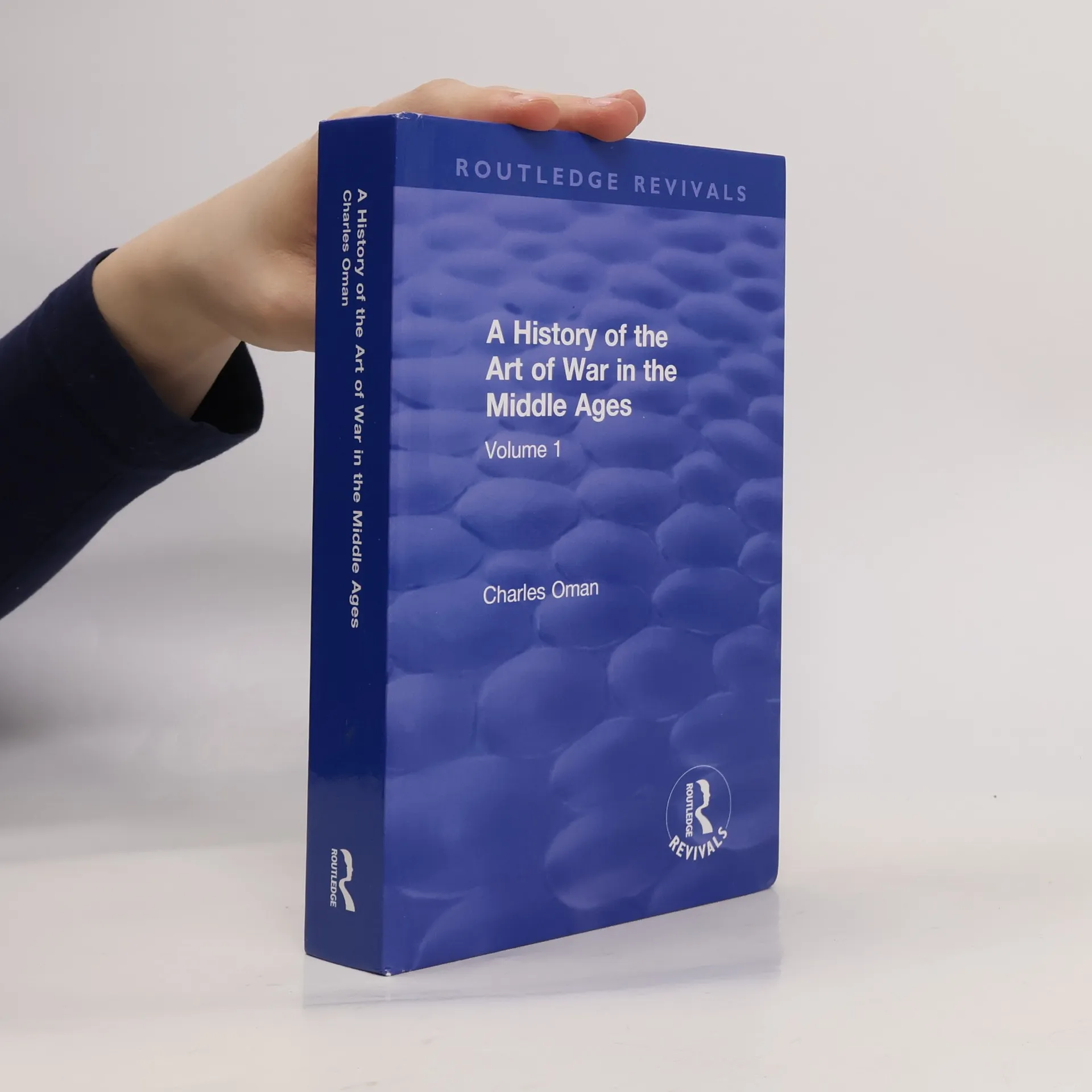
Charles Oman fut un historien militaire britannique dont les reconstructions pionnières de batailles médiévales à partir de chroniques fragmentées furent novatrices. Son style mêle magistralement précision historique et intensité émotionnelle, rendant ses récits, pourtant issus de recherches approfondies, aussi fluides que la fiction. Bien que certaines de ses interprétations aient été débattues, sa capacité à recréer vivement les événements historiques et à leur insuffler un élan dramatique témoigne de son approche unique de l'histoire militaire.
A Complete Colour Assembly of all Maps & Plans from Sir Charles Oman's History of the Peninsular War
106pages
4 heures de lecture
The book features a comprehensive collection of 98 color maps and plans, along with 7 in black and white, from Sir Charles Oman's "History of the Peninsular War." Arranged chronologically, it includes notable maps like "Ciudad Rodrigo" and "Badajoz," as well as lesser-known ones such as the "Battle of Espinosa" from November 11, 1818. This assembly serves as a valuable visual resource for understanding the geographical context of the Peninsular War.
September 1809 - December 1810, Ocaña, Cadiz, Bussaco, Torres Vedras
624pages
22 heures de lecture
Focusing on the Napoleonic Wars, this comprehensive 7-volume history details the pivotal 1807-1814 conflict in the Iberian Peninsula. Sir Charles Oman utilizes a wealth of firsthand accounts and archival materials from French, Spanish, Portuguese, and British sources, alongside his own battlefield inspections. This thorough analysis reveals the campaign's significant impact on Napoleon's resources and strategies, making it an indispensable resource for understanding this crucial military episode.
Set against the backdrop of various Spanish cities, the narrative explores the rich cultural and historical tapestry of Valencia, Ciudad Rodrigo, Badajoz, Salamanca, and Madrid. Each location serves as a unique character, influencing the lives and experiences of the protagonists. Themes of identity, tradition, and the passage of time intertwine as the characters navigate their journeys, revealing the intricate connections between people and place in Spain's vibrant landscape.
December 1810 - December 1811 Masséna's Retreat.. Fuentes de Oñoro, Albuera, Tarragona
728pages
26 heures de lecture
Focusing on the Napoleonic Wars, this comprehensive 7-volume history delves into the 1807-1814 conflict in the Iberian Peninsula, highlighting its significance and impact on Napoleon's campaigns. Sir Charles Oman's meticulous research draws from a wealth of accounts by French, Spanish, Portuguese, and British participants, alongside his own battlefield inspections. This extensive analysis offers a balanced and in-depth exploration of a pivotal moment in military history, making it an essential resource for understanding the complexities of the war.
August 1813 - April 14, 1814 The Capture of St. Sebastian, Wellington's Invasion of France, Battles of the Nivelle, the Nive, Orthez and Toulouse
624pages
22 heures de lecture
Focusing on Wellington's military campaigns during the Napoleonic Wars, this book details the strategic invasion of France and the significant battles that marked this period, including the Capture of St. Sebastian and the Battles of the Nivelle, Nive, Orthez, and Toulouse. It explores the tactics employed, the challenges faced by the forces, and the broader implications of these confrontations on the war's outcome, providing a vivid portrayal of this critical chapter in European history.
The 1807-1814 war in the Iberian Peninsula was one of the most significant and influential campaigns of the Napoleonic Wars. Arising from Napoleon's strategic necessity to impose his rule over Portugal and Spain, it evolved into a constant drain on his resources. Sir Charles Oman's 7-volume history of the campaign is an unrivalled and essential work. His extensive use and analysis of French, Spanish, Portuguese and British participants' accounts and archival material, together with his own inspection of the battlefields, provides a comprehensive and balanced account of this most important episode in Napoleonic military history. Sir Charles Oman's classic 7-volume History of the Peninsular War is one of the most important histories of the period ever written. The work of a brilliant historian and writer, it presents a large amount of detailed and valuable information in a very readable style.
This book provides a historical account of England before the Norman Conquest, covering significant events and themes in British history during the medieval period.
This volume covers significant events from September 1, 1812, to August 5, 1813, including the Siege of Burgos, the Retreat from Burgos, the Campaign of Vittoria, and the Battles of the Pyrenees. It draws on newly utilized sources, notably the diary of Sir Benjamin D'urban, which provides valuable insights into the Burgos retreat and Hill's column operations. However, the correspondence of Sir George Scovell, Wellington's cypher-secretary, becomes less useful after early 1813, as he transitioned to the Military Police Staff Corps Cavalry before Vittoria, losing access to critical information lines. Additionally, Colonel Juan Arzadun contributed essential reports from the Spanish Fourth Army and General Giron's Marching Orders, which were instrumental in detailing the daily movements of the Galician corps and shedding light on its activities in Biscay. This historical work is part of a broader effort by Forgotten Books to digitally reconstruct and preserve classic literature, ensuring that original formats are maintained while repairing imperfections. In rare instances, some flaws from the original may still appear in the reproduction, but most are successfully addressed to preserve the integrity of the historical text.
Volume IV: December 1810 - December 1811 Masséna's Retreat, Fuentes de Oñoro, Albuera, Tarragona
728pages
26 heures de lecture
The book delves into key military engagements during the Peninsular War, highlighting Masséna's retreat and significant battles such as Fuentes de Oñoro, Albuera, and Tarragona. It offers detailed accounts of strategies, troop movements, and the impact of leadership decisions on these crucial confrontations. Through vivid narratives and analysis, the author brings to life the challenges faced by commanders and soldiers, providing insights into the broader implications of these events on the war's outcome.
Volume III: September 1809 - December 1810 Ocaña, Cadiz, Bussaco, Torres Vedras
624pages
22 heures de lecture
Set against the backdrop of significant historical battles, this book explores the military strategies and personal stories surrounding the conflicts in Ocaña, Cadiz, Bussaco, and Torres Vedras. It delves into the experiences of soldiers and leaders, highlighting their courage and resilience during pivotal moments in history. The narrative weaves together detailed accounts of the battles, the geopolitical implications, and the human element, providing a rich tapestry of the era's warfare and its impact on the individuals involved.
Volume II: January to September 1809 From The Battle of Corunna to the end of The Talavera Campaign
710pages
25 heures de lecture
Set against the backdrop of the Peninsular War, this narrative chronicles the significant military engagements from the Battle of Corunna to the conclusion of the Talavera Campaign. It explores the strategic maneuvers, key figures, and the harsh realities faced by soldiers during this tumultuous period. The book delves into the complexities of warfare, leadership, and the impact of these battles on the broader conflict, providing a detailed account that highlights both heroism and the challenges of the era.
Volume 2--The Anglo-Saxon Invasion: 410 A.D.-802 A.D.
196pages
7 heures de lecture
In this second volume of Oman's trilogy, the narrative delves deeper into the intricate lives of its characters, exploring themes of identity, conflict, and resilience. The story unfolds against a richly woven backdrop, blending historical elements with personal struggles. As the characters navigate their intertwined fates, readers are treated to a vivid portrayal of a society grappling with change and tradition. This installment promises to expand on the emotional depth and complexity introduced in the first volume, drawing readers further into the saga.
1807-1809. From the Treaty of Fontainebleau to the Battle of Corunna : 1807-1809
712pages
25 heures de lecture
Set against the backdrop of the Peninsular War, this book explores the complex political and military events from the Treaty of Fontainebleau to the Battle of Corunna. It delves into the strategic maneuvers and key figures involved, highlighting the shifting alliances and the impact of the war on Spain and its people. The narrative offers insights into the challenges faced by both the French and British forces, illustrating the broader implications of these battles in the context of European history.
Focusing on the organization and daily life of Wellington's army, this book delves into the psychology of its key figures, highlighting those whom Wellington deemed versatile and capable. It offers a comprehensive exploration of both leaders and soldiers, revealing their customs and interactions during the Peninsular War. Drawing from official documents like dispatches and court martial records, as well as personal accounts such as diaries and letters, it provides a rich narrative of the army's experiences and culture.
Exploring the challenges faced by Rome in its conquest and occupation of Britain, the narrative delves into military strategies, cultural clashes, and the resilience of local tribes. The book highlights key figures and events that shaped this tumultuous period, offering insights into the complexities of imperial ambition and the fierce resistance encountered. Through vivid storytelling, it brings to life the historical struggle for dominance and the lasting impact of Roman rule on British society.
the Commanders, Organisation, Tactics and Equipage of the British Army During the Peninsular War, 1809-14
324pages
12 heures de lecture
The narrative explores the legacy of Wellington and his esteemed 'old Peninsular Army', highlighting their pivotal role in the Napoleonic Wars. It delves into the strategies, battles, and personal stories of the soldiers who fought under Wellington's command, emphasizing their resilience and camaraderie. The book provides a detailed examination of military tactics, the challenges faced during campaigns, and the profound impact of this army on British military history. Through vivid accounts, it brings to life the experiences of those who shaped a crucial period in Europe.
A History of the Art of War in the Middle Ages (1978)
538pages
19 heures de lecture
First published in 1898, this history of medieval warfare, written by one of the great medievalists of his time, Sir Charles Oman, remains for students and general readers one of the best accounts of military art in the Middle Ages. The book begins with the significant battle of Adrianople in 378 A.D. (the most fearful defeat suffered by a Roman army since Cannae in 216 B.C.) and Marignano (1515 A.D.), the last of the triumphs of the medieval horseman. It was extensively revised and edited by John H. Beeler in 1953 to incorporate many new facts uncovered since the late nineteenth century. This edition is based on Methuen's 1978 revised and enlarged edition, which includes new chapters and the author's original preface.