


Bookbot

William Bechtel

    Connectionism and the Mind
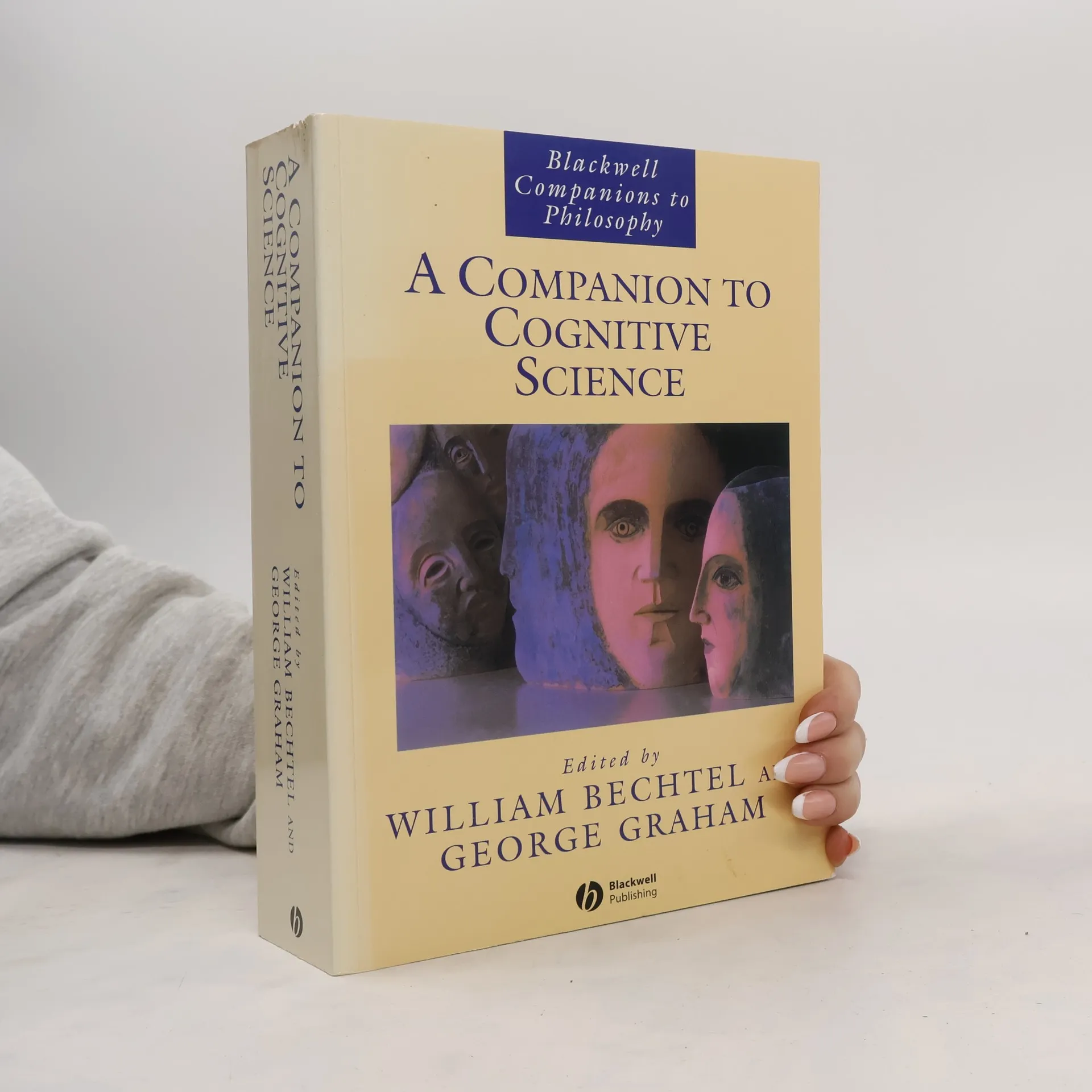
    A Companion to Cognitive Science
    Discovering Cell Mechanisms
    Philosophy of Neuroscience
    • This Element provides a comprehensive introduction to philosophy of neuroscience. It covers such topics as how neuroscientists procure knowledge, including not just research techniques but the use of various model organisms.

      Philosophy of Neuroscience
    • Discovering Cell Mechanisms

      • 336pages
      • 12 heures de lecture
      3,0(4)Évaluer

      The book highlights the significant discoveries made by cell biologists regarding cellular mechanisms, focusing on the innovative instruments that enabled these scientific inquiries. It explores the interplay between technological advancement and biological understanding, showcasing how tools have shaped our knowledge of cell biology.

      Discovering Cell Mechanisms
    • Unmatched in the quality of its world-renowned contributors, this multidisciplinary companion serves as both a course text and a reference book across the broad spectrum of issues of concern to cognitive science.

      A Companion to Cognitive Science
    • Connectionism and the Mind

      An Introduction to Parallel Processing in Networks

      • 240pages
      • 9 heures de lecture

      Something remarkable is happening in the cognitive sciences. After a quarter of a century of cognitive models that were inspired by the metaphor of the digital computer, the newest cognitive models are inspired by the properties of the brain itself. Variously referred to as connectionist, parallel distributed processing, or neutral network models, they explore the idea that complex intellectual operations can be carried out by large networks of simple, neuron-like units. The units themselves are identical, very low-level and 'stupid'. Intelligent performance is derived from the pattern of connection strengths between units, and the fundamental cognitive activity is pattern recognition and completion. Connectionism and the Mind provides an introduction to this newly emerging approach to understanding the mind. The first few chapters focus on network architecture, offering accessible treatment of the equations that describe learning and the propagation of activation (including a glossary for reference). Furthermore, the reader is walked step-by-step through the activities of networks engaged in pattern recognition, learning, and cognitive tasks such as memory retrieval and prototype formation. The remainder of the book addresses the implications of connectionism for theories of the mind, both philosophical and psychological. Foe What Role is played by pattern recognition and completion as basic as cognitive functions? Connectionist models have particular strength in learning and pattern recognition; should they be limited to those functions, or can they provide an overall account of cognitive functioning? In particular, can connectionist models provide an adequate account of the ability to employ linguistic and other symbol systems, or must an adequate system incorporate symbol processing as a basic cognitive capacity? Finally, Connectionism and the Mind examines the relation of connectionist models to philosophical accounts of propositional attitudes, and to a variety of other inquiries in cognitive psychology, linguistics, developmental psychology, artificial intelligence and neuroscience.

      Connectionism and the Mind