

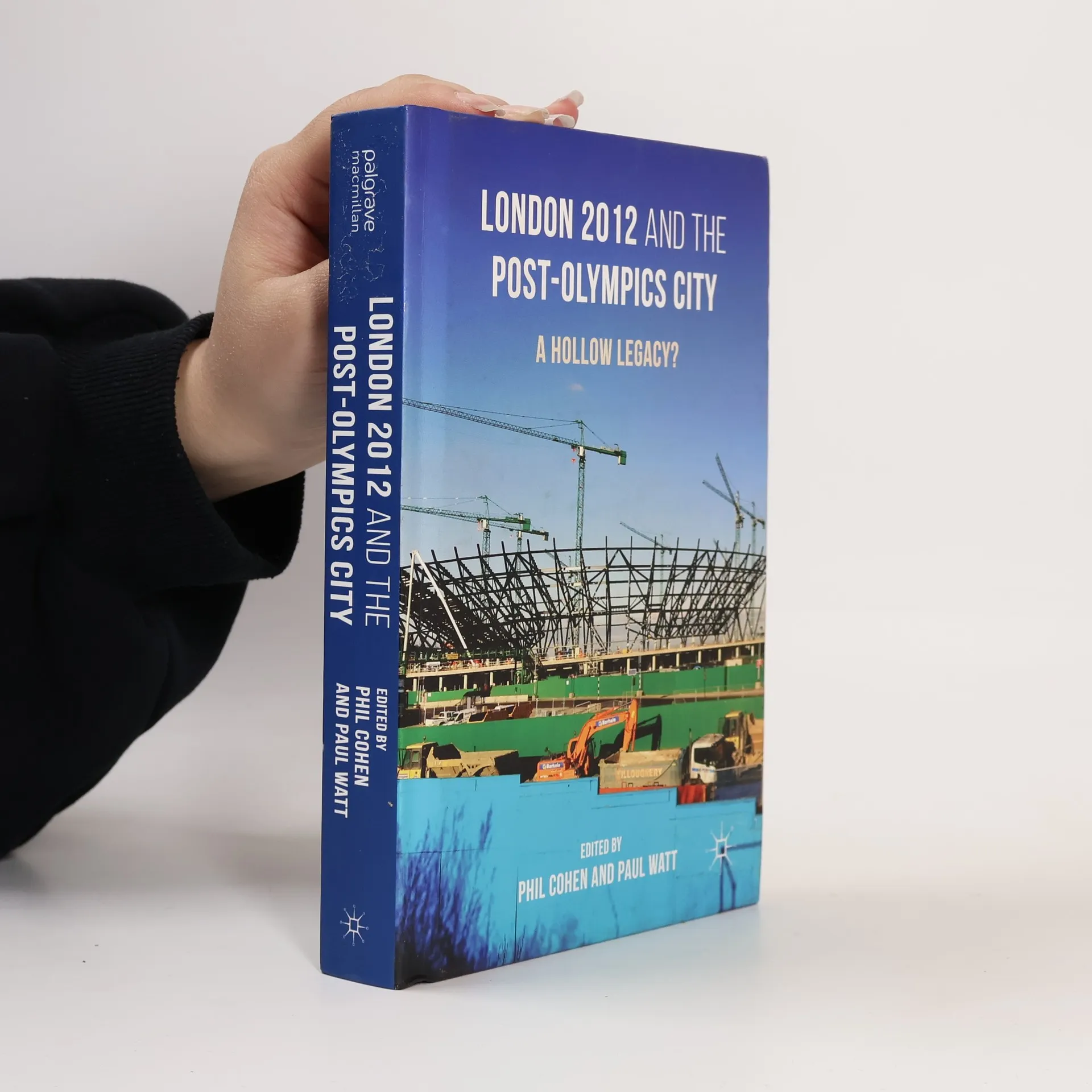
This book brings together a body of new research which looks both backwards and forwards to consider how far the London 2012 Olympic legacy has been delivered and how far it has been a hollow promise. Cohen and Watt consider the lessons that can be learnt from the London experience and aptly apply them other host cities, specifically Rio 2016 and Tokyo 2020. The Olympics are often described as a ‘mega-event’ in a way that assumes the host cities have no other existence outside, before or beyond the contexts imposed by the Games themselves. In terms of regeneration, the London 2012 Olympics promised to trigger a mega-regeneration project that was different to what had come before. This time the mistakes of other large-scale projects like London Docklands and Canary Wharf would be put right: top-down planning would be replaced by civic participation, communication and ‘the local’. This edited collection questions how far the 2012 London legacy really is different. In so doing, it brings fresh evidence, original insights and new perspectives to bear on the post-Olympics debate. A detailed and well-researched study, this book will be of great interest to scholars of urban geography, sociology, urban planning, and sports studies.
Paul Watt Livres

Estate Regeneration and Its Discontents
- 522pages
- 19 heures de lecture
Through original interviews with residents of London estates, the author offers an insightful exploration of estate regeneration and its effects on marginalized communities. The narrative highlights personal experiences and perspectives, revealing the profound consequences of regeneration and gentrification on socio-spatial inequality, emphasizing the struggles faced by these communities amid urban transformation.