



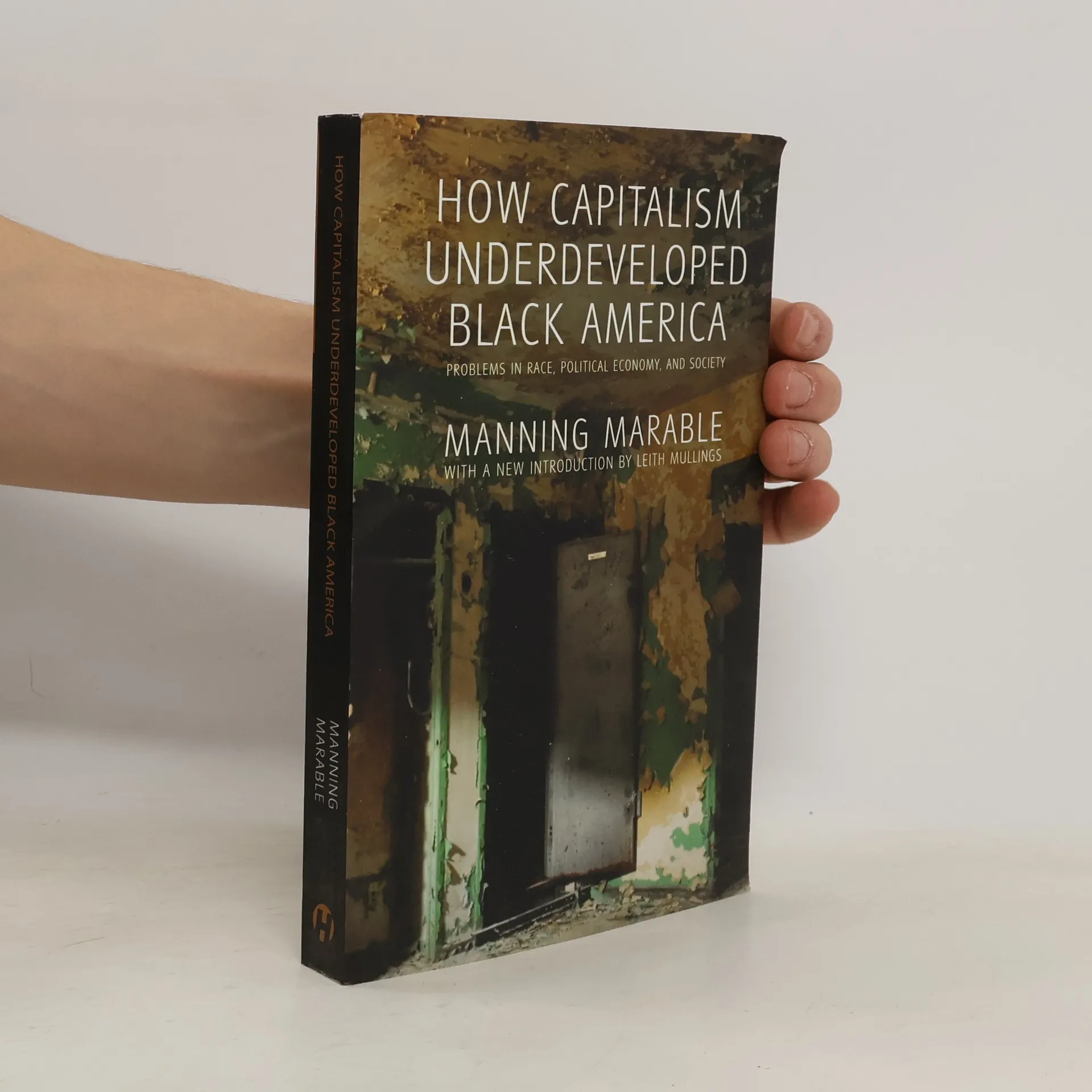
How Capitalism Underdeveloped Black America
Problems in Race, Political Economy, and Society - With a New Introduction by Leith Mullings
- 360pages
- 13 heures de lecture
" How Capitalism Underdeveloped Black America is one of those paradigm-shifting, life-changing texts that has not lost its currency or relevance—even after three decades. Its provocative treatise on the ravages of late capitalism, state violence, incarceration, and patriarchy on the life chances and struggles of black working-class men and women shaped an entire generation, directing our energies to the terrain of the prison-industrial complex, anti-racist work, labor organizing, alternatives to racial capitalism, and challenging patriarchy—personally and politically."—Robin D. G. Kelley "In this new edition of his classic text . . . Marable can challenge a new generation to find solutions to the problems that constrain the present but not our potential to seek and define a better future."—Henry Louis Gates, Jr. "[A] prescient analysis."—Michael Eric Dyson How Capitalism Underdeveloped Black America is a classic study of the intersection of racism and class in the United States. It has become a standard text for courses in American politics and history, and has been central to the education of thousands of political activists since the 1980s. This edition is prsented with a new foreword by Leith Mullings.