Japan’s Indian Ocean Raid 1942
- 96pages
- 4 heures de lecture
An illustrated exploration of the Japanese raid into the Indian Ocean in April 1942 – one of the largest operations conducted by the Imperial Navy during the war.



An illustrated exploration of the Japanese raid into the Indian Ocean in April 1942 – one of the largest operations conducted by the Imperial Navy during the war.
As the Pacific War approached a crescendo, the clashes between swarming US Navy carrier aircraft, and the gigantic Imperial Japanese Navy Yamato-class battleships became symbolic of the fortunes of the two nations. This book presents views from US Navy Divebombers, and IJN anti-aircraft guns, during two of the most dramatic naval engagements.
While not as famous as their larger and faster sister ships such as the Essex- and Yorktown-class carriers, escort carriers made an enormous contribution towards Allied victory both in the Pacific and Atlantic theaters. Rather than relying on size or speed, it was their sheer numbers that made them so effective. Indeed, the Casablanca-class escort carrier was the most-produced aircraft carrier in history. In partnership with the Royal Navy, they provided the backbone of Allied antisubmarine efforts in the Atlantic, finally and irrevocably turning the tide of the war against the U-boats in 1943. In the Pacific, they provided the air cover for the series of landings which led to the doorstep of Japan by 1945. These robust ships faced submarine, air, and even surface threats from the Japanese, but proved able to contend with everything thrown their way. Fully illustrated with contemporary photographs and unique specially commissioned artwork, this book shines a new light on these unjustly overlooked workhorses of the US Navy--ships that helped usher in the Allied victory over the Axis powers in the Atlantic and Pacific.
A comprehensive overview of the strategy, operations, and vessels of the United States Navy from 1941 to 1945. Although slowly building its navy while neutral during the early years of World War II, the US was struck a serious blow when its battleships, the lynchpin of US naval doctrine, were the target of the dramatic attack at Pearl Harbor. In the Pacific Theater, the US was thereafter locked into a head to head struggle with the impressive Imperial Japanese Navy, fighting a series of major battles in the Coral Sea, at Midway, the Philippine Sea, Leyte Gulf, and Okinawa in the struggle for supremacy over Japan. Having avoided the decisive defeat sought by the IJN, the US increased industrial production and by the end of the war, the US Navy was larger than any other in the world. Meanwhile in the west, the US Navy operated on a second front, supporting landings in North Africa, Sicily, and Italy, and in 1944 played a significant part in the D-Day landings, the largest and most complex amphibious operation of all time. Written by an acknowledged expert and incorporating extensive illustrations including photographs, maps, and color artwork, this book offers a detailed look at the strategy, operations, and vessels of the US Navy in World War II.
A history of the enduring Essex-class ships, the US Navy's finest and most numerous fleet carrier during World War II, which were modernized repeatedly and served with distinction. The Essex class was the USN's war-winning ship class of the Pacific War. Of the 24 ships completed, 14 saw action, making the Essex class the largest class of fleet aircraft carriers ever built. These ships had a fine balance of striking power, protection, and speed and were modernized during and after the war. There were five distinct programs carried out, adding not only angled flight decks for jet operations, but repeated upgrades to sensors, weapons, and equipment. Essex-class carriers were used in a number of roles and provided the vast majority of US Navy air power in the Korean War, and a sizeable proportion of air power in the Vietnam conflict. However, as the “super carriers” began to enter service in the early 1960s, the Essex class was relegated to secondary roles– a single Essex carrier served until 1991 as the US Navy's training carrier. Using detailed artwork and photos, this book provides an in-depth portrait of this important and enduring class of ship, and looks at its development and modifications while considering the many and varied actions it took part in.
This fully illustrated study examines and compares the roles of the US Navy submarines and the Imperial Japanese Navy's anti-submarine warfare capabilities during World War II. In 1941 and 1942, US Navy submarine operations in the Pacific were largely ineffective, hampered by faulty torpedo design, conservative tactics, and insufficiently aggressive submarine captains. Eventually, though, a new generation of wartime submarine commanders, combined with reliable torpedoes, new generation boats, improved intelligence, and advanced radar, inflicted devastating losses on Japanese shipping. Antisubmarine warfare was initially accorded a low priority by the Imperial Japanese Navy; the lack of ASW escorts and modern weaponry, and an inability to develop tactics, resulted in devastation to vital convoys, and hampered its ability to deter and destroy enemy submarines. This book explores all these factors, and the role that US submarines played in supporting the major fleet operations in the Pacific Theater, notching up almost 500 patrols by war's end for the loss of 52 submarines to the Japanese. The technical and tactical developments implemented by the opposing sides are documented in detail, including US improvements to submarine design and weaponry and more aggressive tactics, and the Japanese development of destroyer escorts, changes to depth charge design, and improved submarine detection capacity.
This illustrated and detailed volume covers the capabilities and actions of two of the most compelling naval forces in history--the Imperial Japanese Navy's carriers and their incomparably trained aviators, and the US ships which defended against them.
During the Pacific War the most successful component of the Imperial Japanese Fleet was its destroyer force. These ships were larger and, in most cases, better-equipped than their Allied counterparts. This volume details the history, weapons and tactics of the Japanese destroyers built just before and throughout the war.
Details the history, weapons and tactics of the Japanese destroyers that was built before the war. This book includes the famous Fubuki class called Special Type by the Japanese, which were, when completed in the late 1920's, the most powerful class of destroyers in the world.
The Imperial Japanese Navy (IJN) was the third most powerful navy in the world at the start of World War II, and came to dominate the Pacific in the early months of the war. This book details the Japanese ships which fought in the Pacific and examines the principles on which they were designed, and how they were armed.
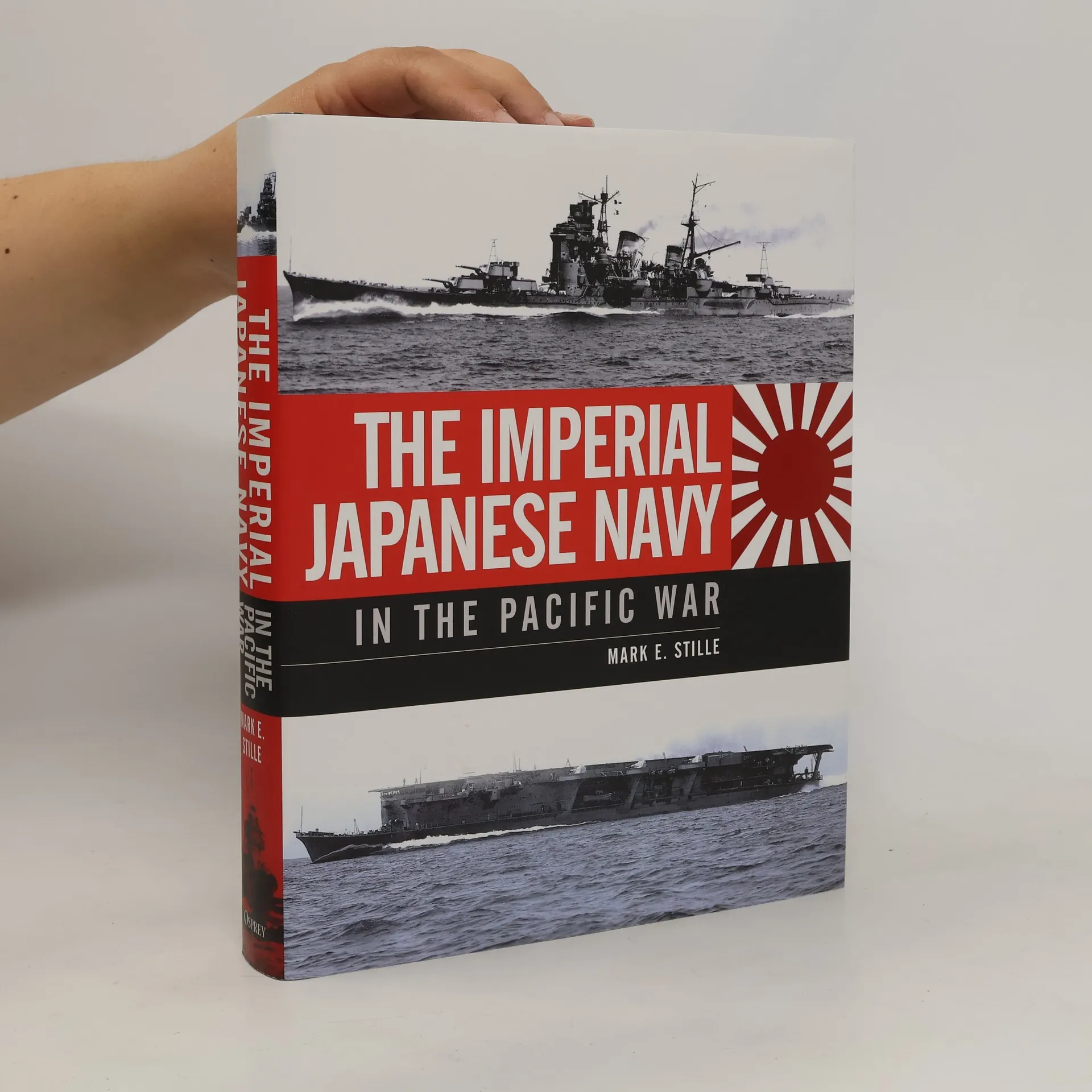
Launching Osprey's new Fleet series, this is a spectacularly illustrated, concise and comprehensive account of the Imperial Japanese Navy's striking force at the height of its power. The Imperial Japanese Navy (IJN) entered the Pacific War as one of the most formidable navies in the world, and its combat power was concentrated into one force, the Combined Fleet. In the months that followed Pearl Harbor it enjoyed an unrivaled string of victories, shattering American, British, Australian, and Dutch naval forces. This period of expansion and constant victories ended at the Battle of Midway, after which the Combined Fleet was forced onto the defensive. In this book, Mark Stille draws on his decades of IJN research to explain what made the Combined Fleet the fighting force that it was. Packed with superb original artwork, explanatory 3D diagrams and maps, it examines the fleet's doctrine, innovative tactics and powerful warships. It also details the qualities and importance of IJN leadership, logistics, naval infrastructure, and Japan's shipbuilding capability, and gives an account and analysis of the IJN's combat performance during these crucial months – not just in the famous carrier battles, but also exploring lesser-known elements such as IJN amphibious forces and land-based aviation.
The Midway-class were the US Navy's biggest carriers built during World War II. Superbly illustrated, this explains how they became the backbone of the Cold War fleet.
"Designed with little more than a passing nod to the international naval treaties of the inter-war period, the imperial Japanese Navy's heavy cruisers were fast and heavily armed. Like the other vessels of the Japanese Navy, the heavy cruisers were technologically superior to and far more innovative than their Allied rivals, whom they met in many of the major Pacific Theater battles, including Midway and Leyte Gulf, Mark Stille continues his study of the UN of Wolrd War II with this fascinating topic, addressing the design and development of all 18 ships in the six heavy cruiser classes, from pre-war construction and mid-war alterations, to their operational histories and eventual fates." -- p [4] of cover
Imperial Japanese Navy Light Cruisers 1941-45.
A detailed and comprehensive study of the carrier formations of the Pacific War, including their origins, development, and key battles from the Coral Sea, through Midway and Guadalcanal to the battle of the Philippine Sea.The defining feature of the Pacific Theater of World War II was the clash of carriers that ultimately decided the fate of nations. The names of the battles become legendary as some of the most epic encounters in the history of naval warfare. Pre-war assumptions about the impact and effectiveness of carriers were comprehensively tested in early war battles such as Coral Sea, while US victories at Midway and in the waters around Guadalcanal established the supremacy of its carriers. The US Navy's ability to adapt and evolve to the changing conditions of war maintained and furthered their advantage, culminating in their comprehensive victory at the battle of the Philippine Sea, history's largest carrier battle, which destroyed almost the entire Japanese carrier force.Examining the ships, aircraft, and doctrines of both the Japanese and US navies and how they changed during the war, Mark E. Stille shows how the domination of American carriers paved the way towards the Allied victory in the Pacific.
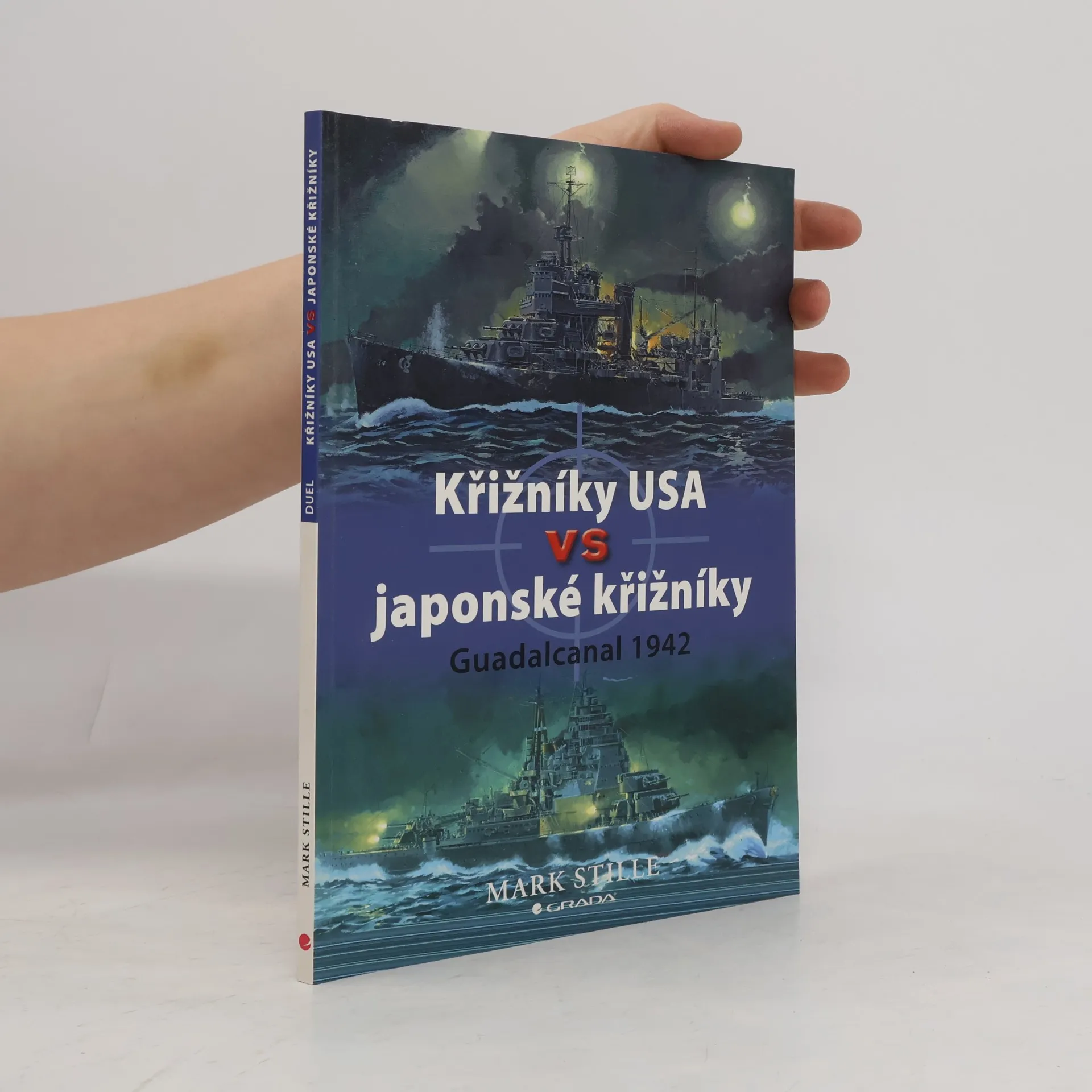
This title explores the crucial role of cruisers in the early Pacific War, focusing on the battles for Guadalcanal, particularly the Battle of Savo Island and the Battle of Cape Esperance.
The Italian Royal Navy (Regia Marine or RM) began the Second World War with one of the largest fleets in the world. Included in this was a total of 59 fleet destroyers, and others were added during the war. These were a diverse collection of ships dating back to the First World War, large destroyers built to counter ships of similar size being introduced in the French Navy (the RM's historical enemy), and medium-sized ships which constituted the bulk of the destroyer force. RM destroyers were built for high speed, not endurance since they were only expected to operate inside the Mediterranean. They were also well-armed, but lacked radar.During the war, RM destroyers fought well. With the exception of a small force based in Abyssinia which fought a series of battles in the Red Sea against the British, RM destroyers were active in the Mediterranean. The primary mission of the RM curing the war was to keep the supply lines to North Africa open. The Italians were largely successful in this effort, and destroyers were key in the effort. RM destroyers were present at every fleet action with the British Mediterranean Fleet.. The intensity of these actions were shown by the fact that the RM lost 51 destroyers during the war.
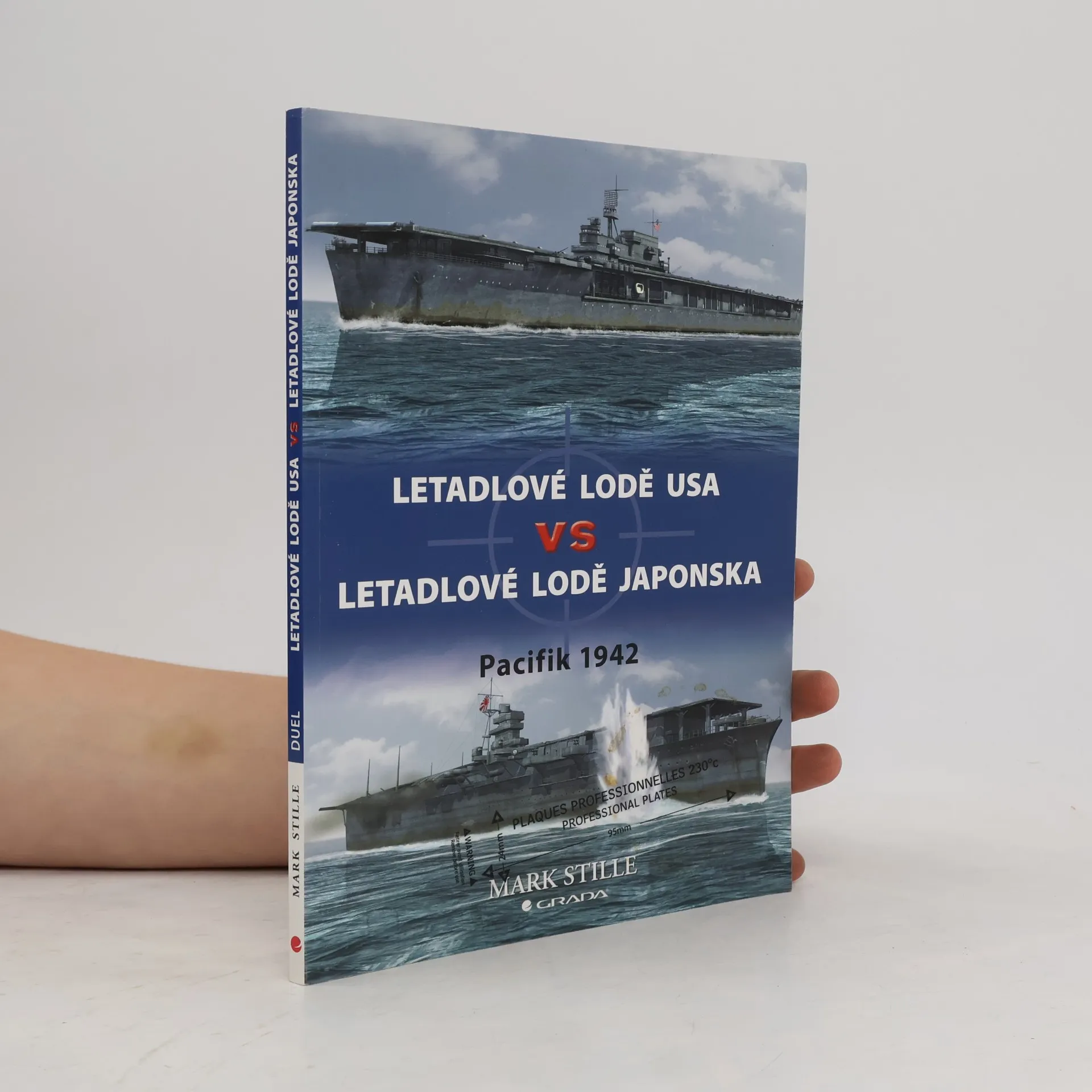
As the Pacific war escalated into the largest naval conflict in history the role of the carrier, the revolutionary and formidable of various naval weapons, became the linchpin of American and Japanese naval strategy. This book reveals the experiences of the airmen and guncrews of the rival vessels.
Japonské námořnictvo bylo průkopníkem námořního letectva, jako první zařadilo do služby letadlovou loď. Američané je následovali a zahájili rozsáhlý program stavby letadlových lodí. Když se válka v Tichomoří rozšířila do největšího námořního konfliktu dějin, stala se letadlová loď základem americké i japonské námořní strategie a tyto lodě spolu bojovaly o nadvládu nad tímto důležitým válčištěm. Tato kniha analyzuje nejrůznější výzbroj, jež byla k dispozici pro letadlové lodě obou protivníků, zejména palubní letadla, ale i mohutná lodní děla. Popisuje konstrukci a vývoj těchto revolučních lodí a líčí zážitky námořních letců a dělových obsluh v zápase o vítězství v souboji dovednosti, houževnatosti a odvahy.
Napínavý příběh posledního velkého souboje amerických a japonských křižníků v legendární bitvě o Guadalcanal jistě potěší všechny zájemce o vývoj a taktiku těchto lodí. Proti sobě stanuly dvě eskadry a svedly spolu několik impozantních bitev, v nichž se válečné štěstí střídavě přiklánělo na tu či onu stranu, až po definitivní porážku japonské flotily. Autor knihy podrobně rozebírá slabiny a silné stránky nesmiřitelných protivníků, jejich doktríny, problémy ve velení, ale i skvělé taktické kroky, úroveň výcviku a vzdělání námořníků, životní podmínky na palubách lodí, technické údaje o třídách, jejich výstroj a výzbroj. Věrohodnost líčení zvyšuje i četné využívání výpovědí přímých účastníků a vzácných dokumentárních fotografií.
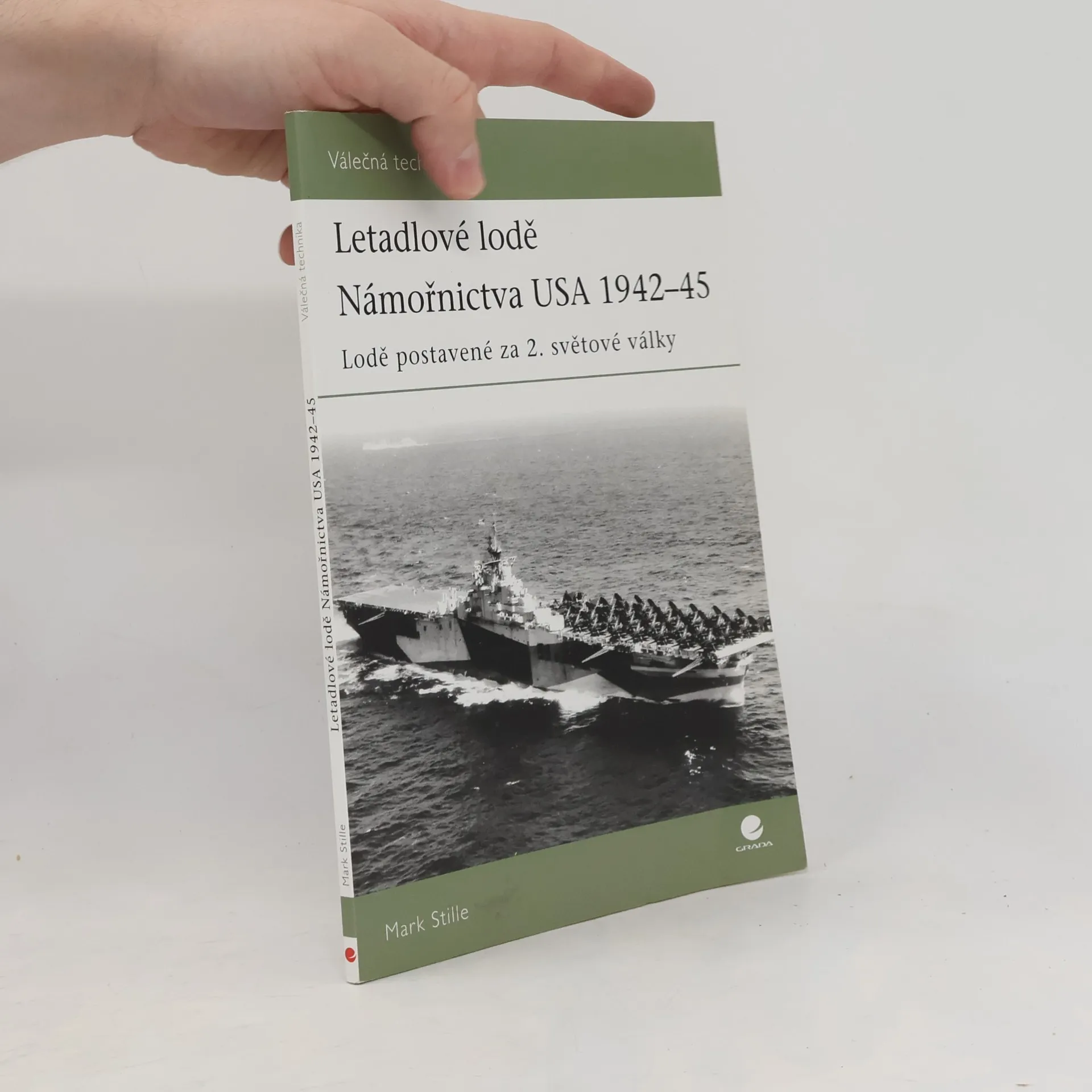
Letadlové lodě byly pro USA základní zbraní proti Japonsku během války v Pacifiku. Velkou roli sehrály letadlové lodě třídy Essex, které představovaly největší typ lodě tohoto druhu, které byl kdy postaven. Čtenář se důkladně seznámí s interiérem i exteriérem těchto lodí, jejich vývojem a designem a prožije boje o Filipíny, záliv Leyte a Okinawu.