L'imagination sociologique de Mills, publiée en 1959, est un texte classique de la sociologie américaine, représentant une version critique de cette discipline. Dans cet ouvrage, Mills aborde trois problèmes fondamentaux : la relation entre biographie et histoire, c'est-à-dire le lien entre les petites et grandes histoires, les destins individuels et leur conditionnement social ; la nécessité de transformations structurelles fondamentales comme condition préalable à l'humanisation des destins humains ; et le constat que la plupart des recherches sociologiques se concentrent sur des questions peu significatives ou servent consciemment les élites au pouvoir. Ce dernier thème est développé comme une critique toujours pertinente de la "grande théorie", qui ne comprend pas les destins humains, et de la recherche empirique abstraite, qui néglige le rôle des structures sociales et des relations de pouvoir. Pour les étudiants en sciences humaines, l'ouvrage inclut un ajout de Mills sur l'atteinte d'une véritable professionnalité et d'un savoir intellectuel.
C. Wright Mills Livres
Sociologue américain, Mills est réputé pour son exploration de la relation complexe entre la biographie individuelle et le contexte historique, ainsi que la théorie et la méthode dans la recherche sociologique. Il a examiné de manière critique les structures de pouvoir et de classe aux États-Unis, plaidant pour le rôle crucial de l'engagement public et politique. Mills estimait que les intellectuels avaient une responsabilité importante de participer activement à la société plutôt que de rester des observateurs détachés.


White Collar; the American Middle Classes...
- 410pages
- 15 heures de lecture
Unlike some other reproductions of classic texts (1) We have not used OCR(Optical Character Recognition), as this leads to bad quality books with introduced typos. (2) In books where there are images such as portraits, maps, sketches etc We have endeavoured to keep the quality of these images, so they represent accurately the original artefact. Although occasionally there may be certain imperfections with these old texts, we feel they deserve to be made available for future generations to enjoy.
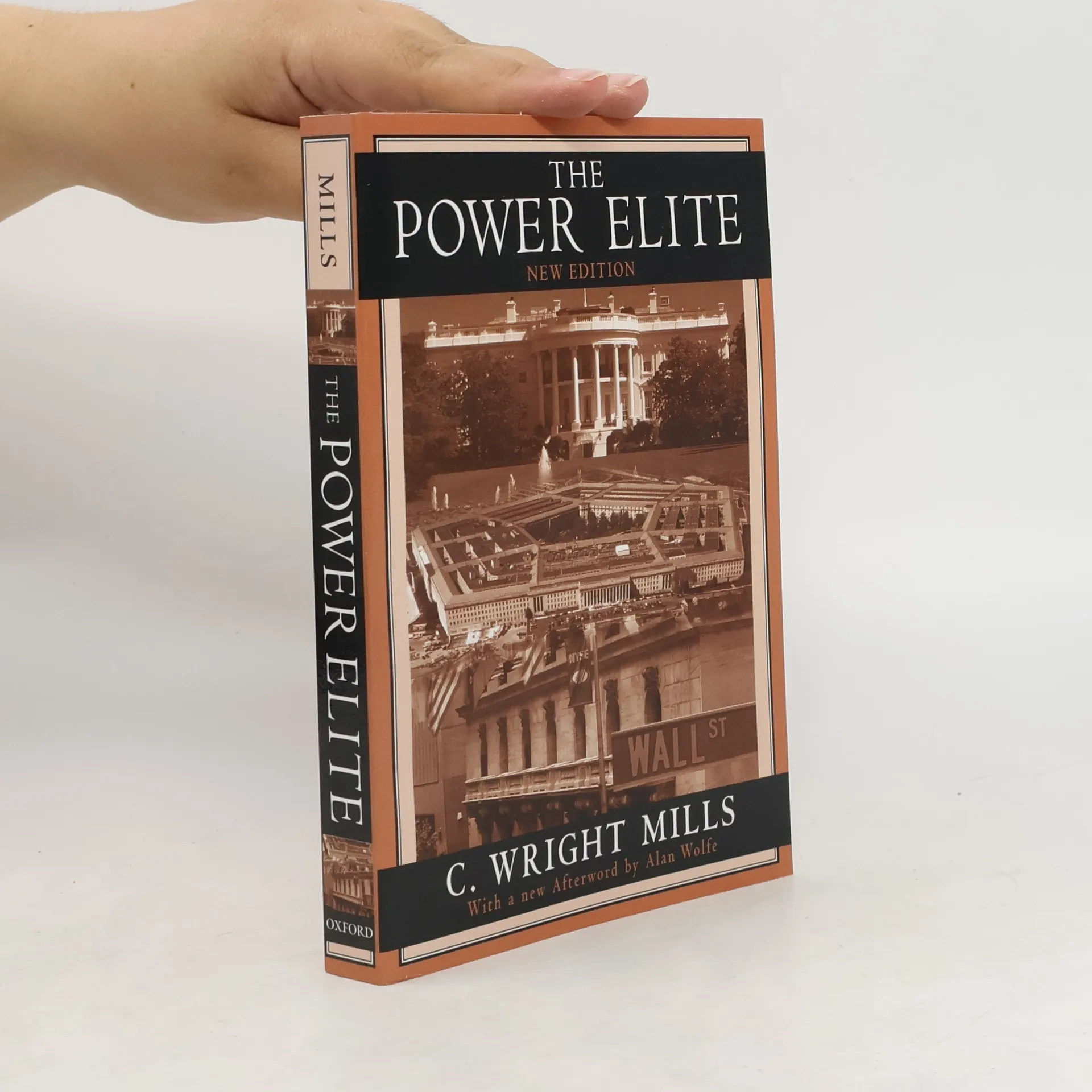
First published in 1956, The Power Elite stands as a contemporary classic of social science and social criticism. C. Wright Mills examines and critiques the organization of power in the United States, calling attention to three firmly interlocked prongs of the military, corporate, and political elite. The Power Elite can be read as a good account of what was taking place in America at the time it was written, but its underlying question of whether America is as democratic in practice as it is in theory continues to matter very much today.What The Power Elite informed readers of in 1956 was how much the organization of power in America had changed during their lifetimes, and Alan Wolfe's astute afterword to this new edition brings us up to date, illustrating how much more has changed since then. Wolfe sorts out what is helpful in Mills' book and which of his predictions have not come to bear, laying out the radical changes in American capitalism, from intense global competition and the collapse of communism to rapid technological transformations and ever changing consumer tastes. The Power Elite has stimulated generations of readers to think about the kind of society they have and the kind of society they might want, and deserves to be read by every new generation.
Gathers essays written during the sixties by such people as Norman Mailer, Marshall McLuhan, Tom Wolfe, Eldridge Cleaver, and others about the changes in art, politics, and the media during that decade
From Max Weber: Essays in Sociology
- 512pages
- 18 heures de lecture
An introduction to the work of the greatest German sociologist and a key figure in the development of present-day sociological thought.
German