Cold Peace
- 336pages
- 12 heures de lecture
An urgent examination of the world barrelling toward a new Cold War, from a scholar on the diplomatic front lines




An urgent examination of the world barrelling toward a new Cold War, from a scholar on the diplomatic front lines
In this book, the editors focus on architecture and communication from various different perspectives – taking into account that the term “architecture” is used for buildings as well as in the context of computer software. Data and software also impact on our cities; raw data, however, do not convey any information – in order to generate information and communication they have to be organized and must make sense to the reader. The contributions avoid clear separation of the various communication spheres of their disciplines. Instead, they use the wide range of approaches to explore meanings – an ambitious aim that leaves the destination wide open; the reader is invited to share in this adventure.
Making War and Building Peace examines how well United Nations peacekeeping missions work after civil war. Statistically analyzing all civil wars since 1945, the book compares peace processes that had UN involvement to those that didn't. Michael Doyle and Nicholas Sambanis argue that each mission must be designed to fit the conflict, with the right authority and adequate resources. UN missions can be effective by supporting new actors committed to the peace, building governing institutions, and monitoring and policing implementation of peace settlements. But the UN is not good at intervening in ongoing wars. If the conflict is controlled by spoilers or if the parties are not ready to make peace, the UN cannot play an effective enforcement role. It can, however, offer its technical expertise in multidimensional peacekeeping operations that follow enforcement missions undertaken by states or regional organizations such as NATO. Finding that UN missions are most effective in the first few years after the end of war, and that economic development is the best way to decrease the risk of new fighting in the long run, the authors also argue that the UN's role in launching development projects after civil war should be expanded.
In the wake of the Cold War, as the international community struggles to accommodate change, the author of this study directs our attention to the classic theorists, Thucydides, Rousseau, Locke and others. He explores their enduring theories, and recommends that they be applied to today's fundamental international dilemmas. Although no one school has all the answers, this analysis maintains that history has provided the theoretical tools to meet modern challenges, and that great political minds of the past can still guide modern politicians through the confusion of current events.
This book of ten original essays provides a showcase of currently diverse theoretical agendas in the field of international relations. Contributors address the theoretical analysis that their perspective brings to the issue of change in global politics. Written for readers with a general interest in and knowledge of world affairs, New Thinking in International Relations Theory can also be assigned in international relations theory courses.The volume begins with an essay on the classical tradition at the end of the Cold War. Essays explore work outside the mainstream, such as Jean Bethke Elshtain on feminist theory and James Der Derian on postmodern theory as well as those developing theoretical advances within traditional realms from James DeNardo's formal modeling to the more descriptive analyses of Miles Kahler and Steve Weber. Other essays include Matthew Evangelista on domestics structure, Daniel Deudney on naturalist and geopolitical theory, and Joseph Grieco on international structuralist theory.
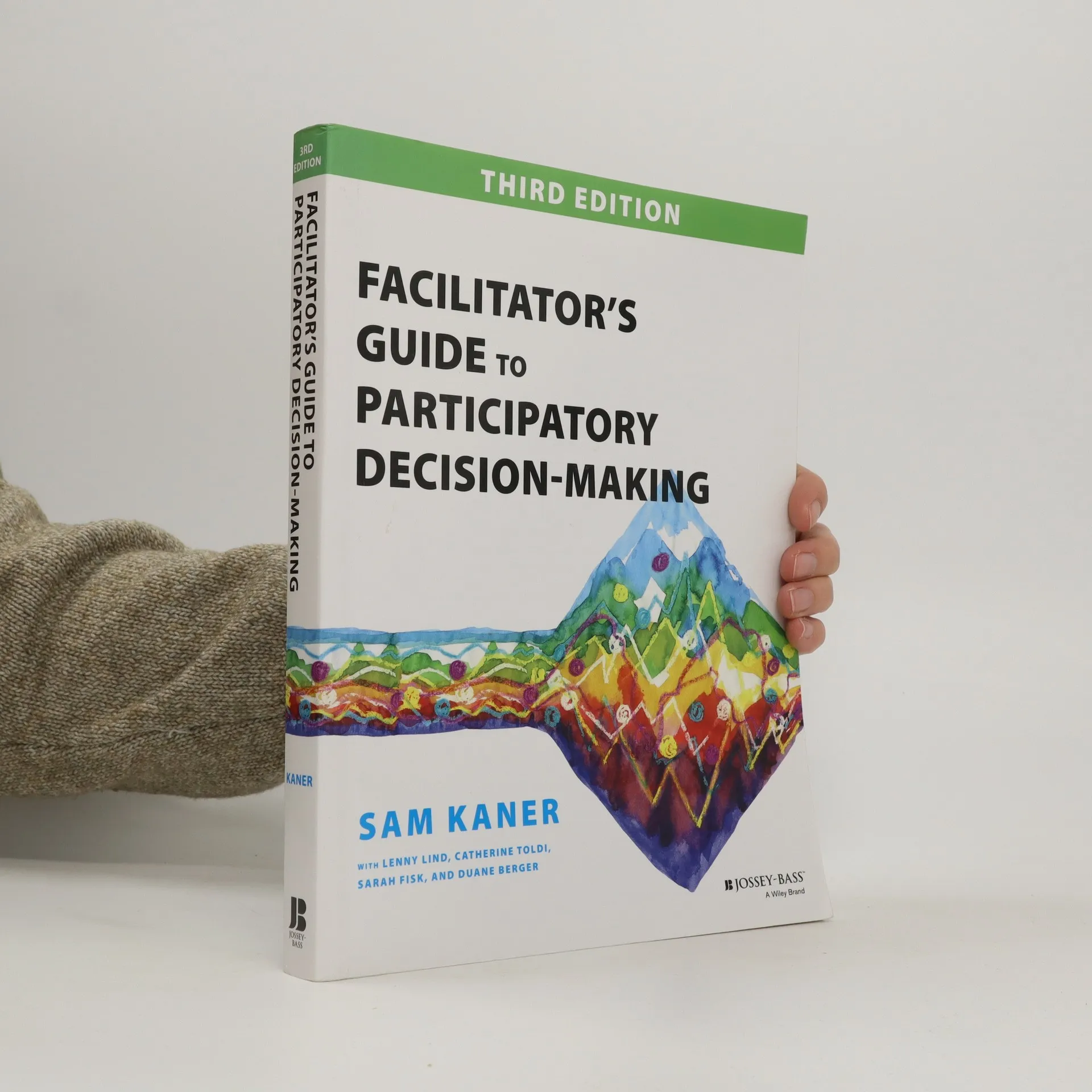
Unleash the transformative power of face to face groups The third edition of this ground-breaking book continues to advance its mission to support groups to do their best thinking. It demonstrates that meetings can be much more than merely an occasion for solving a problem or creating a plan. Every well-facilitated meeting is also an opportunity to stretch and develop the perspectives of the individual members, thereby building the strength and capacity of the group as a whole. This fully updated edition of The Facilitator's Guide to Participatory Decision-Making guides readers through the struggle and the satisfaction of putting participatory values into practice, helping them to fulfill the promise of effective group decision-making. With previous editions already embraced by business and community leaders and consulting professionals around the world, this new book is even more insightful and easy to use. New for this edition: 60 pages of brand new skills and tools Many new case examples Major expansion and reorganization of the advanced sections of the book. New chapter: Teaching A Group About Group Dynamics Doubled in size: Classic Facilitator Challenges. Substantially improved: Designing Realistic Agendas – now three chapters, with wise, insightful answers to the most vexing questions about meeting design.
Why Meetings Are Important - What Goes Wrong at Meetings - The Case for a Group Memory - How to Find Win/Win Solutions - A Summary of the Interaction Method - How to Be a Good Facilitator - How to Be a Good Recorder - How to Be a Good Group Member - How the Boss Stays Boss - How to Plan Your Meeting - What Type of Meeting Are You Going to Hold? - Who Should Attend Your Meeting? - How Many People Should Attend? - How to Make Meeting Rooms Work - How to Put It All Together: The Agenda - Solving Problems in Groups: The Tools - How to Make a Presentation - How to Introduce the Interaction Method into Your Organization - How to Train Yourself.