


Bookbot

Arnold H. Modell

    Philosophical Psychopathology: Imagination and the Meaningful Brain
    The Private Self
    Other Times, Other Realities
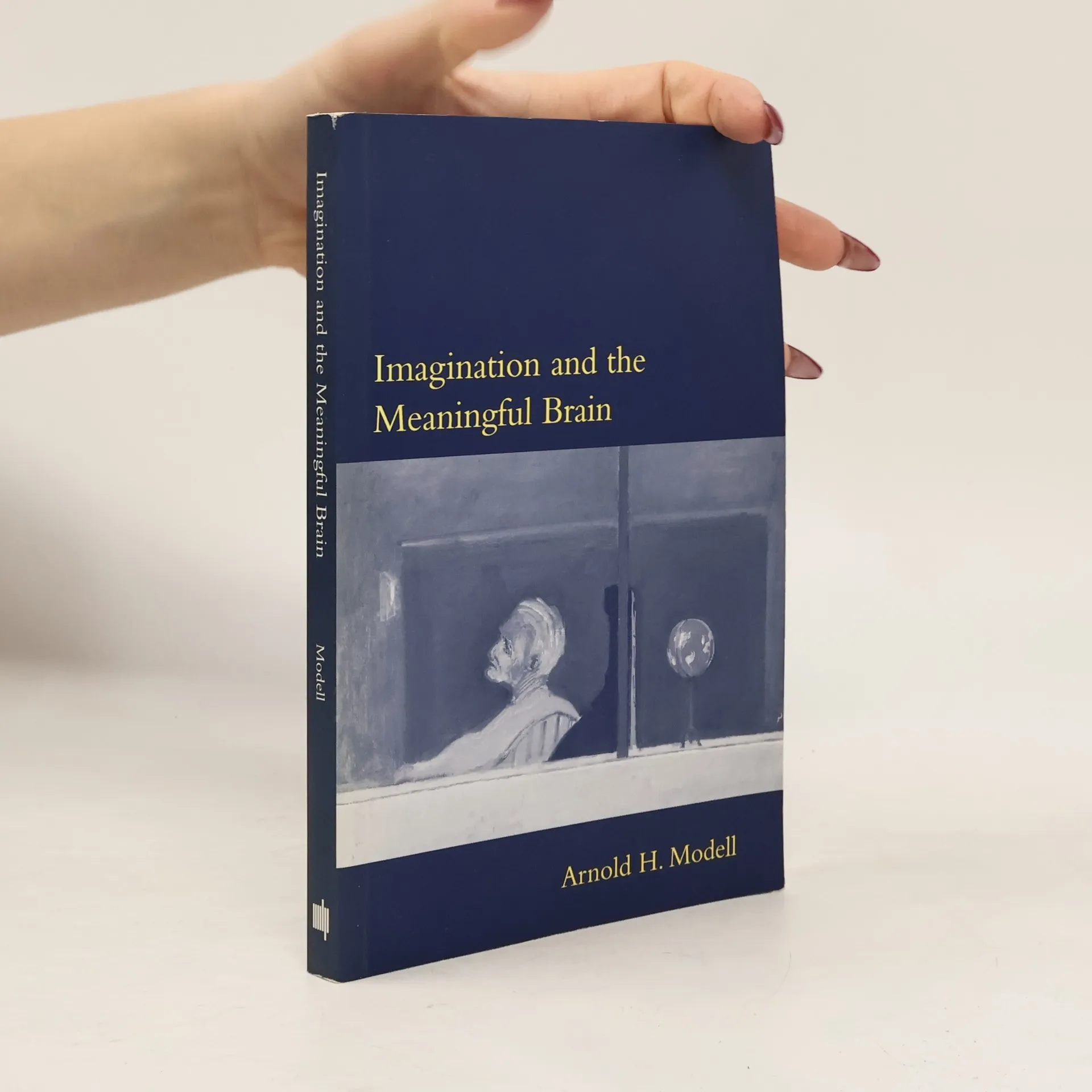
    • The ultimate goal of cognitive sciences is to understand brain function—how it transforms "matter into imagination." Psychoanalyst Arnold Modell argues that any scientific explanation of mind/brain must include subjective human experience. He challenges the notion that mental functioning equates to computation, asserting that meaning construction differs from mere information processing. The complexities of human psychology, understood through introspection and empathy, must complement the third-person perspective of cognitive psychology and neuroscience. Modell posits that if other mammals are conscious and aware of their feelings, we should consider both evolutionary continuities and discontinuities in emotion. While the limbic system, or emotional brain, is ancient, only humans possess generative imagination, allowing us to interpret and transform our feelings through metaphor. To support his argument, Modell incorporates insights from various fields, including psychoanalysis, cognitive psychology, neurobiology, evolutionary biology, linguistics, and philosophy. He contends that integrating neuroscience's objectivity, the phenomenology of introspection, and psychoanalysis's intersubjectivity is essential for a comprehensive understanding of how the mind operates.

      Philosophical Psychopathology: Imagination and the Meaningful Brain2006
    • The Private Self

      • 262pages
      • 10 heures de lecture

      In The Private Self , Arnold Modell contributes an interdisciplinary perspective in formulating a theory of the private self. A leading thinker in American psychoanalysis, Modell here studies selfhood by examining variations on the theme of the self in Freud and in the work of object relations theorists, self psychologists, and neuroscientists. Modell contends that the self is fundamentally paradoxical, in that it is at once dependent upon social affirmation and autonomous in generating itself from within. We create ourselves, he suggests, by selecting values that are endowed with private meanings.By thinking of the unconscious as a neurophysiological process, and the self as the subject and object of its own experience, Modell is able to explain how identity can persist in the flux of consciousness. He thus offers an exciting and original perspective for our understanding of the mind and the brain.

      The Private Self1996
    • Nearly a century has passed since Freud's theories unleashed a revolution in our understanding of the human psyche. Yet, as Arnold Modell firmly points out, we still do not possess a theory that explains how psychoanalysis works. Other Times, Other Realities provides brilliant insight into this perplexing problem and lays the foundation for a comprehensive theory of psychoanalytic treatment. Modell's careful consideration of Freudian theory, the interpretations of contemporary ego psychology, and the contribution of object theory discloses the changing significance of the fundamental elements of the therapeutic process. In Other Times, Other Realities, readers will discover an illuminating synthesis of concepts underlying the various interpretations of the psychoanalytic process.

      Other Times, Other Realities1990