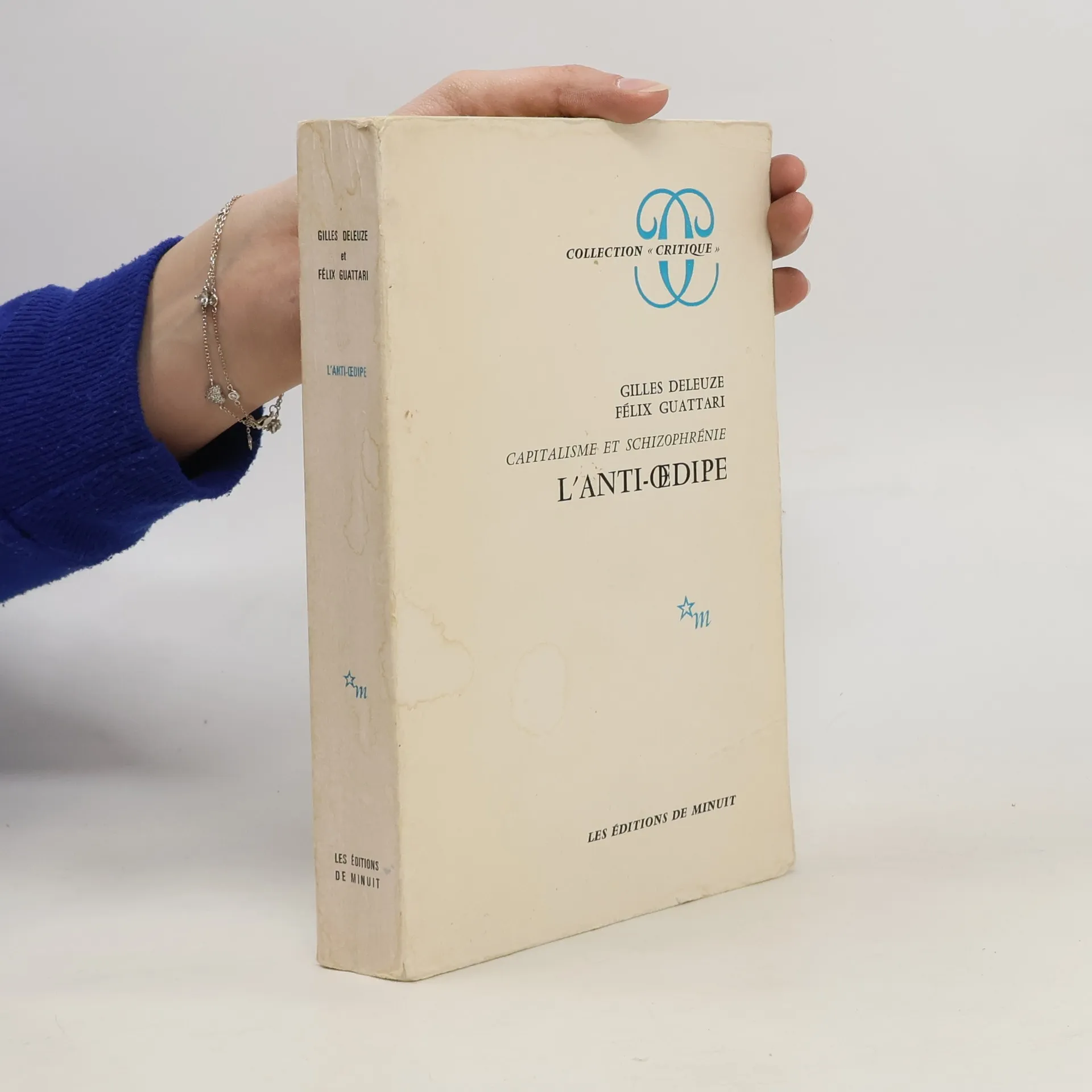
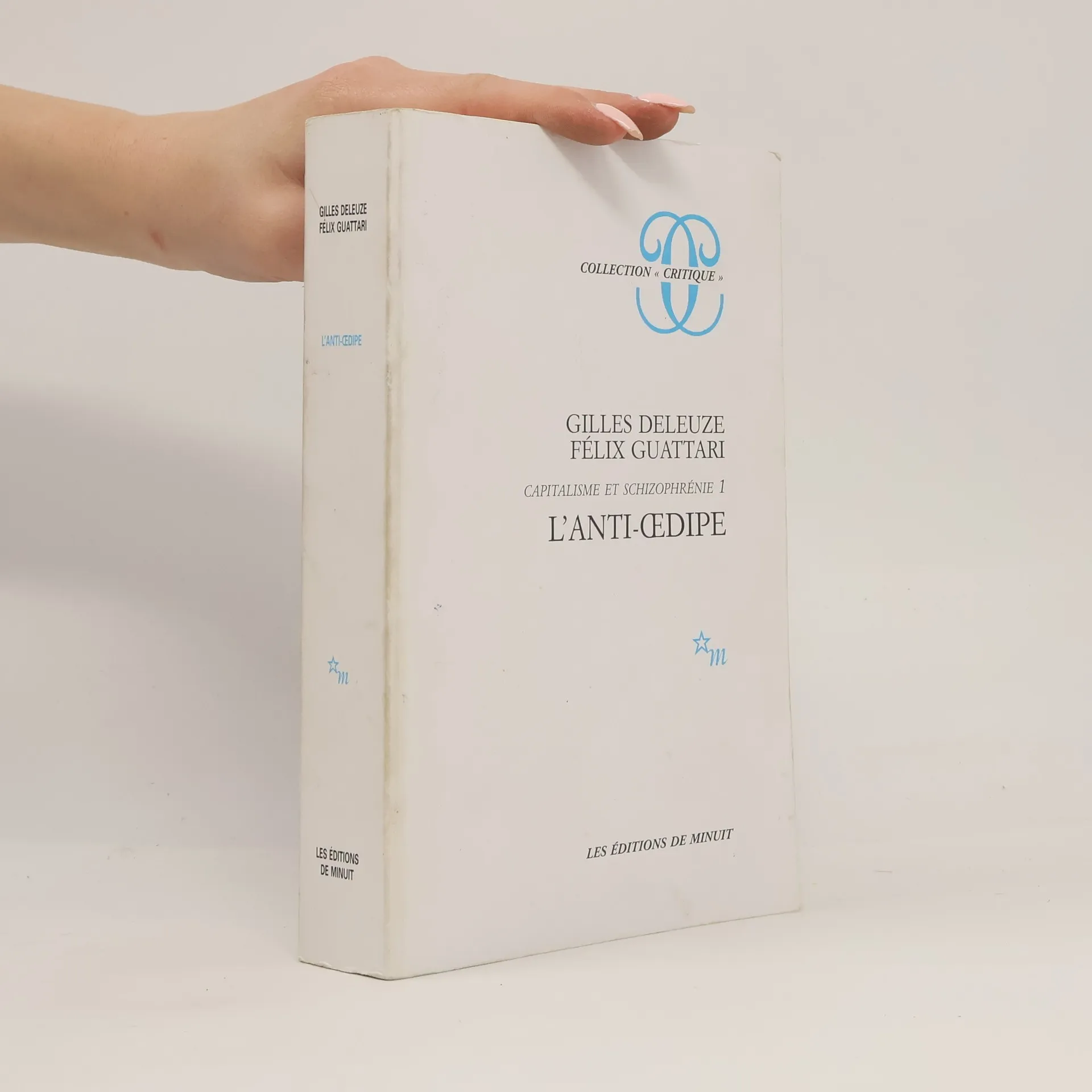
Qu'est-ce que l'inconscient ? Ce n'est pas un théâtre, mais une usine, un lieu et un agent de production. Machines désirantes : l'inconscient n'est ni figuratif ni structural, mais machinique. – Qu'est-ce que le délire ? C'est l'investissement inconscient d'un champ social historique. On délire les races, les continents, les cultures. La schizo-analyse est à la fois l'analyse des machines désirantes et des investissements sociaux qu'elles opèrent. – Qu'est-ce qu'Œdipe ? L'histoire d'une longue « erreur », qui bloque les forces productives de l'inconscient, les fait jouer sur un théâtre d'ombres où se perd la puissance révolutionnaire du désir, les emprisonne dans le système de la famille. Le « familialisme » fut le rêve de la psychiatrie ; la psychanalyse l'accomplit, et les formes modernes de la psychanalyse et de la psychiatrie n'arrivent pas à s'en débarrasser. Tout un détournement de l'inconscient, qui nous empêche à la fois de comprendre et de libérer le processus de la schizophrénie.
Félix Guattari Livres
Pierre-Félix Guattari fut un militant, un psychothérapeute institutionnel, un philosophe et un sémioticien français, fondateur de la schizoanalyse et de l'écologie. Son œuvre, notamment en collaboration avec Gilles Deleuze, explore les relations complexes entre la psyché, la société et l'environnement. La pensée de Guattari se caractérise par une critique radicale du capitalisme et une quête de nouvelles formes d'organisation et de libération. Son approche combine une profonde compréhension de l'esprit humain avec un appel urgent au renouveau écologique.


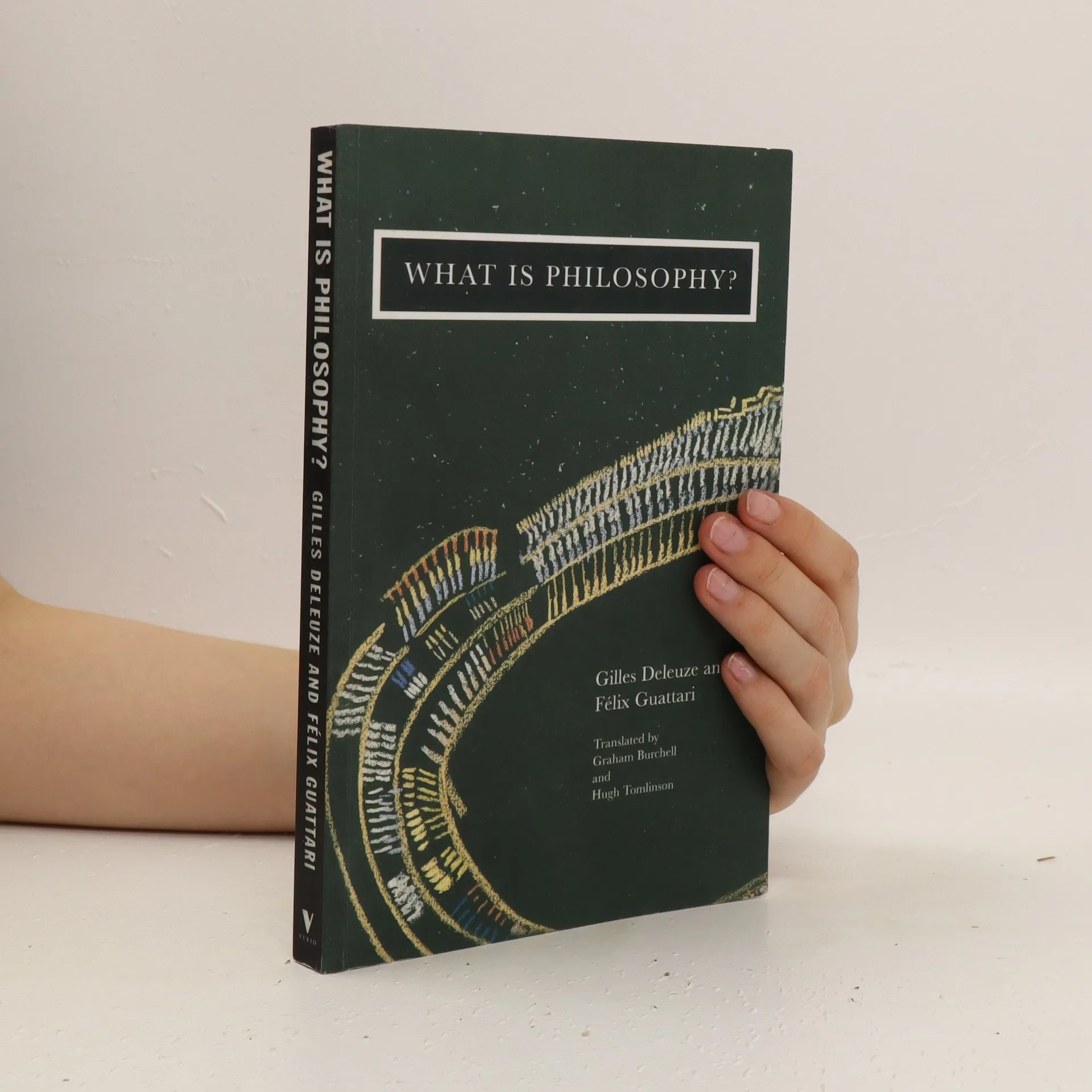
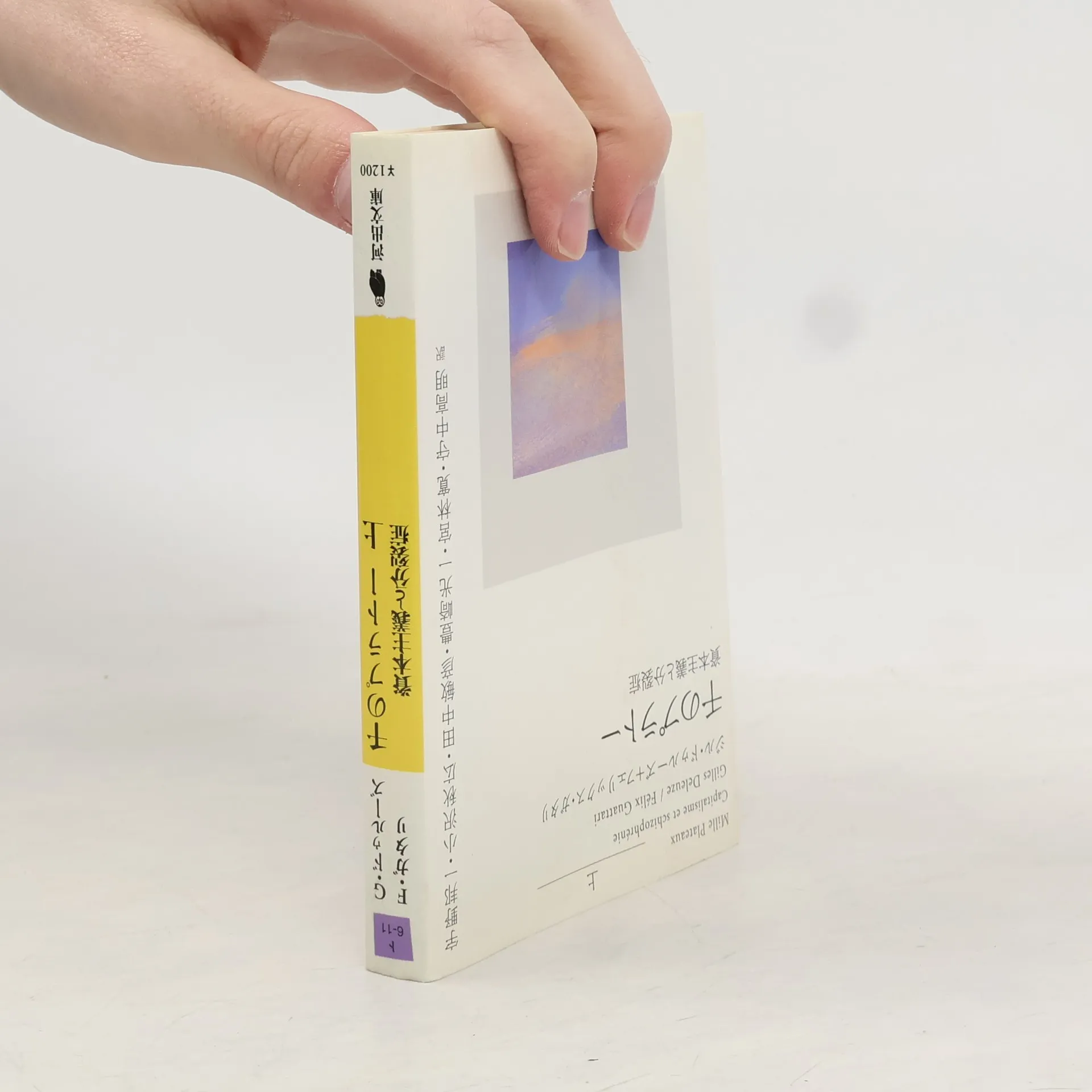
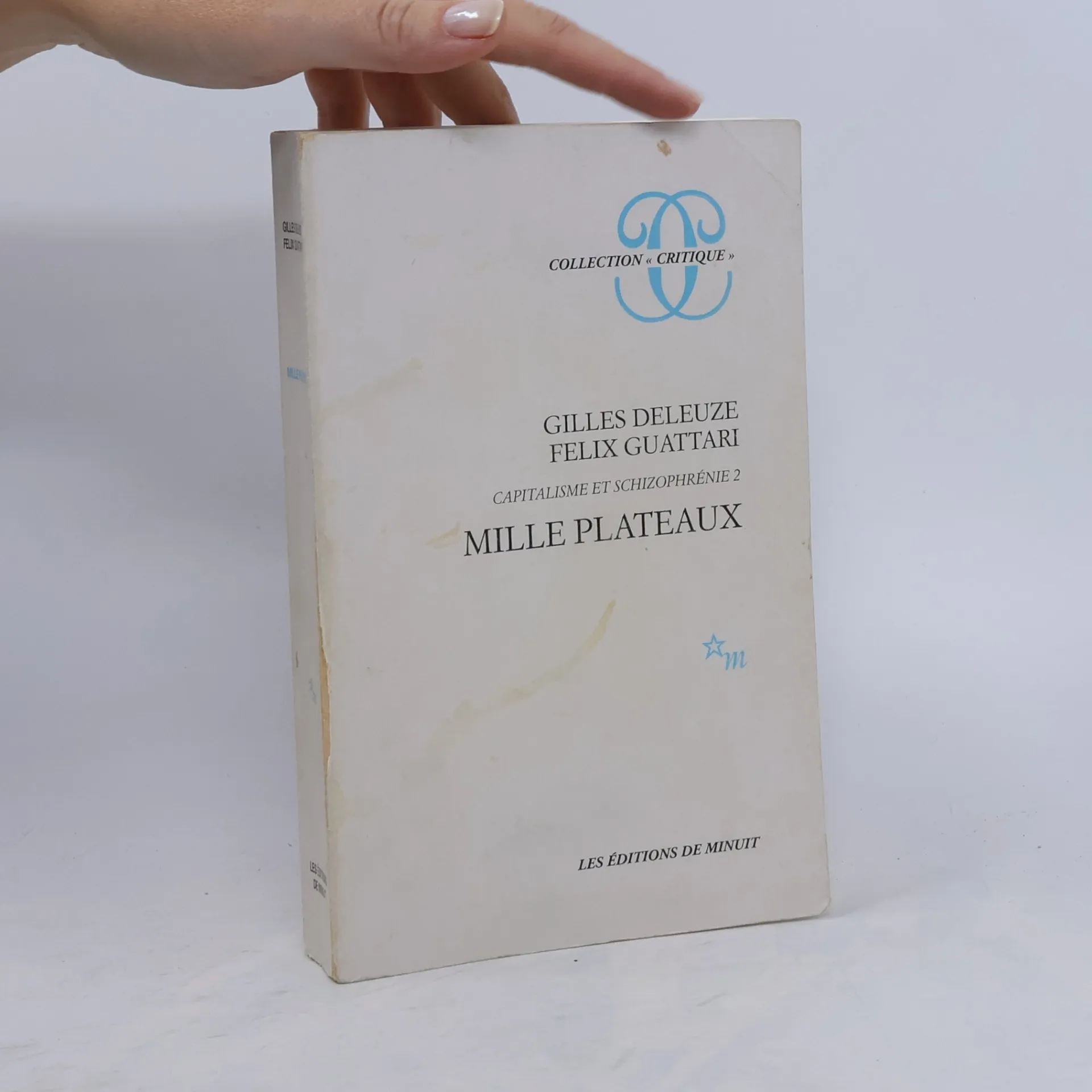
Gilles Deleuze (1925-1995) was Professor of Philosophy at the University of Paris VIII. He is a key figure in poststructuralism, and one of the most influential philosophers of the twentieth century. Felix Guattari (1930-1992) was a psychoanalyst at the la Borde Clinic, as well as being a major social theorist and radical activist. A Thousand Plateaus is part of Deleuze and Guattari's landmark philosophical project, Capitalism and Schizophrenia - a project that still sets the terms of contemporary philosophical debate. A Thousand Plateaus provides a compelling analysis of social phenomena and offers fresh alternatives for thinking about philosophy and culture. Its radical perspective provides a toolbox for nomadic thought and has had a galvanizing influence on today's anti-capitalist movement. Translated by Brian Massumi
The Machinic Unconscious
- 367pages
- 13 heures de lecture
An early work that lays the foundation for establishing a polemical dimension to psychoanalysis.
Soft Subversions
- 341pages
- 12 heures de lecture
A new, expanded, and reorganized edition of a collection of texts that present a fuller scope to Guattari's thinking from 1977 to 1985.
Psychoanalysis and Transversality
- 384pages
- 14 heures de lecture
Transversality can be visualized as a fenced field with horses wearing adjustable blinkers, where the adjustment represents the "coefficient of transversality." When the blinkers are fully closed, the horses experience a traumatic encounter, but as they are opened, movement becomes easier. Originally published in French in 1972, this collection features articles by Félix Guattari written between 1955 and 1971, offering insight into his intellectual and political journey leading up to his collaboration with Gilles Deleuze in "Anti-Oedipus: Capitalism and Schizophrenia." Guattari's unique background includes co-founding the La Borde psychiatric clinic in 1953 with psychoanalyst Jean Oury, emphasizing that treating psychotics requires altering the entire institutional context. He viewed "institutional psychotherapy" as a means not only to heal but also to foster a new relationship with the world. A dissident within the French Communist Party and an active participant in the May 1968 student uprising, Guattari recognized the potential for integrating analysis into political groups. He conceptualized these groups as open machines—subject-groups—rejecting hierarchical structures and developing transversally, rhizomatizing through connections with other groups.
Anti-Oedipus : capitalism and schizophrenia
- 432pages
- 16 heures de lecture
An "introduction to the nonfascist life" (Michel Foucault, from the Preface) When it first appeared in France, Anti-Oedipus was hailed as a masterpiece by some and "a work of heretical madness" by others. In it, Gilles Deleuze and Félix Guattari set forth the following theory: Western society's innate herd instinct has allowed the government, the media, and even the principles of economics to take advantage of each person's unwillingness to be cut off from the group. What's more, those who suffer from mental disorders may not be insane, but could be individuals in the purest sense, because they are by nature isolated from society. More than twenty-five years after its original publication, Anti-Oedipus still stands as a controversial contribution to a much-needed dialogue on the nature of free thinking.
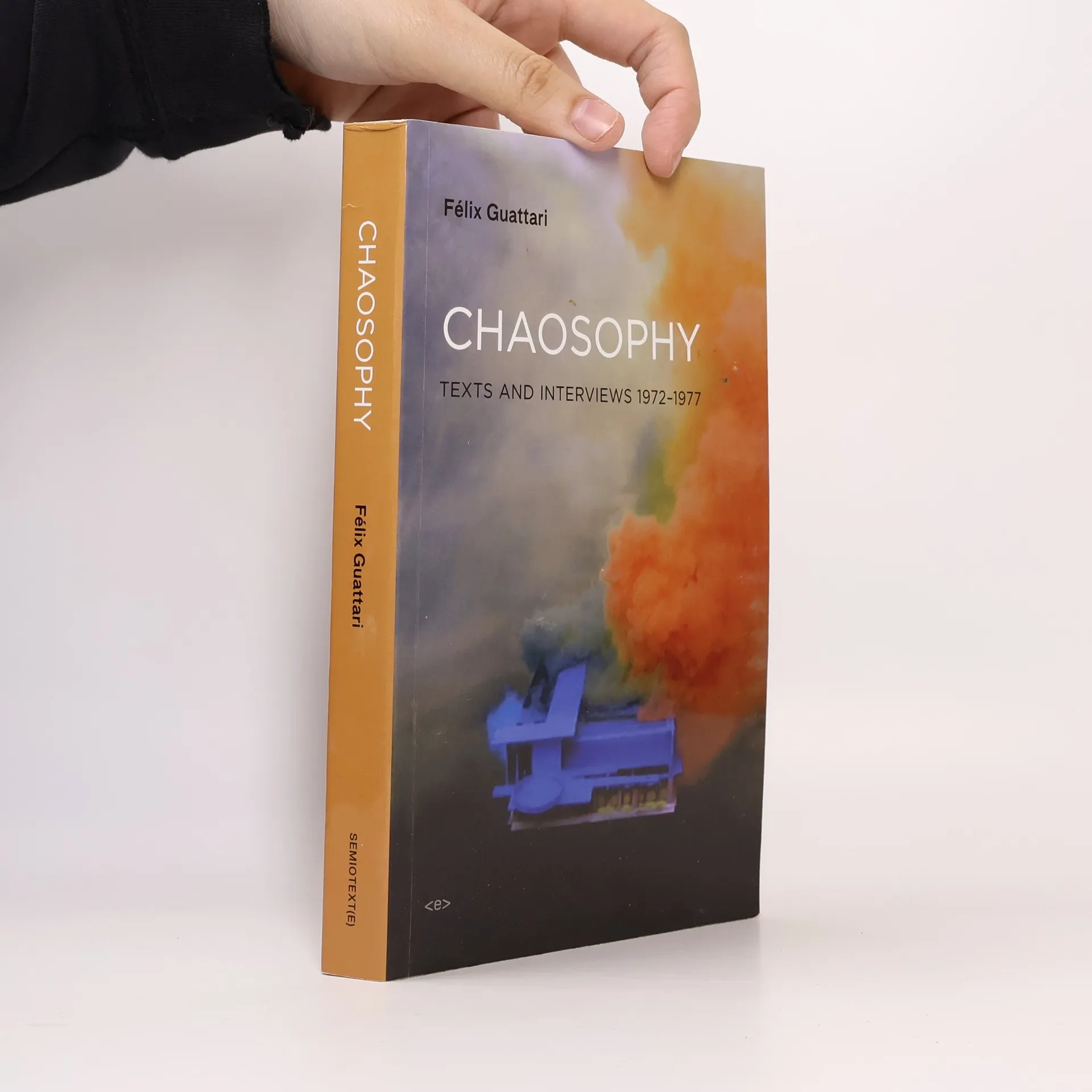
Chaosophy
- 335pages
- 12 heures de lecture
Groundbreaking essays that introduce Guattari's theories of schizo-analysis, in an expanded edition.
Chaosmosis
- 136pages
- 5 heures de lecture
The final work by the author before his death in 1992, Chaosmosis is a radical and challenging work concerned with the reinvention and resingularization of subjectivity. It attempts to embody affective change, the short-circuiting of signification and the proliferation of sense necessary to engage with non-discursive, artistic, poetic and pathic intensities. It includes critical reflections on Lacanian psychoanalysis, structuralism, information theory, postmodernism, and the thought of Heidegger, Bakhtin, Barthes, and others.
The Anti-OEdipus Papers
- 439pages
- 16 heures de lecture
With Anti-Oedipus in 1972, Felix Guattari and Gilles Deleuze instigated one of the most daring intellectual adventures of our time, updating both psychoanalysis and Marxism in light of a more radical and "constructivist" vision of capitalism. Assembled here for the first time, Guattari's notes, addressed to and annotated by Deleuze, reveal an inventive, visionary "conceptor," arguably one of the more enigmatic figures in philosophy and social-political theory today. The Anti-Oedipus Papers (1969-1973) are supplemented by substantial journal entries describing Guattari's turbulent relationship with his teacher Jacques Lacan, apprehensions about Anti-Oedipus and personal accounts of his life