
Bookbot

Amitav Ghosh

    11 juillet 1956

    Amitav Ghosh est l'un des écrivains indiens les plus renommés, dont les œuvres explorent les événements historiques, la mémoire et leur impact sur le présent. Son écriture se caractérise par une recherche méticuleuse et des personnages complexes naviguant dans des paysages sociaux et politiques complexes. Ghosh aborde des thèmes tels que le colonialisme, la migration et les rencontres culturelles, mettant souvent en lumière des récits oubliés et des voix marginalisées. Sa maîtrise stylistique et sa profonde compréhension de la condition humaine en font un conteur exceptionnel.

    Amitav Ghosh
    The glass palace
    The Great Derangement
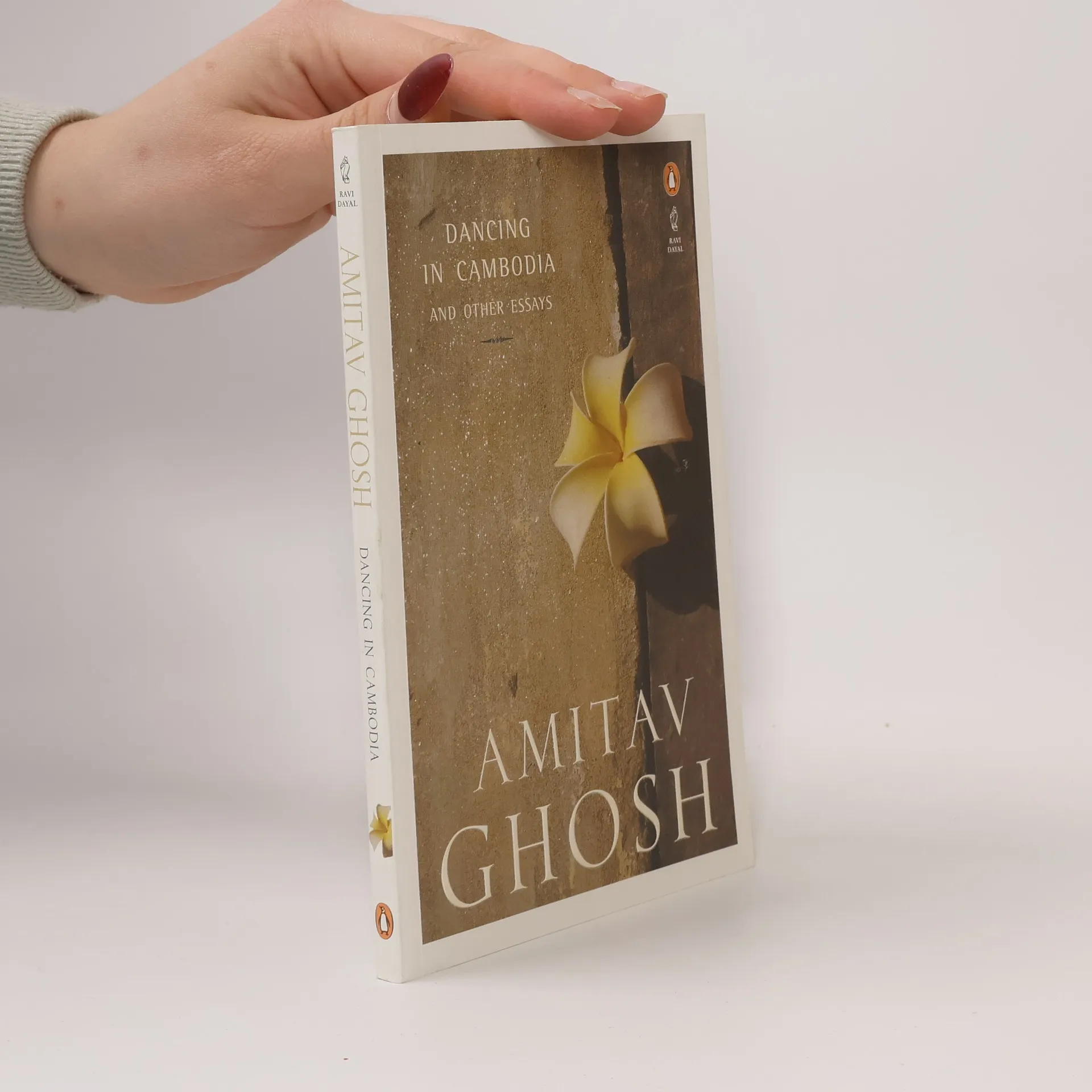
    Dancing In Cambodia And Other Essays
    Flood of Fire (Ibis Trilogy 3)
    The Nutmeg's Curse
    Le pays des marées
    • Le pays des marées

      • 473pages
      • 17 heures de lecture

      Au nord-est de l'Inde, à l'embouchure du Gange et du Brahmapoutre, s'étend une vaste région parsemée d'îlots, hostile et déshéritée. On l'appelle les Sundarbans, le pays des marées. C'est là, entre terre et mer, que vont se rencontrer un citadin éduqué, un modeste pêcheur et une étudiante américaine fille d'émigrés. Trois destins étrangement liés, trois visages de l'Inde, trois regards croisés sur son histoire et son patrimoine. Figure majeure de la littérature indienne contemporaine, Amit Ghosh esquisse le portrait d'un pays en pleine mutation, loin des clichés des grandes sagas bollywoodiennes mais avec un sens subtil du romanesque.

      Le pays des marées
      4,0
    • The Nutmeg's Curse

      • 352pages
      • 13 heures de lecture

      From the bestselling author of the Ibis trilogy and The Great Derangement, The Nutmeg's Curse is an enthralling, panoramic history of the influence of colonialism on the world today, told through the surprising story of the nutmeg.

      The Nutmeg's Curse
      4,3
    • Flood of Fire (Ibis Trilogy 3)

      • 616pages
      • 22 heures de lecture

      It is 1839 and tension has been rapidly mounting between China and British India following the crackdown on opium smuggling by Beijing. With no resolution in sight, the colonial government declares war.One of the vessels requisitioned for the attack, the Hind, travels eastwards from Bengal to China, sailing into the midst of the First Opium War. The turbulent voyage brings together a diverse group of travellers, each with their own agenda to pursue. Among them is Kesri Singh, a sepoy in the East India Company who leads a company of Indian sepoys; Zachary Reid, an impoverished young sailor searching for his lost love, and Shireen Modi, a determined widow en route to China to reclaim her opium-trader husband's wealth and reputation. Flood of Fire follows a varied cast of characters from India to China, through the outbreak of the First Opium War and China's devastating defeat, to Britain's seizure of Hong Kong.

      Flood of Fire (Ibis Trilogy 3)
      4,1
    • Dancing In Cambodia And Other Essays

      • 126pages
      • 5 heures de lecture

      Through extraordinary first-hand accounts Amitav Ghosh presents a compelling chronicle of the turmoil of our times. `Dancing in Combodia recreates the first-ever visit to by a troupe of Cambodian dancers with King Sisowath, in 1906. Ghosh links this historic visit, celebrated by Rodin in a series of sketches, to the more recent history of the Khmer Rouge revolution. The Town by the Sea records his experiences in the Andaman and Nicobar Islands just days after the tsunami; and in September 11 he takes us back to that fateful day when he retrieved his young daughter from school in New York, sick with the knowledge that she will be marked by the same kind of tumult that has defined his own life.

      Dancing In Cambodia And Other Essays
      4,1
    • Are we deranged? The acclaimed Indian novelist Amitav Ghosh argues that future generations may well think so. How else to explain our imaginative failure in the face of global warming? In his first major book of nonfiction since In an Antique Land, Ghosh examines our inability—at the level of literature, history, and politics—to grasp the scale and violence of climate change. The extreme nature of today’s climate events, Ghosh asserts, make them peculiarly resistant to contemporary modes of thinking and imagining. This is particularly true of serious literary fiction: hundred-year storms and freakish tornadoes simply feel too improbable for the novel; they are automatically consigned to other genres. In the writing of history, too, the climate crisis has sometimes led to gross simplifications; Ghosh shows that the history of the carbon economy is a tangled global story with many contradictory and counterintuitive elements. Ghosh ends by suggesting that politics, much like literature, has become a matter of personal moral reckoning rather than an arena of collective action. But to limit fiction and politics to individual moral adventure comes at a great cost. The climate crisis asks us to imagine other forms of human existence—a task to which fiction, Ghosh argues, is the best suited of all cultural forms. His book serves as a great writer’s summons to confront the most urgent task of our time.

      The Great Derangement
      4,1
    • The glass palace

      • 560pages
      • 20 heures de lecture

      The International Bestseller from the Man Booker Prize shortlisted author 'An absorbing story of a world in transition' JM Coetzee 'A Doctor Zhivago for the Far East' The Independent Rajkumar is only another boy, helping on a market stall in the dusty square outside the royal palace, when the British force the Burmese King, Queen and all the Court into exile. He is rescued by the far-seeing Chinese merchant, and with him builds up a logging business in upper Burma. But haunted by his vision of the Royal Family, he journeys to the obscure town in India where they have been exiled. The story follows the fortunes - rubber estates in Malaya, businesses in Singapore, estates in Burma - which Rajkumar, with his Chinese, British and Burmese relations, friends and associates, builds up - from 1870 through the Second World War to the scattering of the extended family to New York and Thailand, London and Hong Kong in the post-war years.

      The glass palace
      4,0
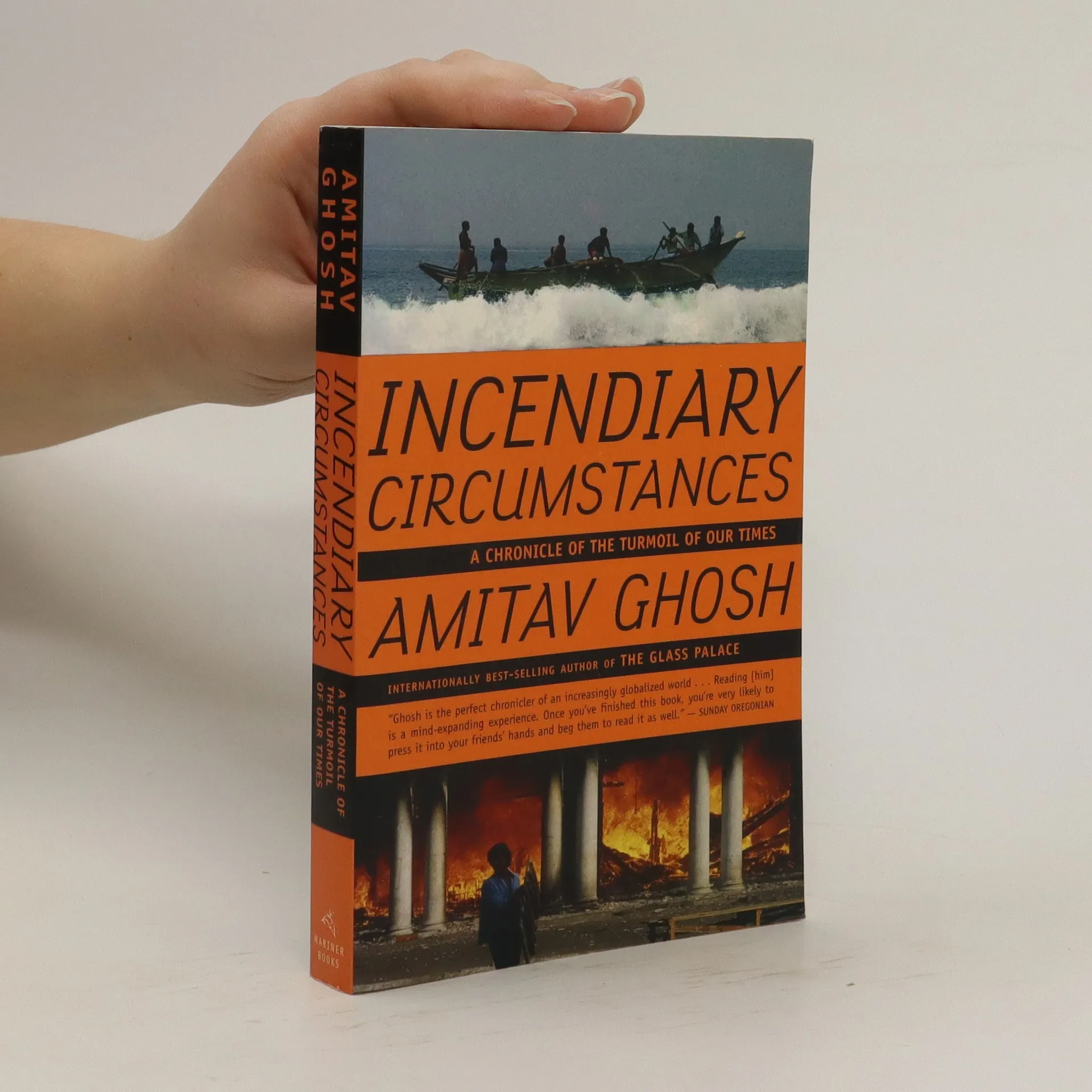
    • Novelist and journalist Ghosh has offered firsthand accounts of pivotal world events over the past twenty years. He is an essential voice in forums like The Nation, the New York Times, the New Republic, Granta, and The New Yorker. This book brings together the finest of these pieces for the first time--including many never before published in the U.S.--in a compelling chronicle of the turmoil of our times. In his travels he has walked amid the devastation of the 2004 tsunami, stood on an icy mountaintop on the contested border between India and Pakistan, interviewed Pol Pot's sister-in-law in Cambodia, shared the elation of Egyptians when Naguib Mahfouz won the Nobel Prize, and stood with his threatened Sikh neighbors through the riots following Indira Gandhi's assassination. With intelligence and authentic sympathy, he "illuminates the human drama behind the headlines" (Publishers Weekly). Incendiary Circumstances is testimony of an era defined by the ravages of politics and nature.--From publisher description.

      Incendiary circumstances : a chronicle of the turmoil of our times
      4,0
    • A beautifully illustrated fable from Booker-shortlisted author

      Jungle Nama
      3,8
    • Smoke and Ashes

      • 416pages
      • 15 heures de lecture

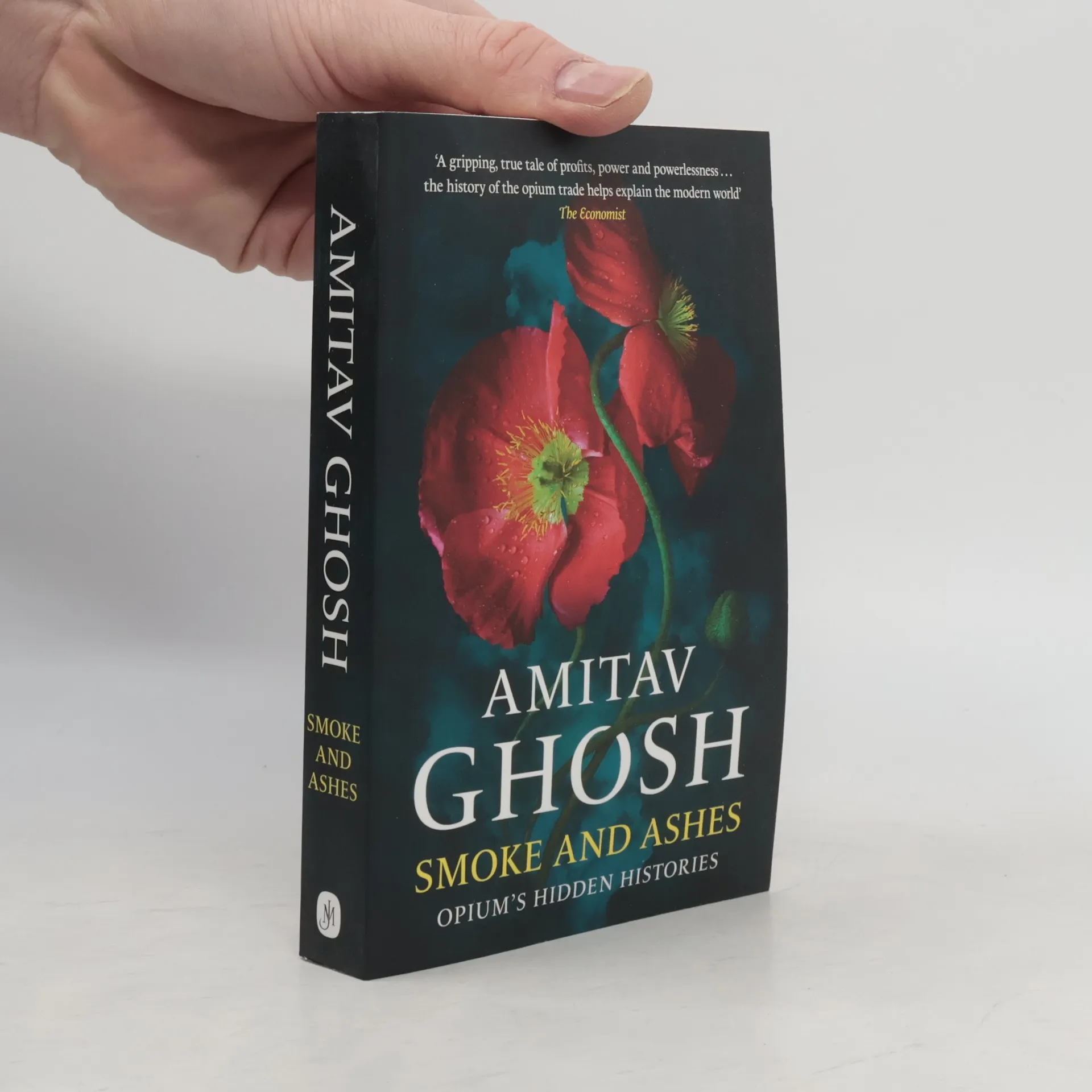
      The Booker-shortlisted author of the Ibis trilogy explores the impact of opium on global history, economies, cultures, and his own understanding of self.

      Smoke and Ashes
      3,9
    • Sea of Poppies

      • 544pages
      • 20 heures de lecture

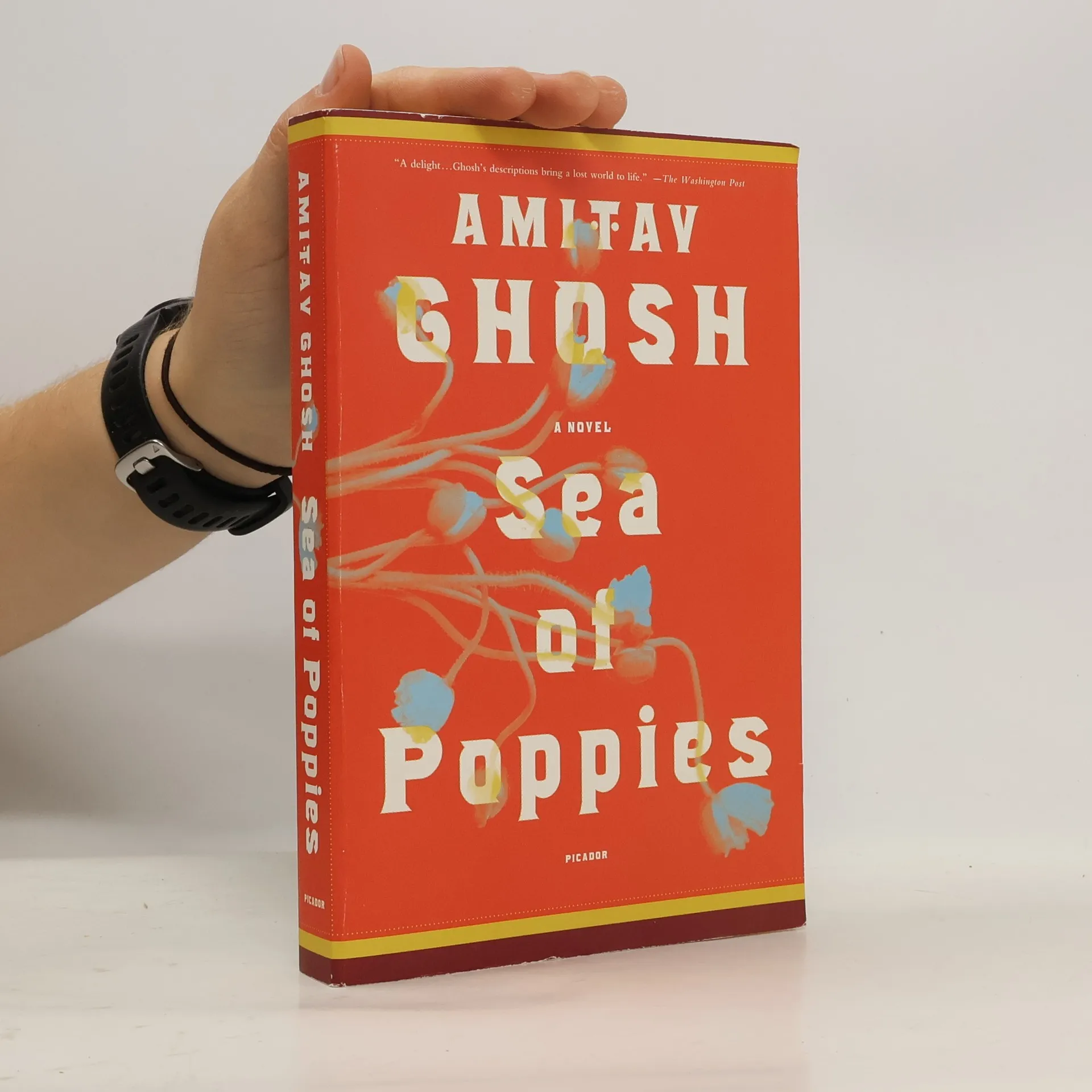
      A stunningly vibrant novel from Amitav Ghosh, author of the internationally acclaimed bestseller The Glass Palace

      Sea of Poppies
      4,0
    • River of Smoke

      • 580pages
      • 21 heures de lecture

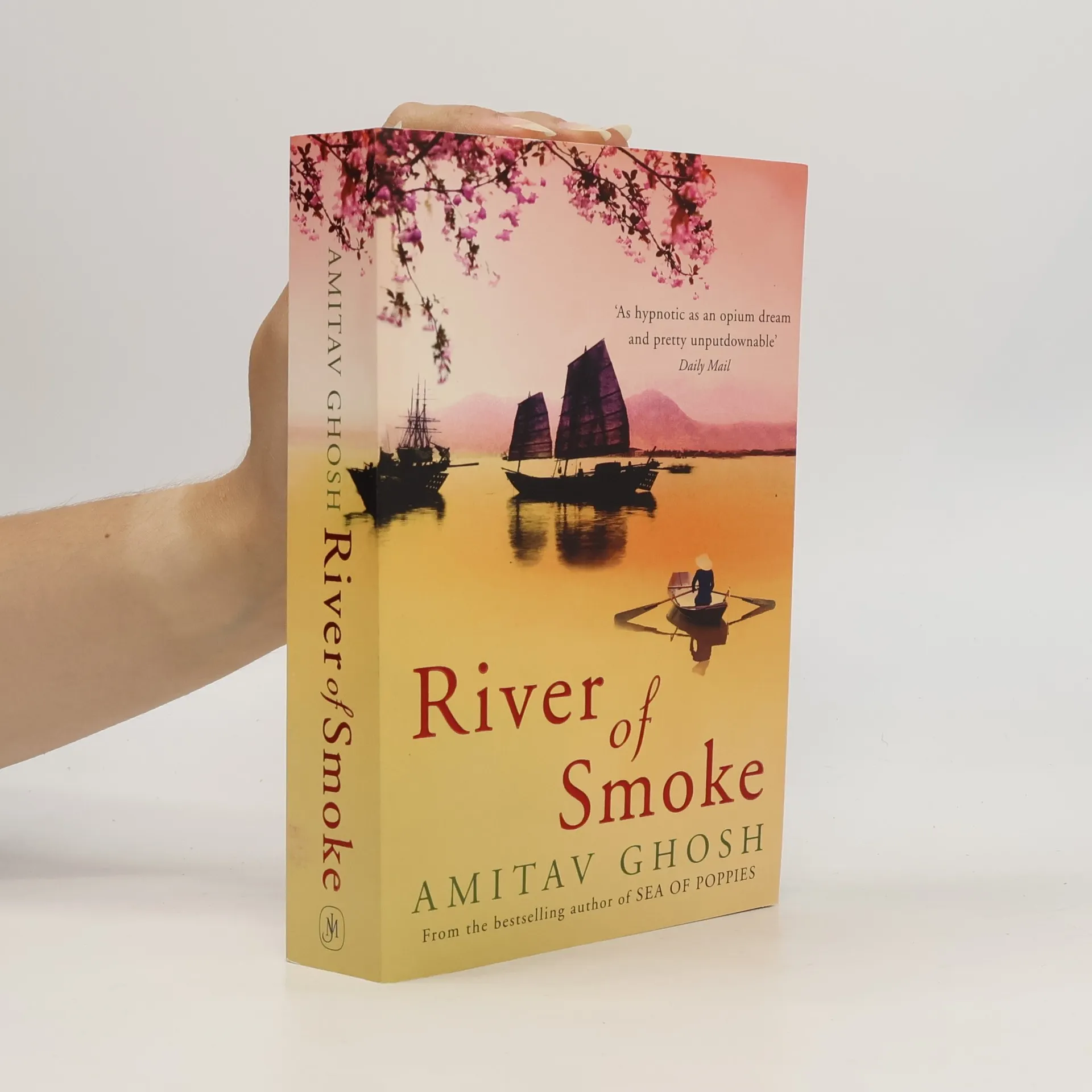
      The sequel to the bestselling, Booker-shortlisted, Sea of Poppies.

      River of Smoke
      3,9
    • The Shadow Lines

      • 251pages
      • 9 heures de lecture

      Opening in Calcutta in the 1960s, Amitav Ghosh's radiant second novel follows two families -- one English, one Bengali -- as their lives intertwine in tragic and comic ways. The narrator, Indian born and English educated, traces events back and forth in time, from the outbreak of World War II to the late twentieth century, through years of Bengali partition and violence, observing the ways in which political events invade private lives.

      The Shadow Lines
      3,9
    • The Circle of Reason

      • 423pages
      • 15 heures de lecture

      Amitav Ghosh's extraordinary first novel makes a claim on literary turf held by Gabriel Garcia Marquez and Salman Rushdie. In a vivid and magical story, The Circle of Reason traces the misadventures of Alu, a young master weaver in a small Bengali village who is falsely accused of terrorism. Alu flees his home, traveling through Bombay to the Persian Gulf to North Africa with a bird-watching policeman in pursuit.

      The Circle of Reason
      3,6
    • In an Antique Land

      • 393pages
      • 14 heures de lecture

      Packed with anecdote and exuberant detail, In an Antique Land provides magical and intimate insights into Egypt from the Crusades to Operation Desert Storm. It exposes the indistinguishable and intertwining ties that bind together India and Egypt, Hindus and Muslims and Jews. By combining fiction, history, travel writing and anthropology, to create a single seamless work of imagination, Ghosh characteristically makes us rethink the political boundaries that divide the world and the generic boundaries that divide narratives.

      In an Antique Land
      3,9
    • Uncanny and Improbable Events

      • 128pages
      • 5 heures de lecture

      Over the past 75 years, a new canon has emerged. As humans have driven the living planet to the brink of collapse, visionary thinkers around the world have raised their voices to defend it. Their words have endured, becoming the classics that define the environmental movement today. In this personal and wide-ranging exploration of how our collective imaginations fail to grasp the scale of environmental destruction, Amitav Ghosh summons writers and novelists to confront the most urgent story of our times

      Uncanny and Improbable Events
      3,8
    • Gun Island

      • 313pages
      • 11 heures de lecture

      A spellbinding, globe-trotting novel by the bestselling author of the Ibis trilogy

      Gun Island
      3,5
    • The Calcutta Chromosome

      A Novel of Fevers, Delirium & Discovery

      • 320pages
      • 12 heures de lecture

      From Victorian lndia to near-future New York, The Calcutta Chromosome takes readers on a wondrous journey through time as a computer programmer trapped in a mind-numbing job hits upon a curious item that will forever change his life. When Antar discovers the battered ID card of a long-lost acquaintance, he is suddenly drawn into a spellbinding adventure across centuries and around the globe, into the strange life of L. Murugan, a man obsessed with the medical history of malaria, and into a magnificently complex world where conspiracy hangs in the air like mosquitoes on a summer night.

      The Calcutta Chromosome
      3,5
    • Wild Fictions

      • 288pages
      • 11 heures de lecture

      A diverse collection of essays spanning 25 years, this book showcases the author's reflections and insights published in various journals and periodicals. It explores a range of themes and ideas, offering readers a glimpse into the evolution of the author's thoughts and the literary landscape over time. Each essay captures unique perspectives, making it a rich tapestry of personal and intellectual exploration.

      Wild Fictions
    • Beloved Oblivion

      • 128pages
      • 5 heures de lecture

      R. P. Ghosh's richly varied life experiences are the inspiration for this multi-themed collection of poems. Drawing on his early childhood challenges as a refugee and subsequent success in professional-services as well as the arts, the author passionately describes and deftly combines his philosophies on 'power-crazy' political forces and their effect on so many, the meaning of life, the reality of ancient religions in our modern world and his love and respect for the forces of nature, so enchantingly interwoven into his verses.His creative self-assessment of situations in his life in other countries, and with different cultures, is both fascinating and thought-provoking and the reader can look forward to exploring new ways of thinking.

      Beloved Oblivion
    • Der Fluch der Muskatnuss

      Gleichnis für einen Planeten in Aufruhr

      • 334pages
      • 12 heures de lecture

      Auf einer indonesischen Insel fällt eine Öllampe zu Boden, kurz danach begehen niederländische Soldaten ein Massaker an den Inselbewohnern. Wie hängen diese beiden Geschehnisse zusammen und was geschah danach? Mit dieser Frage beginnt Amitav Ghosh seine Recherche auf den Spuren der Muskatnuss. Heute alltägliches Gewürz, galt sie im 17. Jahrhundert als Luxusgut ‒ allein eine Handvoll davon reichte aus, um einen Palast zu erbauen ‒, denn die seltene Frucht wuchs nur auf jener Insel, die niederländische Truppen vornehmlich deshalb in Besitz nahmen, um das Handelsmonopol für die Niederländische Ostindien-Kompanie zu sichern. Während Amitav Ghosh die Reise der Muskatnuss nachzeichnet, veranschaulicht er eindrucksvoll die Mechanismen von Kolonialismus und Ausbeutung der Einheimischen sowie der Natur durch westliche Länder. Mitreißend stellt er dabei die Verbindung geschichtlicher Entwicklungen mit aktuellen Realitäten her, verkettet niederländische Stillleben und die Nomenklatur nach Linné mit der Black-Lives-Matter-Bewegung, der Covid-Pandemie und der Standing Rock Sioux Reservation, um zu zeigen, dass der heutige Klimawandel in einer jahrhundertealten geopolitischen Ordnung verwurzelt ist, die vom westlichen Kolonialismus und seiner mechanistischen Weltsicht – die Erde als bloßem Ressourcenlieferant für die Menschheit – geschaffen wurde.

      Der Fluch der Muskatnuss
      4,0
    • Ghoshova cesta do starobylé země začala v knihovně Oxfordské univerzity, kde při hledání materiálů ke své disertační práci narazil na edici středověké obchodní korespondence, kterou z rukopisů nalezených v geníze káhirské synagogy vydal arabista Šlomo Dov Goitein. Kniha Ve starobylé zemi, která vyšla poprvé roku 1992, spojuje dva příběhy: autorovo autobiografické vyprávění, či vzpomínky z terénního výzkumu (1980-81 a 1988) a historickou rekonstrukci života kupce Ben Jica a jeho otroka Bommy, jehož postava se stává autorovým alter egem. Fascinuje ho na ní už samotná skutečnost, že se tak nevýznamná postava stala shodou náhod součástí psané historie, ale zejména kulturní propustnost světa, v němž on i jeho pán žili.

      Ve starobylé zemi
      4,0
    • Die Inseln

      • 368pages
      • 13 heures de lecture

      Als Deen Datta, Antiquar in Brooklyn, bei einem Besuch in seiner alten Heimat Kalkutta auf eine bengalische Sage um eine Schlangengöttin stößt, lernt er die beiden jungen Männer Tipu und Rafi kennen. Tipu wird bei dem Besuch eines Schreins für die Schlangengöttin von einer Kobra gebissen. Er hat daraufhin seltsame Visionen, Deen wiederum meint, seinen Willen zu verlieren. Ein paar Monate später trifft er Rafi in Venedig wieder: Deen ist als Übersetzer hier, Rafi einer von Hunderten Klimaflüchtlingen. Er wollte gemeinsam mit Tipu noch Europa, doch hat ihn unterwegs verloren.Deen und Rafi machen sich mithilfe einer Gruppe Aktivisten daran, ihn zu finden – und kommen dabei auch der geheimnisvollen bengalischen Legende auf die Spur.

      Die Inseln
      2,5
    • Die große Verblendung

      Der Klimawandel als das Undenkbare

      • 256pages
      • 9 heures de lecture

      »Höchst selten besitzt ein Autor so erhellende Einsichten und Erzähltalente, dass ein leidlich bekanntes Thema sich plötzlich ganz neu eröffnet. Ghosh ist so ein Autor, und DIE GROSSE VERBLENDUNG ist genau diese Art von Buch.« Naomi Klein Amitav Ghosh, „Meister der Sprache“ ( Die Zeit ) und Romancier von Weltrang, fragt sich, warum der Klimawandel in der Literatur der Gegenwart nicht zur Sprache kommt. Woher rührt unsere große Verblendung, vor der künftige Generationen fassungslos stehen werden? Hat die Kunst in dieser epochalen Katastrophe ihren Meister gefunden? Mit »Die große Verblendung« legt Ghosh ein Essay vor, das nicht nur seine Zunft, sondern uns alle auffordert, ein neues Kapitel der Menschheitsgeschichte zu schreiben und uns eine andere, bessere Welt auszumalen.

      Die große Verblendung
    • Rauch und Asche

      Die geheime Geschichte des Opiums

      • 432pages
      • 16 heures de lecture

      In einer mitreißenden Mischung aus Reisebericht, Memoir und historischem Essay zeichnet der indische Autor die Anfänge des weltweiten Opiumhandels ab dem 19. Jahrhundert nach und macht deutlich, dass dessen Auswirkungen bis in die heutige Zeit reichen: von den mächtigsten Familien und prestigeträchtigsten Institutionen, deren Reichtum sich den Einnahmen aus dem Opiumgeschäft verdankt, bis hin zur amerikanischen Opioid-Epidemie und dem Oxycontin-Skandal. Während der jahrzehntelangen Archivrecherche für seine Ibis-Romantrilogie stellte Amitav Ghosh mit Erstaunen fest, dass die Lebenswege und Handelsrouten zahlreicher Menschen, auch seiner eigenen Vorfahren, im 19. Jahrhundert mit einer einzigen Pflanze verwoben waren: der Mohnblume. Das Britische Weltreich sicherte sich durch ihren Anbau in den indischen Kolonien die Handelsfähigkeit mit China, indische Bauern wurden über Jahrhunderte hinweg in prekärer Abhängigkeit gehalten, und die chinesische Bevölkerung wurde von einer unaufhaltsamen Drogenepidemie überspült. Währenddessen hofften internationale Handelsleute stets auf Reichtum durch die Beteiligung am Opiumhandel.

      Rauch und Asche