

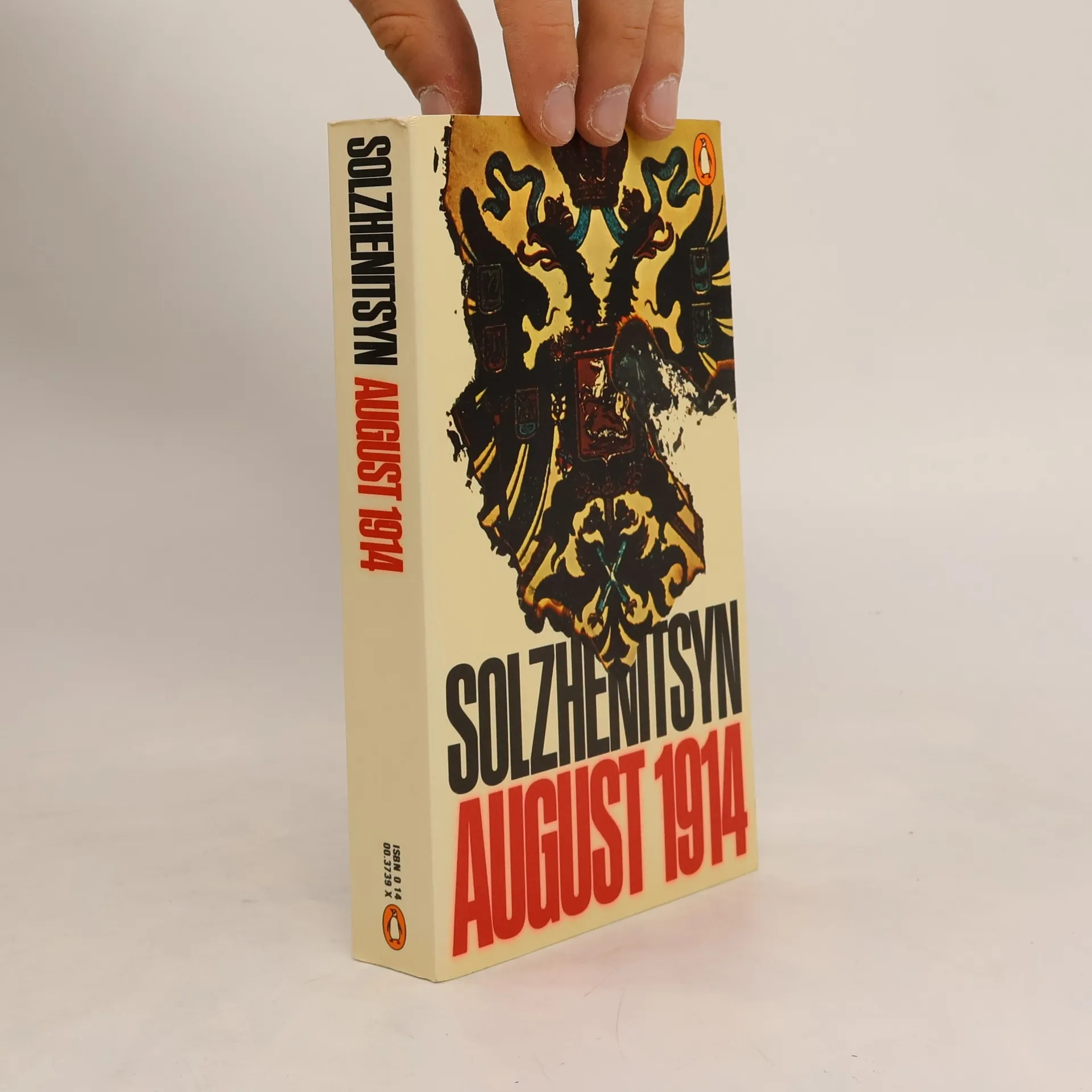
Short stories and other short pieces (including some lovely prose poems) by the late Nobel Prize laureate Alexander Solzhenitsyn. Contents: Matryona's house. For the good of the cause. The Easter procession. Zakhar-the-Pauch. The right hand. An incident at Krechetovka station. Prose poems: Freedom ...
Michael Glenny Ordre des livres (chronologique)

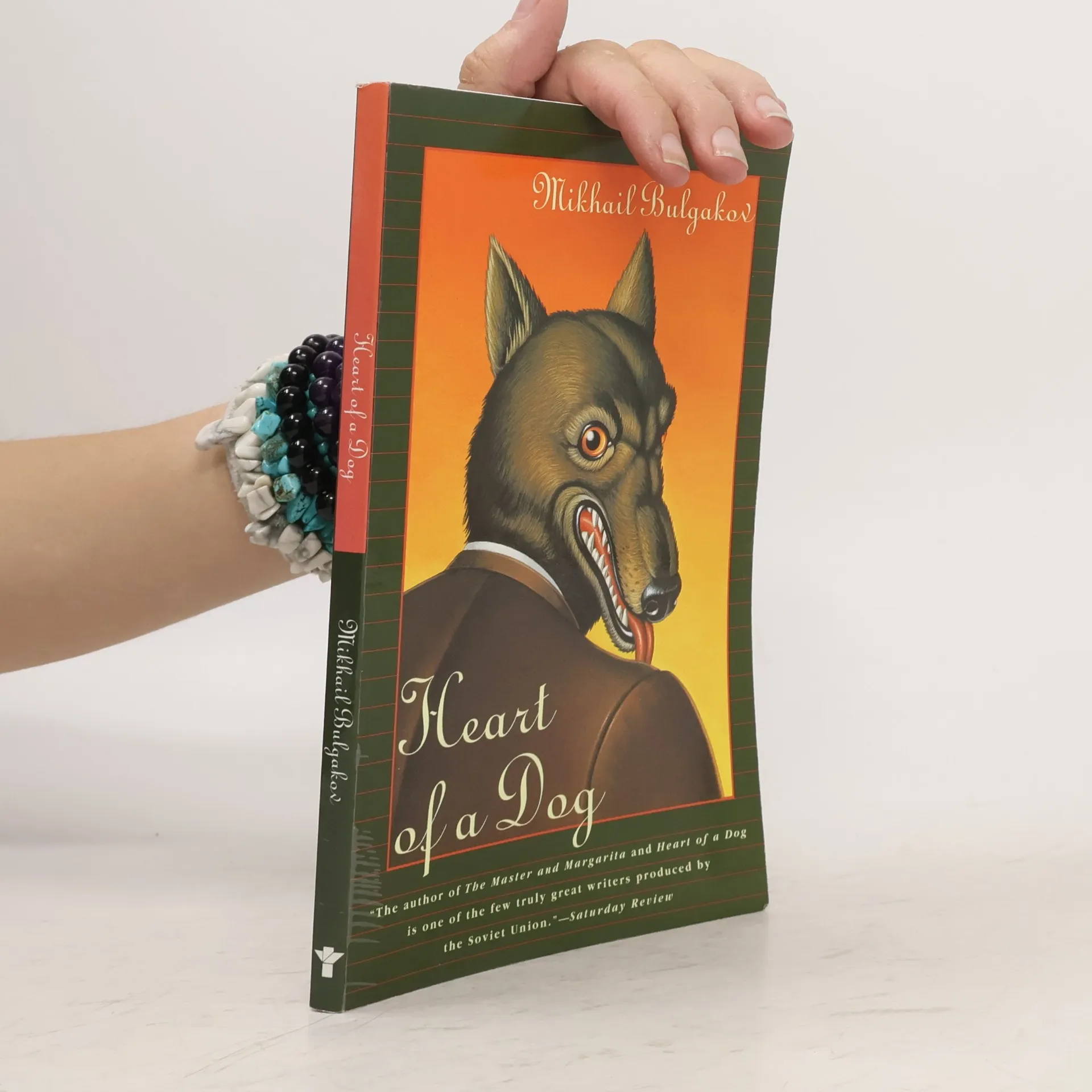


Heart of a Dog
- 123pages
- 5 heures de lecture
Mikhail Bulgakov's absurdist parable of the Russian Revolution. A world-famous Moscow professor -- rich, successful, and violently envied by his neighbors -- befriends a stray dog and resolves to achieve a daring scientific first by transplanting into it the testicles and pituitary gland of a dead man. But the results are wholly unexpected: a distinctly and worryingly human animal is on the loose, and the professor's hitherto respectable life becomes a nightmare beyond endurance. As in The Master and Margarita , the masterpiece he completed shortly before his death, Mikhail Bulgakov's early novel, written in 1925, combines outrageously grotesque ideas with a narrative of deadpan naturalism. The Heart of a Dog can be read as an absurd and wonderfully comic story; it can also be seen as a fierce parable of the Russian Revolution.
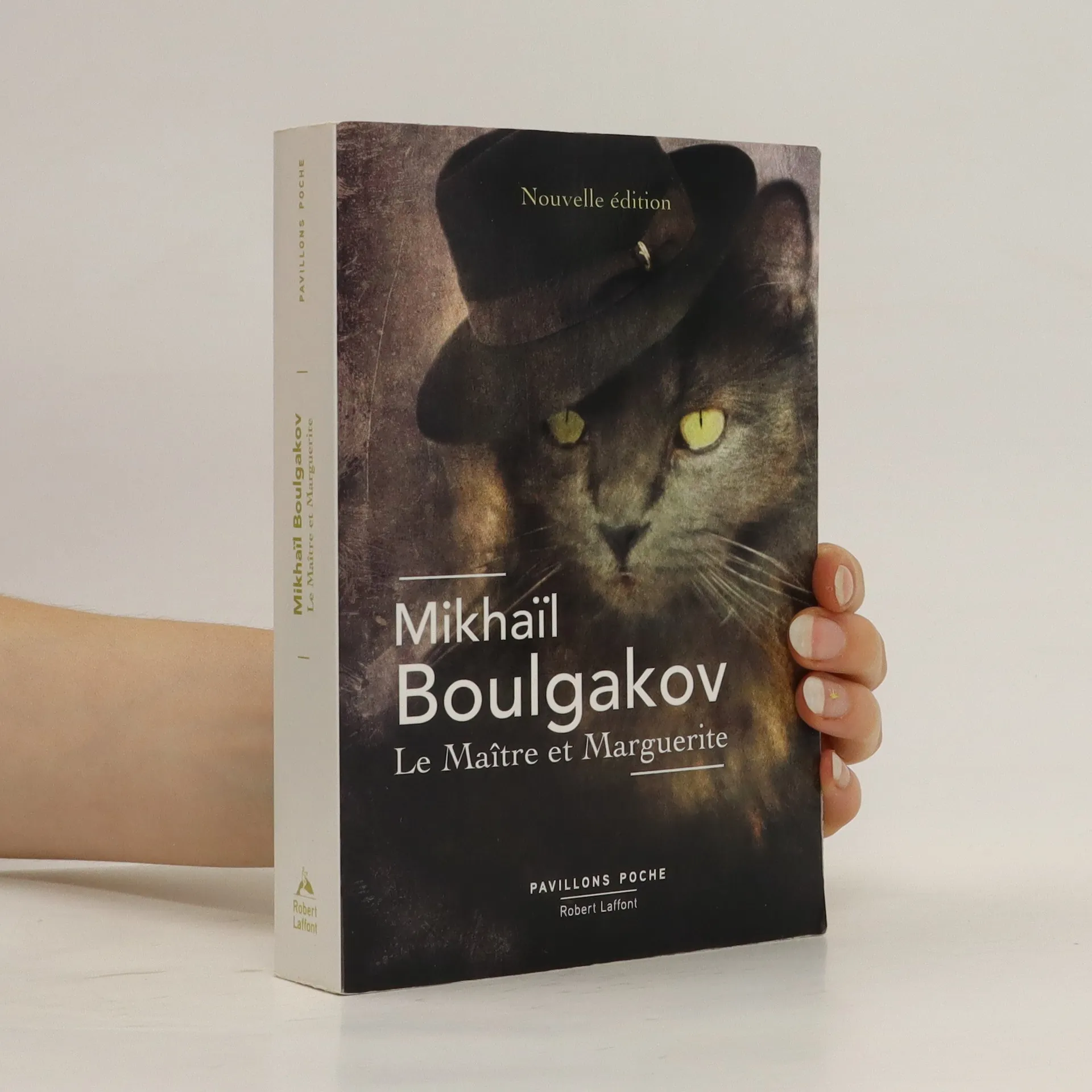
Le Maitre et Marguerite
- 690pages
- 25 heures de lecture
Pour retrouver l'homme qu'elle aime, un écrivain maudit, Marguerite accepte de livrer son âme au diable. Version contemporaine du mythe de Faust, transposé à Moscou dans les années 1930, Le Maître et Marguerite est aussi l'une des histoires d'amour les plus émouvantes jamais écrites. Mikhail Boulgakov a travaillé à son roman durant douze ans, en pleine dictature stalinienne, conscient qu'il n'aurait aucune chance de le voir paraître de son vivant. Ecrit pour la liberté des artistes et contre le conformisme, cet objet d'admiration universelle fut publié un quart de siècle après la mort de celui qui est aujourd'hui considéré comme l'égal de Dostoïevski, Gogol ou Tchekhov. Cette édition s'accompagne d'un appareil critique et d'une introduction de la spécialiste de la littérature russe Marianne Gourg, qui a également révisé la traduction.
Faithful Ruslan
- 224pages
- 8 heures de lecture
Unavailable for twenty years, this harrowing allegory of obedience to authority is esteemed as “one of the defining literary texts of the post-Stalin period.” (The Guardian) Set in a remote Siberian depot immediately following the demolition of one of the gulag’s notorious camps and the emancipation of its prisoners, Faithful Ruslan is an embittered cri de coeur from a writer whose circumstances obliged him to resist the violence of arbitrary power. “Every writer who writes anything in this country is made to feel he has committed a crime,” Georgi Vladimov said. Dissident, he said, is a word that “they force on you.” His mother, a victim of Stalin’s anti-Semitic policy, had been interred for two years in one of the camps from which Vladimov derived the wrenching detail of Faithful Ruslan. The novel circulated in samizdat for more than a decade, often attributed to Solzhenitsyn, before its publication in the West led to Vladimov’s harassment and exile. A starving stray, tortured and abandoned by the godlike “Master” whom he has unconditionally loved, Ruslan and his cadre of fellow guard dogs dutifully wait for the arrival of new prisoners—but the unexpected arrival of a work party provokes a climactic bloodletting. Fashioned from the perceptions of an uncomprehending animal, Vladimov’s insistently ironic indictment of the gulag spirals to encompass all of Man’s inexplicable cruelty.
A historical novel about the defeat of the Imperial Russian Army at the Battle of Tannenberg in East Prussia.
La Garde blanche
- 317pages
- 12 heures de lecture
Bulgakov's elegant first novel, recently reissued by Melville House in Michael Glenny's translation, explores the October Revolution's impact on Kiev, referred to as The City. The narrative unfolds over two pivotal days during the Russian Civil War, December 13 and 14, 1918, as Kiev transitions from the control of the Ukrainian Hetman Skoropadsky, a German ally, to the forces of Petlyura, a mysterious Ukrainian nationalist. Petlyura's troops particularly target Russian officers who supported the corrupt regime. Central to the story is the Turbin family: Alexei, a doctor returning from WWI; his 17-year-old brother Nikolai, a military cadet; and their sister Elena, who inspires Alexei's officer friends. They are joined by their comic foil, Vasily Lisovich, affectionately called Vasilisa, an almost Dostoevskian character. The novel showcases Bulgakov's skills as both a dramatist and prose artist, with surreal elements foreshadowing his later work, Master and Margarita. It vividly depicts the chaos of civil war while exploring themes of family loyalty and friendship. Initially published as a magazine serial in 1925, the project was interrupted when the magazine folded. Despite its complexities, the story's stage adaptation ran in Soviet Russia from 1926 to 1941, while the book itself was not published until 1966.