Bookbot

Steven Pinker

    18 septembre 1954

    Steven Pinker est un éminent psychologue expérimental et scientifique cognitif canadien-américain, connu pour ses explorations approfondies de la nature humaine et de sa pertinence pour le langage, l'histoire, la morale et la politique. Son travail explore le langage et la cognition, naviguant dans des sujets complexes avec clarté et perspicacité. Les enquêtes audacieuses de Pinker remettent en question les hypothèses courantes, incitant les lecteurs à reconsidérer leur compréhension du comportement humain et du progrès. Par son écriture, il cherche à éclairer les mécanismes de l'esprit et les implications de la connaissance pour la société.

    Steven Pinker
    The sense of style : the thinking person's guide to writing in the 21st century
    The Blank Slate
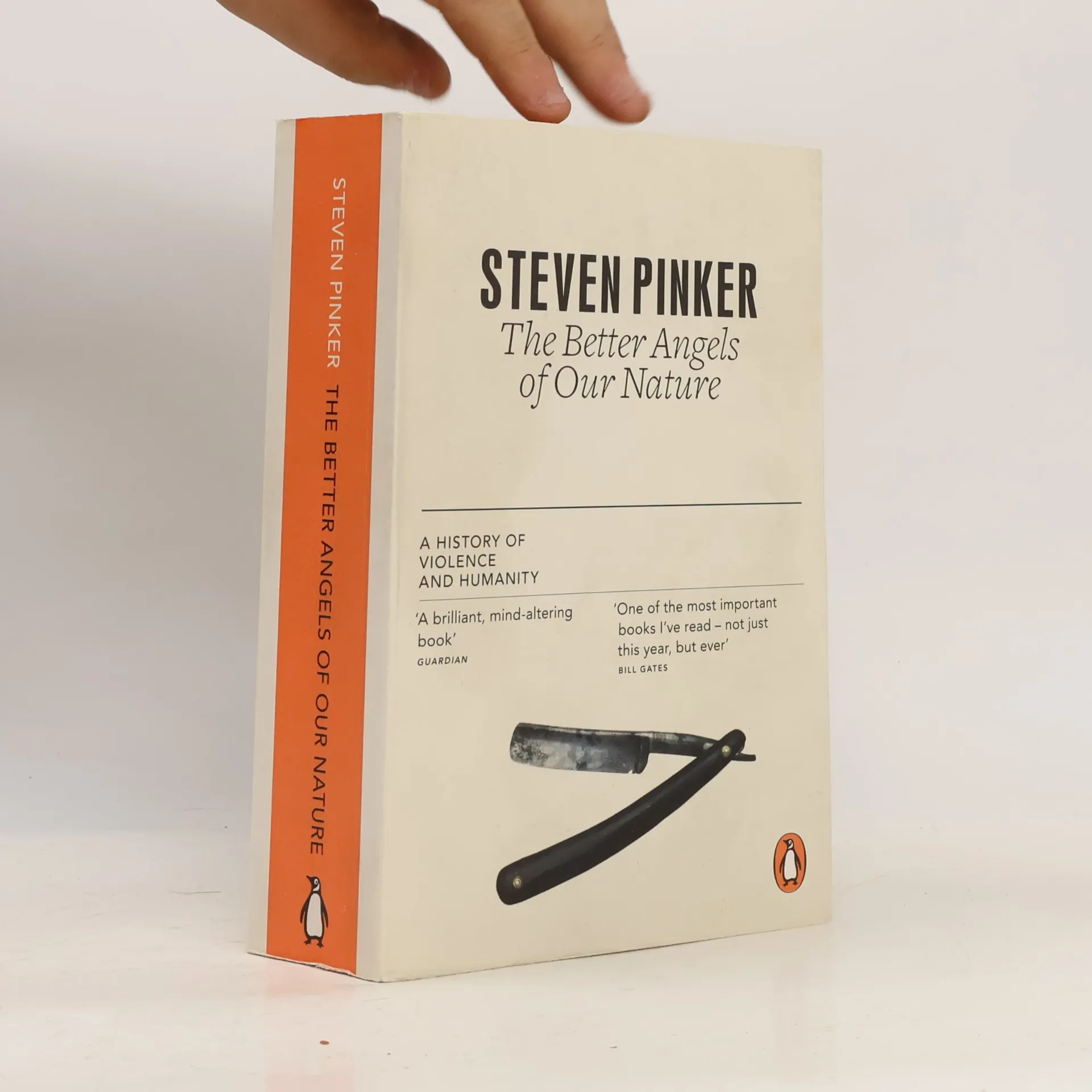
    The better angels of our nature
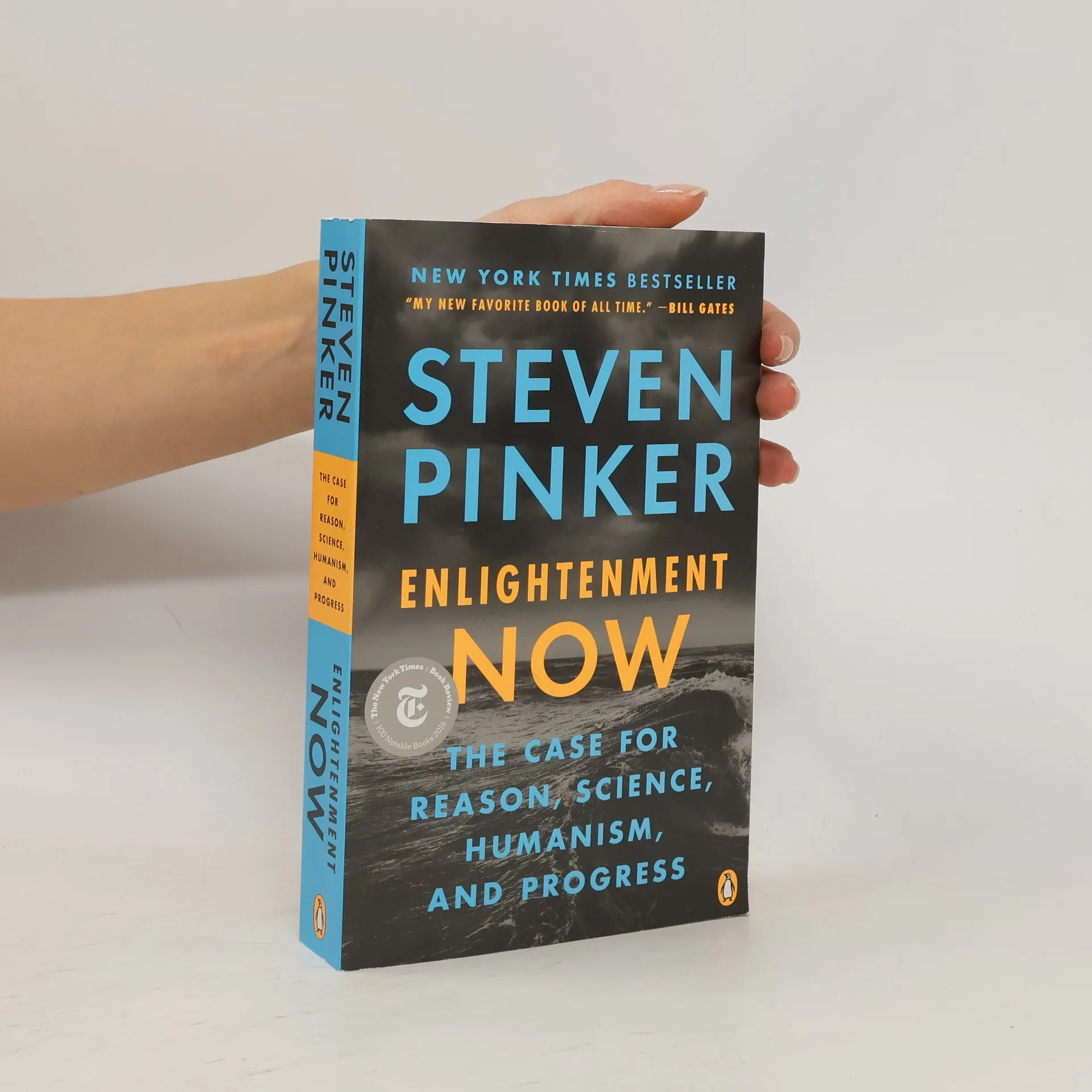
    Enlightenment Now
    Das unbeschriebene Blatt
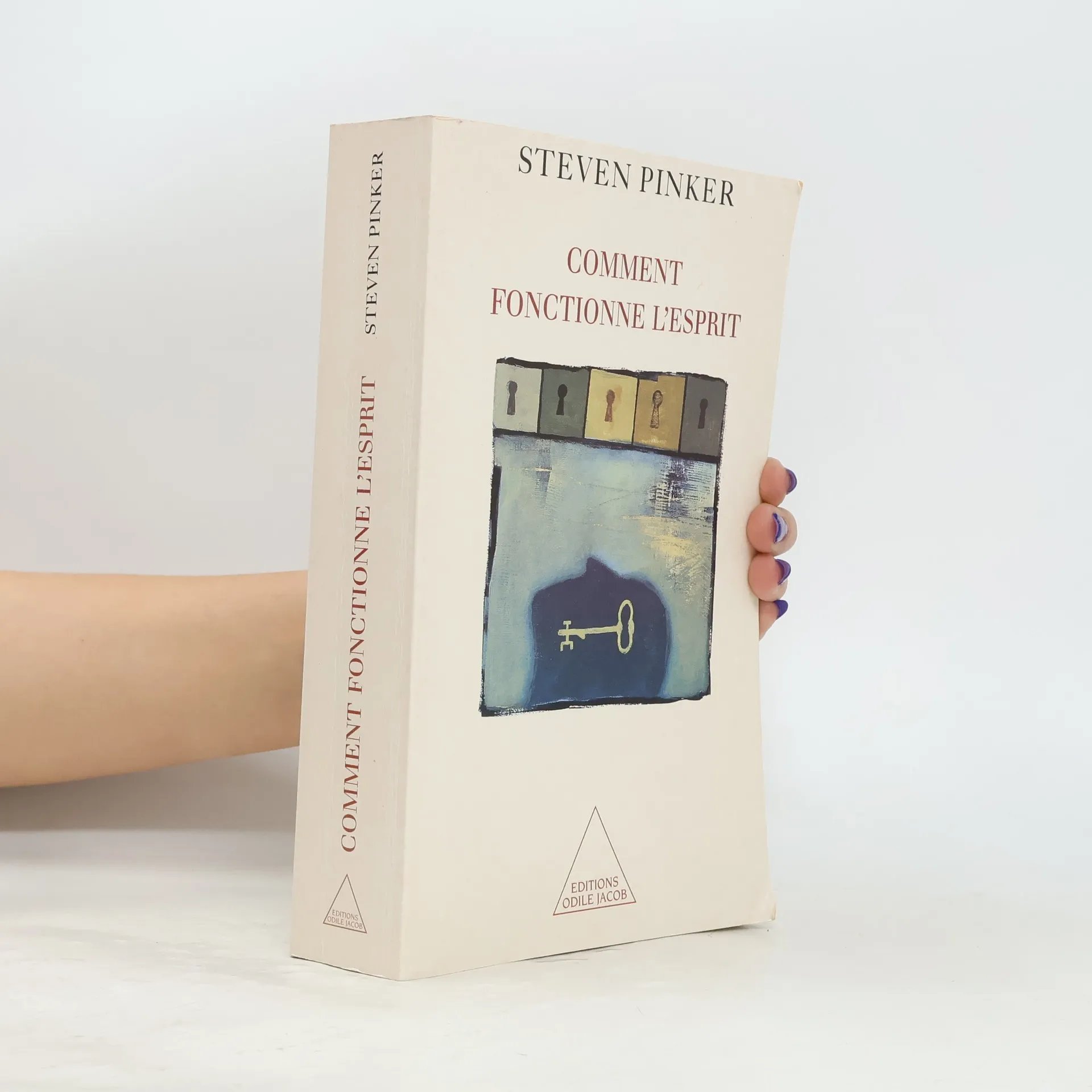
    Comment fonctionne l'esprit
    • Comment fonctionne l'esprit

      • 685pages
      • 24 heures de lecture

      Qu'est-ce que l'esprit? Comment a-t-il évolué? Comment nous permet-il de penser, d'agir, d'avoir des sentiments ou d'éprouver des émotions esthétiques? C'est à travers ces questions et beaucoup d'autres que l'auteur tente d'analyser les principales facultés de l'esprit : perception, raisonnement, relations sociales, humour, art, religion, philosophie, etc. Un ouvrage qui reste clair et accessible malgré son contenu spécialisé. [SDM].

      Comment fonctionne l'esprit
      4,0
    • Das unbeschriebene Blatt

      Die moderne Leugnung der menschlichen Natur

      Mit einem aktuellen Vorwort zur Neuausgabe! Auf John Locke geht die Vorstellung zurück, der Mensch sei ein leeres Blatt, auf dem im Verlauf des Lebens die persönlichen Erfahrungen eingetragen werden. In seinem mittlerweile klassischen Buch »Das unbeschriebene Blatt. Die moderne Leugnung der menschlichen Natur« bezieht Bestseller-Autor Steven Pinker ganz die Gegenposition: Mit Witz, Brillanz und Gelehrsamkeit analysiert er die Geschichte dieser Idee und zeigt, wie falsch sie ist – mit allen kruden Auswirkungen auf Vorstellungen von Sexualität, Rasse, Kindererziehung, Intelligenz usw. Die Rolle der Gene wird systematisch unterschätzt; aber das bedeutet nicht, dass wir ihnen völlig ausgeliefert sind. Pinker zeigt nämlich auch, wie befreiend diese Sichtweise sein kann. Ein unterhaltsames und anschauliches Buch zur Natur des Menschen, ein echter Lesegenuss.

      Das unbeschriebene Blatt
      4,2
    • The follow-up to Pinker's groundbreaking The Better Angels of Our Nature presents the big picture of human progress: people are living longer, healthier, freer, and happier lives, and while our problems are formidable, the solutions lie in the Enlightenment ideal of using reason and science. Far from being a naïve hope, the Enlightenment, we now know, has worked. But more than ever, it needs a vigorous defense. The Enlightenment project swims against currents of human nature--tribalism, authoritarianism, demonization, magical thinking--which demagogues are all too willing to exploit. Many commentators, committed to political, religious, or romantic ideologies, fight a rearguard action against it. The result is a corrosive fatalism and a willingness to wreck the precious institutions of liberal democracy and global cooperation.

      Enlightenment Now
      4,2
    • Faced with the ceaseless stream of news about war, crime, and terrorism, one could easily think this is the most violent age ever seen. Yet as bestselling author Pinker shows in this startling and engaging new work, just the opposite is true.

      The better angels of our nature
      4,2
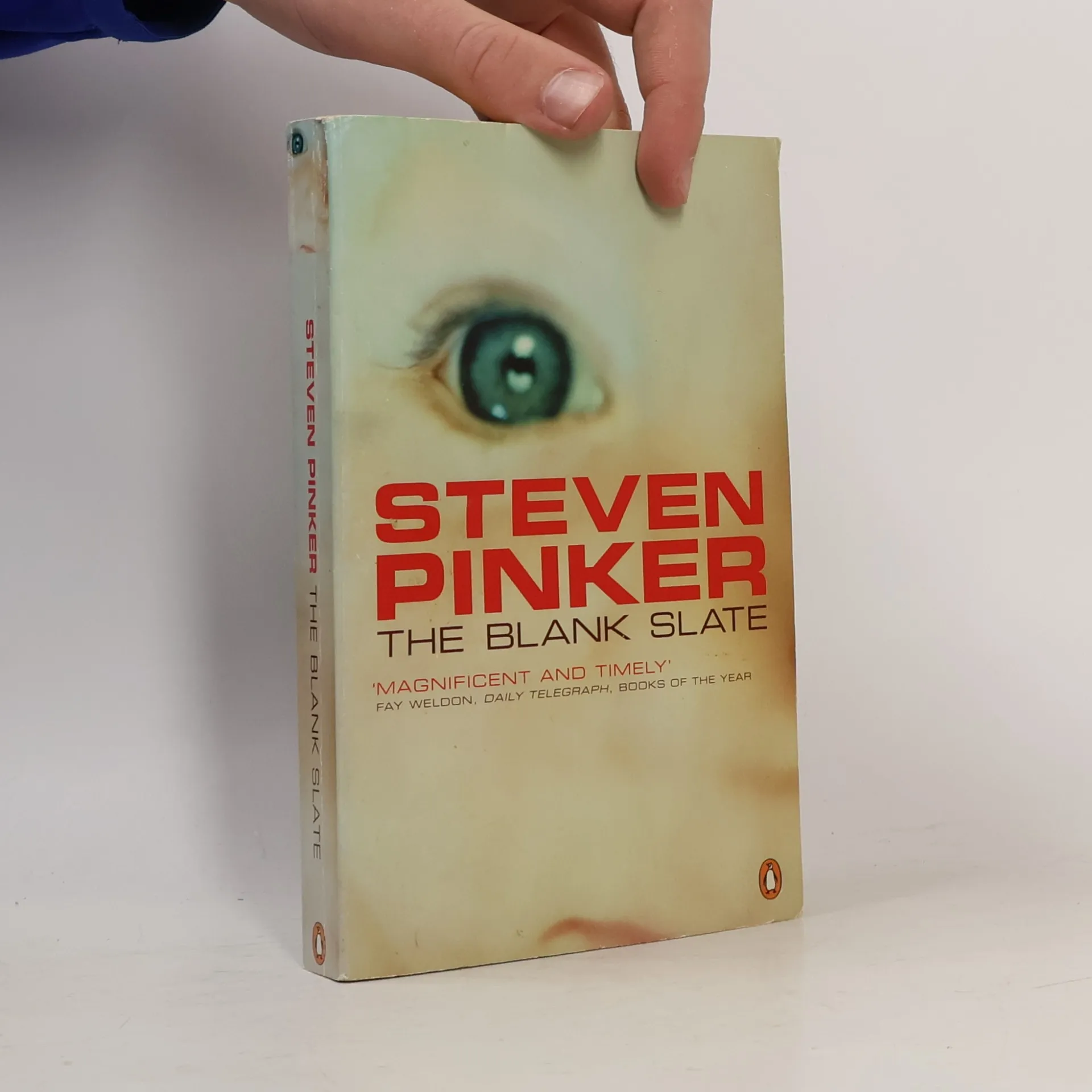
    • The Blank Slate

      The Modern Denial of Human Nature

      • 528pages
      • 19 heures de lecture

      What is the truth about human nature? Steven Pinker argues that our usual explanations of human behaviour - stated most clearly in the human sciences of psychology, ethics and politics - tend to deny what is now undeniable: the role of an inherited human nature.

      The Blank Slate
      4,1
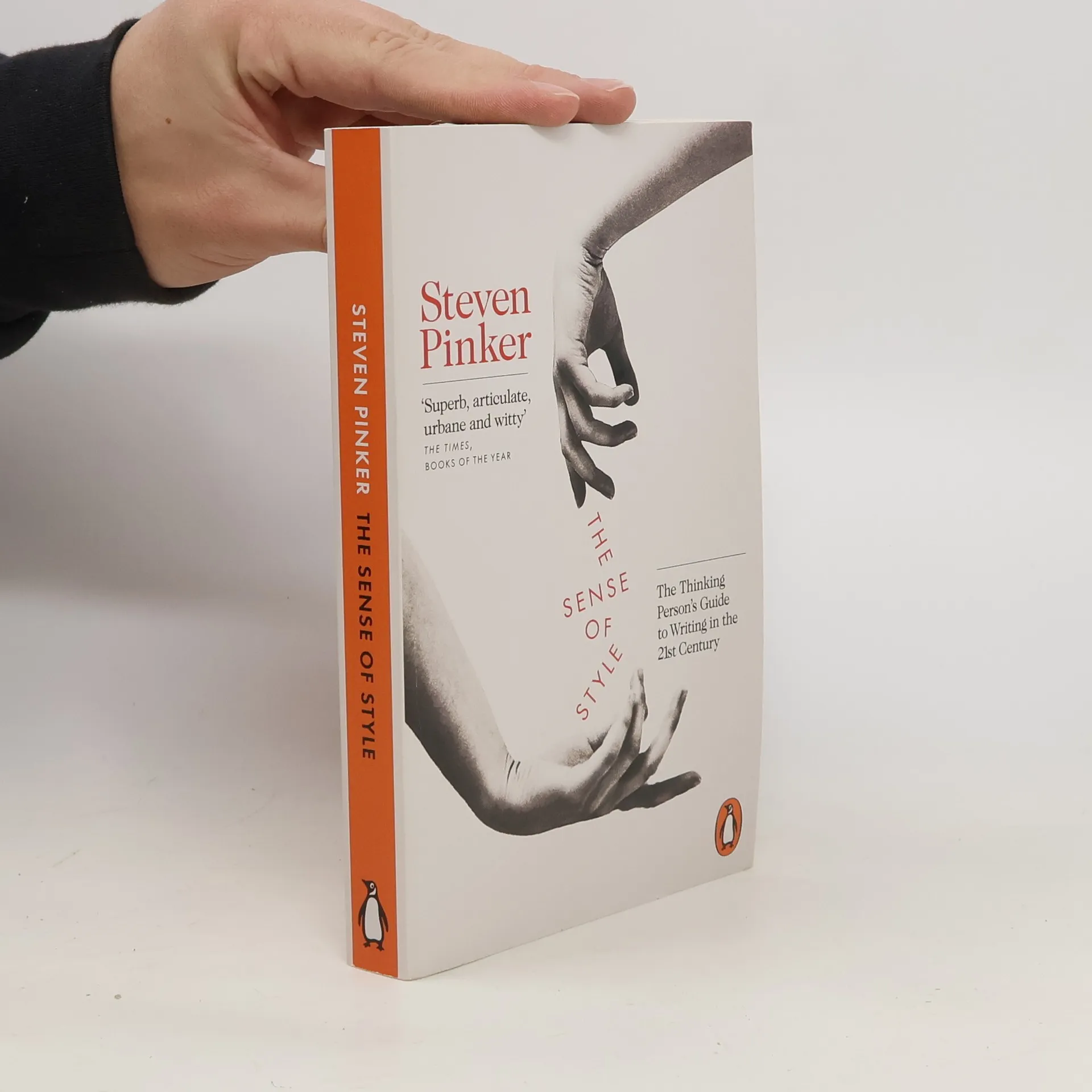
    • What is the secret of good prose? Does it matter in an age of digital media? In this witty, mind-expanding book about the art and science of writing well, Steven Pinker shows that good style isn't just about rules - it's about empathy, coherence and adding beauty to the world. 'Witty, direct and idiosyncratic . . . often laugh-out-loud funny . . . refreshingly uncensorious . . . It helps enormously that he is such a beautiful stylist himself.' Paula Byrne, The Times 'Wonderful . . . No true lover of this chaotic, unregulated, magnificently vital language could fail to thrill.' Christopher Hart, Sunday Times 'Brainy, funny . . . a comedy of linguistic bad manners.' Peter Conrad, Guardian 'Outstanding . . . the one book I can unreservedly recommend as a guide on how to write well . . . unique as well as brilliant.' Oliver Kamm, The Times

      The sense of style : the thinking person's guide to writing in the 21st century
      4,1
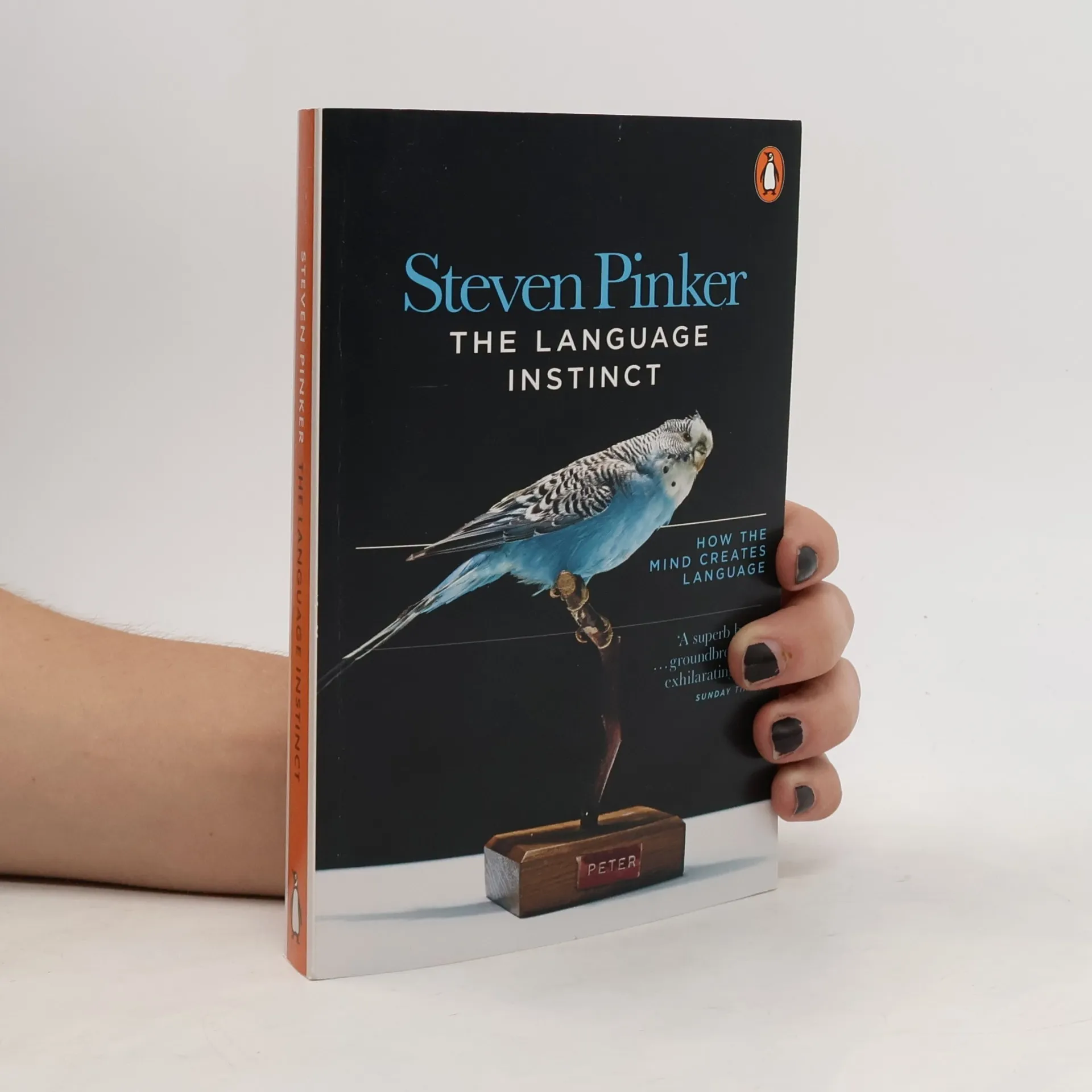
    • In "The Language Instinct," Steven Pinker, well-known for his revolutionary theory of how children acquire language, lucidly explains everything you always wanted to know about language: how it works, how children learn it, how it changes, how the brain computes it, how it evolved. With wit, education, and deft use of everyday examples of humor and wordplay, Pinker weaves our vast knowledge of language into a compelling story: language is a human instinct, wired into our brains by evolution like web spinning in spiders or sonar in bats.

      The Language Instinct
      4,0
    • Language, Cognition, and Human Nature

      • 392pages
      • 14 heures de lecture

      Collects for the first time Steven Pinker's most influential scholarly work on language and cognition. Pinker is a highly eminent cognitive scientist, and these essays emphasize the importance of language and its connections to cognition, social relationships, child development, human evolution, and theories of human nature.

      Language, Cognition, and Human Nature
      3,9
    • The Stuff of Thought

      • 499pages
      • 18 heures de lecture

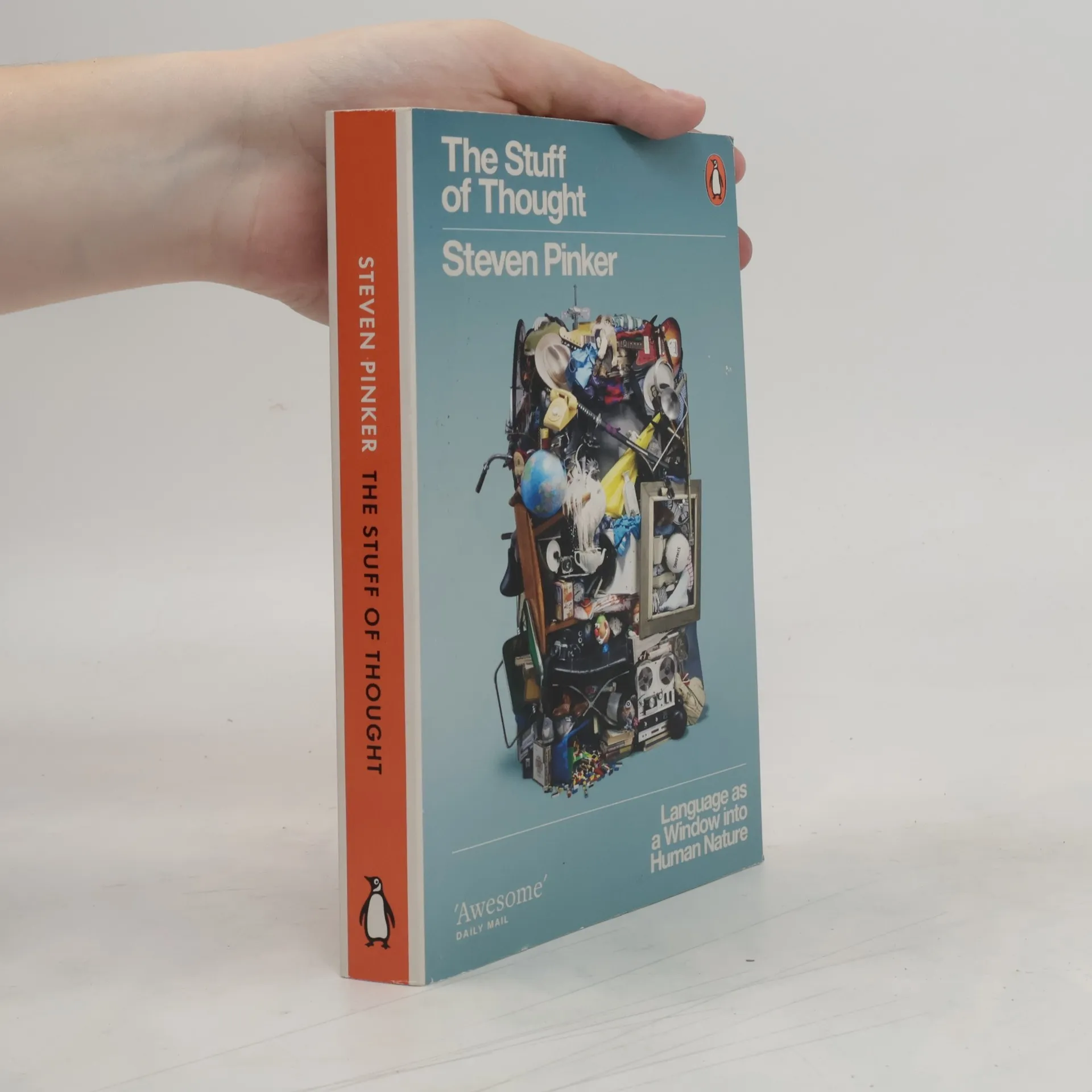
      Steven Pinker analyses what words actually mean and how we use them, and he reveals what this can tell us about ourselves. He shows how we use space and motion as metaphors for more abstract ideas, and uncovers the deeper structures of human thought that have been shaped by evolutionary history.

      The Stuff of Thought
      3,9
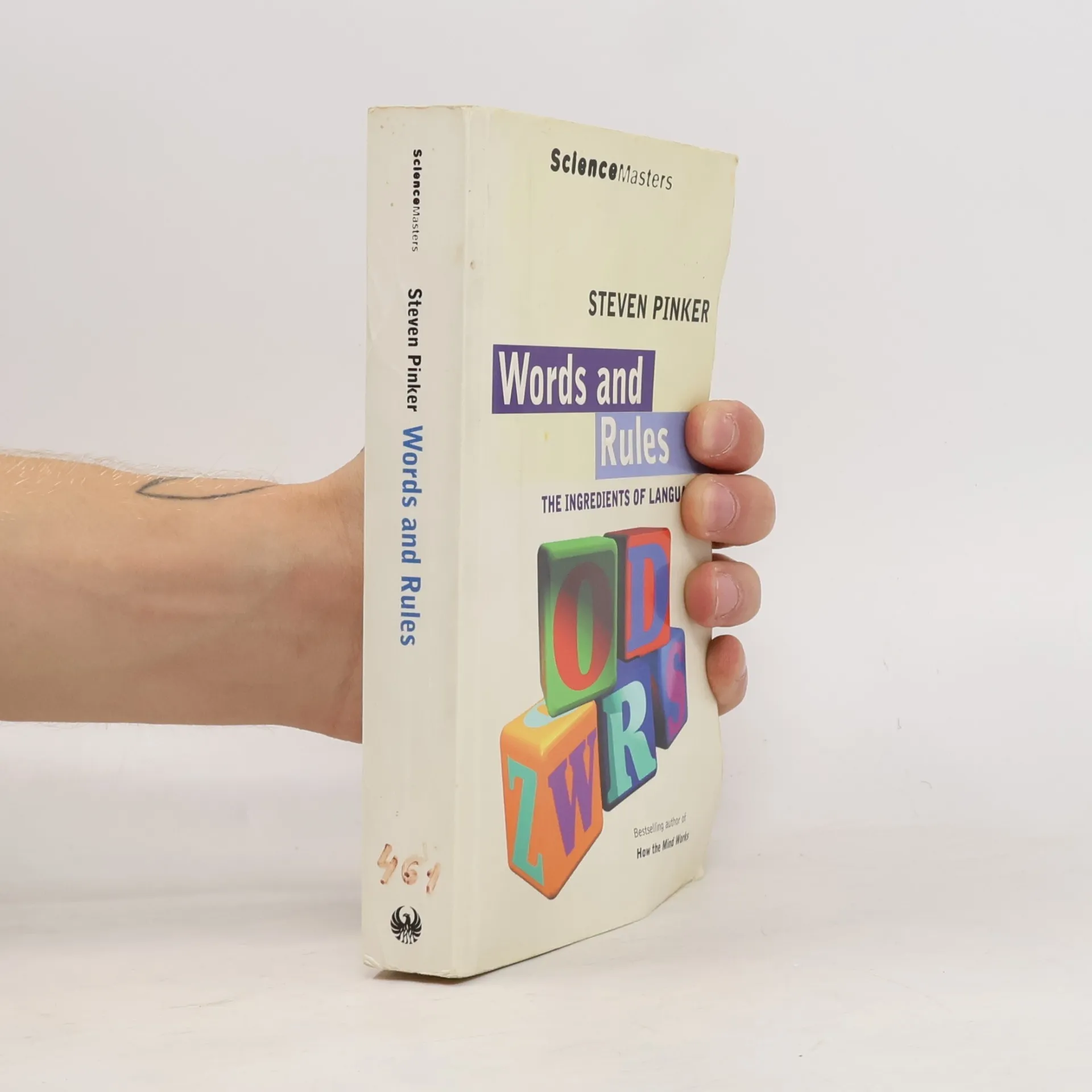
    • How does language function? How do children acquire their mother tongue? Why do languages evolve, making older forms like Shakespearean and Chaucer's English challenging to understand? What accounts for the quirks and irregularities in languages? Are they fundamentally similar? How are new words formed? Where is language processed in the brain? In this insightful work, Steven Pinker addresses these questions and more. With the same wit and style found in his classic, he delves into language through the lens of a seemingly simple phenomenon: the existence of regular and irregular verbs. This exploration connects a wide range of topics across the sciences and humanities, including language history, computer simulations of human language, children's speech errors, English peculiarities, key themes in Western philosophy, and advancements in genetics and brain imaging. Pinker elucidates these complexities through a powerful idea: language consists of a mental dictionary of memorized words and a mental grammar of creative rules. This distinction not only deepens our understanding of language but also sheds light on the human mind itself. This work is a captivating and original contribution from one of the leading cognitive scientists of our time.

      Words and rules: The ingredients of language
      3,9
    • Learnability and Cognition

      • 512pages
      • 18 heures de lecture

      Before Steven Pinker became known for his bestsellers on language and human nature, he authored several influential technical monographs on language acquisition. His 1989 work, which integrates two significant topics—how children learn their mother tongue and how the mind categorizes fundamental concepts like space, time, causality, agency, and goals—has become a classic in cognitive science. Children exhibit remarkable subtlety in language use; for instance, phrases like "pour water into the glass" sound natural, while "pour the glass with water" does not. This raises the question of how children make these distinctions without consistent correction or merely mimicking their parents. Pinker addresses this paradox through a theory on how children grasp the meanings and applications of verbs, delving into its implications for language, thought, and their interrelation. In a new preface, he reflects on how the ideas explored in this work inspired his later bestseller, which examines language as a lens into human nature. He emphasizes that these technical discussions offer valuable insights into not only language acquisition but also literary metaphor, scientific understanding, political discourse, and societal views on sexuality and obscenity.

      Learnability and Cognition
      3,3
    • Rationality

      • 432pages
      • 16 heures de lecture

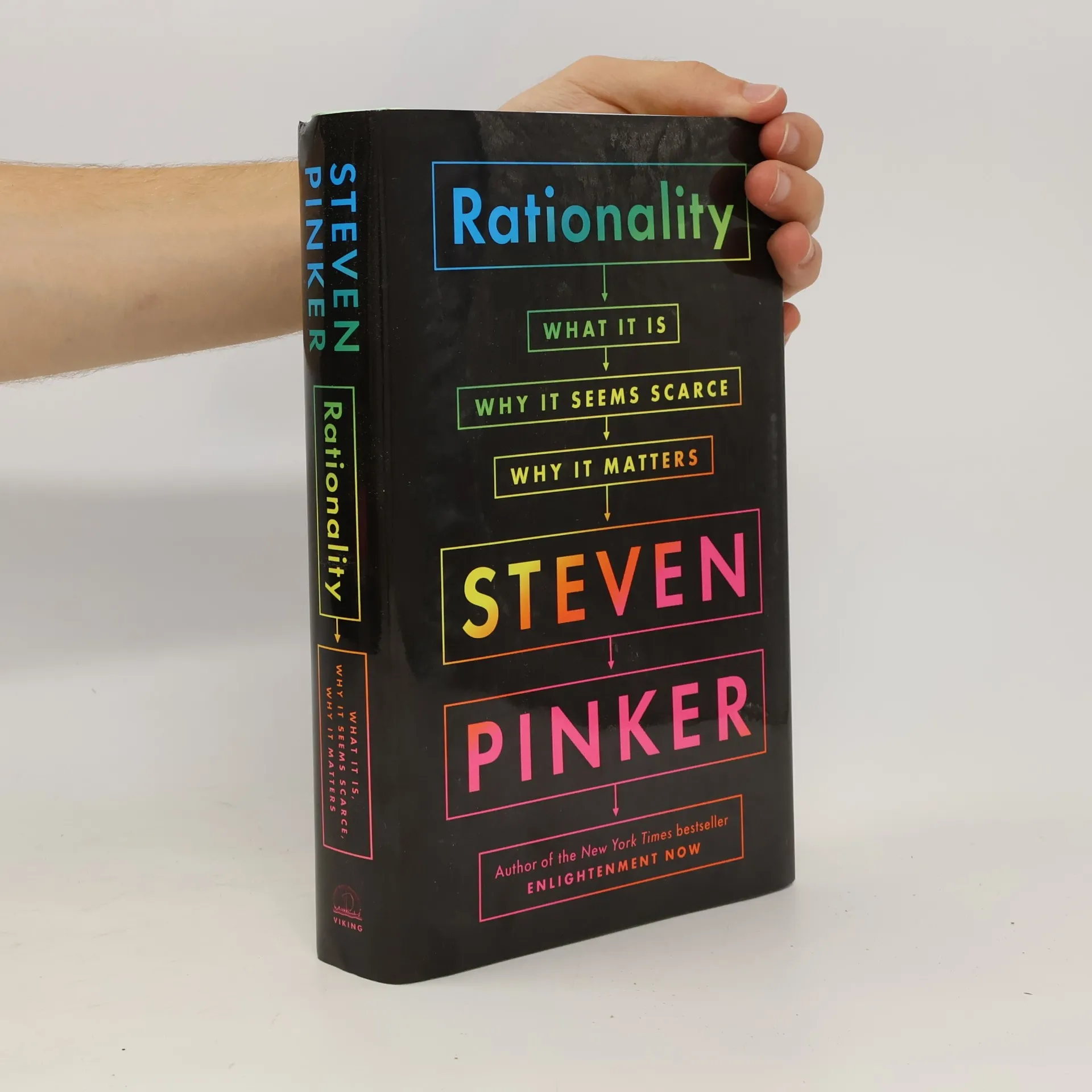
      In the twenty-first century, humanity is reaching new heights of scientific understanding - and at the same time appears to be losing its mind. How can a species that discovered vaccines for Covid-19 in less than a year produce so much fake news, quack cures and conspiracy theorizing? In Rationality, Pinker rejects the cynical cliche that humans are simply an irrational species. After all, we discovered the laws of nature, lengthened and enriched our lives and set the benchmarks for rationality itself. Instead, he explains, we think in ways that suit the low-tech contexts in which we spend most of our lives, but fail to take advantage of the powerful tools of reasoning we have built up over millennia- logic, critical thinking, probability, and decision-making under uncertainty. These tools are not a standard part of our educational curricula, and have never been presented clearly and entertainingly in a single book - until now. Rationality matters. It leads to better choices in our lives and in the public sphere, and is the ultimate driver of social justice and moral progress. Brimming with insight and humour, Rationality will enlighten, inspire and empower.

      Rationality
      3,8
    • "Progress. It is one of the animating concepts of the modern era. From the Enlightenment onwards, the West has had an enduring belief that through the evolution of institutions, innovations, and ideas, the human condition is improving. This process is supposedly accelerating as new technologies, individual freedoms, and the spread of global norms empower individuals and societies around the world. But is progress inevitable? Its critics argue that human civilization has become different, not better, over the last two and a half centuries. What is seen as a breakthrough or innovation in one period becomes a setback or limitation in another. In short, progress is an ideology not a fact; a way of thinking about the world as opposed to a description of reality. In the seventeenth semi-annual Munk Debates, which was held in Toronto on November 6, 2015, pioneering cognitive scientist Steven Pinker and best-selling author Matt Ridley squared off against noted philosopher Alain de Botton and best-selling author Malcolm Gladwell to debate whether humankind's best days lie ahead, "--Amazon.com.

      Do Humankind's Best Days Lie Ahead?: The Munk Debates
      3,3
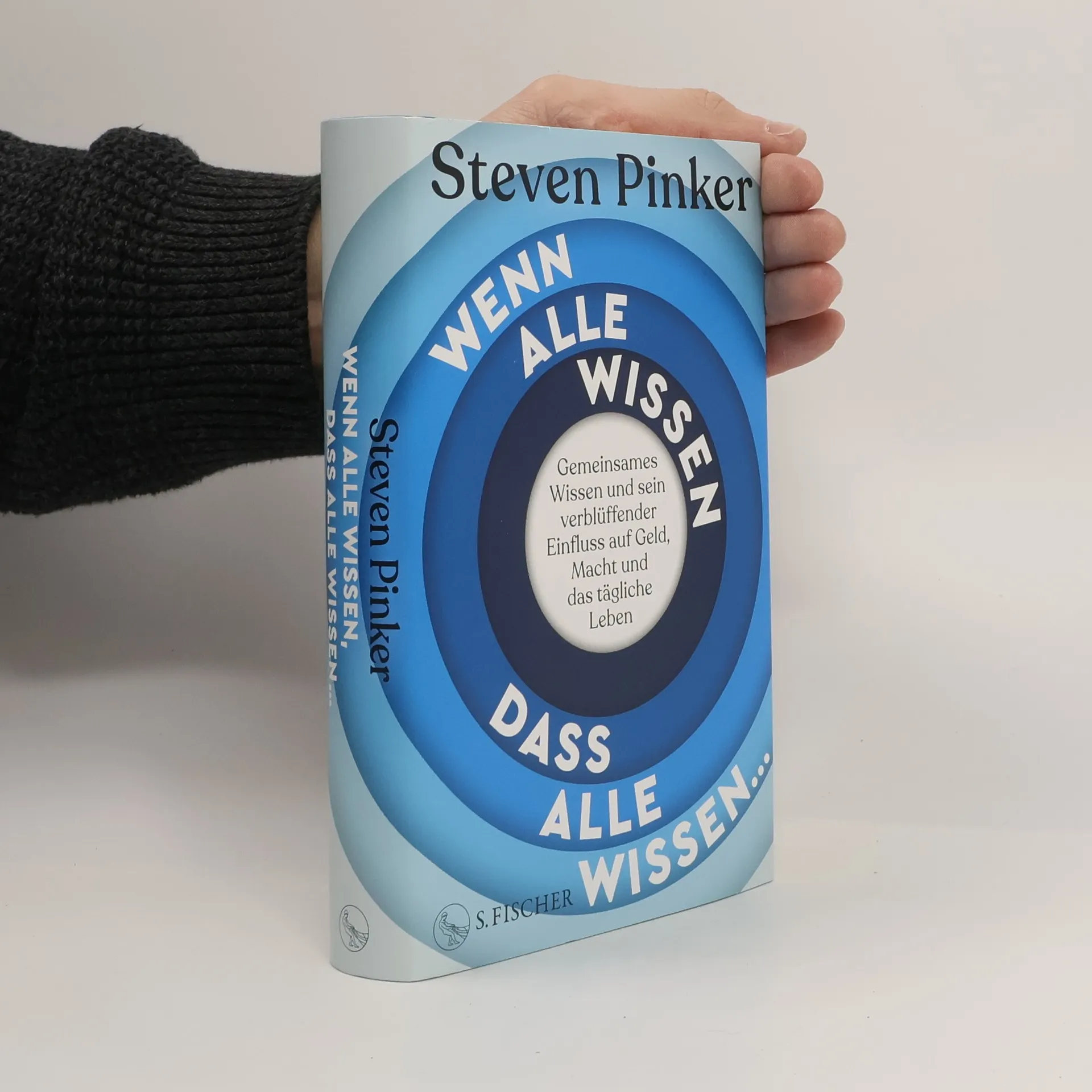
    • Wenn alle wissen, dass alle wissen...

      Gemeinsames Wissen und sein verblüffender Einfluss auf Geld, Macht und das tägliche Leben

      • 416pages
      • 15 heures de lecture

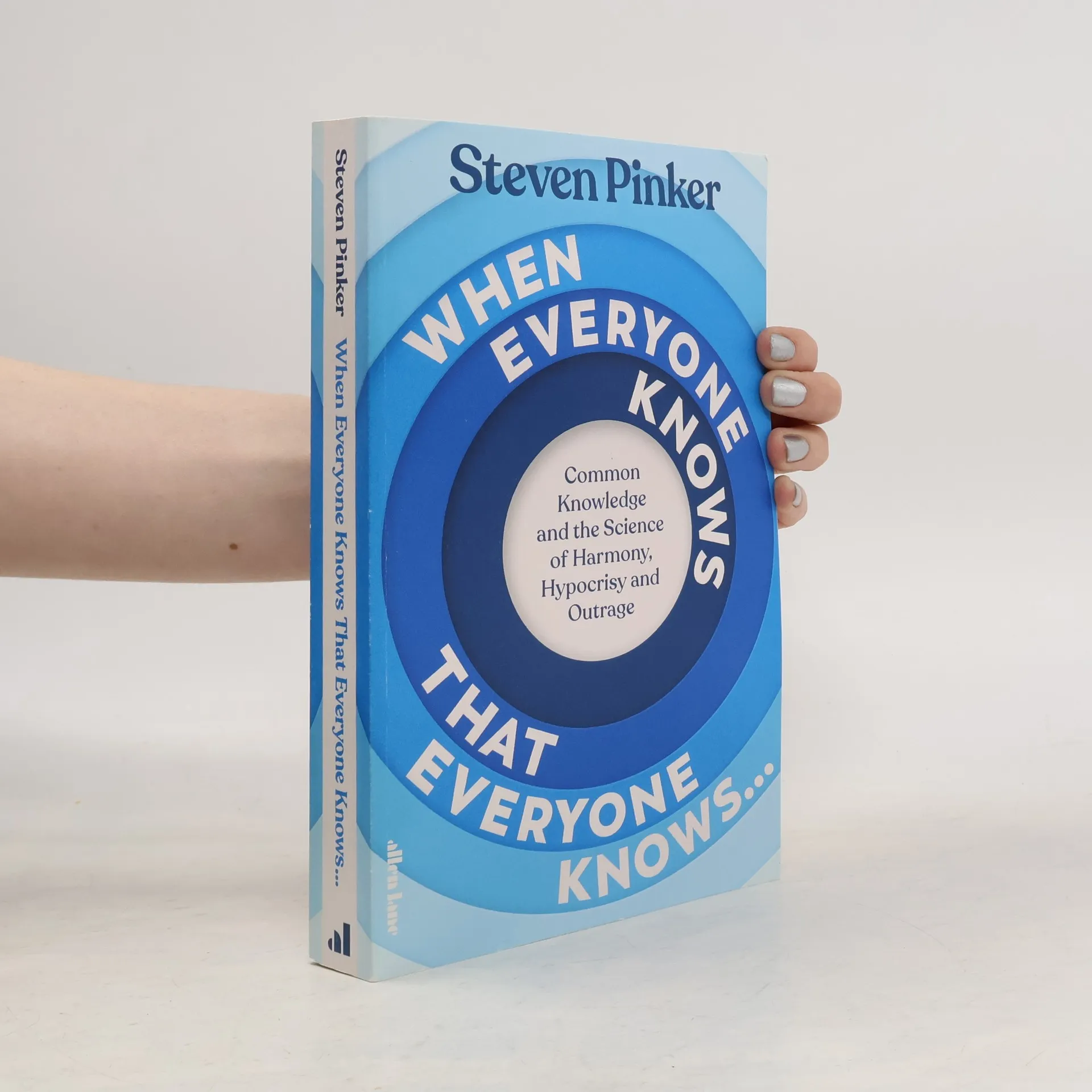
      Wie Gemeinsames Wissen unsere Gesellschaft bildet – die erste umfassende Theorie Von der Börse über internationale Beziehungen bis hin zu privaten Verabredungen: Tagtäglich treffen wir Annahmen darüber, was andere Menschen wissen und denken, und richten unser Handeln danach aus – oft, ohne uns dessen bewusst zu sein. Steven Pinker befasst sich in seinem neuen Buch damit, wie wir den Wissensstand anderer Menschen einschätzen. Anhand von zahlreichen Beispielen aus der Spieltheorie, der Geschichte und unserem Alltag zeigt er so klar wie unterhaltsam, dass unsere alltäglichen Interaktionen auf komplexesten Überlegungen beruhen – und warum diese Tatsache unser Zusammenleben entscheidend prägt.

      Wenn alle wissen, dass alle wissen...