
The Big Bang theory--the leading explanation for the origin of the universe--posits that space and time sprang into being about 14 billion years ago in a hot, expanding fireball of nearly infinite density. Over the last three decades, the theory has repeatedly had to be revised to address such issues as how galaxies and stars first formed and why the expansion of the universe is speeding up--let alone what caused the Big Bang in the first place. This book presents a bold new cosmology: Steinhardt and Turok recount remarkable developments in astronomy, particle physics, and superstring theory that together form the basis of their groundbreaking "Cyclic Universe" theory. According to this picture, the Big Bang was not the beginning of time, but the bridge to a past filled with endlessly repeating cycles, each accompanied by the creation of new matter and the formation of new galaxies, stars, and planets.--From publisher description.
Neil Turok Livres
Neil Turok est un physicien sud-africain dont le travail explore la physique mathématique et la physique de l'univers primordial. Il examine des concepts fondamentaux tels que la constante cosmologique et un modèle cyclique de l'univers, contribuant à notre compréhension de ses origines. Sa recherche se caractérise par un engagement profond envers les questions fondamentales de l'existence. Turok cherche à percer les mystères de l'univers par la physique théorique.

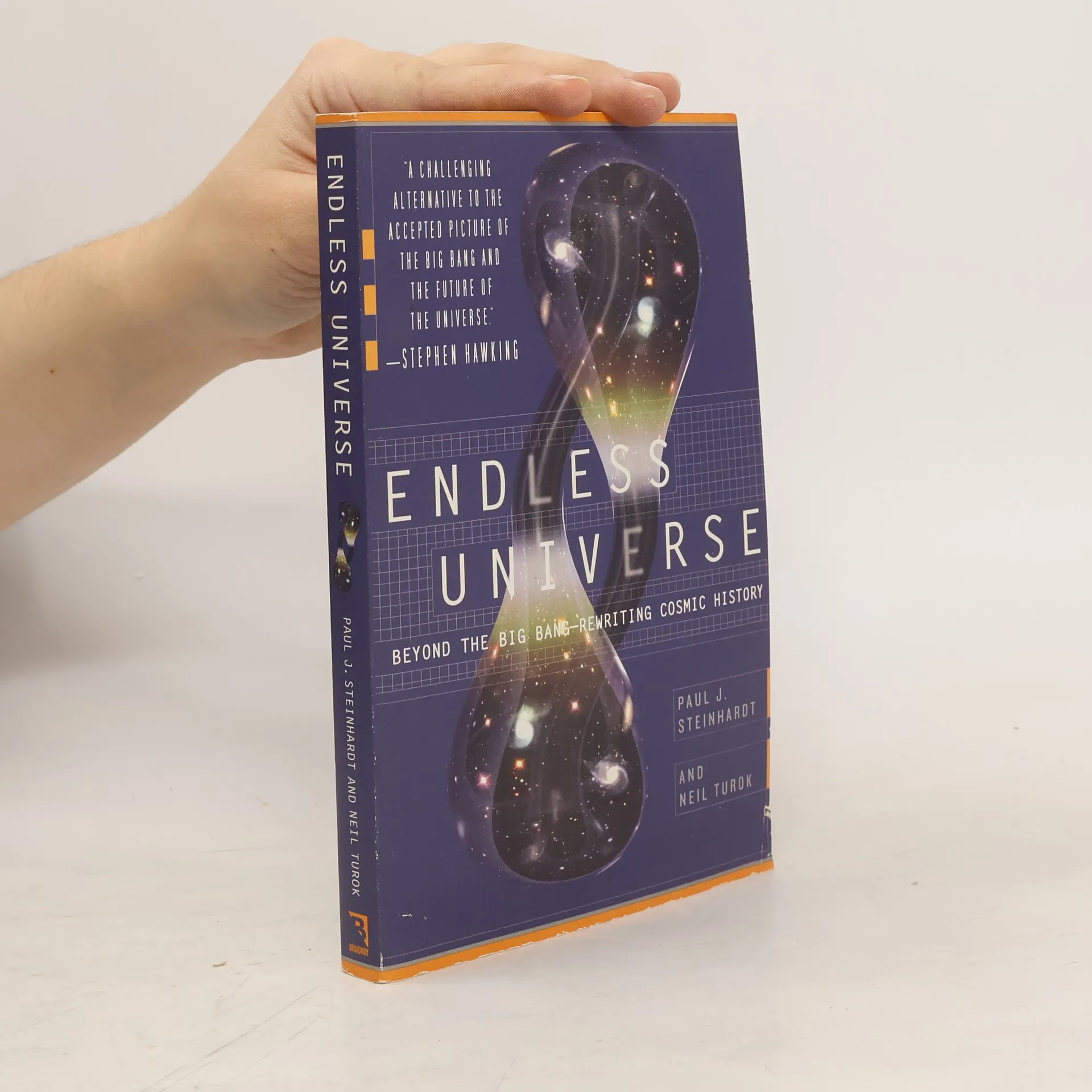

Two world-renowned scientists present an audacious new vision of the cosmos that “steals the thunder from the Big Bang theory.” —<i>Wall Street Journal </i> The Big Bang theory—widely regarded as the leading explanation for the origin of the universe—posits that space and time sprang into being about 14 billion years ago in a hot, expanding fireball of nearly infinite density. Over the last three decades the theory has been repeatedly revised to address such issues as how galaxies and stars first formed and why the expansion of the universe is speeding up today. Furthermore, an explanation has yet to be found for what caused the Big Bang in the first place. In <i>Endless Universe</i>, Paul J. Steinhardt and Neil Turok, both distinguished theoretical physicists, present a bold new cosmology. Steinhardt and Turok “contend that what we think of as the moment of creation was simply part of an infinite cycle of titanic collisions between our universe and a parallel world” (<i>Discover</i>). They recount the remarkable developments in astronomy, particle physics, and superstring theory that form the basis for their groundbreaking “Cyclic Universe” theory. According to this theory, the Big Bang was not the beginning of time but the bridge to a past filled with endlessly repeating cycles of evolution, each accompanied by the creation of new matter and the formation of new galaxies, stars, and planets. <i>Endless Universe</i> provides answers to longstanding problems with the Big Bang model, while offering a provocative new view of both the past and the future of the cosmos. It is a “theory that could solve the cosmic mystery” (<i>USA Today</i>).