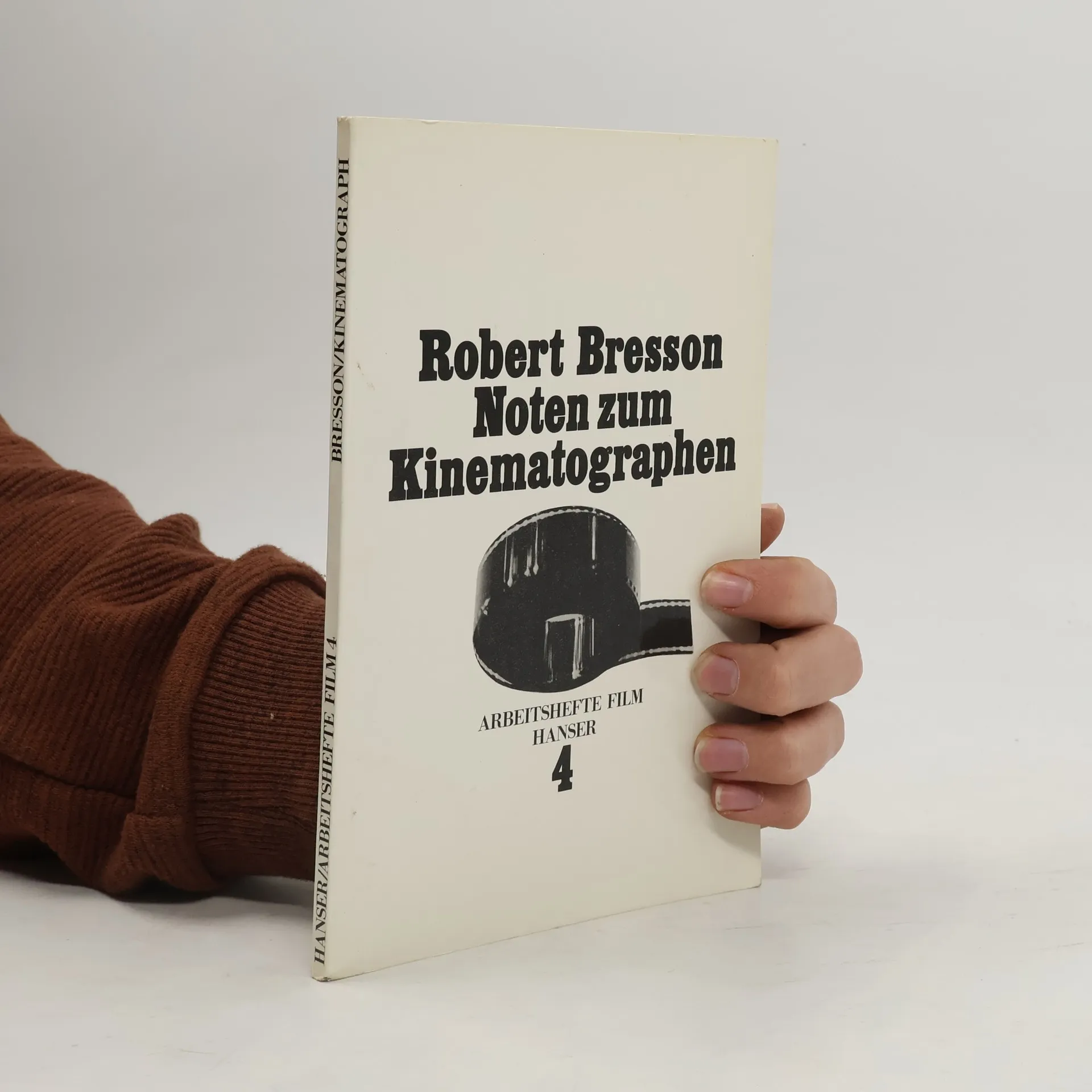
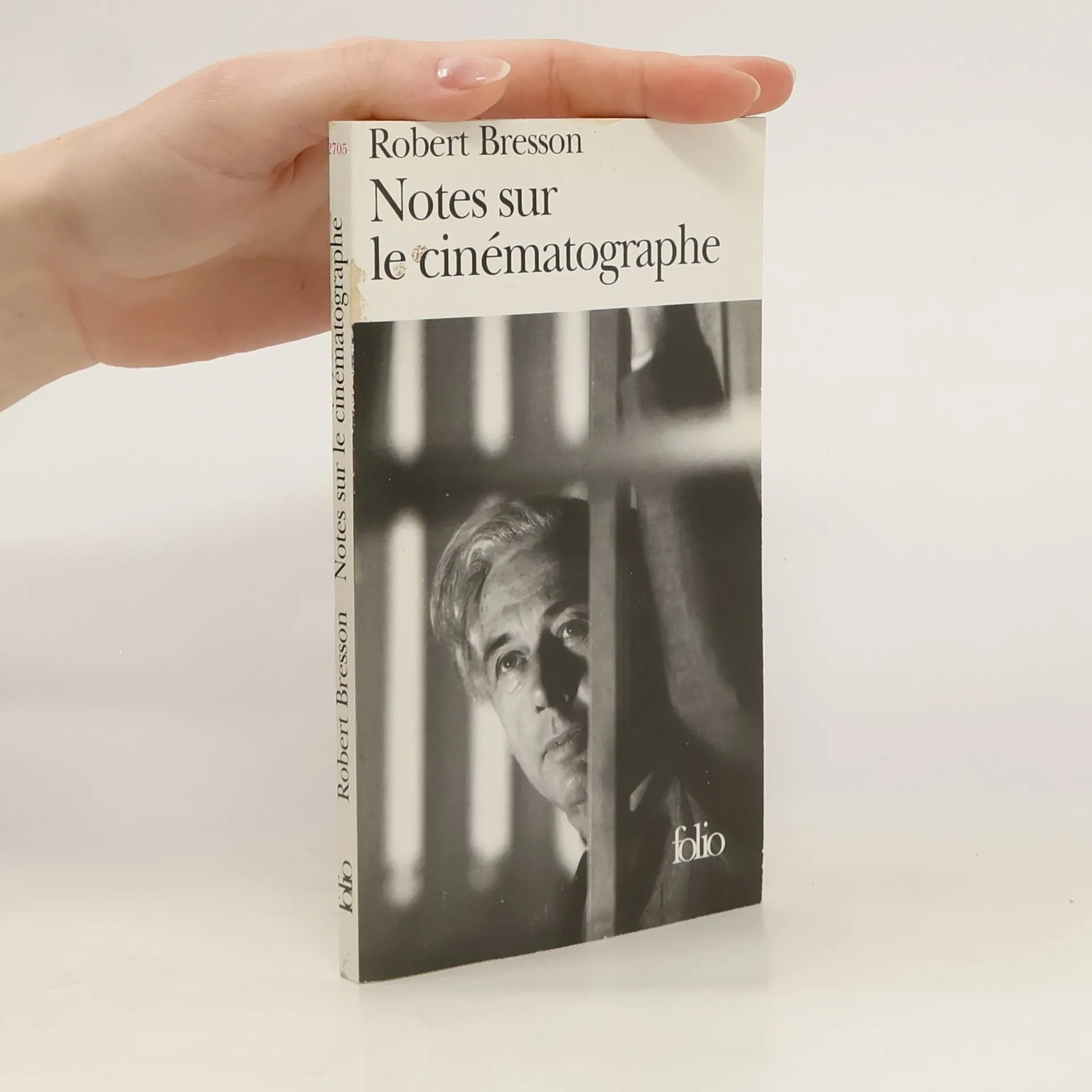
Robert Bresson était un cinéaste français réputé pour son style spirituel, ascétique et esthétique, contribuant de manière significative à l'art cinématographique et influençant la montée de la Nouvelle Vague française. Son approche de la réalisation était souvent considérée comme celle du cinéaste français le plus estimé après Jean Renoir. L'influence de Bresson fut si profonde que Jean-Luc Godard le décrivit en déclarant : « Robert Bresson, c'est le cinéma français, comme Dostoïevski est le roman russe et Mozart la musique allemande. » Son œuvre se caractérise par une profonde introspection et une approche narrative singulière.
«Ces mots sont plus que des notes de journal d'un réalisateur expérimenté. Ces mots sont des cicatrices, des marques de souffrance, des joyaux. Dans notre nuit (la nuit de la création qui doit nécessairement venir pour que s'allume l'écran), ils brillent comme des étoiles, nous montrant le simple et difficultueux chemin vers la perfection.» J.M.G. Le Clézio.
Robert Bresson, renowned for his films like *Pickpocket* and *A Man Escaped*, was a pivotal figure in French cinema, known for his distinctive approach. He preferred nonprofessional actors, rejected advancements like Cinerama, and critiqued capitalism's impact on film. *Bresson on Bresson* compiles significant interviews from his forty-year career, showcasing the coherence and exploratory nature of his work. Each chapter focuses on one of his fourteen films, discussing literary adaptation, sound design, and his influential treatise, *Notes on the Cinematograph*. Bresson’s reflections are marked by insightful mantras, such as “Sound...invented silence in cinema” and “It’s the film that...gives life to the characters.” His integrity and originality garnered respect from contemporaries like Jean-Luc Godard and Jacques Rivette. While his films exhibit meticulous thought, these interviews reveal his deep faith in intuition—both his own and that of the audience, which he believed is primed to feel before fully understanding. This belief underscores the profound connection he sought to establish through his art.