Bookbot

Don Stephen Lemons

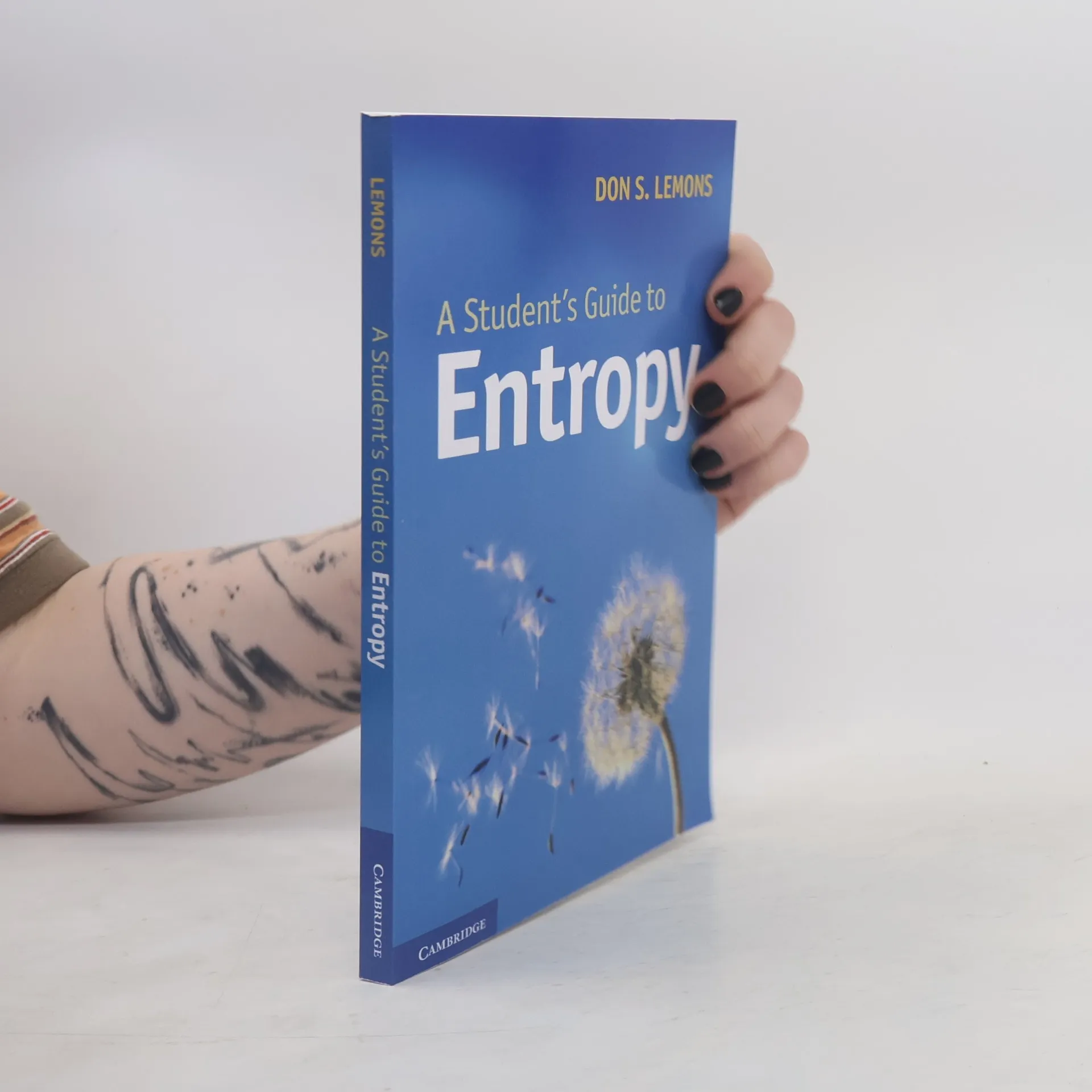
    A student's guide to entropy
    Thermodynamic Weirdness
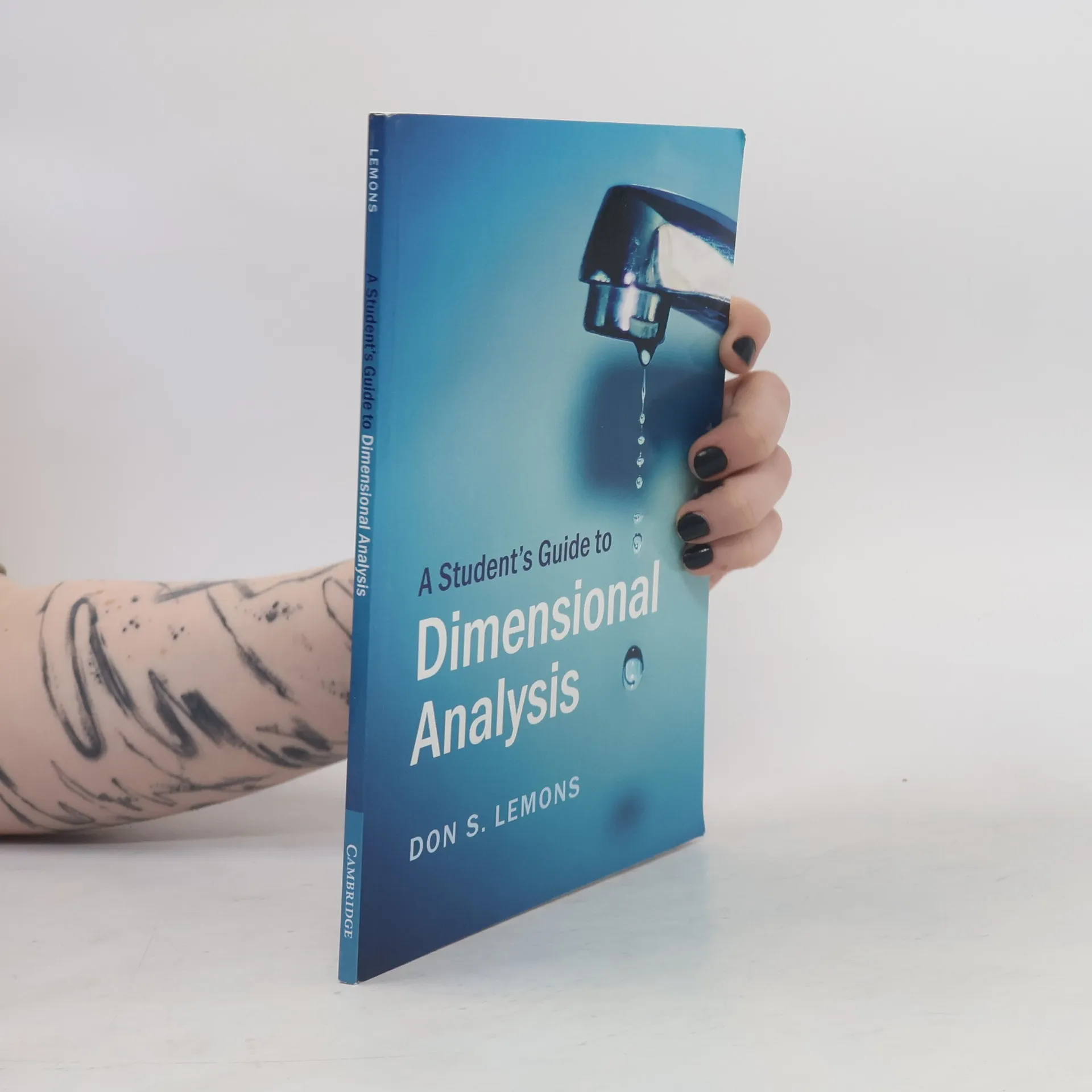
    A Student's Guide to Dimensional Analysis
    On the Trail of Blackbody Radiation
    • On the Trail of Blackbody Radiation

      • 224pages
      • 8 heures de lecture

      An account of Max Planck’s construction of his theory of blackbody radiation, summarizing the established physics on which he drew. In the last year of the nineteenth century, Max Planck constructed a theory of blackbody radiation—the radiation emitted and absorbed by nonreflective bodies in thermal equilibrium with one another—and his work ushered in the quantum revolution in physics. In this book, three physicists trace Planck’s discovery. They follow the trail of Planck’s thinking by constructing a textbook of sorts that summarizes the established physics on which he drew. By offering this account, the authors explore not only how Planck deployed his considerable knowledge of the physics of his era but also how Einstein and others used and interpreted Planck’s work. Planck did not set out to lay the foundation for the quantum revolution but to study a universal phenomenon for which empirical evidence had been accumulating since the late 1850s. The authors explain the nineteenth-century concepts that informed Planck’s discovery, including electromagnetism, thermodynamics, and statistical mechanics. In addition, the book offers the first translations of important papers by Ludwig Boltzmann and Wilhelm Wien on which Planck’s work depended.

      On the Trail of Blackbody Radiation
      4,0
    • Preface; Acknowledgments; 1. Introduction; 2. Mechanics; 3. Hydrodynamics; 4. Temperature and heat; 5. Electrodynamics and plasma physics; 6. Quantum physics; 7. Dimensional cosmology; 8. Appendix. Answers to problems; Index.

      A Student's Guide to Dimensional Analysis
      3,0
    • Thermodynamic Weirdness

      • 190pages
      • 7 heures de lecture

      Students of physics, chemistry, and engineering are taught classical thermodynamics through its methods--a "problems first" approach that neglects the subject's concepts and intellectual structure. In this book, Lemons fills this gap, offering a nonmathematical account of the ideas of classical thermodynamics in all its non-Newtonian "weirdness." By emphasizing the ideas and their relationship to one another, Lemons reveals the simplicity and coherence of classical thermodynamics. The author presents concepts in an order that is both chronological and logical, mapping the rise and fall of ideas in such a way that the ideas that were abandoned illuminate the ideas that took their place. Selections from primary sources, including writings by Daniel Fahrenheit, Antoine Lavoisier, James Joule, and others, appear at the end of most chapters. --From publisher description

      Thermodynamic Weirdness
      3,6
    • A student's guide to entropy

      • 200pages
      • 7 heures de lecture

      Striving to explore the subject in as simple a manner as possible, this book helps readers understand the elusive concept of entropy. Innovative aspects of the book include the construction of statistical entropy, the derivation of the entropy of classical systems from purely classical assumptions, and a statistical thermodynamics approach to the ideal Fermi and ideal Bose gases. Derivations are worked through step-by-step and important applications are highlighted in over 20 worked examples. Nearly 50 end-of-chapter exercises test readers' understanding. The book also features a glossary giving definitions for all essential terms, a time line showing important developments, and list of books for further study. It is an ideal supplement to undergraduate courses in physics, engineering, chemistry and mathematics.

      A student's guide to entropy
      3,9