

Bookbot

Sebastian Raschka

    Cet auteur se plonge profondément dans les domaines de la science des données et de l'apprentissage automatique, découvrant avec enthousiasme des modèles complexes dans les données. Son travail se concentre sur l'obtention de conclusions pertinentes grâce à des techniques d'exploration de données et d'apprentissage automatique, en particulier pour la modélisation prédictive. Fort partisan de la collaboration et de l'éthique open source, il croit au pouvoir du partage des connaissances et des outils pour la croissance mutuelle. Actuellement, il affine ses compétences analytiques en tant que doctorant, se concentrant sur le développement d'un logiciel de criblage virtuel très efficace pour la découverte de médicaments assistée par ordinateur et sur des approches novatrices en matière de docking protéine-ligand.

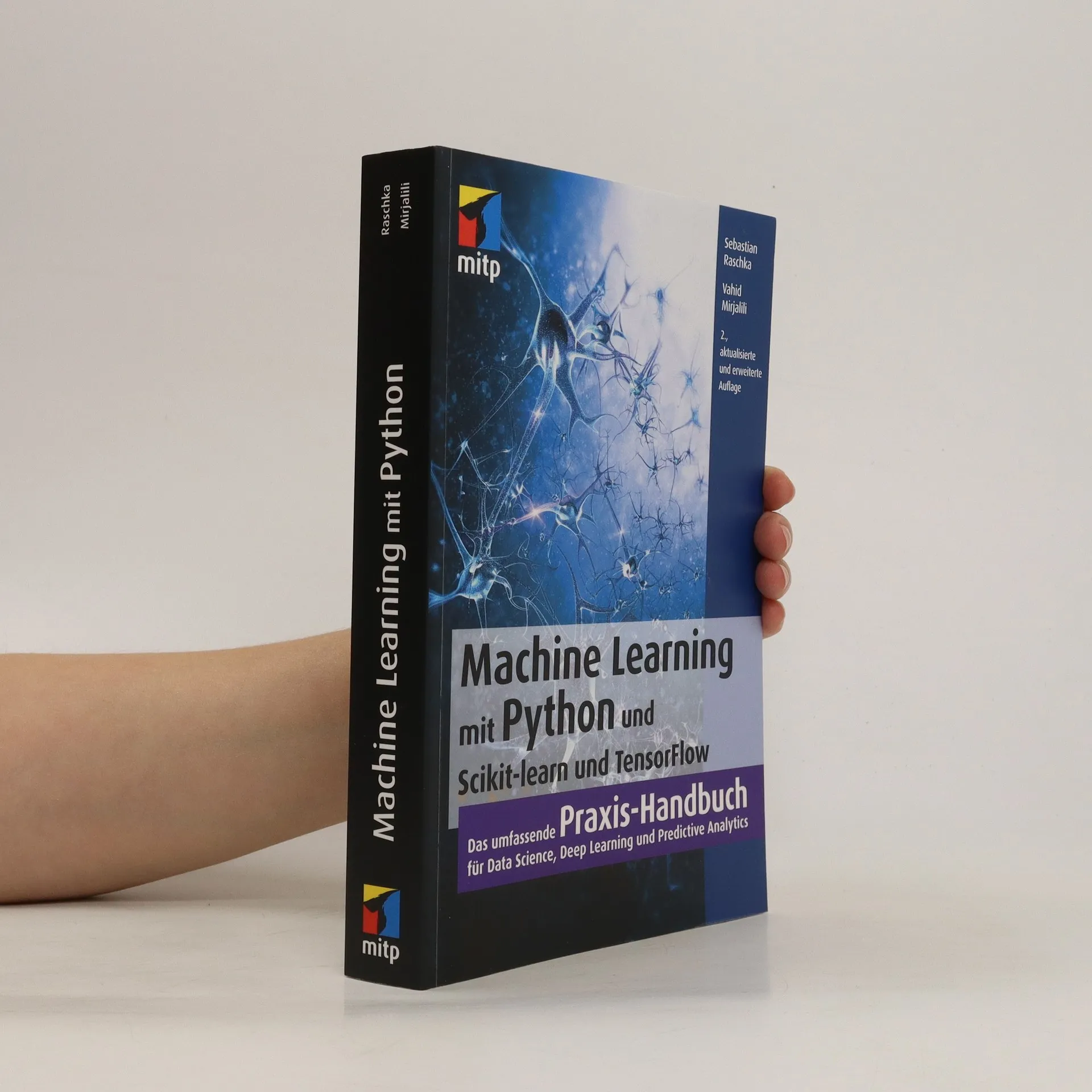
    Machine Learning mit Python und Scikit-learn und TensorFlow
    Machine Learning mit Python und Keras, TensorFlow 2 und Scikit-learn
    Machine Learning Q and AI
    Machine Learning with PyTorch and Scikit-Learn
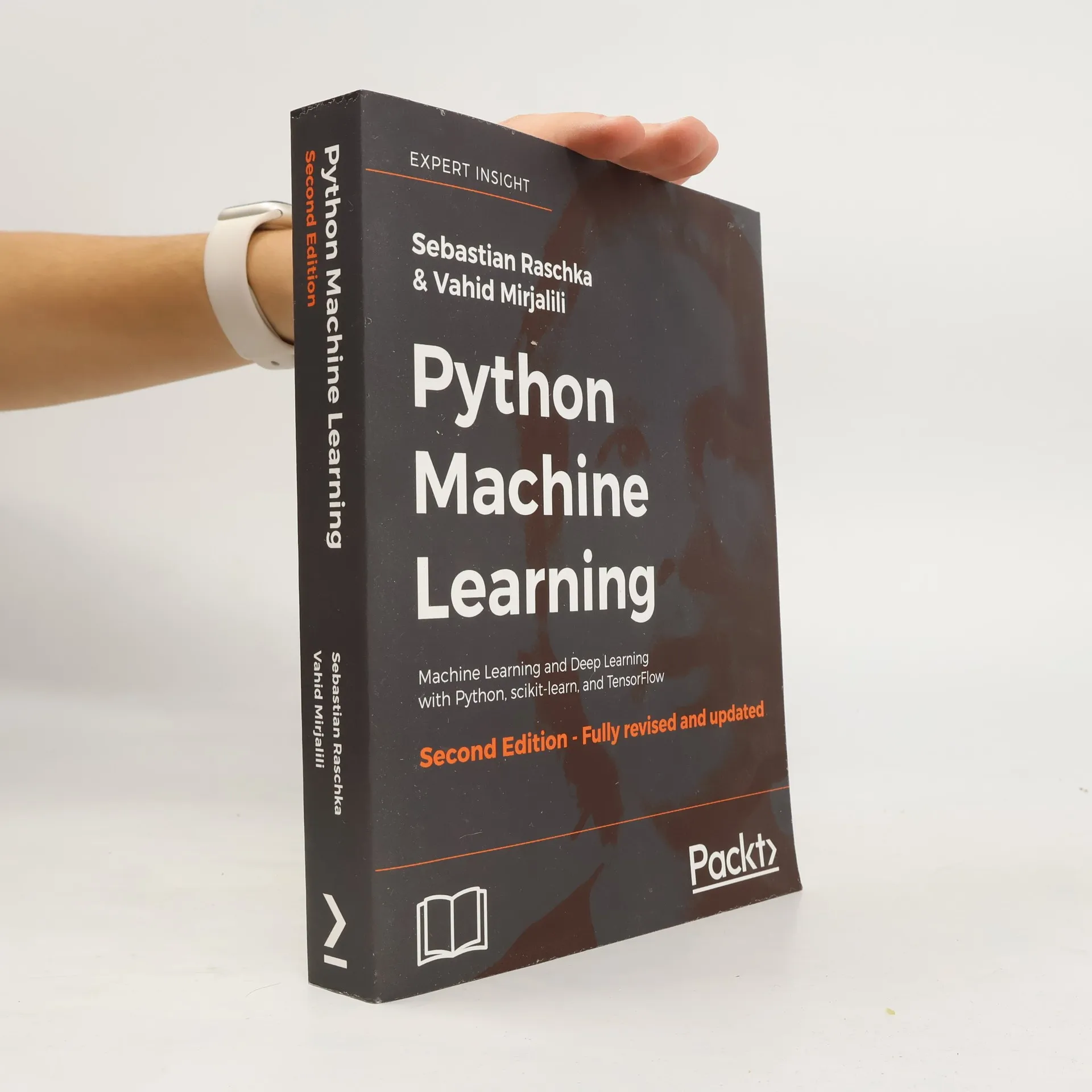
    Python Machine Learning
    • Python Machine Learning

      • 622pages
      • 22 heures de lecture
      4,3(49)Évaluer

      Machine learning is eating the software world. Understand and work at the cutting edge of machine learning, neural networks, and deep learning with this second edition of Sebastian Raschka's bestselling book, Python Machine Learning. Modernized and extended to include the latest open source technologies, including scikit-learn, Keras, and TensorFlow, Python Machine Learning Second Edition offers the practical knowledge and techniques you need to create effective machine learning and deep learning applications in Python. Sebastian Raschka and Vahid Mirjalili's unique insight and expertise introduce you to machine learning and deep learning algorithms, before progressing to advanced topics in data analysis. This book combines the theoretical principles of machine learning with a hands-on coding approach for a thorough grasp of machine learning theory and implementation using Python.

      Python Machine Learning
    • Machine Learning with PyTorch and Scikit-Learn

      Develop machine learning and deep learning models with Python

      • 774pages
      • 28 heures de lecture

      Focusing on machine and deep learning, this guide offers a thorough exploration of PyTorch, known for its user-friendly coding framework. It is part of a bestselling series, providing readers with practical insights and techniques to effectively implement machine learning concepts. Ideal for both beginners and experienced practitioners, the book emphasizes hands-on learning and real-world applications, making complex topics accessible and engaging.

      Machine Learning with PyTorch and Scikit-Learn
    • Die zweite Auflage dieses Buchs behandelt die Anwendung fortschrittlicher statistischer Modelle des Machine Learnings und die wichtigsten Algorithmen sowie Python-Bibliotheken wie NumPy, SciPy, Scikit-learn, TensorFlow, Matplotlib, Pandas und Keras. Machine Learning und Predictive Analytics revolutionieren die Unternehmenswelt, indem sie es ermöglichen, Trends und Muster in komplexen Daten zu erkennen, was für den langfristigen Geschäftserfolg entscheidend ist. Die Autoren erläutern den Einsatz von Machine-Learning- und Deep-Learning-Algorithmen anhand praktischer Beispiele und bieten umfassende Einblicke in leistungsfähige Python-Bibliotheken. Sie zeigen, wie Python genutzt werden kann, um grundlegende Erkenntnisse zu gewinnen und komplexe Algorithmen zu entwickeln. Zu den Themen gehören das Trainieren von Lernalgorithmen für Klassifizierungen, Regressionsanalysen zur Ergebnisprognose, Clusteranalysen zur Entdeckung verborgener Muster, Deep-Learning-Verfahren zur Bilderkennung, effektive Datenvorverarbeitung, Dimensionsreduktion zur Datenkomprimierung, das Training neuronaler Netze mit TensorFlow, Ensemble Learning, die Integration von Machine-Learning-Modellen in Webanwendungen sowie Stimmungsanalysen in sozialen Netzwerken und die Modellierung sequenzieller Daten mit rekurrenten neuronalen Netzen.

      Machine Learning mit Python und Scikit-learn und TensorFlow