

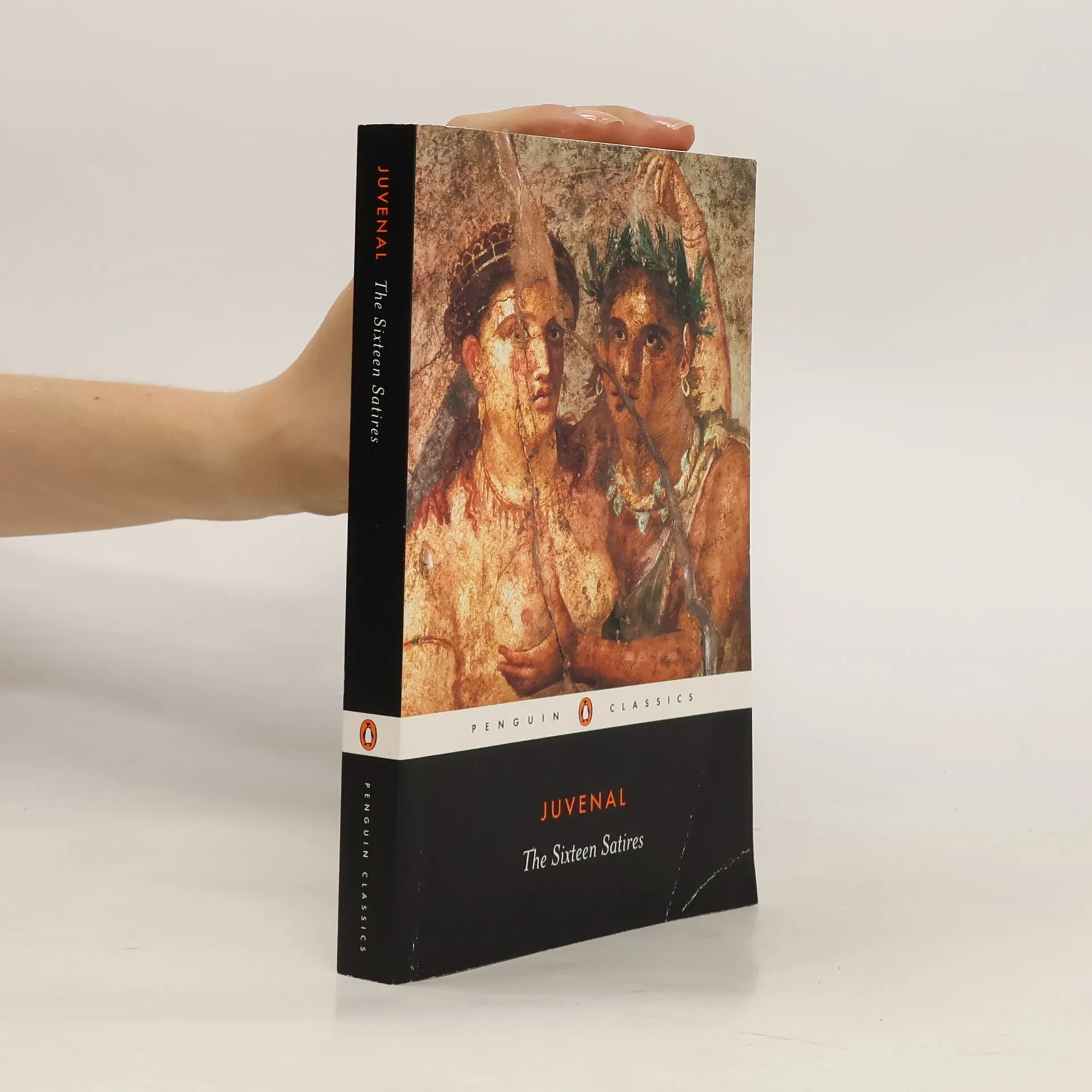
Juvenal's Satires create a fascinating (and immediately familiar) world of whores, fortune-tellers, boozy politicians, slick lawyers, shameless sycophants, ageing flirts and downtrodden teachers. Perhaps more than any other writer, Juvenal (c. AD 55-138) captures the splendour, the squalor and the sheer vibrant energy of everyday Roman life. A member of the traditional land-owning class, which was rapidly seeing power slip into the hands of dynamic outsiders, he offers equally savage portraits of decadent aristocrats, women interested only in 'rough trade' like actors and gladiators, and the jumped-up sons of panders and auctioneers. He constantly compares the corruption of his own generation with its stern upright forebears. And he makes us feel from within the deep humiliation of having to dance attendance on rich but odious patrons
Juvenal Livres
Juvénal était un poète romain réputé pour ses satires, qui offrent une critique cinglante de la société romaine et de sa décadence morale. Ses œuvres, composées en hexamètre dactylique, se caractérisent par leur esprit vif, leur ironie mordante et leurs observations pénétrantes sur la nature humaine. À travers sa poésie, Juvénal explore des thèmes tels que la cupidité, l'hypocrisie et les absurdités de la vie quotidienne, offrant un commentaire durable sur les faiblesses humaines éternelles. Sa voix distinctive et sa perspective intransigeante consolident sa position de figure marquante de la littérature romaine.


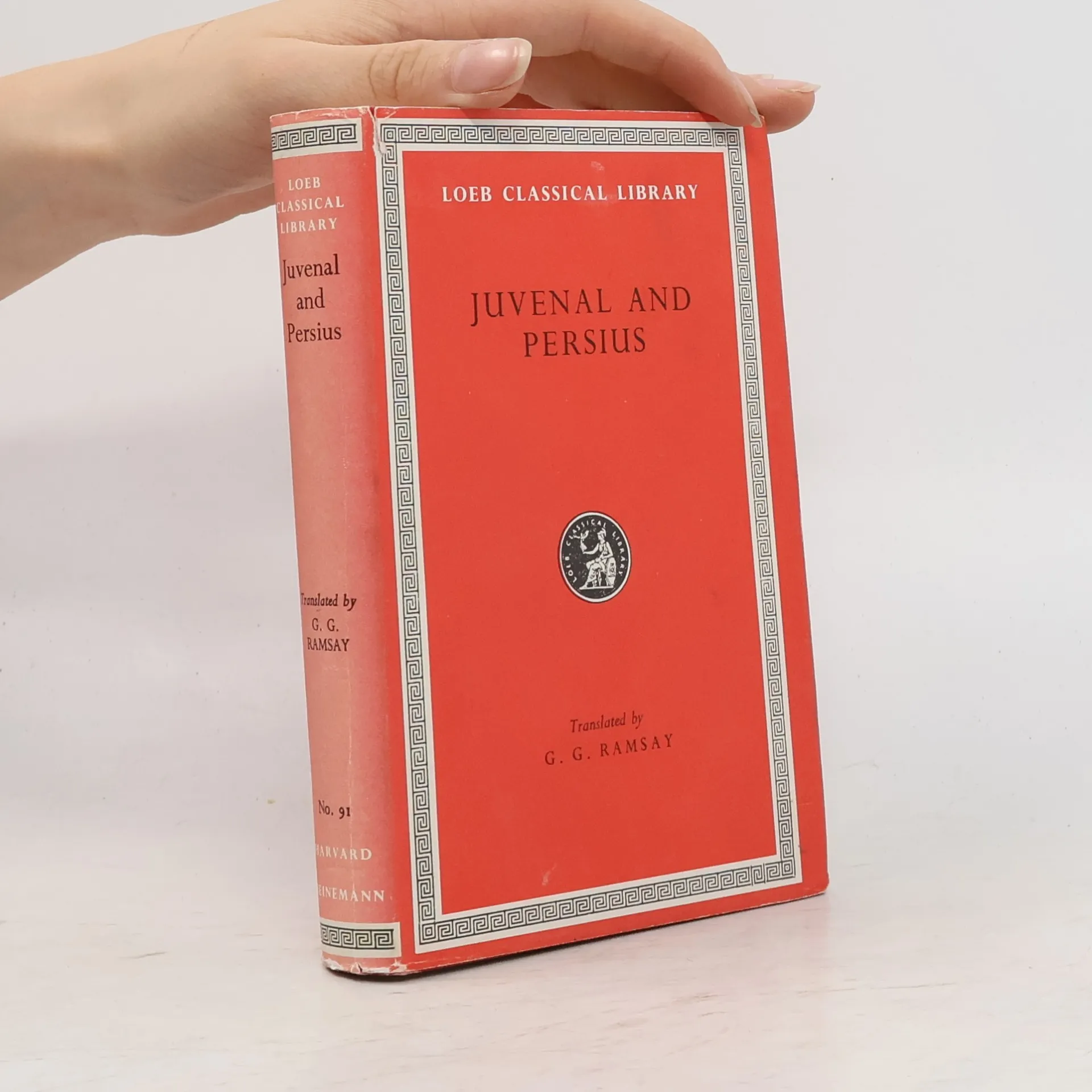
Juvenal and Persius
- 414pages
- 15 heures de lecture
THIS EDITION HAS BEEN REPLACED BY A NEWER EDITION. Juvenal, Decimus Iunius Iuvenalis (ca. AD 60-140), a master of satirical hexameter poetry from Aquinum, crafted incisive satires on various aspects of Roman life. His works critique inept poetry (Satire 1), expose the vices of false philosophers (2), articulate the grievances of the deserving poor (3), and depict the dynamics of clients (5). He satirizes a council meeting under Emperor Domitian (4), vicious women (6), and reflects on the future of letters and learning under a new emperor (7). He emphasizes virtue over birth as the source of nobility (8) and critiques homosexual vice (9). The tone shifts in later satires, exploring themes like the true object of prayer (10), contrasts in eating habits (11), a friend's shipwreck escape, will-hunters (12), guilt and revenge (13), parental examples (14), cannibalism in Egypt (15), and the privileges of soldiers (16, unfinished). Persius Flaccus, Aulus (AD 34-62), of Volaterrae, was of equestrian rank and studied grammar, rhetoric, and Stoic philosophy in Rome. He lived a sober life with his family and friends, including Lucan. His six Satires begin with a prologue and address topics such as the corruption of literature (1), misguided prayers (2), deliberate wrong living (3), insincere politicians (4), praise for Cornutus the Stoic, and the servility of men (5), concluding with a chatty poem to poet Bassus (6).
Römische Satiren. Color vitae: Lucilius, Horaz, Petron, Juvenal
- 83pages
- 3 heures de lecture
Letteratura universale: Contro le donne
Satira VI con testo a fronte - A cura di Franco Bellandi
- 189pages
- 7 heures de lecture