

This third edition builds on the success of previous editions, focusing on the latest features of the Spring Framework for enterprise Java applications. It offers code recipes covering various aspects of Spring, including fundamentals like the IoC container and AOP, as well as enterprise solutions such as Java EE integration, Spring Integration, Batch, jBPM, and cloud technologies like Hadoop and MongoDB. The web section includes Spring MVC, Web Flow, Roo, and integration with Grails and REST services. The book provides step-by-step guidance with complete, real-world code examples, allowing you to copy and modify code and configuration files for your projects, saving significant time. You'll learn to develop with core Spring concepts, create web services, build web clients, and integrate with social media and mobile apps. Additionally, it covers Spring Data, Batch, NoSQL, and big data integration, along with transaction management, messaging, testing, caching, and application security. Targeted at Java developers seeking hands-on experience with Java/Java EE development using Spring, it also serves as a valuable reference for those already using Spring in their projects, with practical code examples throughout.
Daniel Rubio Livres


Beginning Django
- 593pages
- 21 heures de lecture
Discover the Django web application development framework, views, middleware, templates, special Jinja templates and more. Furthermore, this book covers full-fledged Django Python-based application development, management, settings, static resources, logging, and email. Beginning Django also covers Django models, forms, REST services, user and session management and how to access, use and leverage the Django admin site. You'll also learn how to build real-time web and game applications with Django. Lastly, you'll see how to deploy to production environments. After reading and using this book, you'll be able to build a Django application top to bottom and be ready to move on to more advanced or complex Django application development. What You'll Learn Get started with the Django framework Use Django views, URLs, middleware, templates and Jinja templates Take advantage of Django models, forms, REST services and more Build a Django web application Create a Django real time web application Deploy a Django application Who This Book Is For Python developers new to the Django web application development framework and web developers new to Python and Django.
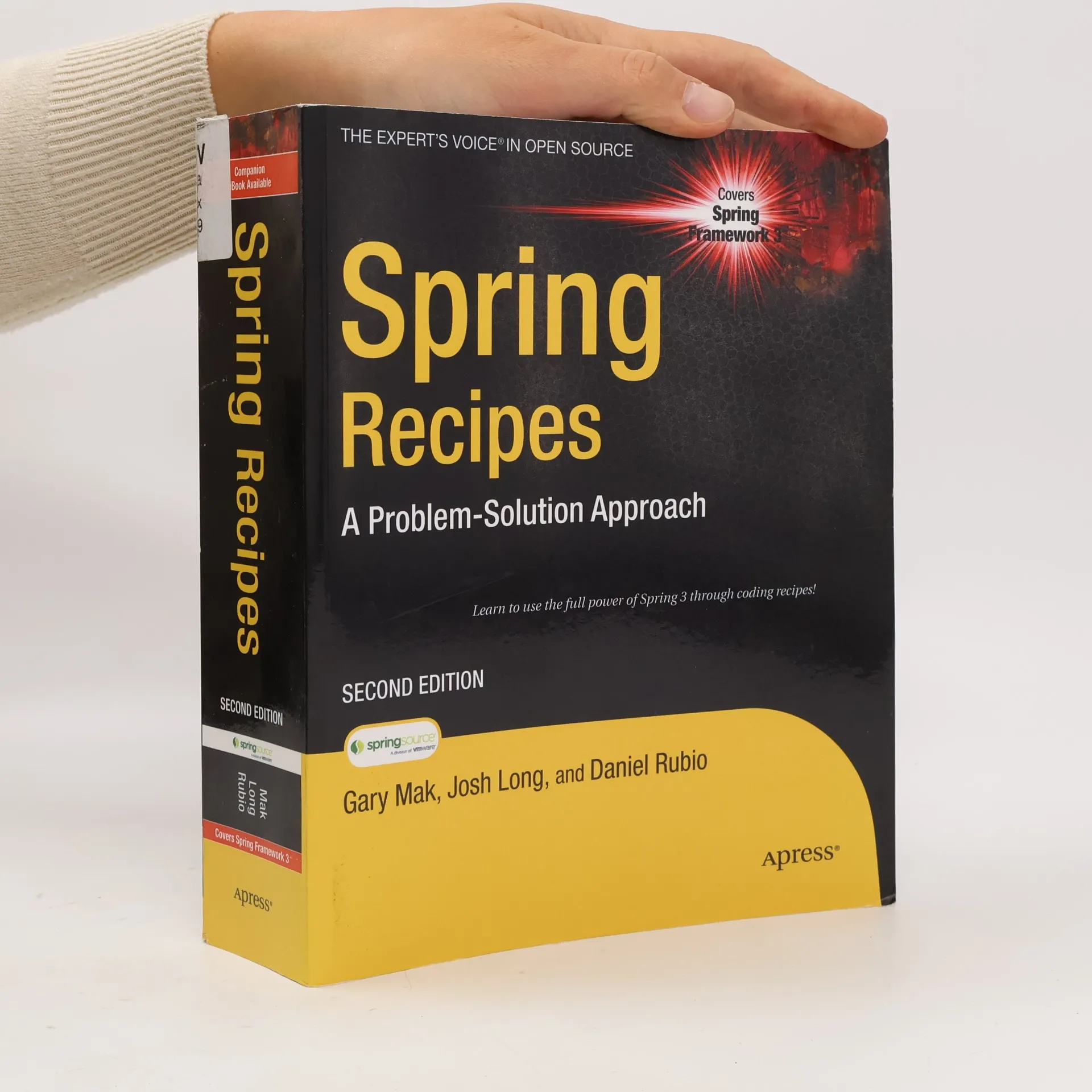
Spring Recipes - Second Edition
- 1148pages
- 41 heures de lecture
The Spring framework is growing. It has always been about choice. Java EE focused on a few technologies, largely to the detriment of alternative, better solutions. When the Spring framework debuted, few would have agreed that Java EE represented the best-in-breed architectures of the day. Spring debuted to great fanfare, because it sought to simplify Java EE. Each release since marks the introduction of new features designed to both simplify and enable solutions. With version 2.0 and later, the Spring framework started targeting multiple platforms. The framework provided services on top of existing platforms, as always, but was decoupled from the underlying platform wherever possible. Java EE is a still a major reference point, but it’s not the only target. OSGi (a promising technology for modular architectures) has been a big part of the SpringSource strategy here. Additionally, the Spring framework runs on Google App Engine. With the introduction of annotation-centric frameworks and XML schemas, SpringSource has built frameworks that effectively model the domain of a specific problem, in effect creating domain-specific languages (DSLs). Frameworks built on top of the Spring framework have emerged supporting application integration, batch processing, Flex and Flash integration, GWT, OSGi, and much more.