



Bookbot

B. F. Skinner

    20 mars 1904 – 18 août 1990

    B. F. Skinner fut une figure centrale de la psychologie du XXe siècle, façonnant profondément notre compréhension du comportement humain. Il est célèbre pour son concept de behaviorisme radical, qui examine le comportement comme un produit de l'interaction environnementale et du renforcement. L'influence de Skinner s'étend bien au-delà du monde universitaire, ses idées ayant un impact sur l'éducation, la thérapie et même la conception de systèmes sociaux. Son approche met l'accent sur les actions observables et leur contrôle, offrant aux lecteurs une perspective distincte sur les mécanismes qui régissent notre conduite.

    B. F. Skinner
    Futurum zwei
    Nauka i zachowanie człowieka
    Science And Human Behavior
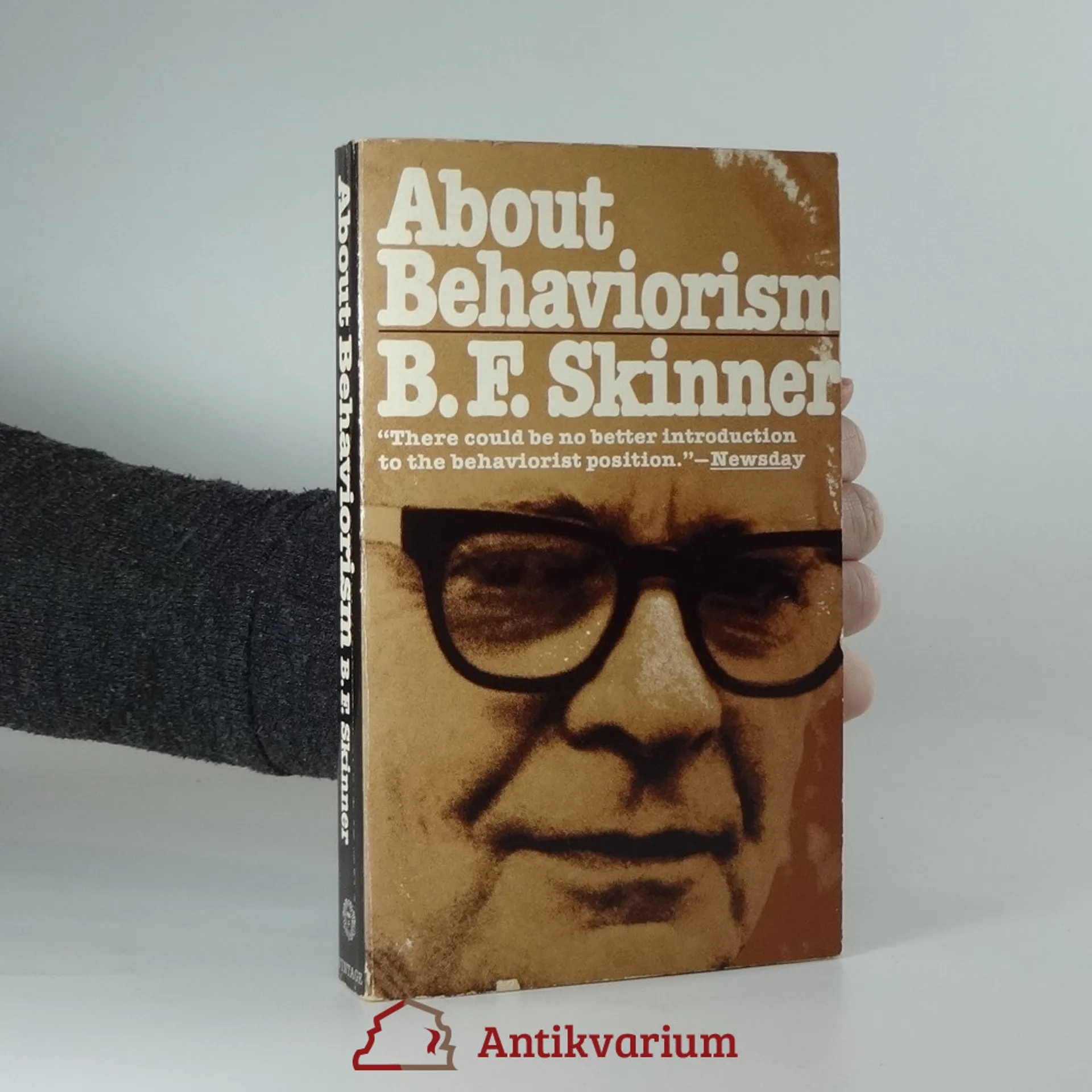
    About Behaviorism
    Walden Two
    Verbal behavior
    • Verbal behavior

      • 492pages
      • 18 heures de lecture
      4,2(22)Évaluer

      2015 Reprint of 1957 Edition. Full facsimile of the original edition. Not reproduced with Optical Recognition Software. The significance of this work was grasped immediately. Osgood wrote that "Verbal Behavior is certainly one of the two or three most significant contributions to this field in our time." (Osgood, 1958, p. 212). Morris wrote that "Skinner is both elegant and admirable (Morris, 1958, p. 213.) Both predicted a promising future for the book and such did turn out to be the case. Over more than half a century after its initial publication in 1957, "Verbal Behavior" has remained in demand and continues to be relevant. The documented efficacy of Skinner's practices, especially with autism, has assured its relevance. His functional analysis of language continues to inform contemporary research in the field of linguistics. Contents: A functional analysis of verbal behavior -- General problems -- The mand -- Verbal behavior under the control of verbal stimuli -- The tact -- Special conditions affecting stimulus control -- The audience -- The verbal operant as a unit of analysis -- Multiple causation -- Supplementary stimulation -- New combinations of fragmentary responses -- The autoclitic -- Grammar and syntax as autoclitic processes -- Composition and its effects -- Self-editing -- Special conditions of self-editing -- Self-strengthening of verbal behavior -- Logical and scientific verbal behavior -- Thinking.


      Verbal behavior
    • Walden Two

      • 352pages
      • 13 heures de lecture
      3,5(6399)Évaluer

      A Utopian community organized around behaviorist principles offers provocative alternatives to a society lacking direction.

      Walden Two
    • Nauka i zachowanie człowieka to kluczowa publikacja B.F. Skinnera, w której autor w przekonujący sposób przedstawia naukowe podejście do analizy ludzkiego zachowania. Skinner argumentuje, że możliwe jest opisywanie, wyjaśnianie, przewidywanie i kontrolowanie zachowań na podstawie wyników badań. Szczegółowo omawia czynniki wpływające na ludzkie zachowanie oraz analizuje specyficzne zdolności, takie jak samokontrola, myślenie czy poczucie ja. W kolejnych rozdziałach podejmuje temat zachowań społecznych oraz złożonych kwestii, takich jak rząd, prawo, religia, psychoterapia, kontrola ekonomiczna i edukacja. Książka kończy się refleksją na temat możliwości kontrolowania ludzkiego zachowania z perspektywy kulturowej. Skinner dowodzi, że nauka powinna być fundamentem praktycznych działań, a zachowanie można kształtować i modyfikować, korzystając z metod opartych na badaniach eksperymentalnych. Publikacja ta pozostaje aktualna, a jej wznawianie świadczy o jej znaczeniu. Autor podkreśla, że kluczowe jest zrozumienie natury człowieka na wysokim poziomie, co może być naszą jedyną nadzieją na skuteczne zastosowanie nauki w codziennym życiu.

      Nauka i zachowanie człowieka