

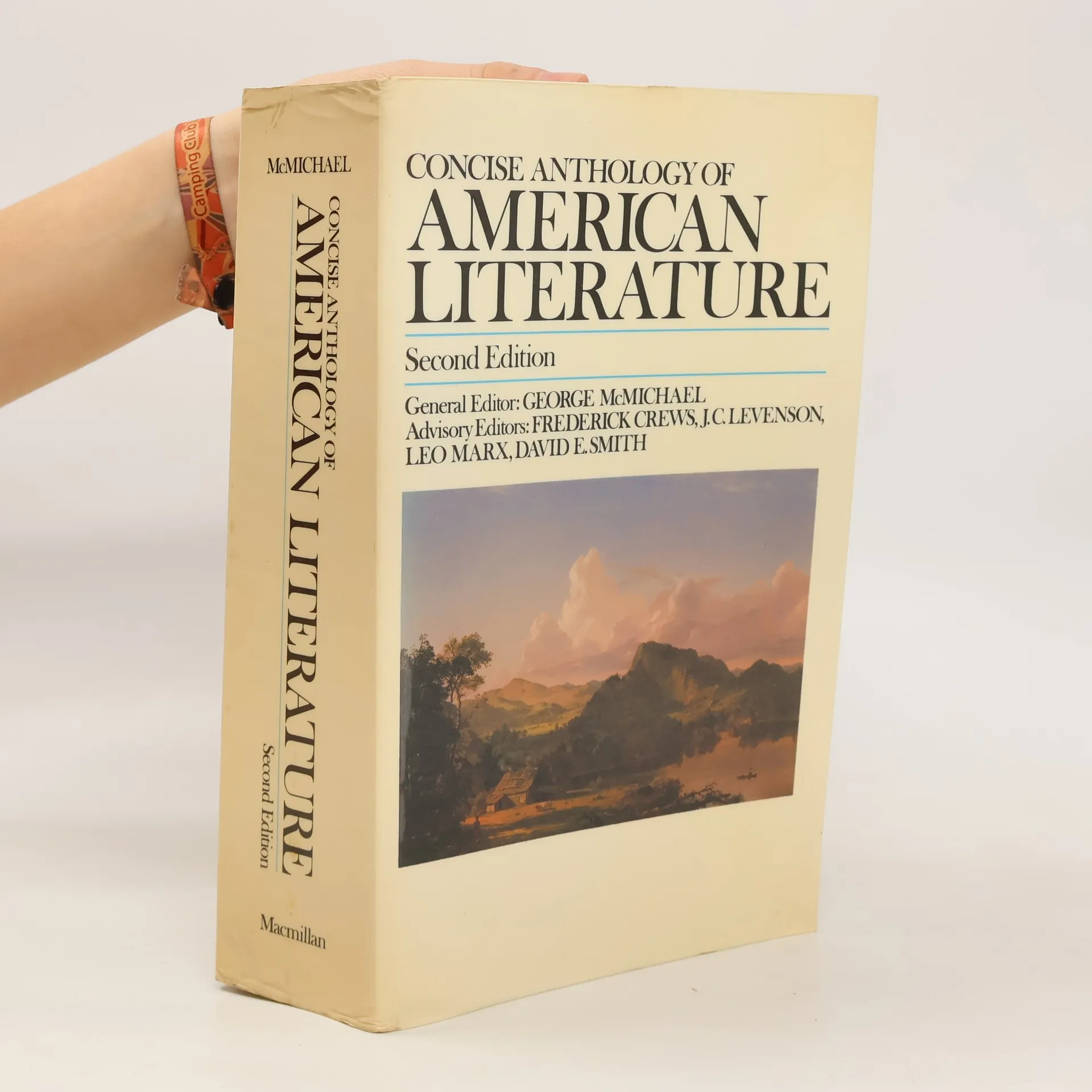
This consise anthology offers a balanced approach to the enjoyment of reading American literature.Over 20 new authors representing diverse cultural backgrounds allow students to read about unique experiences through the eyes of esteemed writers including Sonia Sanchez, Sherman Alexie, Maxine Hong Kingston, and Frances E.W. Harper. New historical documents, including the romantic letters exchanged by John and Abigail Adams and an account of the Vietnam War through the eyes of a young soldier, provide an understanding for student readers. Four groundbreaking dramas (from the 18th century: "Slaves in Algiers," by Susanna Haswell Rowson; from the 19th century: "The Escape, " by William Wells Brown; from the early 20th century: "Trifles," by Susan Glaspell; and from the late 20th century: "Fences," by August Wilson) help students understand the role of theater in America through the centuries. Speeches by Legendary Leaders include Martin Luther King s unforgettable I Have a Dream speech and Booker T. Washington s historical Atlanta Exposition Address in addition to Barack Obama s 2009 Inaugural Address."
Frederick C. Crews Livres
Les écrits de Harry Crews explorent les complexités de la motivation humaine et les débats intellectuels avec une clarté incisive. Son travail précoce s'est penché sur la théorie psychanalytique et son application à la littérature, mais il est ensuite devenu un ardent défenseur des normes empiriques et d'un point de vue sceptique. Crews s'est intéressé à un large éventail de sujets, de la mode des souvenirs retrouvés aux critiques des affirmations pseudoscientifiques, en mettant constamment l'accent sur le discours rationnel et l'écriture claire. Ses essais sont célébrés pour leur rigueur intellectuelle et leur capacité à éclairer des questions complexes.


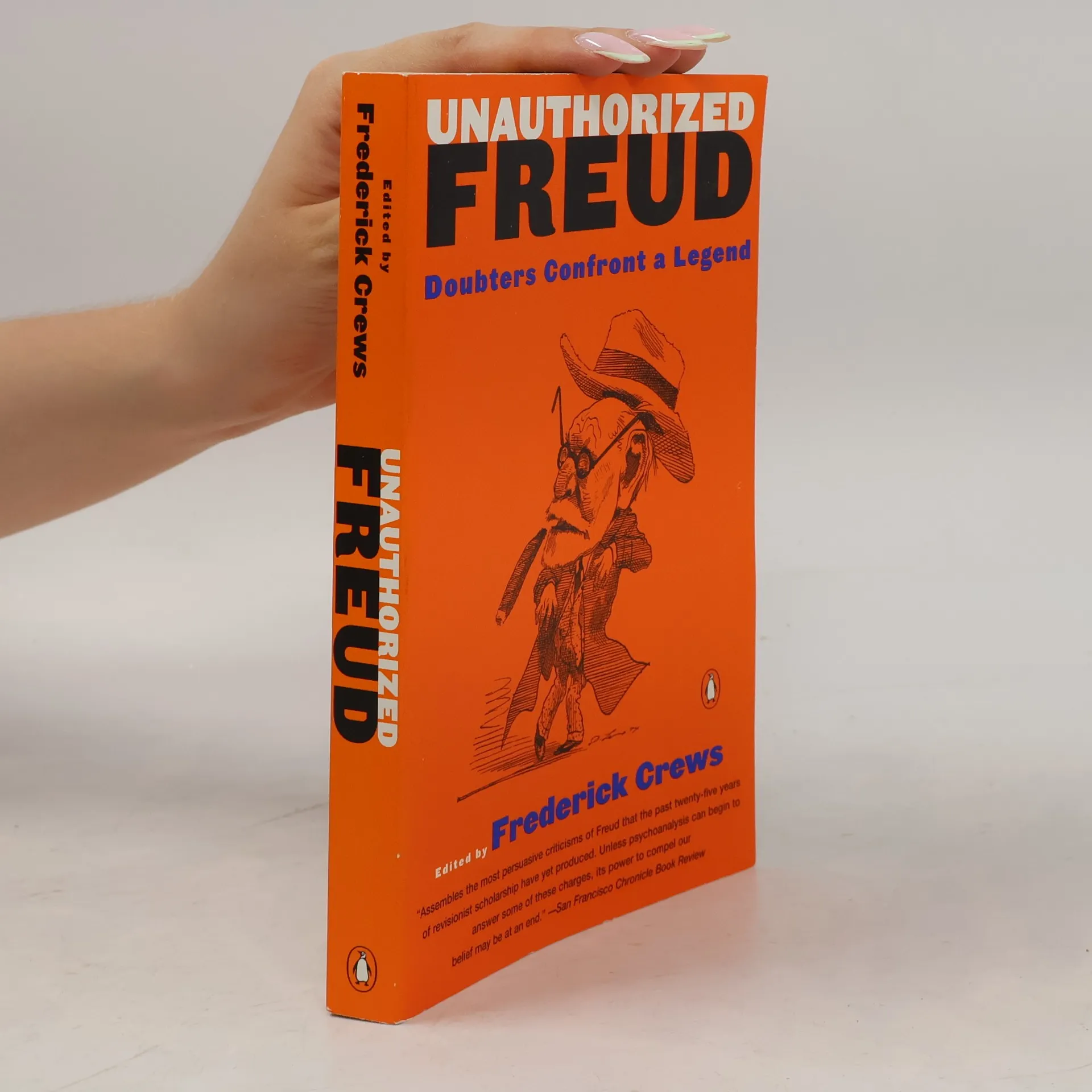
Over the past thirty years, a revolution has occurred in the study of Sigmund Freud and his brainchild, psychoanalysis. The Freud of legend has been exposed as fiction, a joint concoction of Freud himself and his official biographer, Ernest Jones. The emerging truth is that Freud was a dogmatist who browbeat his patients and consistently failed to mark the crucial difference between their fantasies and his own. Now Frederick Crews, the most authoritative of Freud critics, collects the trenchant writings of eighteen experts who put to rest the myth of Freud's scientific and therapeutic prowess.The scrupulously researched selections included in Unauthorized Freud reveal the fumbles and deceptions that led to the "discovery" of psychoanalysis; the arbitrary interpretations of dreams, symptoms, and slips; the inconsistencies in Freud's case histories and what we now know about his patients; and the terrible personal costs incurred by his disciples. The conclusion is inescapable: the founder of psychoanalysis has been the most dangerously overrated figure in the history of medical science.
Nearly 40 years ago a young literary scholar by the name of Frederick Crews had an inspired idea: to portray his trendsetting peers in the act of applying their critical acumen to the adventures of that deceptively simpleminded teddy bear of storybook fame, Winnie-the-Pooh. Now Winnie-the-Pooh is three-quarters of a century old - and, alas, Professor Crews lags not far behind. Thanks, however, to the efforts of Princeton's superstar professor N. Mack Hobbs, Crews has been coaxed out of retirement long enough to lend his blessing and his name to a project undertaken in homage to his own - a panel on Pooh convened at the Modern Language Association convention in Washington, DC, at which leading lights of contemporary criticism were invited to train their wits upon the beloved bear. Radical feminist Sisera Catheter, Lacanian postcolonialist Das Nuffa Dat, and trailblazing proponents of Deconstruction, Poststructuralist Marxism, New Historicism, Biopoetics, Cultural Studies and - let us not forget - recovered memory theory, all took their turns at the podium and their shots at dear Edward Bear, leaving no ammunition in the arsenal of contemporary litery hermeneutics unexploded. Here, then, are the published proceedings of this remarkable event, for the edification (and delectation) of a new generation of readers.
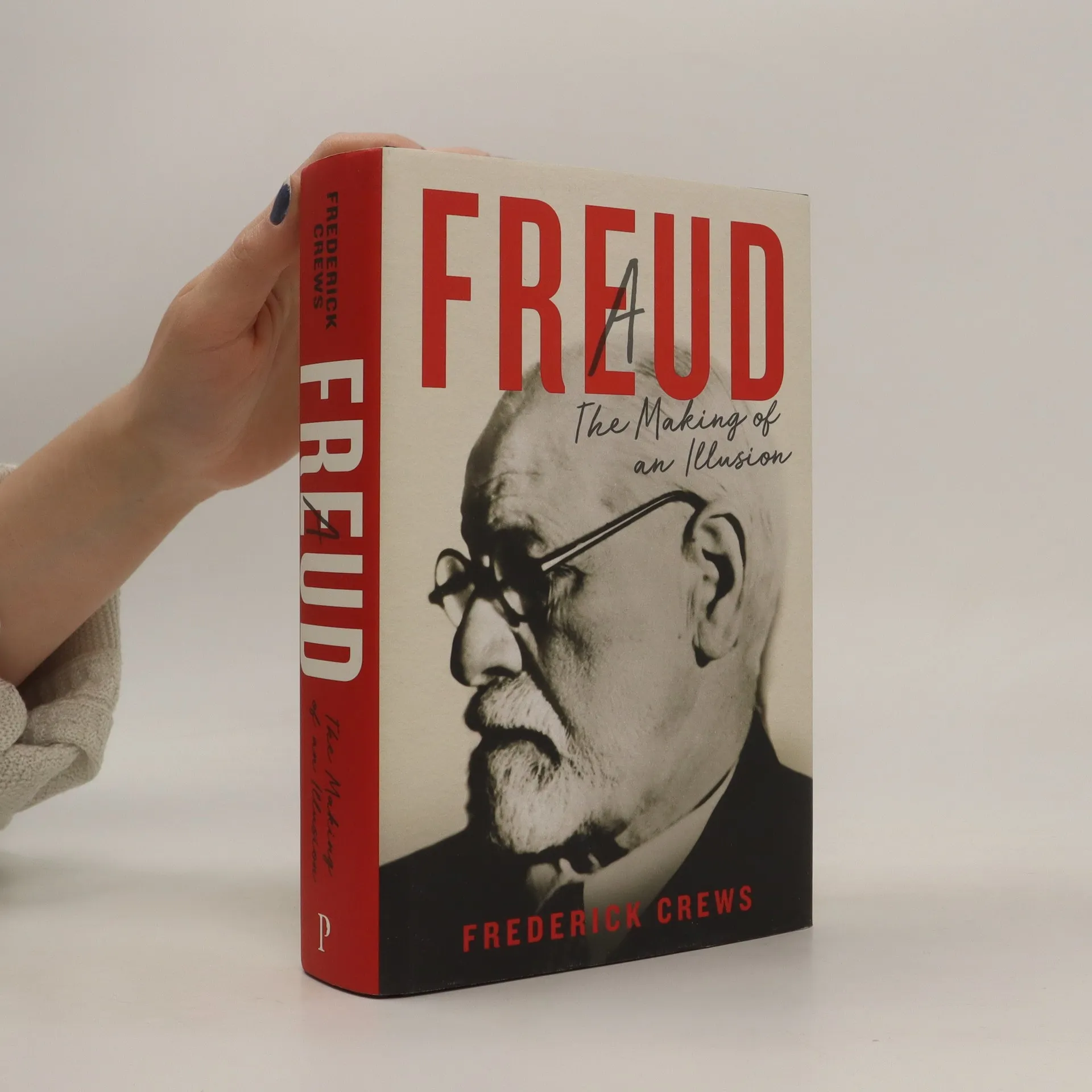
Freud : the making of an illusion
- 768pages
- 27 heures de lecture
A searing examination of Freud's life and legacy, from a major academic
Freud's legacy in dispute
- 300pages
- 11 heures de lecture
In 1993 and 1994, The New York Review of Books published two tenaciously argued essays by Frederick Crews attacking Freudian psychoanalysis and its aftermath in the so-called recovered memory movement. The first reviewed a growing body of evidence indicating that Freud doctored his data and manipulated his colleagues in an effort to consolidate a cult-like following that would neither defy nor upstage him. The second, published in two parts, challenged the scientific and therapeutic claims of the rapidly growing recovered memory movement, maintaining that its social effects have been devastating. Crews traced that movement to Freudian precedent - not just to Freud's abandoned "seduction theory" but also to the most essential assumptions of psychoanalysis itself. The response was tremendous: issues flew off the stands, and therapists, patients, scholars, philosophers, and others whose lives had been touched by Freud's ideas responded in one of the largest waves of letters the Review had ever seen. Twenty-five of these were published, with Crews's deft and forceful replies. Most are gathered here, together with Crews's original essays, a new introduction describing the genesis of his pieces, and an epilogue considering the debate and its reverberations. The result is a fierce, contentious, and startling book that rocks the foundations of one of the century's governing ideas
The author's critique of Freudian psychoanalyis and the "recovered memory" movement, first published in 1993 in The New York Review of Books to a storm of controversy, is presented along with twenty-five responses. IP.