This third volume in Christian Fuchs's Media, Communication and Society series explores living in an age of digital capitalism, analyzing its various aspects through the lens of critical thinkers. Each chapter delves into a specific dimension of digital capitalism or a critical theorist, shedding light on its mechanisms. Topics include digital positivism, big data analytics, and the intersections of patriarchy, slavery, and racism within digital labor. The book examines digital alienation, the impact of social media on the capitalist crisis, and the connections between imperialism and digital labor. It also discusses alternatives like trade unions, class struggles, platform co-operatives, digital commons, and public service Internet platforms. Specific case studies include the digital labor of Foxconn and Pegatron workers, Google software engineers, and online freelancers, alongside an analysis of the political economy of targeted advertising on platforms like Facebook, Google, YouTube, and Instagram. This work provides critical insights into the economy, politics, and culture of digital capitalist society, making it essential for students and researchers in media, culture, communication studies, and related fields.
Christian Fuchs Livres
Christian Fuchs est un théoricien critique de premier plan de la communication et de la société. Son œuvre explore des analyses critiques approfondies des processus de communication contemporains et de leur impact sociétal, avec un accent particulier sur les technologies numériques et leurs ramifications sociales. Fuchs examine comment les plateformes numériques façonnent nos relations, notre politique et notre économie.


Digital Demagogue
Authoritarian Capitalism in the Age of Trump and Twitter
- 320pages
- 12 heures de lecture
An analytical intervention into Trumpology, Twitter and authoritarianism.
Focusing on the political economy of communication, this guide equips students with the tools to critically analyze the media's role in society. It delves into the intricate relationships between media, culture, and economics, fostering a deeper understanding of how these elements influence public discourse and societal structures. Through its comprehensive approach, the book encourages critical thinking about media practices and their broader implications.
Focusing on the foundations and applications of digital ethics through a Critical Theory lens, this volume explores ethical considerations in the context of digital technology. It emphasizes a critical approach, aiming to address the complexities and implications of digital media and communication in contemporary society.
Exploring the theoretical foundations of digital fascism, this fourth volume delves into how fascist ideologies are propagated through online platforms. It includes case studies that illustrate the mechanisms of communication used by these movements, offering insights into their impact on society and media. The book emphasizes the intersection of technology and political extremism, making it a critical resource for understanding contemporary digital discourse.
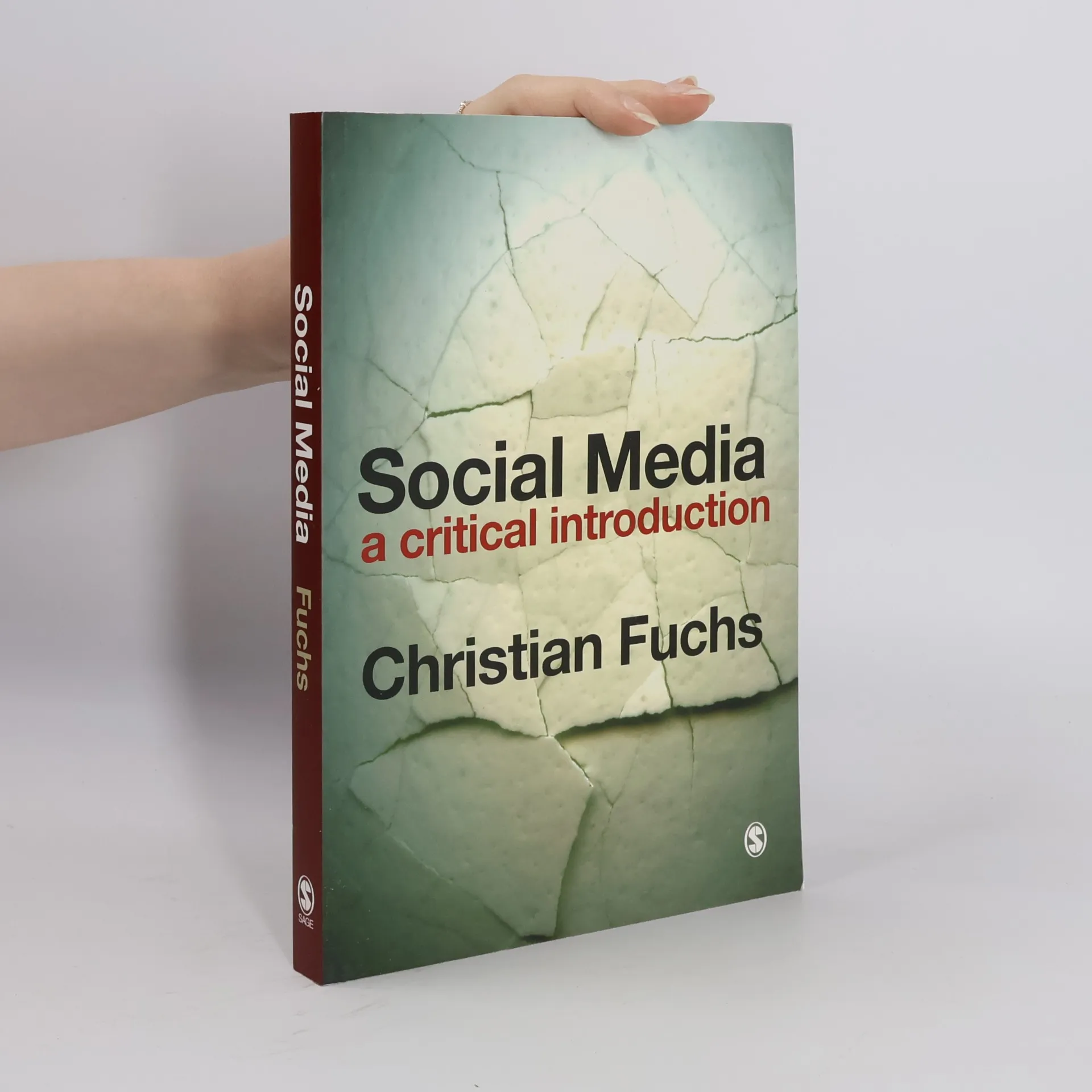
Social media : a critical introduction
- 304pages
- 11 heures de lecture
Now more than ever, we need to understand social media - the good as well as the bad. We need critical knowledge that helps us to navigate the controversies and contradictions of this complex digital media landscape. Only then can we make informed judgements about what's happening in our media world, and why. Showing the reader how to ask the right kinds of questions about social media, Christian Fuchs takes us on a journey across social media, delving deep into case studies on Google, Facebook, Twitter, WikiLeaks and Wikipedia. The result lays bare the structures and power relations at the heart of our media landscape. This book is the essential, critical guide for all students of media studies and sociology. Readers will never look at social media the same way again.
Digital Democracy and the Digital Public Sphere
Media, Communication and Society Volume Six
- 308pages
- 11 heures de lecture
Focusing on radical humanist theory, this volume explores the digital public sphere and its implications for digital democracy. It examines contemporary challenges and opportunities, providing insights into how media and communication shape societal interactions and democratic engagement in the digital age.
Die Kinder auf der Wolke - Band 1. Gute-Nacht-Geschichten zum Vorlesen und Selberlesen
- 36pages
- 2 heures de lecture
In "Die Kinder auf der Wolke" begleiten Leser Duxi und Susi auf einer fantastischen Reise, die mit einer Entdeckung im Wald beginnt. Nach einem Sturz in eine Schlucht landen sie auf einer Wolke und erleben die Welt aus neuer Perspektive. Die Geschichte thematisiert Freundschaft und Zusammenhalt und ist ideal für Gute-Nacht-Vorlesestunden.
„Karrierejunkie – Karriere im großen Konzern für blutige Anfänger“ bietet jungen Berufseinsteigern einen umfassenden Einblick in die Verhaltensmuster, Gesetzmäßigkeiten und verborgenen Regeln, die in Unternehmen herrschen. Der Autor teilt wertvolle Erkenntnisse, basierend auf persönlichen Erfahrungen und Gesprächen mit Führungskräften und Beratern, um eine effizientere und weniger risikobehaftete Karrieregestaltung zu ermöglichen. Mit seiner unterhaltsamen und anschaulichen Schreibweise ist dieses Buch ein einzigartiger Wegweiser für all diejenigen, die ihre berufliche Laufbahn selbst in die Hand nehmen möchten.
Das Netzwerk der Neuen Rechten
Wer sie lenkt, wer sie finanziert und wie sie die Gesellschaft verändern
Fast unbemerkt von der Öffentlichkeit ist ein neues und einflussreiches rechtes Netzwerk aus Stiftungen, Vereinen, Medien und Kampagnen in Deutschland herangewachsen. Seit Jahren spüren Christian Fuchs und Paul Middelhoff ihm nach: seinen öffentlichen Seiten und denen, die im Dunkeln liegen. Für das Buch sind sie durch Deutschland und Europa gereist und haben die wichtigsten Protagonisten der Szene getroffen. Sie waren geheimen Spendern in der Schweiz auf der Spur und mit einem AfD-Politiker in Serbien unterwegs. Sie hatten Zutritt zum Haus der Identitären Bewegung, waren auf einem Festival der Guerilla-Aktivisten und und trafen den Chef von Deutschlands erfolgreichster Hetzseite zum Gespräch in dessen Küche. Während der Recherchen wurden sie bedroht, angelogen und gerieten in den Shitstorms einer rechten Trollarmee. Dieser Report enthüllt zum ersten Mal das ganze Ausmaß des Milieus - seine ideologischen Grundlagen, seine führenden Köpfe, seine wichtigen Zeitschriften, Verlage, Internet-Plattformen, Burschenschaften und die geheimen Finanziers. Viele Verbindungen führen zur AfD, die zum Gravitationszentrum der Strömung geworden ist. Die Autoren zeigen, wie die Neue Rechte versucht, die gesellschaftliche Mitte zu übernehmen. Ihre Erkenntnisse sind alarmierend.
Soziale Medien und Kritische Theorie
- 625pages
- 22 heures de lecture
Dieses Buch vermittelt Ihnen ein kritisches Verständnis der komplexen Zusammenhänge und Widersprüche, die den Kern der Beziehung der sozialen Medien zur Gesellschaft ausmachen. Die Neuauflage untersucht Populismus, Rassismus und Nationalismus, stellt das Phänomen der Influencer vor, erklärt den Big Data-Kapitalismus und Imperialismus, untersucht die wachsende Bedeutung von Plattformen, fordert Sie heraus, sich ein wirklich soziales Medium vorzustellen und zu erreichen, das den Zielen einer gerechten und fairen Welt dient, und analysiert schließlich Fake News im Kontext von Facebook und Cambridge Analytica. Dieses Buch ist ein wesentlicher Leitfaden für jeden, der kritisch verstehen will, wie wir zum digitalen Kapitalismus gekommen sind und was wir dagegen tun können.
Dieses Buch erzählt die Geschichte der Zwickauer Terrorzelle, die sich «Nationalsozialistischer Untergrund» nannte. Es rückt ganz nah heran an die Biographien von Uwe Mundlos, Uwe Böhnhardt und Beate Zschäpe. Die Autoren beschreiben, wie aus drei Mittelschichtskindern rechtsextreme Terroristen werden konnten, die über ein Jahrzehnt lang mordeten und im Untergrund lebten — ohne gefasst zu werden. In einer detailreichen Reportage schildern sie in beklemmenden Nahaufnahmen, wie die drei Extremisten ihre Taten verübten, wer ihnen half und wie sie ihren Alltag organisierten. Parallel zur Geschichte der Zwickauer Terrorzelle beschreibt das Buch das gesellschaftliche Klima in Deutschland nach der Wende, in dem sich das Trio radikalisierte. Es zeigt auf, welche Umstände dazu führten, dass über ein halbes Jahrhundert nach Ende des Zweiten Weltkriegs wieder solch brutaler Terror von rechts gedeihen konnte. «Ein intensives Buch, ein spannendes Buch, das ein völlig neues Licht auf die Zwickauer Terrorzelle wirft. Ich kann es als ein großes Stück schonungsloser Aufklärung nur empfehlen.» Hans Leyendecker
In "Das Glühen im Dunkeln" zelebriert Christian Fuchs in Essays das Kino als grelle Kunstform und Katharsis-Kirche. Er widmet sich leidenschaftlich Außenseiterfiguren und verschiedenen Genres, von Horror bis Arthouse. Das Buch bietet Antworten auf die Frage "Was könnt ich mir heute anschauen?" und enthält Illustrationen von Michael Liberatore und Michael Trimmel.
Das „Buch Henoch“ gehört zu den faszinierendsten Texten der antiken Welt – eine geheimnisvolle Schrift, die nicht in den biblischen Kanon aufgenommen wurde, aber dennoch tiefen Einfluss auf die jüdische und christliche Gedankenwelt hatte. Dieses Werk, auch als 1. Henoch oder äthiopisches Henochbuch bekannt, entführt seine Leser in eine Welt aus Engelstürzen, Visionen, Gerichtsszenen und kosmologischen Offenbarungen. In dieser sorgfältig edierten und kommentierten Ausgabe wird das Buch Henoch in seiner literarischen und theologischen Tiefe erschlossen. Es eignet sich für interessierte Laien ebenso wie für Studierende der Theologie, Religionswissenschaft und Judaistik. Die Einleitung führt verständlich in Entstehung, Überlieferung und Bedeutung des Werkes ein, während ein erläuternder Anhang zentrale Begriffe und Themen erklärt. Ob als Einführung in die frühjüdische Apokalyptik, als Grundlage für die Beschäftigung mit Engelslehre, Eschatologie oder apokryphen Schriften, oder als spiritueller Impuls: Dieses Buch ist ein Schlüssel zu einer vergessenen Welt.
Feuerwanzen lügen nicht - Stefanie Höfler - Lehrerheft
Unterricht, Lösungen, Didaktik, Methodik, Heft
Unser Lehrerheft zum Lesebegleiter zu Feuerwanzen lügen nicht von Stefanie Höfler enthält nicht nur die Lösungen der Aufgaben, sondern unterstützt bei der Planung eines abwechslungsreichen Deutschunterrichts, der Spaß an der Lektüre weckt und die Lesemotivation anregt. Das Unterrichtsmaterial enthält zusätzliche Arbeitsblätter und Unterrichtsideen zur weiteren Vertiefung der Themen.Das Lehrerheft enthält Kapitelübersicht und Inhaltsangabe Lösungsvorschläge zu den Aufgaben des Lesebegleiters Feuerwanzen lügen nicht Weitere Arbeitsblätter zu Themen Lösungsvorschläge zu den Arbeitsblättern Vorschlag für eine Klassenarbeit Mit Downloadbereich (z. B. - Kopiervorlagen von Arbeitsblätter und Klassenarbeiten, Illustrationen)Der Lesebegleiter für die Schülerinnen und Schüler ist separat erhältlich unter der ISBN: 978-3-96323-187-2 und enthält: kapitelweise Inhaltssicherung Sprache und Stil Figuren und ihre Beziehungen produktive Schreibanlässe Kreativaufgaben Hintergründe liebevoll gestaltete Illustrationen
Feuerwanzen lügen nicht - Stefanie Höfler - Lesebegleiter
Interpretationshilfe, Arbeitsheft, Lernmittel, Heft, Schülerheft
- 52pages
- 2 heures de lecture
Der Lesebegleiter führt Schritt für Schritt durch den Roman Feuerwanzen lügen nicht von Stefanie Höfler und ermöglicht eine strukturierte, selbstständige Erschließung des Inhalts und der Themen. Das Unterrichtsmaterial mit abwechslungsreichen Aufgaben, Hilfestellungen und einer schülernahen Gestaltung mit Illustrationen fördert die Kreativität und das individuelle Lerntempo im Fach Deutsch. Einsetzbar als Arbeitsheft im Unterricht, für Freiarbeit und für fachfremden Unterricht sowie für die private Nutzung.Der Lesebegleiter enthält kapitelweise Inhaltssicherung Sprache und Stil Figuren und ihre Beziehungen produktive Schreibanlässe Kreativaufgaben Hintergründe liebevoll gestaltete IllustrationenDas dazugehörige Lehrerheft ist erhältlich unter der ISBN: 978-3-96323-186-5
Ein kritisches Verständnis der sozialen Medien und ihrer Auswirkungen auf die Gesellschaft wird in diesem Buch vermittelt. Es behandelt Themen wie Populismus, Rassismus und Nationalismus und beleuchtet das Phänomen der Influencer sowie den Einfluss von Big Data-Kapitalismus. Zudem wird die Rolle von Plattformen und die Herausforderung, soziale Medien für eine gerechte Welt zu gestalten, thematisiert. Die Analyse von Fake News im Zusammenhang mit Facebook und Cambridge Analytica rundet die Diskussion ab und bietet wertvolle Einsichten für ein besseres Verständnis des digitalen Kapitalismus.
Radikaler Digitaler Humanismus
Eine Philosophie für die digitale Gesellschaft des 21. Jahrhunderts
- 167pages
- 6 heures de lecture
Der Radikale Digitale Humanismus bietet einen tiefen Einblick in die Moralphilosophie der digitalen Gesellschaft und betont die Notwendigkeit eines radikalen Humanismus, um die aktuellen Krisen zu bewältigen. Christian Fuchs untersucht, wie digitale Technologien unsere Gesellschaft prägen und stellt grundlegende Fragen zur Relevanz der humanistischen Philosophie im digitalen Zeitalter. Das Werk zielt darauf ab, ein kritisches Verständnis für die Herausforderungen der Digitalisierung zu fördern und eine Erneuerung der humanistischen Denkweise zu inspirieren.
Marx heute
Eine Einführung in die kritische Theorie der Kommunikation, Kultur, digitalen Medien und des Internets
- 350pages
- 13 heures de lecture
Dieses Buch bietet eine Einführung in die Anwendung von Karl Marx' Ideen in Medien-, Kommunikations- und Kulturwissenschaften. Es beleuchtet seine Bedeutung für die kritische Gesellschaftsanalyse im 21. Jahrhundert und analysiert den Einfluss des Kapitalismus und der Klassengesellschaft auf das heutige Leben und die Kommunikationstechnologien.
Das digitale Kapital
Zur Kritik der politischen Ökonomie des 21. Jahrhunderts
- 288pages
- 11 heures de lecture
Das 21. Jahrhundert ist geprägt durch den Aufstieg neuer Technologien wie den sozialen Medien, dem Internet der Dinge, Cloud-Computing, Industrie 4.0, durch Künstliche Intelligenz gesteuerte Automatisierungstechnologien, Blockchain, usw. Entgegen den Behauptungen neoliberaler IdeologInnen haben diese digitalen Technologien zu keiner neuen Gesellschaft mit unbegrenzten Chancen geführt, sondern zu einer Transformation des Kapitalismus und seiner Klassenverhältnisse. Christian Fuchs untersucht die Grundlagen des digitalen Kapitals. Er stellt einen Ansatz vor, der Karl Marx‘ Theorie als Kritik der politischen Ökonomie des digitalen Kapitalismus im 21. Jahrhundert aktualisiert. Durch eine Lektüre von Marx‘ wichtigsten Arbeiten zeigt Fuchs, wie Marx heutige Entwicklungen vorwegnahm und Grundlagen für die kritische Analyse der heutigen Widersprüche des digitalen Kapitalismus schuf. „Gesellschaften verändern sich im Tempo der Entwicklung von Technologie der revolutionären Praxis. Die Widersprüche, die das Kapital gegenwärtig erlebt, treten immer häufiger in den Strukturen von Kommunikation und Technologie auf. Fuchs liest Marx im Lichte der Gegenwart und ihres Gewirrs explosiver Widersprüche neu. Er zeigt mit Klarheit und Kraft den notwendigen Weg der theoretischen Militanz heute auf." Antonio Negri, Ko-Autor der Tetralogie „Empire“, „Multitude“, „Commonwealth“ & „Assembly“
Kommunikation und Kapitalismus: Eine kritische Theorie
- 503pages
- 18 heures de lecture
Theoriegrundlagen des kommunikativen Materialismus anschaulich erklärt Dieses Buch bietet eine Einführung in die kritische Theorie der Kommunikation und die Kritik der politischen Ökonomie der Kommunikation. Es zeigt, wie Leben und Arbeit im Kapitalismus von den Menschen in gesellschaftlichen Verhältnissen durch Kommunikationsprozesse organisiert wird. Der Autor veranschaulicht die Theoriegrundlagen des kommunikativen Materialismus. Zu diesen Grundkonzepten gehören u.a. die Gesellschaft, der Kapitalismus, die Kommunikationstechnologie, die Ideologie, der Nationalismus, gesellschaftliche Kämpfe und Alternativen. Das Buch zeigt, warum die Organisation der Kommunikation als Geschäft und in der Form der Kapitalakkumulation Gefahren für die Menschen, die Demokratie, die Öffentlichkeit, die Kultur und die Wirtschaft darstellt.
Verschwörungstheorien in der Pandemie
Wie über COVID-19 im Internet kommuniziert wird
- 213pages
- 8 heures de lecture
Die COVID-19-Pandemie hat Phasen der Abschottung mit sich gebracht, die die Art und Weise, wie Menschen arbeiten, ihren Alltag führen und kommunizieren, verändert haben. In der Pandemiekrise haben sich Verschwörungstheorien herausgebildet. Das Buch analysiert, wie diese in den sozialen Medien kommuniziert, rezipiert, verbreitet und in Frage gestellt wurden. Dabei spielen Verschwörungstheorien um Bill Gates und COVID-19 eine wichtige Rolle. Der Autor zeigt, dass Zeiten tiefer Krisen nicht nur Zeiten des sozialen Wandels sind, sondern auch Zeiten, in denen Kommunikation und Kommunikationstechnologien bei der Produktion, Verbreitung und Herausforderung von Ideologien eine Rolle spielen.
Der Körper‚ das Trauma und der Affekt
Theorie und Praxis der Polyvagaltheorie in der Psychotherapie
Dieses Buch beschreibt die praktische Umsetzung der Polyvagaltheorie in der therapeutischen Arbeit, insbesondere in der dialogisch-phänomenologischen Gestalttherapie. Die Konzepte der Polyvagaltheorie werden erläutert und mit Dialog, Kontakt und autonomen Körperreaktionen verknüpft. Es wird gezeigt, wie eine spezifische therapeutische Haltung den erfolgreichen Einsatz der Theorie in der Praxis unterstützt. Praxisbeispiele verdeutlichen die Anwendung und zeigen, dass auch andere Therapieformen, die sichere Räume schaffen, für die Polyvagaltheorie geeignet sind. Ziel ist es, ein Verständnis dafür zu schaffen, wie im psychotherapeutischen Prozess gezielt mit autonomen Körperreaktionen gearbeitet werden kann. Diese Reaktionen sind häufig bei erlebnisorientierten Ansätzen zu beobachten und können zur Integration traumatischer Erlebnisse genutzt werden. Die Polyvagaltheorie bietet ein Erklärungsmuster für unwillkürliche Reaktionen, die zu Schwierigkeiten wie Angst- und Panikattacken, Flashbacks, Depressionen und dissoziativen Symptomen führen können. Betroffene finden Erklärungen für ihre Hilflosigkeit in bestimmten Situationen und können erste Schritte zur Selbstregulation erfahren. Die Arbeitsweise wird stets mit der Theorie verknüpft, um Therapeut*innen zu befähigen, ihren eigenen Stil zu entwickeln. Zahlreiche kommentierte Fallbeispiele verdeutlichen die Integration der Polyvagaltheorie in die therapeutische Praxis und machen de
Die Kinder auf der Wolke. Band 1
- 36pages
- 2 heures de lecture
In „Die Kinder auf der Wolke“ tauchen Leser in eine fesselnde Welt voller Fantasie und Abenteuer ein. Die Geschichte folgt Duxi und Susi, Geschwistern, die mit ihren Eltern in einem malerischen Haus am Waldrand leben und die Natur erkunden. An einem Abend, während sie auf die Geschichten ihres Vaters warten, erzählt er von einer aufregenden Reise, die sie um die Welt führt. Im nahegelegenen Wald entdecken sie eine mysteriöse Höhle, aus der unheimliche Geräusche dringen. Als sie vor diesen Geräuschen fliehen, stürzen sie in eine Schlucht, landen jedoch sanft auf einer Wolke. Am nächsten Tag erwachen sie dort und erleben die Welt aus einer neuen Perspektive, fliegen über grüne Wiesen und bewaldete Berge. Auf ihrer Reise treffen sie Adebar, einen sprechenden Storch, der von seiner bevorstehenden Reise nach Afrika erzählt. Die Kinder entdecken faszinierende Orte und lernen die Bedeutung von Freundschaft und Zusammenhalt. Diese herzerwärmende Geschichte über Abenteuerlust und Neugier regt die Vorstellungskraft an und vermittelt wichtige Botschaften. Ideal für Eltern, die ihren Kindern eine spannende Gute-Nacht-Geschichte vorlesen möchten, bietet das Buch eine perfekte Mischung aus Abenteuer und Fantasie, die Kinder und Eltern gleichermaßen begeistert.
Das Buch führt in eine Vielzahl von Methoden und Themen ein, darunter die politische Ökonomie der Kommunikation im Kapitalismus, Medienkonzentration, Werbung, globale Medien und transnationale Medienkonzerne, Klassenverhältnisse und Arbeitsbedingungen in der Medien- und Kommunikationsindustrie, das Internet und digitale Medien, die Informationsgesellschaft und der digitale Kapitalismus, die Medien in der Öffentlichkeit, öffentlich-rechtliche Medien, das öffentlich-rechtliche Internet und das Medienmanagement. Das Buch kann in Studiengängen mit den Schwerpunkten Medien- und Kommunikationswissenschaft, Digitale Medien, Medienökonomie, Soziologie, Politikwissenschaft, Management- und Organisationswissenschaft, Wirtschaftswissenschaften, Volkswirtschaftslehre und Betriebswirtschaftslehre eingesetzt werden.
Dieses Buch analysiert den digitalen Kapitalismus. Es beleuchtet, wie Wirtschaft, Politik und Kultur der digital-kapitalistischen Gesellschaft funktionieren und interagieren. Jedes Kapitel konzentriert sich auf eine bestimmte Dimension des digitalen Kapitalismus oder eine kritische Theorie, die uns hilft, die Dynamiken des digitalen Kapitalismus zu verstehen. Zu den behandelten Themen gehören: digitaler Positivismus und administrative Big-Data-Analytik; Patriarchat, Sklaverei und Rassismus im Kontext der digitalen Arbeit; digitale Entfremdung; soziale Medien in der Wirtschaftskrise; Imperialismus und digitale Arbeit; Gewerkschaften und Klassenverhältnisse im digitalen Zeitalter; Plattformgenossenschaften; digitale Gemeingüter; öffentlich-rechtliche Internetplattformen; die digitale Arbeit von Foxconn- und Pegatron-Arbeitenden, Software-Entwickler: innen bei Google und Online-Freelancern; die politische Ökonomie von zielgerichteter Werbung auf Facebook, Google, YouTube und Instagram.
Die Gestalt des Traumatischen
Phänomenologisches Handeln bei seelischer Verletzung
Das Buch bricht den herrschenden Diskurs auf und entwickelt eine Haltung, die Erkenntnisse verschiedener Schulen und Theorien im Kontext individueller Biografien sinnvoll miteinander verbindet. Im Fokus steht die Arbeit des Neurologen Kurt Goldstein, dessen interdisziplinärer Ansatz ihn zu einem Vordenker der psychosomatischen Medizin macht. Goldsteins Forschung mit hirnverletzten Soldaten des Ersten Weltkriegs führte zu einer biologisch fundierten Anthropologie, die philosophische Dimensionen umfasst. Er thematisiert das Leib-Seele-Problem, das auch heute von den Neurowissenschaften aufgegriffen wird, und kritisiert den „naturalistischen Kurzschluss“, was sein Denken aktuell hält. Für Goldstein ist Trauma ein existenzielles Ereignis, das Menschen in Krisen stürzt, die sich nicht im naturwissenschaftlichen Ursache-Wirkung-Paradigma erfassen lassen. Diese Ausklammerung von Sinnfragen behindert die Traumarbeit. Das Buch analysiert den klinisch-pragmatischen Trauma-Diskurs im gesellschaftlichen Kontext und setzt ihn mit einer philosophisch-phänomenologischen Perspektive in Beziehung. Die Gestalttherapie trägt mit ihrer gesellschaftskritischen Haltung zur Erweiterung des Traumas bei. Der Ansatz integriert somatische Reaktionsmuster und fördert eine erlebnis- und beziehungsorientierte Haltung. Dadurch verschiebt sich der Diskurs von individueller Dysfunktionalität hin zu gesellschaftlicher Verantwortung. Praktische Handlungsdimensi
Geheimer Krieg
- 253pages
- 9 heures de lecture
Ein amerikanisches Kriegskommando in Stuttgart steuert Killerdrohnen in Afrika und dem Nahen Osten zur Eliminierung mutmaßlicher Terroristen. Die NSA überwacht Daten von Überseekabeln aus Deutschland und verstärkt ihre Abhörtechnik in Hessen. US-Sicherheitskräfte nehmen Verdächtige an Flughäfen fest, während BND-Agenten für die Amerikaner Asylbewerber ausfragen, um Drohnenziele auszukundschaften. Der Aufbau geheimer Foltergefängnisse wurde von der CIA-Logistikzentrale in Frankfurt koordiniert. Eine US-Firma, die Kidnapping-Flüge organisiert, erhält weiterhin Millionenverträge von deutschen Ministerien. All dies geschieht nicht nur auf deutschem Boden, sondern auch mit der Unterstützung der Bundesregierung, die Deutschland zu einem integralen Bestandteil der US-Sicherheitsarchitektur gemacht hat. Dieses System entzieht sich der öffentlichen Kontrolle. Der amerikanische „Krieg gegen den Terror“ beginnt direkt vor unseren Haustüren und wird mit Mitteln geführt, die viele ablehnen. John Goetz und Christian Fuchs haben sich auf eine Reise zu geheimen Kommandozentralen begeben und dabei beunruhigende Entdeckungen gemacht. Sie starteten eine datenjournalistische Gegenspionage, um die Aktivitäten von Geheimdiensten und US-Militärs in Deutschland aufzuklären. An unerwarteten Orten fanden sie Datenspuren und werteten diese aus, was dieses Werk zu einem Beispiel modernen investigativen Journalismus macht.