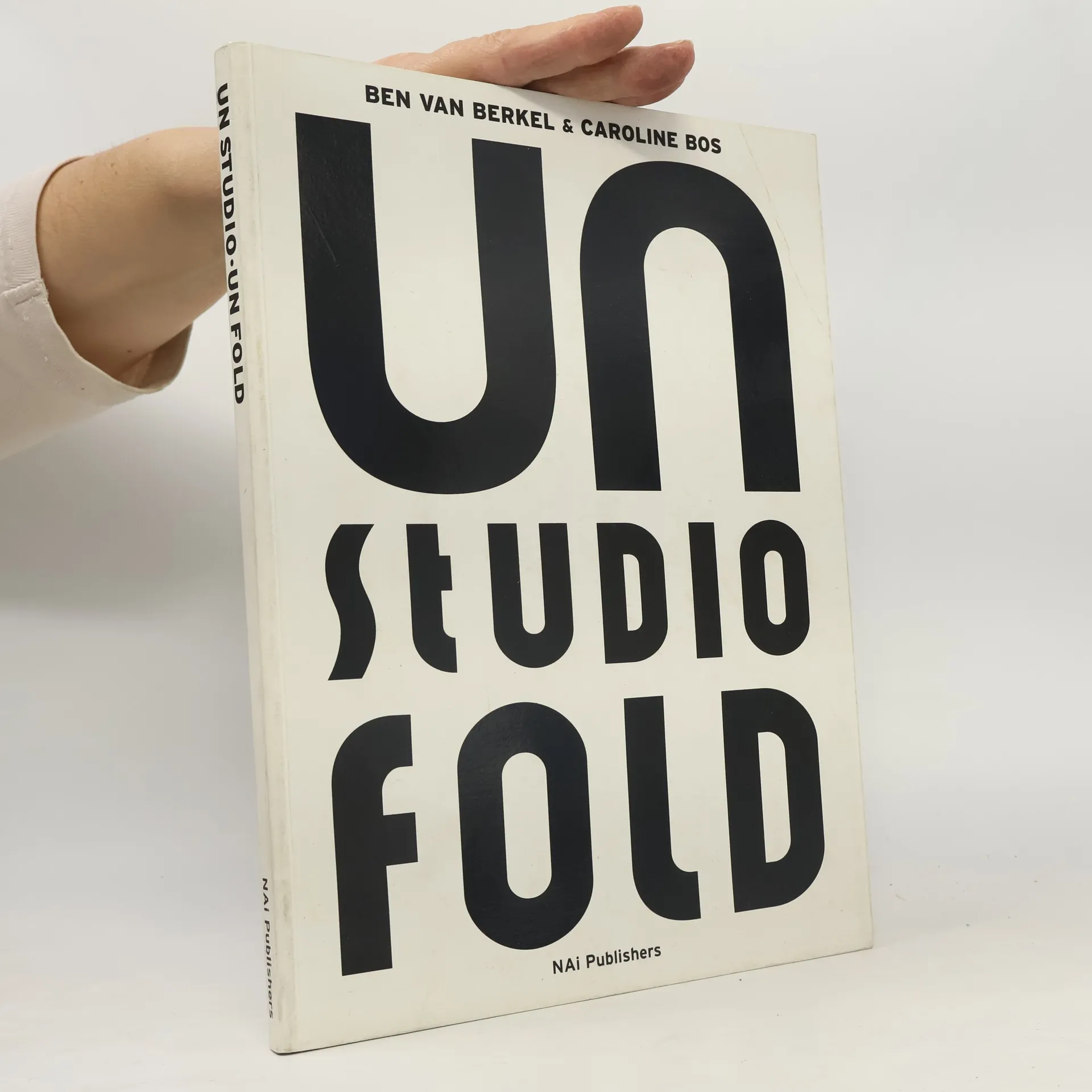
An hour north of Rotterdam, Ben van Berkel and Caroline Bos lead the 45-person UN Studio, founded in 1998. With a partner's declaration that "the box is dead," they have built a network of researchers and specialists focused on architecture, urban development, and infrastructure, aiming to create projects that integrate brief, construction, infrastructure, circulation, form, and space. Their Erasmus Bridge, a sinuous roadway suspended from a single pylon, has become a symbol of modern Rotterdam. The science center for Carnegie Mellon University in Pittsburgh features a Euclidean grid of beams and columns, described by van Berkel as "a sock being pulled back on itself." Following the success of their three-volume publication Move, UN Studio seeks new perspectives with UNFOLd. This work includes documentation of recent projects and a critical examination of previously unpublished designs, such as the Arnhem station area, a generating station in Innsbruck, a Nuclear Magnetic Resonance laboratory in Utrecht, and the winning design for Ponte Parodi in Genoa. With a personal touch, UNFOLd immerses readers in the firm's design process through texts by Bos and innovative architectural photography.
Mark Wigley Ordre des livres (chronologique)
1 janvier 1956
Mark Wigley est une voix influente dans la théorie architecturale, explorant la relation complexe entre l'architecture, la mode et le désir. Ses écrits plongent dans la manière dont l'architecture moderne est façonnée par des forces esthétiques et culturelles, examinant souvent les fondements critiques de la déconstruction. Le travail de Wigley encourage une réévaluation des pratiques architecturales à travers le prisme de la théorie critique et du commentaire culturel.