Fondation Cartier pour l'art contemporain: William Eggleston
Exposition, 20 novembre 2001-24 février 2002, Paris, Fondation Cartier pour l'art contemporain
- 156pages
- 6 heures de lecture
Exposition 20 novembre 2001 - 24 février 2002, Paris Fondation


William Eggleston a redéfini l'art photographique en défendant la photographie couleur à une époque où elle était largement rejetée comme médium commercial. Son approche distinctive capture les détails négligés de la vie quotidienne, transformant le banal en déclarations visuelles saisissantes. L'œil aiguisé d'Eggleston pour la composition et la couleur révèle l'extraordinaire dans l'ordinaire, remettant en question les notions conventionnelles d'esthétique photographique. Son exposition pionnière au MoMA a marqué un moment charnière, consolidant la place de la photographie couleur dans le monde des beaux-arts.


Exposition, 20 novembre 2001-24 février 2002, Paris, Fondation Cartier pour l'art contemporain
Exposition 20 novembre 2001 - 24 février 2002, Paris Fondation
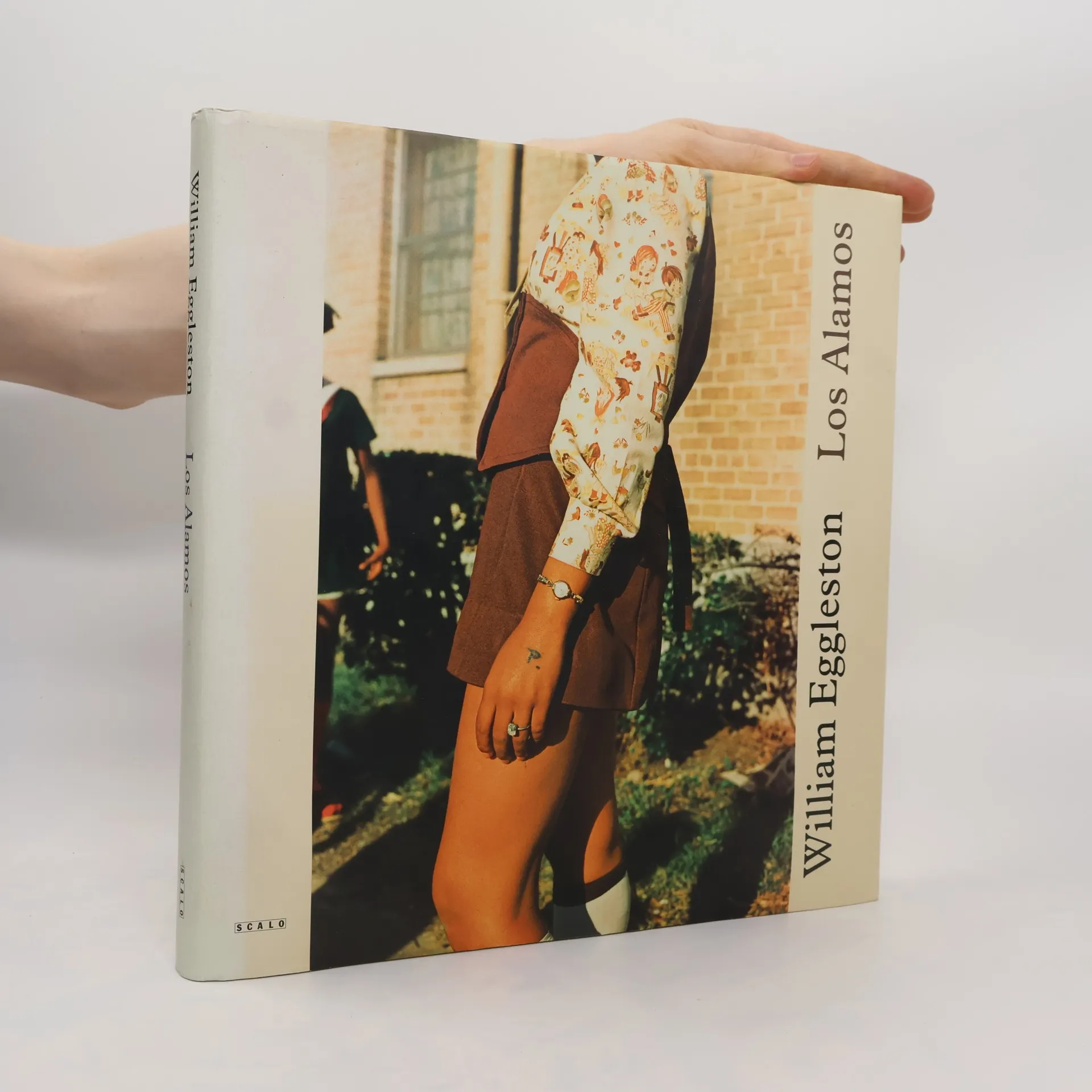
The negatives for the Los Alamos Project were created between 1965 and 1974 and archived in two boxes, Box #17 and Box #83. In the nineties, these boxes were moved from Memphis to New York, where William Eggleston, Walter Hopps, Caldecot Chubb, and Winston Eggleston edited the photographs into five portfolio boxes of dye transfer prints, with an edition of five and three sets of artist proofs. Thirteen additional images, not included in the portfolios, were printed as individual dye-transfer prints known as the “cousins” of the project. Walter Hopps initially envisioned an exhibition, but it never materialized, leading him to return Box #17 to Memphis while Box #83 was forgotten. After Hopps’ death, his widow discovered Box #83 in his office, which was then returned to the Eggleston Artistic Trust. The negatives in Box #83 had been organized by Hopps and documented in a handmade book titled Lost and Found Los Alamos. In late 2011, William Eggleston III and Marc Holborn reviewed the complete set of negatives for a final edit, culminating in 2012 with the three-volume set titled Los Alamos Revisited. The sequence was composed by Thomas Weski, who previously edited the Scalo book Los Alamos. This new edition includes the long-lost negatives from Box #83, completing the collection. William Eggleston, born in 1939 in Memphis, continues to live and work there.
Zu Beginn der Fotogeschichte war der Himmel grau und das Diktum der künstlerischen Fotografie und des Fotojournalismus lange Zeit schwarzweiß. Obwohl bereits 1935 der erste breit einsetzbare Diapositivfilm auf den Markt kam, blieb die Farbfotografie der Werbewelt vorbehalten und galt als kommerziell, vulgär und nicht-künstlerisch. Ungeachtet dessen entdeckten ab den 1960er Jahren immer mehr Fotograf: innen mit der New Color Photography andere und neue Gestaltungsmöglichkeiten. Das über fünf Jahrzehnte umfassende Werk von William Eggleston hat wesentlich zu diesem Paradigmenwechsel beigetragen. Neben Stephen Shore, Saul Leiter und Evelyn Hofer erkannte Eggleston früh die unverwechselbare Kraft der Farbe und ihre einzigartige Qualität zur Abbildung des Alltäglichen. Zumal Eggleston keineswegs vorgab, im Beiläufigen das Schöne bloßzulegen. Stattdessen überzog er das Banale mit einem Moment des Unheimlichen und Rätselhaften: Gerade weil Farbe der menschlichen Wahrnehmung so nahekommt, musste Eggleston die eigene Umgebung mittels der Fotografie immer wieder überprüfen – als seien ihm selbst die gefrorenen Lebensmittel im Eisfach nicht geheuer, nicht die Ketchup-Flaschen auf der Theke, und schon gar nicht die Waffen, die wie zufällig in so vielen seiner Bilder auftauchen.
William Eggleston’s standing as one of the masters of colour photography is widely acknowledged. But the gradual steps by which he transformed from an unknown into a leading artist are less well known. Steidl has undertaken to trace these steps in an ambitious series of publications. Before Color (Steidl, 2010) explored Eggleston’s revelatory early black and white images, while Chromes is an edit of more than 5,000 Kodachromes and Ektachromes taken from ten chronologically ordered binders found in a safe in the Eggleston Artistc Trust. This archive had once been used by John Szarkowski who selected the forty-eight images printed in Eggleston’s seminal book William Eggleston’s Guide, while the rest of the archive has remained almost entirely unpublished. This book presents Eggleston’s early Memphis imagery, his testing of colour and compositional strategies, and the development towards the ‘poetic snapshot’. In short, Chromes shows a master in the making. William Eggleston, born in Memphis in 1939, is one of the most important contemporary American photographers. From the 1970s onwards, his work has been central to the recognition of colour photography as an artistic medium. Eggleston has published extensively and has shown in many major exhibitions. Steidl has published Eggleston’s Paris (2009) and Before Color (2010).
"Los Alamos" presents a series of photos that have never before been shown, yet it contains a blueprint of Eggleston's aesthetics, his subtle use of subdued color hues, the casual elegance of his trenchant observations of the mysteries of the mundane.
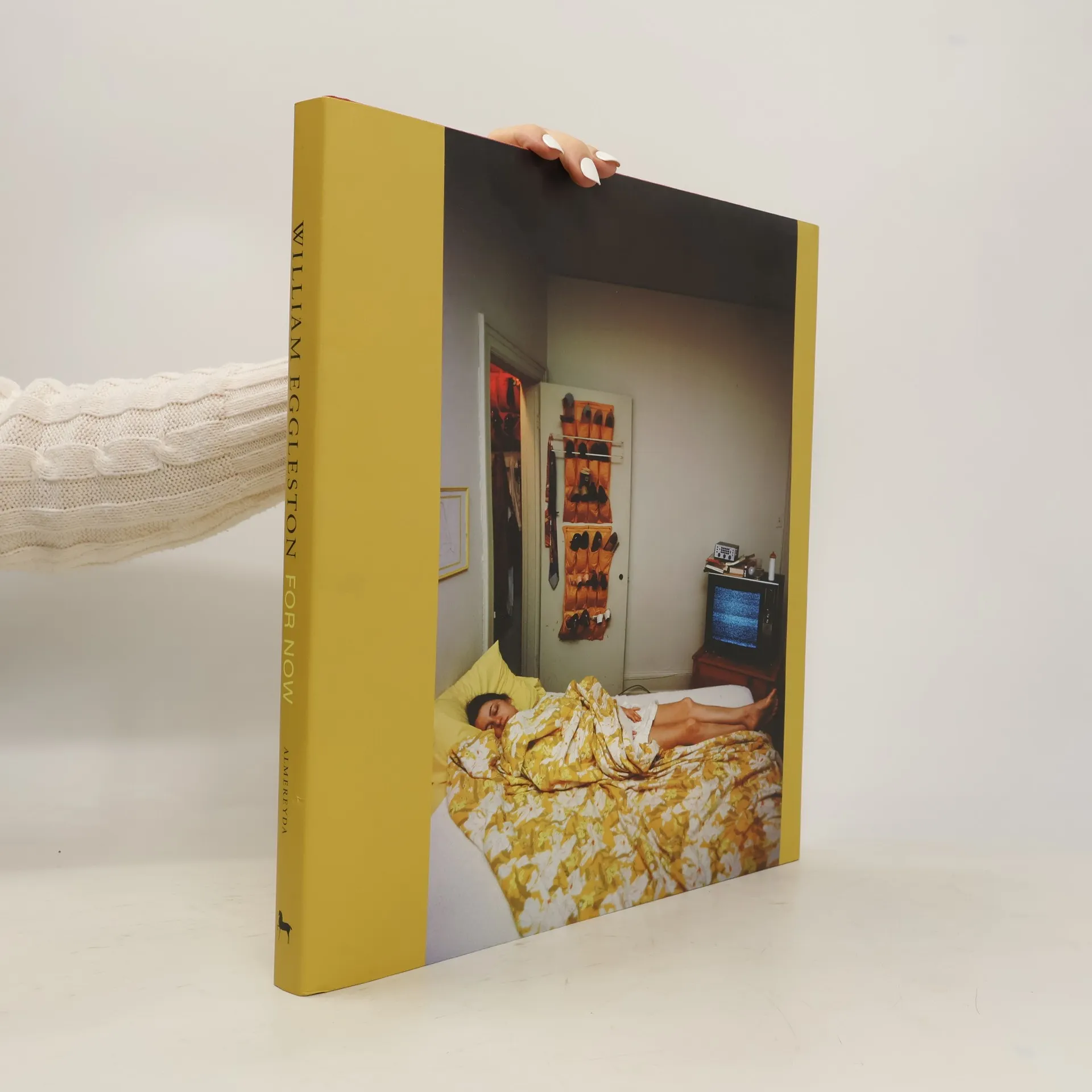
For Now is the result of film-maker Michael Almereyda's year-long rummage through the Eggleston archives, a remarkable collection of heretofore unseen images spanning four decades of work by one of our seminal artists. Unusual in its concentration on family and friends, the book highlights an air of offhand intimacy, typical of Eggleston and typically surprising. Afterword by Michael Almereyda, with additional texts by Lloyd Fonvielle, Greil Marcus, Kristine McKenna and Amy Taubin.
At War with the Obvious: Photographs by William Eggleston at The Metropolitan Museum of Art presents the work of this idiosyncratic artist, whose influences are drawn from disparate if surprisingly complementary sources—from Walker Evans and Henri Cartier-Bresson in photography to Bach and late Baroque music. Many of Eggleston’s most recognized photographs are lush studies of the social and physical landscape found in the Mississippi delta region that is his home
Flowers is a facsimile of the third of William Eggleston's rare artist's books, which was first published in an edition of only fifteen by Caldecott Chubb in New York in 1978. The original Flowers was a linen-bound volume with red leather spine and corners recreating the look of a photo album, and housed in a slipcase. Within its pages were twelve original chromogenic coupler prints focused on the theme of flowers. Flowers, along with trees and other foliage inevitably feature in many of Eggleston's photos as part of the Memphis streetscapes and interiors that are his favorite motifs. But in this book the flowers take center stage in all their mundane glory--be it a kitsch spray of gladioli and carnations in a cut-glass vase, a single rose before a box hedge, or a forlorn bunch on a white marble tomb inscribed with the word "Mama." Along with Eggleston's Morals of Vision , also released this season, Flowers is a further chapter in Steidl's publication of Eggleston's artist's books in new editions that honor the design and spirit of the originals, while exposing their contents to the wider public for the first time.
Black and White is an updated and expanded edition of William Eggleston's Before Color (Steidl, 2012), the first publication to comprehensively present Eggleston's early black-and-white photos and explore his artistic beginnings. In the late 1950s Eggleston began photographing his hometown of Memphis, discovering many of the motifs that would come to define his seminal work in color: the diners, cars, gas stations, supermarkets, domestic interiors, and the seemingly mundane gestures and vacant expressions of his fellow citizens. Here are also his unconventional, sometimes tilted croppings, and above all his emphasis on the beautiful in the banal. In the mid-1960s Eggleston began working with color and after experimenting with different exposure settings he was soon pleased with the results--"And by God it all worked. Just overnight." He subsequently abandoned black-and-white photography but its influence on his original vision of the American everyday remains fundamental.
William Eggleston, known as the "father of color photography," has spent nearly sixty years developing a unique style that merges everyday subjects with a deep appreciation for color, form, and composition. His approach challenges conventional interpretations, as he aims to elevate the mundane to striking, poetic visuals. Eggleston's work invites viewers to engage with the ambiguity of his images, reflecting his belief in the complexity of the ordinary.
Containing 150 recent photographs by the American photographer William Eggleston, this volume provides a sequence of images which form an almost autobiographic narrative, beginning with pictures of Eggleston's home territory in the Mississippi Delta and radiating out across the USA.
In April 1979, a book of 15 color photographs by William Eggleston was published in a limited edition of twenty. The photographs were taken from the second chapter of an unpublished larger work entitled Wedgewood Blue . Alongside his publications Chromes (2011), Los Alamos Revisited (2012) and the forthcoming Democratic Forest (2014) and Election Eve (2016), all documenting Eggleston's life work, At Zenith constitutes a calm and experimental intermezzo from Eggleston's familiar loudness and intensity of colors. The photographer pointed his camera at the sky to focus on the clouds rolling by.
A box containing William Eggleston’s earliest black and white photography was discovered in the archives of the William Eggleston Artistic Trust in Memphis. These photos were later exhibited at Cheim & Read gallery in New York and sold. This book reunites these images, showcasing the artistic beginnings of a pioneer in contemporary photography. In the late 1950s, Eggleston began capturing suburban Memphis with high-speed 35 mm black and white film, developing a style and motifs that would influence his iconic color work, including diners, supermarkets, and domestic interiors. Fifty years later, all plates in this edition have been scanned from vintage prints developed by Eggleston himself. In the mid-1960s, after discovering color film, he quickly embraced it, stating, “And by God, it worked. Just overnight.” Although he abandoned black and white photography, its influence on his practice remains significant. This new edition follows the sold-out first print-run. Born in Memphis in 1939, Eggleston is a key figure in contemporary American photography, instrumental in establishing color photography as an artistic medium. He has published extensively and exhibited widely, with previous works including Eggleston’s Paris (2009) and Before Color (2010) from Steidl.
When William Eggleston's second artist's book Morals of Visions was first published in 1978 in a limited edition of fifteen, only a handful of lucky people were able to obtain it; it has since become a collectible rarity. That is now to change with this new Steidl edition, which re-imagines Morals of Visions as a trade book for the general public. The original Morals of Vision contains eight color coupler prints of Eggleston's archetypal still lifes, landscapes and portraits which glorify the banal and have since changed the history of color photography. "There is no particular reason to search for meaning," Eggleston has said of his work in general, a sentiment in contrast with the title Morals of Vision which suggests that there are indeed principles of a kind to be learnt from the images in this book. Yet the lessons in photos including those of a broom leaning again a wall, green grain silos in the fading light, and an off-center electric candle complete with fake wax, remain Eggleston's own ironic secret. 'I don't have a burning desire to go out and document anything. It just happens when it happens. It's not a conscious effort, nor is it a struggle.' -William Eggleston
In 1977 William Eggleston released Election Eve, his first and most elaborate artist’s book, containing 100 original prints in two leather-bound volumes housed in a linen box. It was published by Caldecot Chubb in New York in an edition of only five, and has since become Eggleston’s rarest collectible book. This new Steidl edition recreates the full original sequence of photos in a single volume, making it available to the wider public for the first time. Election Eve contains images made in October 1976 during Eggleston’s pilgrimage from Memphis to the small town of Plains, Georgia, the home of Jimmy Carter who in November 1976 was elected 39th President of the United States. Eggleston began photographing even before he left Memphis and depicted the surrounding countryside and villages of Sumter Country, before he reached Plains. His photos of lonesome roads, train tracks, cars, gas stations and houses are mostly empty of people and form an intuitive, unsettling portrait of Plains, starkly different to the idealized image of it subsequently promoted by the media.
At the end of the 1950s William Eggleston began to photograph around his home in Memphis using black-and-white 35mm film. Fascinated by the photography of Henri Cartier- Bresson, Eggleston declared at the time: “I couldn’t imagine doing anything more than making a perfect fake Cartier-Bresson.” Eventually Eggleston developed his own style which later shaped his seminal work in color—an original vision of the American everyday with its icons of banality: supermarkets, diners, service stations, automobiles and ghostly figures lost in space. From Black and White to Color includes some exceptional as yet unpublished photographs, and displays the evolution, ruptures and above all the radicalness of Eggleston’s work when he began photographing in color at the end of the 1960s. Here we discover similar obsessions and recurrent themes as present in his early black-and-white work, including ceilings, food, and scenes of waiting, as well as Eggleston’s unconventional croppings—all definitive traits of the photographer who famously proclaimed, “I am at war with the obvious.”
William Eggleston's Guide marked a pivotal moment in art history as the first one-man show of color photographs at The Museum of Modern Art, New York, and its inaugural publication on color photography. The reception was intensely divided, compelling the art world to confront color photography, a medium previously overlooked, and the vernacular nature of the images that transcended typical family snapshots. These photographs showcased a new mastery of color as a crucial aspect of composition. The book, featuring a textured cover with a photograph of a tricycle and gold lettering, includes 48 images selected from 375 taken between 1969 and 1971, presenting a refined yet casual perspective of Eggleston's Memphis surroundings. The collection captures various scenes, such as an anonymous woman in a vibrant dress on a bold outdoor sofa, a coal-fired barbecue framed by a shiny tricycle and a sleek car fender, and a tiny, gray-haired lady in a flowered housecoat standing in a mint-green room. In this edition, The Museum of Modern Art has created new color separations from the original 35 mm slides, producing a facsimile that reflects the photographer's original intentions with fresh vibrancy.
This book is a facsimile of an album of Eggleston’s Polaroids assembled by the photographer himself, and containing the only photos he made in this medium. Consisting of 56 images taken with the Polaroid SX-70 (the now cult camera produced between 1972 and 1981) and handmounted in a black leather album also produced by the company, Polaroid SX-70 is the first publication of Eggleston’s Polaroids. The gloriously mundane subjects of these photos—a Mississippi street sign, a telephone book, stacked crates of empty soda bottles—is familiar Eggleston territory, but fascinatingly all of these Polaroids were taken outdoors. They are rare records of Eggleston’s strolls or drives in and around Mississippi, complement the majority of his work made with color negative film or color slides, and show his ironic flair for photo-sequencing in book form.