
Christoph Ransmayr est célèbre pour ses récits magistralement ciselés qui plongent souvent dans les profondeurs de l'histoire et de la mythologie. Son style se caractérise par une riche texture linguistique et des aperçus profonds de la condition humaine. Ransmayr explore les thèmes de la mémoire, de la perte et de la quête d'identité dans des paysages souvent austères et inconnus. Ses œuvres sont marquées par un fort sens du lieu et une profonde compréhension des aspirations humaines.
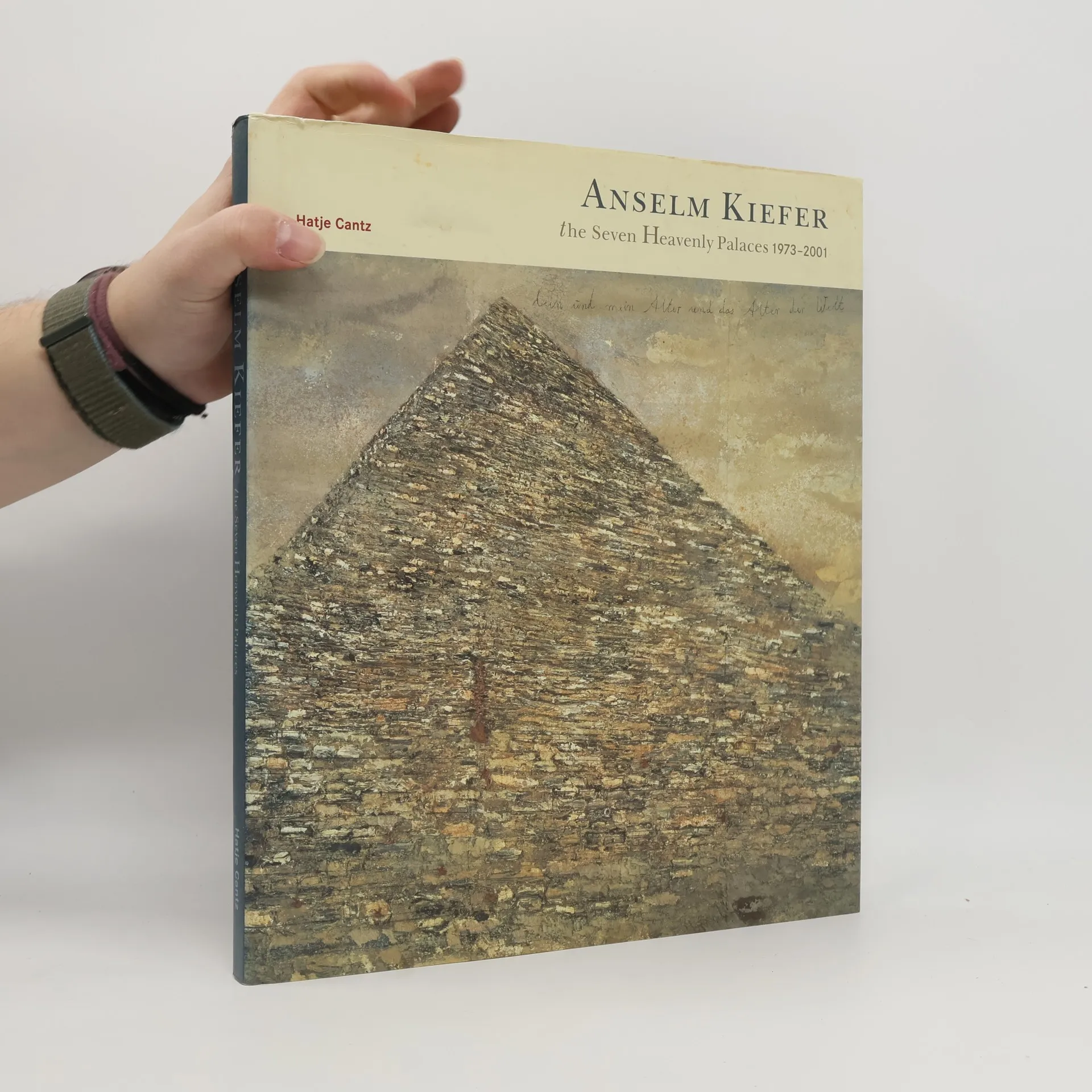
Quelle magnifique exposition du monde réel, au sein duquel, tout, absolument tout, se révéla sens dessus dessous, des caves à ciel ouvert, des églises sans toit - des terrains de jeux. Ce fut beau. Ce fut l'enfance. Que ce fut bien, que ce fut finalement facile de bâtir un nouveau monde à partir des ruines de l'ancien. Un nouveau monde, quoique bien plus petit, réduit à une création de bac à sable. En juin 2000, l'auteur Christoph Ransmayr rendit visite à l'artiste Anselm Kiefer à La Ribaute, dans le Sud de la France. De cette rencontre demeure ce texte.
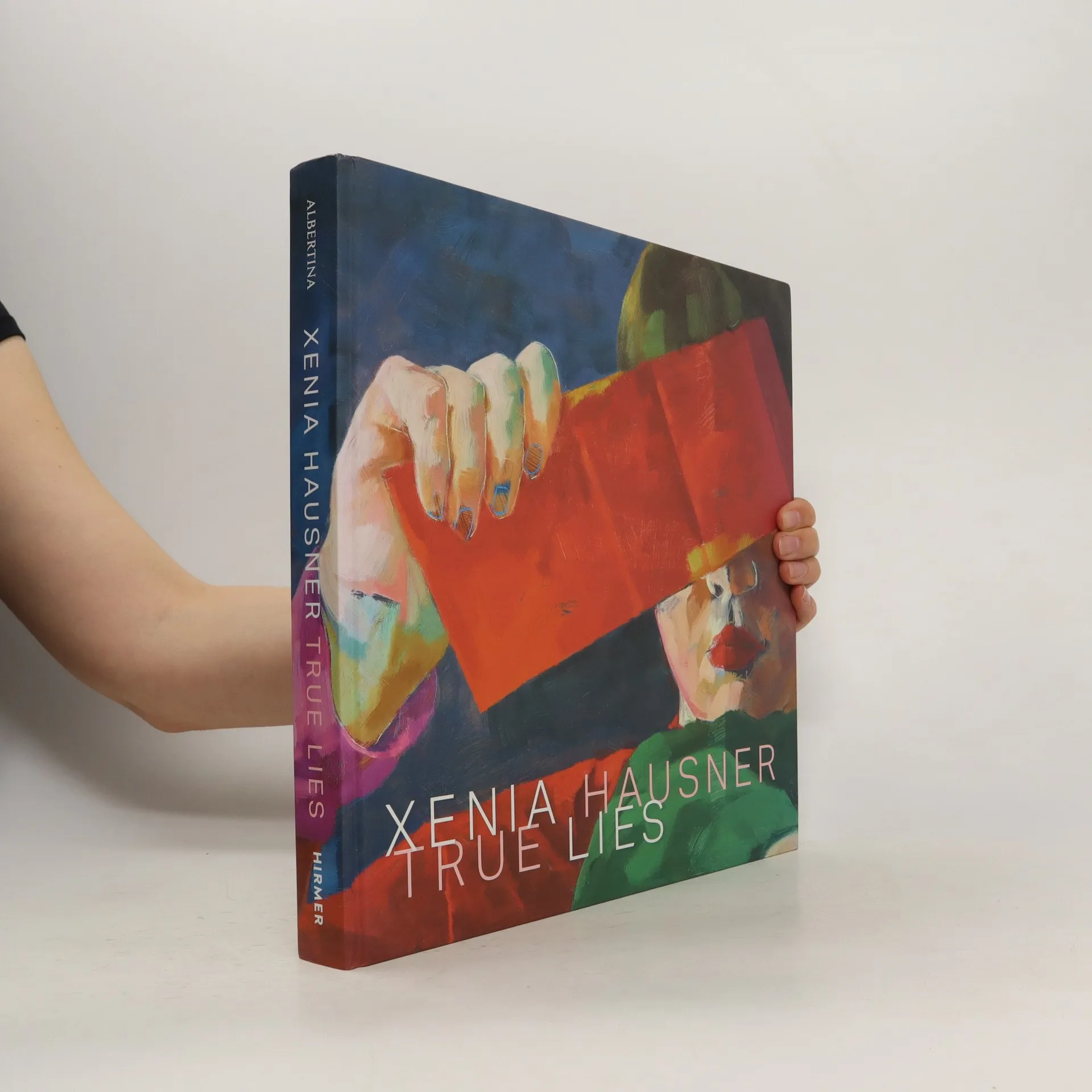
Dans la Chine du XVIIIe siècle, l'empereur Qianlong règne en despote sur une cour résignée à la démesure de son souverain. Son dernier caprice est une série d'horloges conçues pour mesurer les variations de la course du temps : le temps fuyant, rampant ou suspendu d'une vie humaine, selon qu'il est ressenti par un enfant, un condamné à mort ou des amants. Venu de Londres à l'invitation du souverain, Alistair Cox, le plus célèbre des horlogers du monde occidental, saura-t-il exaucer les désirs de Qianlong et freiner la course des heures ? Avec la précision d'un peintre, Christoph Ransmayr construit un récit singulier et virtuose, méditation sur la fugacité du temps et l'illusion d'en triompher par l'art.
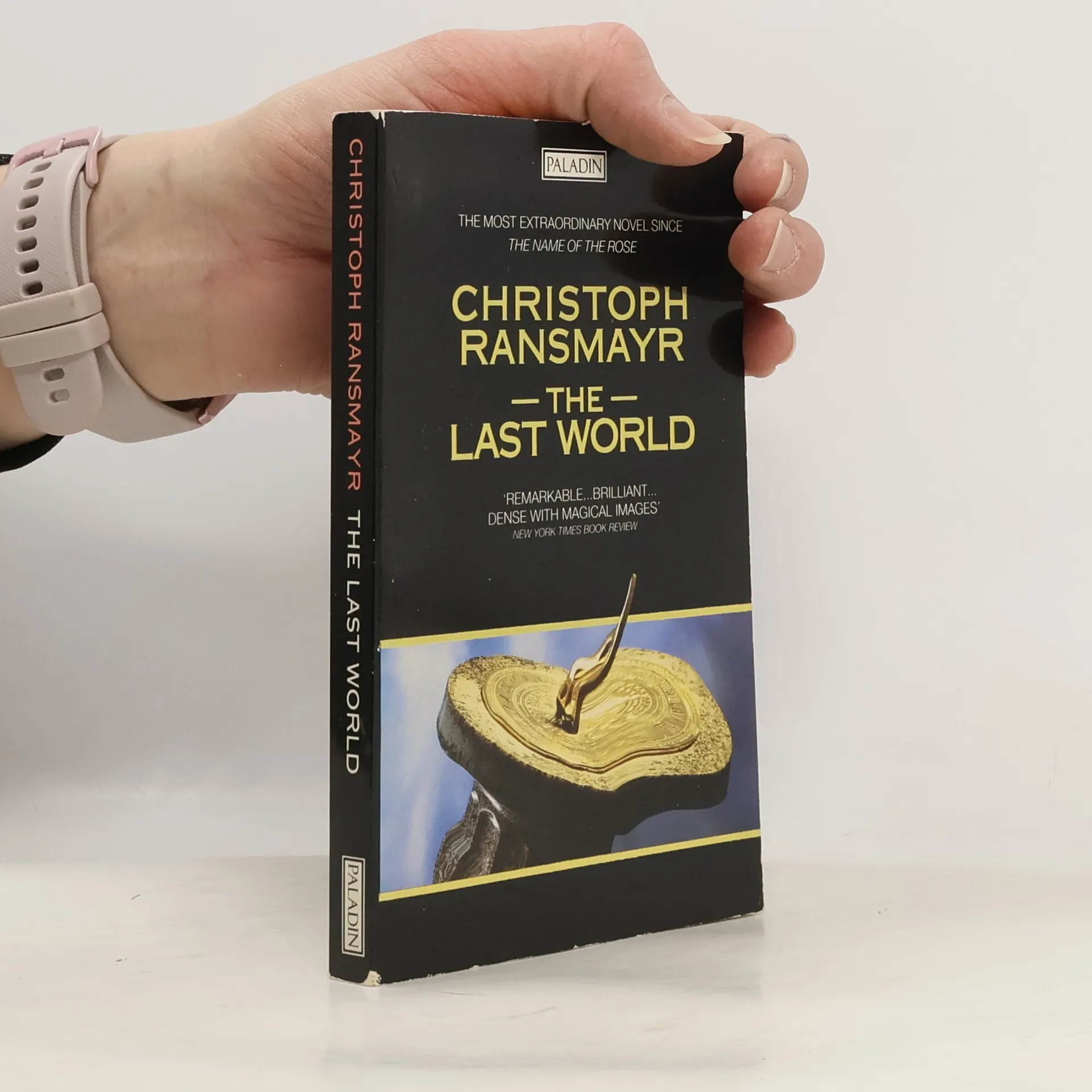
Venezianische Garten legen Phosphorbrände an die Fluchtwege der Katakomben, eine Stimme am Telefon spricht vom Zorn des Imperators, und Ovid, der unglücklichste Dichter der Antike, tritt zur Eröffnung eines Stadions vor einen Strauß Mikrophone und sagt: Bürger von Rom... Die letzte Welt hat ihren Ursprung im Feuer. Es ist eigentlich nur ein Zimmerbrand, der die Schreibstube einer römischen Villa verwüstet. Was dieses Feuer unvergeßlich macht, ist der Umstand, dass es von Ovid entfacht wurde: was da brennt, ist sein Hauptwerk, die Metamorphosen, eine grausame Enzyklopädie der antiken Verwandlungsmythen. Die letzte Welt ist ein utopischer Roman, in dem die Antike auf bedrohliche Weise mit einer unbekannten Zukunft zusammenschießt.
A tragic accident unfolds as a longboat plunges over the Great Falls, leading to the drowning of five passengers. The Lockmaster, tasked with ensuring safe river navigation, faces scrutiny when his son suspects foul play rather than an accident. Driven by the need for answers, the son, a hydraulic engineer knowledgeable about river dynamics, embarks on a quest to uncover the truth behind the disaster and locate his missing father, raising questions about responsibility and the nature of the tragedy.
The world’s most powerful man, Qiánlóng, the emperor of China, invites renowned eighteenth-century clockmaker Alister Cox to his court in Beijing. In the heart of the Forbidden City, Cox and his assistants are tasked with building machines that reflect the passage of time as experienced by both a child and a condemned man, capturing the myriad emotions tied to that journey. Navigating the complexities of a rigidly hierarchical society ruled by an almost god-like figure, Cox employs his expertise to fulfill the emperor’s desires. Ultimately, Qiánlóng, known as the Lord of Time, commissions a clock that measures eternity—a perpetuum mobile. Driven by the desire to honor his late daughter and aware of the daunting nature of the task, Cox begins his work. Meanwhile, the court, trapped in an endless summer, is rife with sinister gossip about the foreigners’ creation. The Englishmen grapple with their confinement in this gilded cage. Richly imagined and vividly recounted, this narrative showcases Christoph Ransmayr’s ability to weave a captivating tale infused with metaphorical and metaphysical depth. It transcends the mere meeting of two men—one isolated by power, the other by grief—offering profound insights into mortality and the power of storytelling to conquer time.
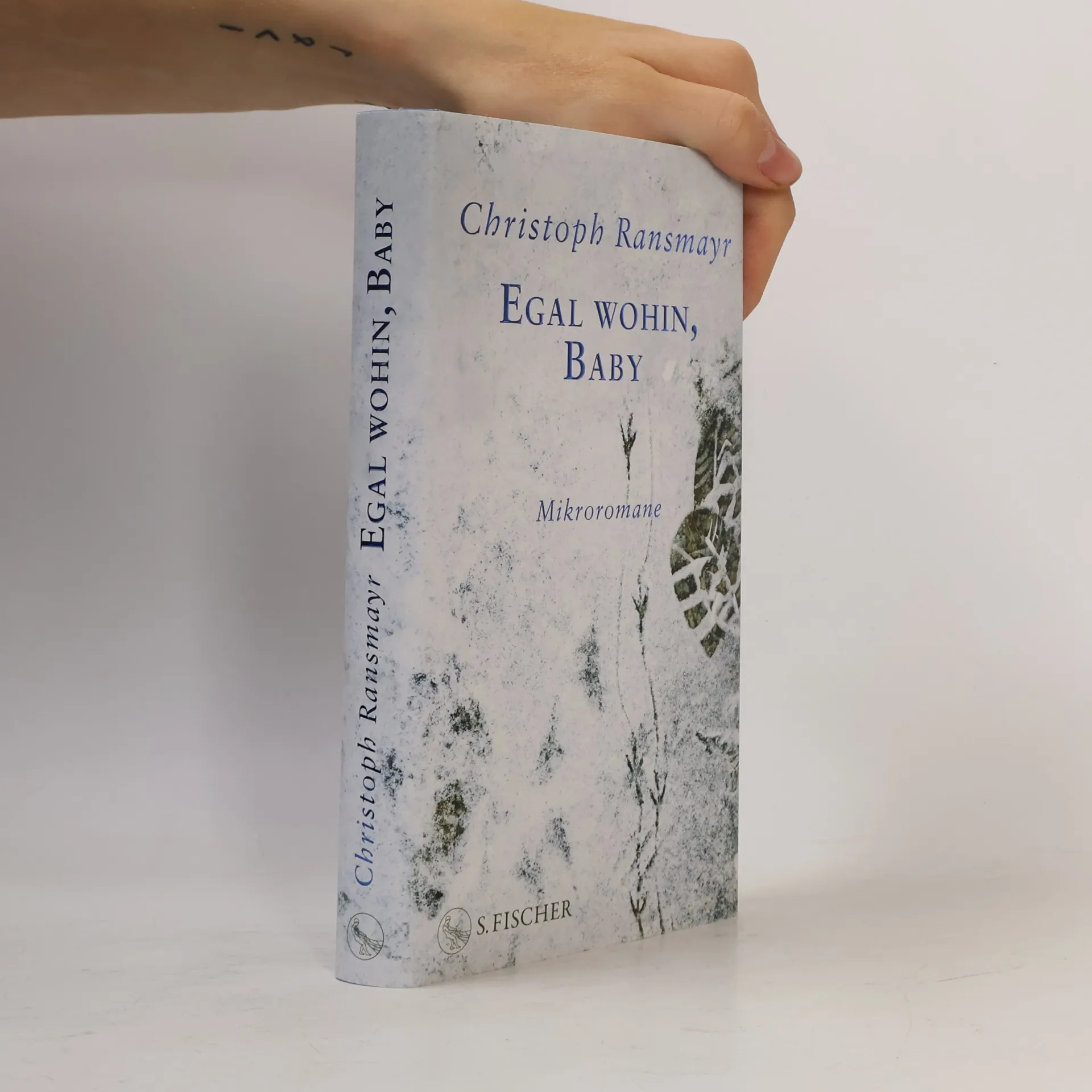
In "Egal wohin, Baby" erzählt Christoph Ransmayr siebzig Geschichten, die zu seinen Schwarz-Weiß-Fotografien gehören. Jedes Bild wird durch einen Mikroroman ergänzt, der die Flüchtigkeit des Moments mit Leidenschaft und Ironie einfängt. Ransmayrs Beobachtungsgabe und Sprachkunst verleihen den Texten hypnotisierende Schönheit.